Recently we’ve seen an influx of Turkish-made firearms into the American market. They have been appearing as finished guns or as nearly finished guns that ultimately receive an American-made brand. These guns appeal to American consumers because they are well made and affordable. Since 2020, European American Armory Corporation (EAA) has been working with Turkish firearms manufacturer Girsan importing handguns. Now EAA has partnered with Balikli, another well-known Turkish manufacturer, and it is importing a Remington 700-inspired bolt-action rifle.
The Remington Model 700 is one of the most iconic centerfire rifles ever produced. Its three rings of steel, dual-locking-lug bolt and cylindrical action have been copied by many manufacturers. The platform is as iconic as the 1911 pistol and 870 shotgun. The new Balikli BLK Bolt Action Rifle is a rendition of the Remington 700, and at first glance appears nearly identical. However, it’s not an exact clone. There are some slight geometric differences that prevent it from being 100-percent compatible with all Remington 700 parts and aftermarket accessories. So, let’s take a detailed look at this rifle, piece by piece.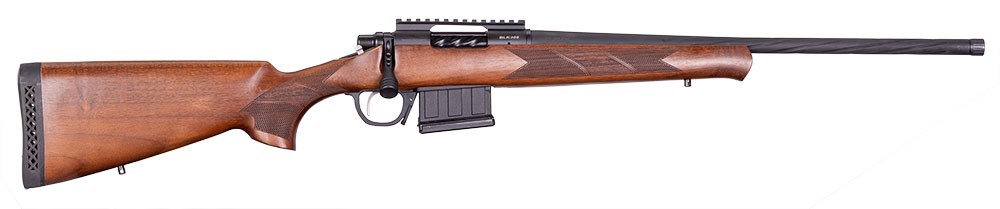
The Action
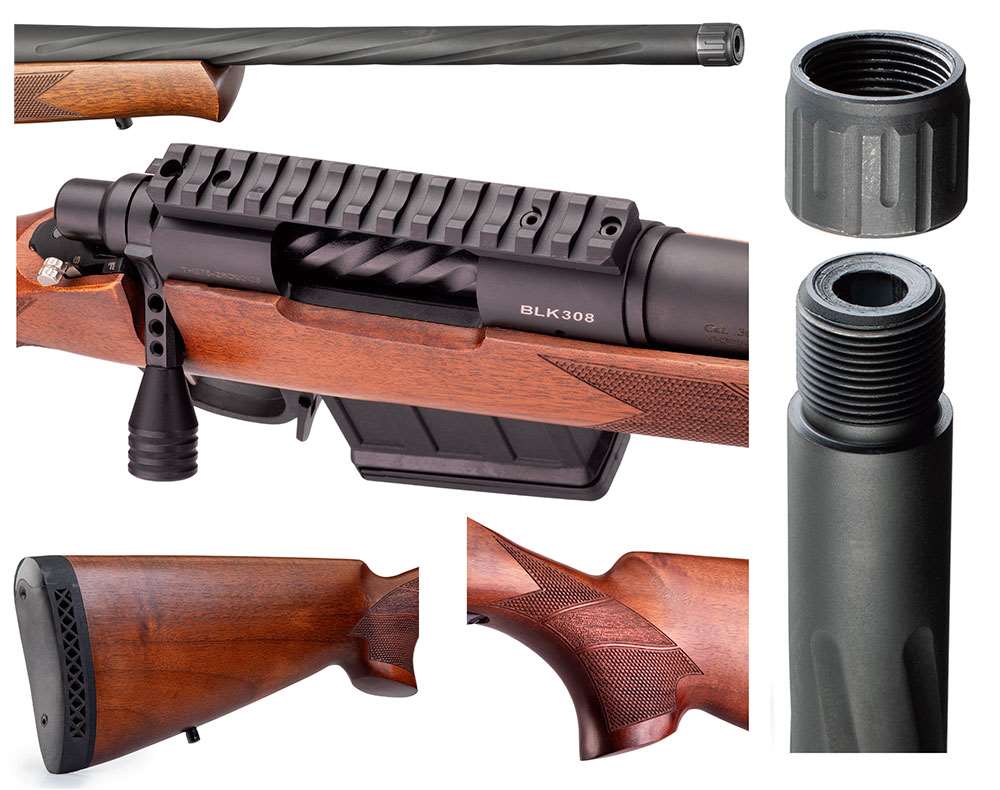
Similar to the Remington 700, the BLK’s action is cylindrical in design and measures 1.35 inches in diameter. This should allow for compatibility with aftermarket Rem-ington 700 stocks. I tried the barreled action in stocks I had on hand from Magpul and Boyd’s, and it fit, but I was advised by EAA that some aftermarket stocks will require minor tweaking. Balikli builds the action in two lengths, and the rifle is offered chambered for the .308 Win. or .30-‘06 Sprg. Remington 700 scope bases or rails drilled for 6x40 screws should work; the set I tried worked fine, but the BLK rifle comes with a one-piece aluminum, 13-slot Picatinny rail installed. The major difference between this action and the Model 700 is that the bolt release/stop has been relocated to the left side as is common with many modern 700-like actions from other manufacturers.
The Bolt
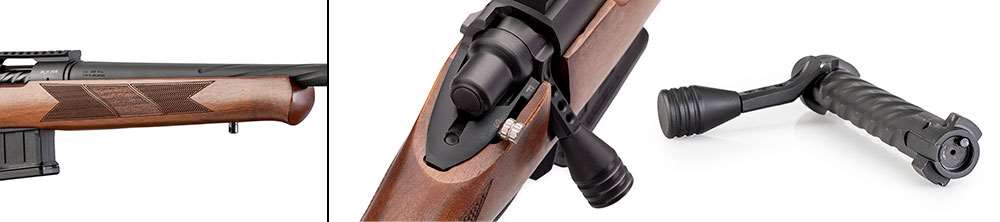
With its plunger ejector, the two-lug bolt looks very similar to a bolt from a Remington 700. However, instead of the often criticized Remington 700 spring-style extractor, this bolt has a Sako/M16-style extractor. The bolt body has radial fluting around its circumference, the bolt handle has three lightening holes that modernize its appearance and it’s fitted with an oversized and threaded knob allowing for aftermarket replacement. Bolt operation was smooth and cocking force was minimal, nearly identical in feel to a Remington 700.
The Trigger
The rifle is fitted with a flat, single-stage trigger that has a straight shoe measuring .37-inch wide and it has eight shallow grooves along its face. The two-position safety that does not lock the bolt is integral to the trigger mechanism. As for trigger-pull weight, it broke somewhat inconsistently with between 3.5 and 3.75 pounds of pressure, with minimal take-up that was a tad bit creepy, and with a noticeable amount of over-travel. I’d rate the trigger about average for a rifle in this price point and very similar to the factory triggers on pre-bankruptcy Remington 700 rifles. Since the action is dimensionally very similar to a Remington 700, you might consider installing a Timney trigger—which was the common fix for early Remington 700s—however, due to differences in cocking piece geometry, a Timney trigger for a Remington 700 will not function correctly. If you want to improve the trigger on this rifle, you’ll need a gunsmith.
The Barrel
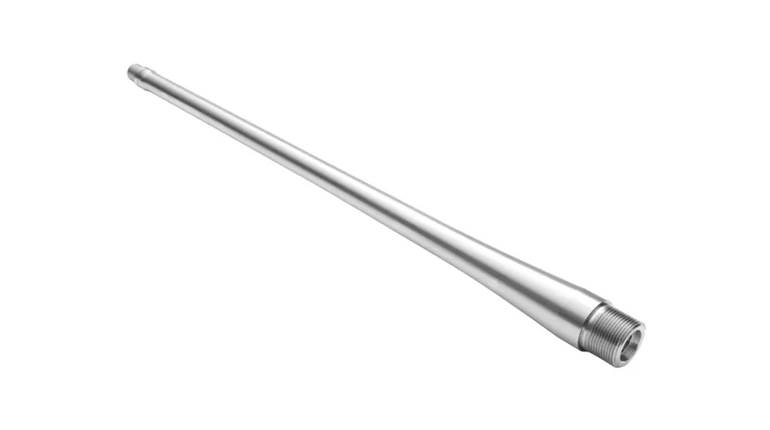
Whether chambered for .308 Win. or .30-‘06 Sprg., the BLK is fitted with a button-rifled, 20-inch barrel. It measures 1.18 inches in diameter just forward of the .19-inch-thick recoil lug and it tapers to .70 inch at a point just behind the threaded portion. Along the length of the barrel, from about 5.5 inches forward of the action to about an inch from the threaded portion, there are six shallow radial flutes. The muzzle is threaded 5/8x24 tpi and the rifle ships with a knurled thread protector. Twist rates are as per SAAMI (Sporting Arms and Ammunition Manufacturer’s Institute) standards at 1:10-inch for the .30-‘06 Sprg. and 1:12-inch for the .308 Win. Together, the barrel and action weigh 4.48 pounds.
The Stock
Turkish walnut is used for the stock and the wood on the test rifle was rather plain with a dark satin finish. Lines are classic without a raised comb or cheek piece, and the comb is straight and positioned about a half inch below bore centerline with a 14.5-inch length of pull. The grip is gracefully curved to an almost vertical line at the tip and was very comfortable in hand. There is also a tasteful Schnabel fore-end that adds to the rifle’s visual appeal. Attractive machined grip panels are located on the sides of the grip and forearm and sport a blend of checkering and stippling. Two action screws that pass through pillars hold the action and stock together. The stock is fitted with a 1-inch-thick, ventilated rubber recoil pad, but oddly, the pad has a hard plastic cap covering about an inch of the pad at the heel. Blue-steel sling swivel studs are located 4 inches from the toe of the stock and about 3 inches from the tip of the fore-end. With the floor plate, the stock weighs 1.93 pounds.
Floor Plate and Magazine
Inletting for the floor plate was generous and in some places the floor plate was proud above the stock and in others it was slightly below. Aesthetically, this was the only complaint—the fit in this area could have been better. The floor plate is hard polymer with a generous trigger guard that has the paddle-style, ambidextrous magazine release located at the front and the rifle ships with two polymer AICS magazines that do not drop free when the release is pressed. (This is not a bad thing on a hunting rifle; it can prevent inadvertent magazine ejection.) Fully assembled with the provided scope rail and the detachable magazine installed, the rifle weighs 6.65 pounds.
Shooting Results
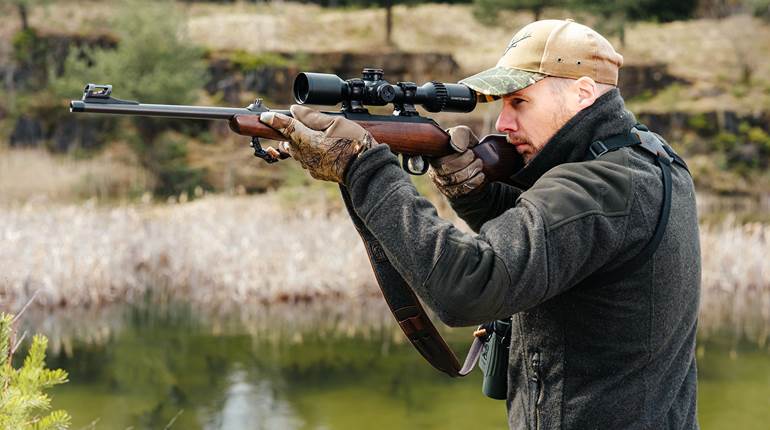
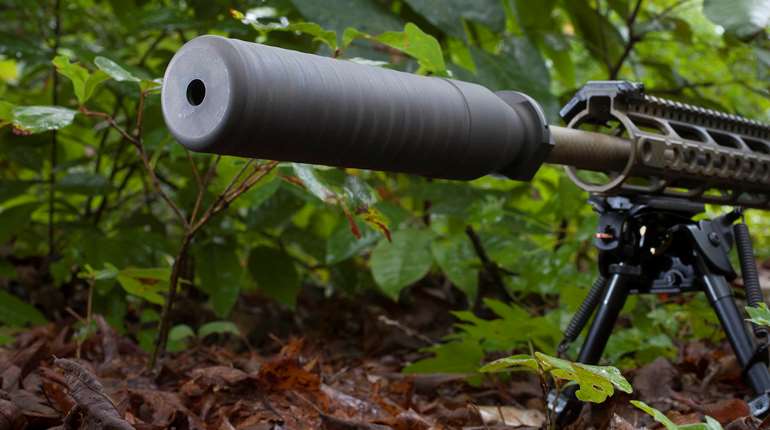
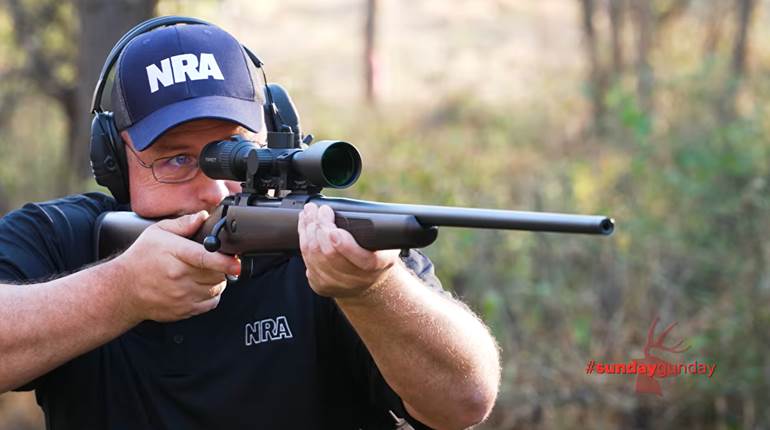
After familiarizing myself with the rifle and making sure the installed scope rail was tight, I mounted a Maven RS.1 2.5-15x44 mm riflescope in Leupold Backcountry rings, screwed on a Banish 30 suppressor, and sighted the bore. The first three, five-shot groups were fired with Remington 150-grain Core-Lokt ammo and averaged 1.56 inches. I tested two other loads and overall, the rifle averaged 1.39 inches for nine five-shot groups. Underwhelming for sure, but when I disassembled the rifle to get a closer look at the components, I discovered the action screws were very loose. Loose action screws can be very detrimental to precision, so I tightened them to 45 inch-pounds and went back to the shooting bench.
I repeated the exact same test with the same three loads and this time the rifle averaged 1.17 inches—15-percent better—for the nine, five-shot groups. That’s not fantastic precision, but from a rifle with a suggested retail price of less than $700, that’s pretty darned good. I kicked myself for not checking the action screws before the first range session. After all, there’s no point in the test results of a gun not properly screwed together—or is there? I mention my mistake for two reasons. First, action screw tightness is something you might need to be reminded to check, and second, with the loose action screws, the rifle still averaged less than 1.5 inches. The point is that this rifle did not shoot horribly with loose action screws, which speaks to the interface between the action and stock.
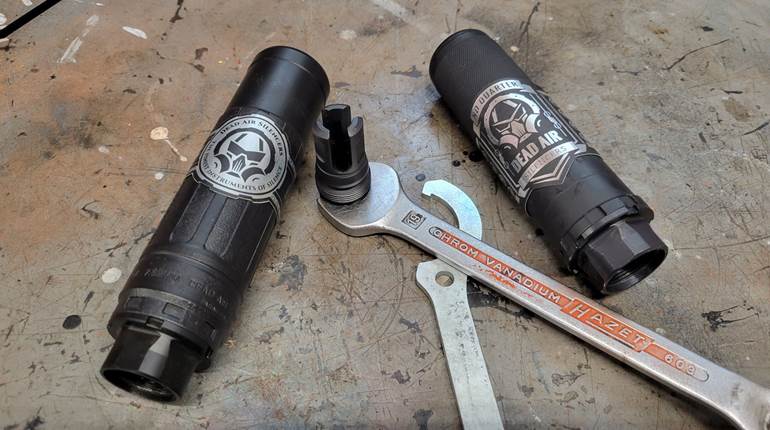
Most of the shooting with the Balikli BLK Bolt Action Rifle was done from field positions where rifle balance becomes important. Out of the box, the rifle was a tad butt-heavy, balancing about a half inch behind the front action screw. Butt-heavy rifles are more responsive and quick handling, and muzzle-heavy rifles are easier to hold on target. Ultimate balance, of course, depends on the riflescope you mount and if you use a suppressor. At 24 ounces, the Maven scope was on the heavy side, and it moved the balance point slightly further to the rear. However, with the 9.5-ounce Banish 30 suppressor—in its short configuration—the rifle ended up just a tad muzzle-heavy and performed very well—notwithstanding the less-than-stellar trigger—during offhand shooting from the standing, kneeling and seated positions.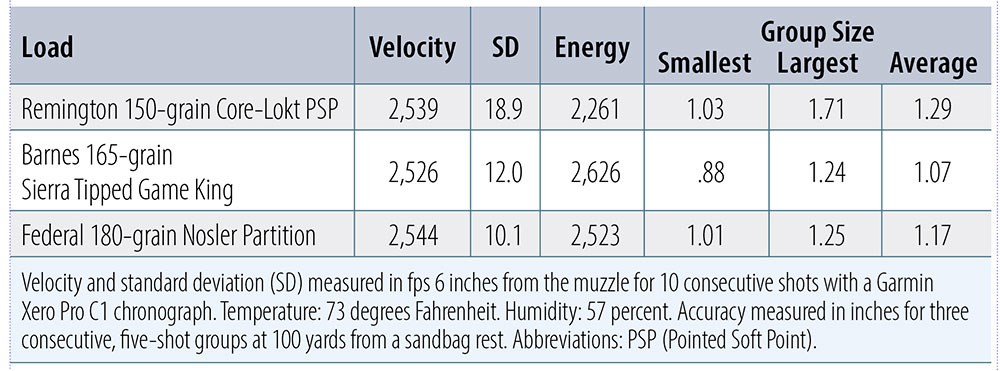
Many shooters who do a lot of offhand shooting like to tightly loop up in a shooting sling for stabilization. With some rifles, this can torque the stock and alter point-of-impact. I did a fair amount of shooting looped up in a Galco RifleMann sling and the rifle performed fine. As for reliability, there were no issues of any kind with the rifle. It fed all munitions tried with ease and there were no failures to fire, extract or eject.
What’s the Verdict?
The push-feed Model 700 bolt-action rifle has a stellar reputation and has been used for every pursuit and in every way a bolt-action rifle can be used. Very similar, with only a few small differences, the Balikli BLK Bolt Action Rifle should prove to be just as dependable and is available with a detachable AICS-style magazine. Just as importantly, these EAA imported rifles are very affordable. With a tuned trigger, there would be little to nothing to complain about with this rifle, and it very much reminds me of a 1995 Jeff Cooper quote.
Jeff Cooper founded Gunsite Academy 50 years ago. His work there, in conjunction with his pioneering book, “The Art of the Rifle,” laid the foundation for much of today’s firearms training with rifles. Cooper once wrote that there, “Ain’t [sic] many troubles that a man cain’t [sic] fix with seven hundred dollars and a .30-06.” Whether a .308 Win. or .30-‘06 Sprg.—there ain’t enough difference to matter—I think that quote is the best summation of this slightly less-than-$700 rifle. Unquestionably, you could spend more money and not be as well armed.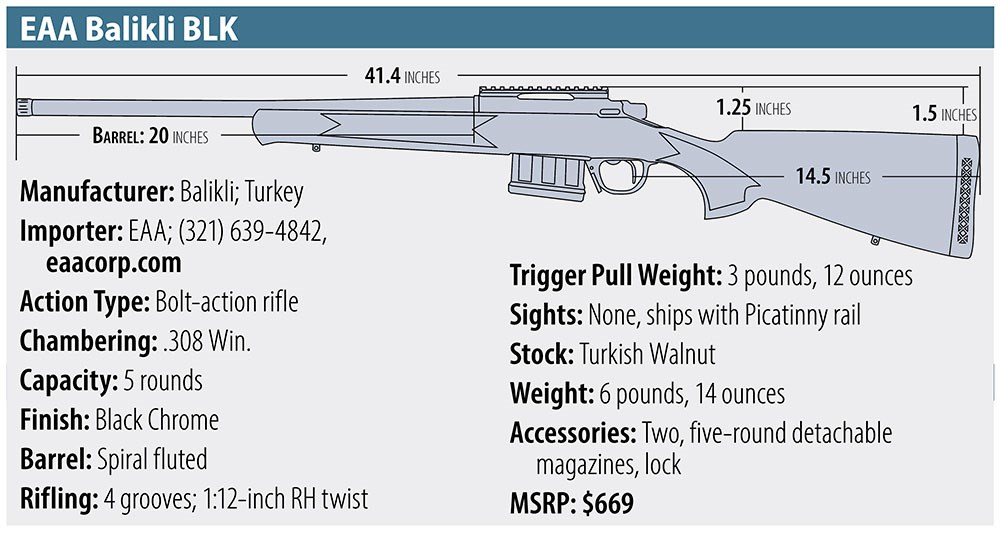
Most Popular