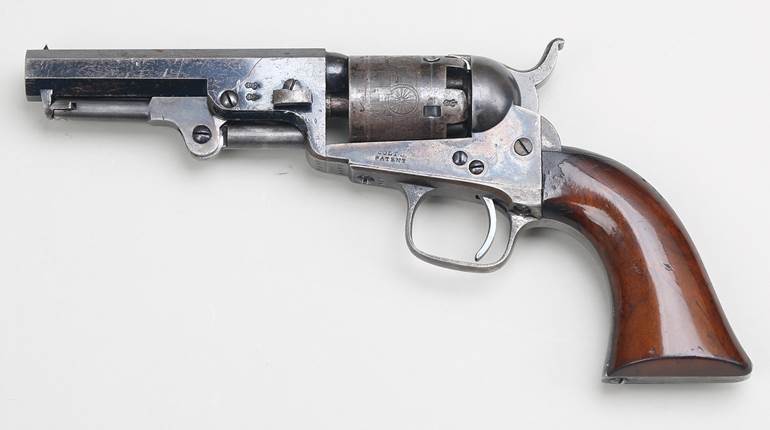
Samuel Colt pioneered the revolver concept in the 1830s with the early Colt Paterson design, which improved upon earlier designs with a mechanism that rotated the cylinder and indexed the next round with the cocking of the hammer. Soon after, other companies entered the cap-and-ball market, and one of those was an old name in military arms, The Eli Whitney Company, which developed the Whitney Navy revolver. Watch our latest “I Have This Old Gun” segment above to see the Whitney Navy in action on the range.
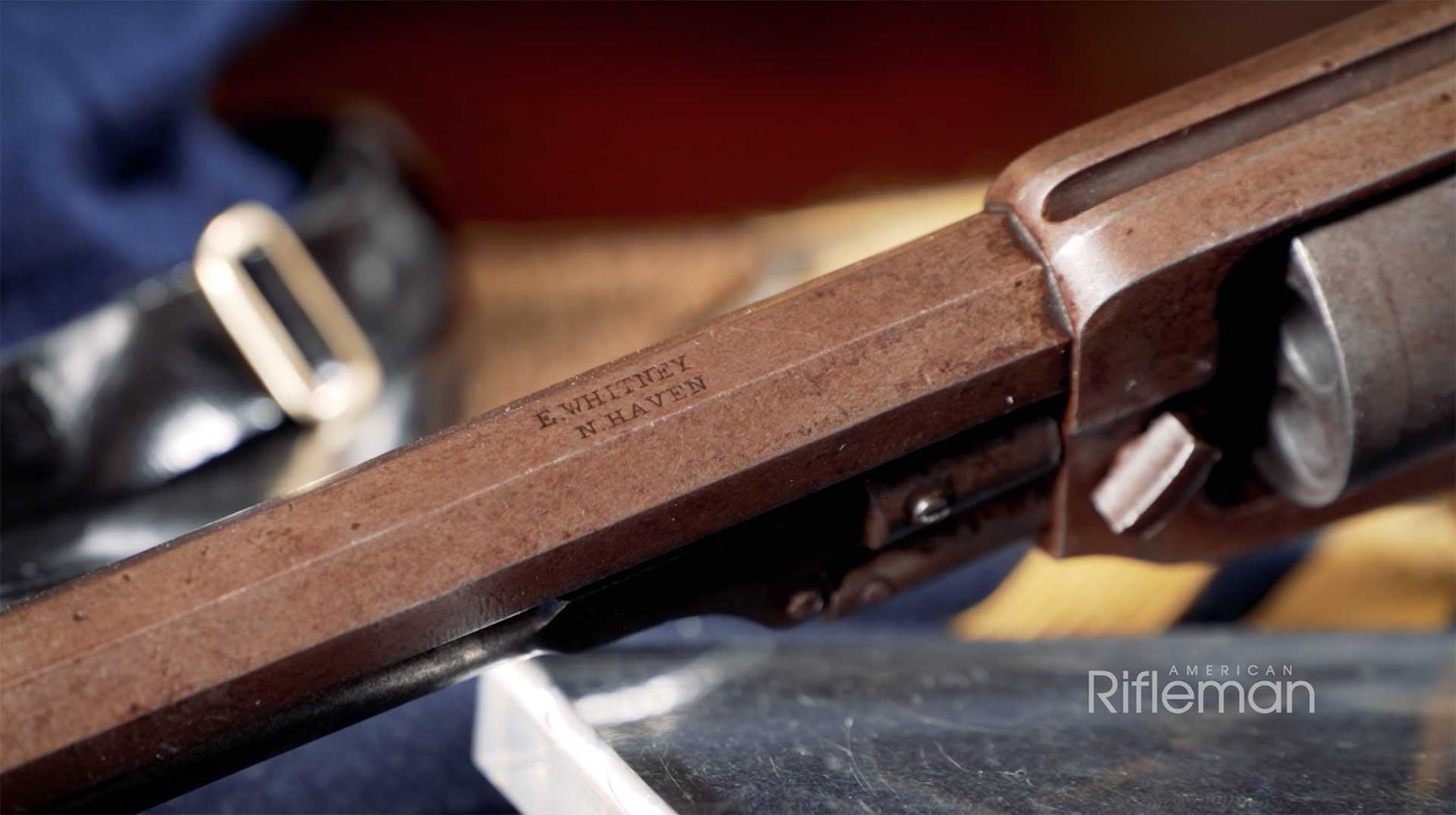
“After Colt's patent on the revolver ran out, all of a sudden, it was open to several different competitors, and one of these was Whitney, the same Eli Whitney Company that had made muskets since the earliest days of the Republic,” American Rifleman contributor Kenneth L. Smith-Christmas said. “And the Whitneys decided to go with a different type of revolver system than Colt had. Theirs was a solid frame with a screw-in barrel, and it was really a solid, solid piece of workmanship.”
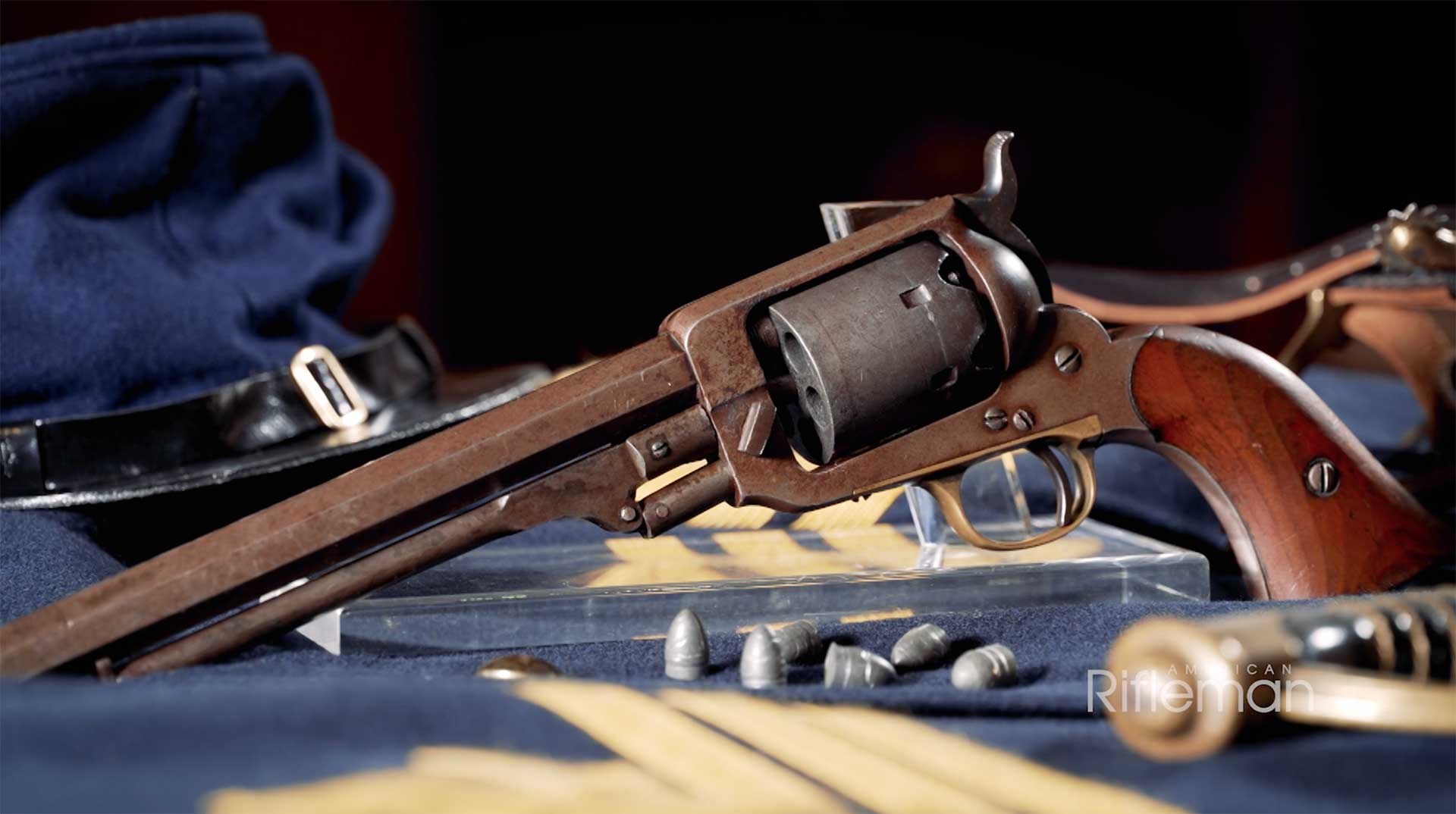
The Eli Whitney Company first made copies of Colt’s 1851 Navy revolver design, but soon after, it began producing its own solid-frame example also chambered for a .36-caliber projectile. The Navy had a six-round cylinder and employed a single-action operating system, like other revolvers of the era.
“One of the things to note about Whitney revolver design is it went through a few different iterations. The first Whitney revolvers that were ever made didn't have a loading lever at all,” American Rifleman Executive Editor Evan Brune said. “You couldn't reload the gun without really taking the cylinder out and going through a whole process. Later versions of the Whitney did have a loading lever underneath the barrel, and these, too, went through a few different variations.”
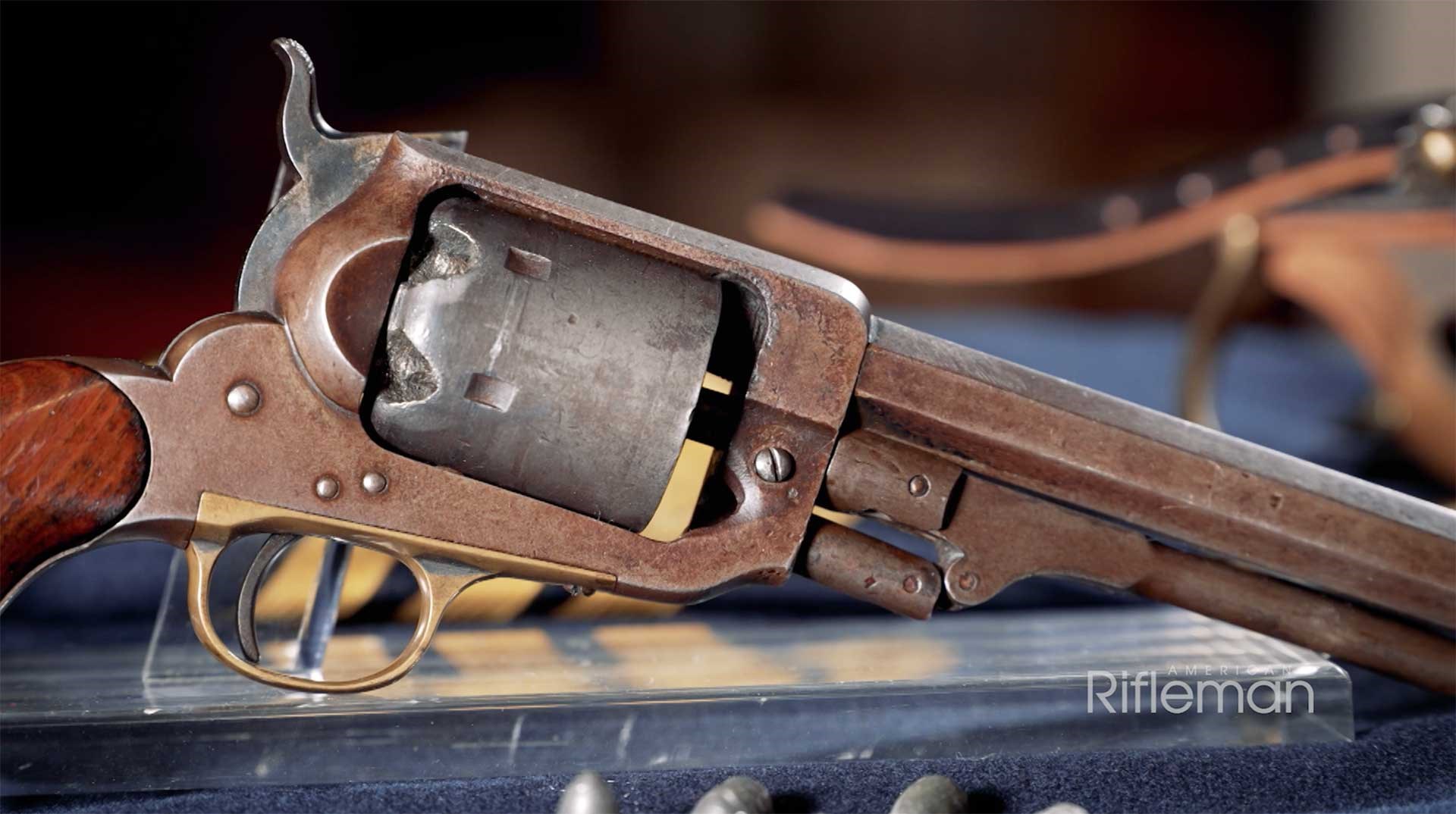
Early versions of the Whitney Navy that featured loading levers used a small, spring-loaded, ball-shaped detent to secure the lever to the barrel after loading, but these weakened over time and came loose under fire. Later versions used a spring-loaded wedge that secured the lever to the barrel.
“In the end, they made over 30,000 of these revolvers,” Smith-Christmas said. “Most of these went to the Union, but a number of them were used by the Confederacy. They were purchased prior to the war. And then even after the war started, through rather surreptitious means, they're acquired.”
One of the most famous users of the Whitney Navy was the 4th Virginia Cavalry, which acquired genuine Whitney revolvers during the American Civil War. But as the Confederacy faced shortages of arms, new makers emerged and attempted to produce guns for Confederate use.
“Interestingly enough, the Confederates came up with a version of their own called the Spiller & Burr, which was basically identical in almost every detail to the .36 Whitney Navy revolver, except that it had a brass frame,” American Rifleman Field Editor Garry James said. “Today, a second model Whitney revolver in good shape will bring, you know, a couple thousand dollars, whereas a Spiller & Burr will bring tens of thousands of dollars. They're very, very rare and very, very sought-after.”
To watch complete segments of past episodes of American Rifleman TV, go to americanrifleman.org/videos/artv. For all-new episodes of ARTV, tune in Wednesday nights to Outdoor Channel 8:30 p.m. and 11:30 p.m. EST.