The new VP9CC is Heckler & Koch’s second micro-size pistol, following the CC9’s debut in late 2024. Made at HK’s Oberndorf, Germany, factory, the VP9CC was intended for the European market, but was released in rather limited numbers. Its construction, dimensions and magazine capacity precisely fit the “micro-9” market niche pioneered by KelTec’s P11 in 1995, which was nearly dormant until SIG Sauer’s P365 sparked a popularity explosion in this genre of concealed-carry handgun.
Chambered in 9 mm, the VP9CC is striker-fired and uses the tilting-barrel, locked-breech operating system. It ships in a high-quality soft case with a 10-round flush-fit and an extended 12-round magazine.
The VP9CC is constructed using a steel chassis pinned inside a polymer grip frame. Attached to the chassis are the slide-lock levers, takedown lever and trigger, sear and associated components collectively known as the fire-control unit. Because the chassis is the serialized component and can be switched into other grip frames, aftermarket manufacturers may offer replacement frames as they did with the SIG P365 and P320 once these pistols became popular. As it stands, HK sells a grip frame without an accessory rail for $58.
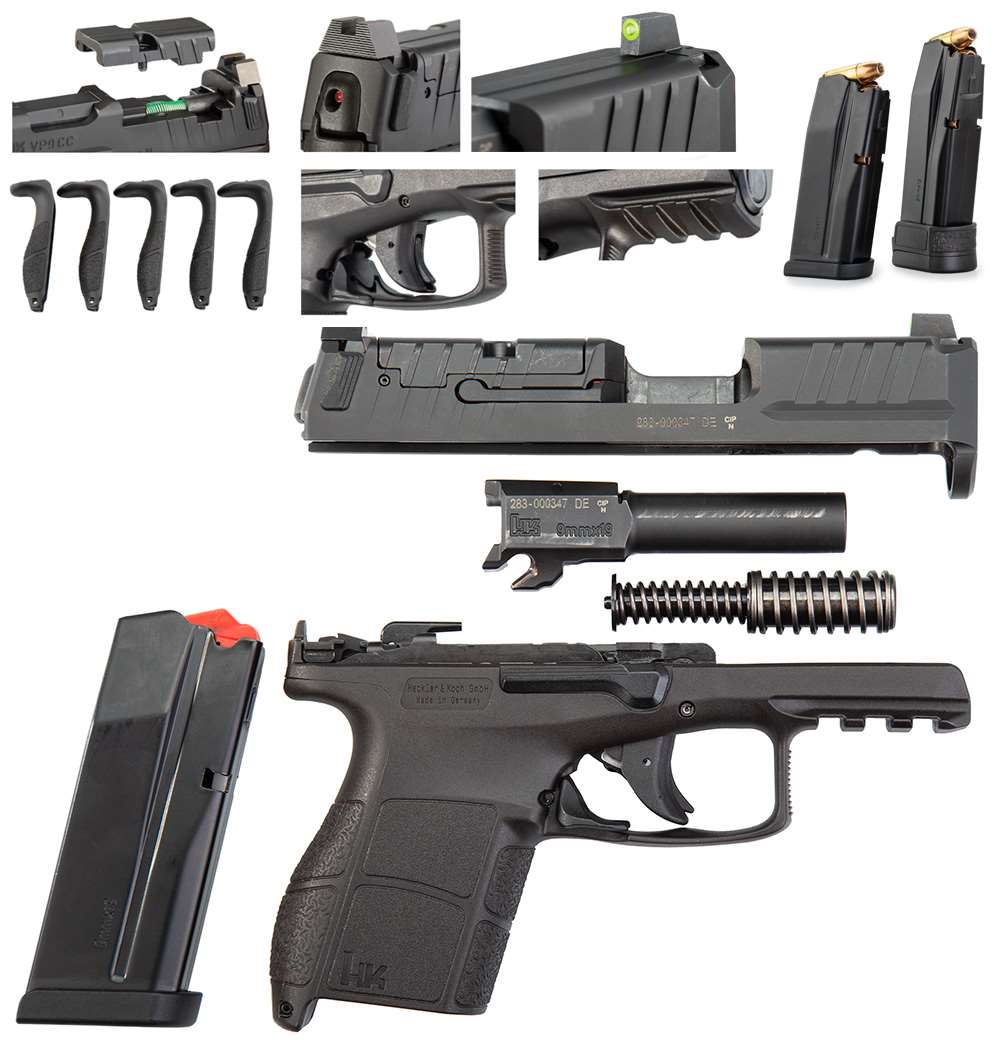
The barrel offers high-round-count durability from its hammer-forged, polygonal rifling and what HK calls cannon-grade steel. (Be mindful, however, that non-jacketed and non-plated lead bullets should not be used with polygonal rifling because lead accumulates just ahead of the chamber and increases chamber pressure.) The slide has a deep optics cut that allows compatible optical sights to sit low enough to co-witness the irons, and a RMSc-footprint optics-mounting plate is included. Steel parts have HK’s “Hostile Environment Coating,” which appears to be nitride.
The fixed XS Sights are made of steel with a square-notch rear and square front post. The front sight has a tritium insert surrounded by a light-green ring while the rear sight tapers toward the top, which helps the shooter establish a front-sight focus quickly, and horizontal ser- rations that reduce rearward reflection. The sights are placed at the ends of the slide to maximize the sight radius.
The VP9CC incorporates several elements common to the VP9 series of pistols. The rear of the striker is painted red and is visible through a hole in the back plate when cocked. Bilateral slide-release levers are present and slightly protruding “charging supports” beneath the rear sight offer additional grasping surface, which is important given the shallow rear-slide serrations. This pistol can only be disassembled if fully unloaded. Also, the striker remains de-cocked during disassembly. Another important safety feature is a rotating, spring-loaded retainer that holds the striker rearward until the trigger is pulled. It supplements the engagement between the sear and the striker and, along with the trigger tab, serves as a drop safety. Because the retainer spring is small, be mindful to clean and function-check the retainer to make sure it’s in position.
On balance, the ergonomics of this pistol are quite good. The grip shape makes pointing intuitive and six different interchangeable backstraps offer three different thicknesses with a standard or extended grip tang. These backstrap options aren’t just marketing enticements, but can improve your marksmanship by altering trigger reach so you can position your finger at a preferred place on the trigger where the sights stay on target during the trigger stroke. Extending the grip tang can add comfort, help recoil control and sight recovery and, as I discovered, prevent slide bite if you use a high, thumb-forward grip. Fit is also improved by installing the pinky-extension baseplate onto the 10-round magazine. The rear sight’s square, high-profile leading edge enables the slide to be racked by catching it on a hard surface should one hand be incapacitated.
Two aspects that could be improved are the slide-release levers, which would be more easily engaged if wider—especially when attempting to lock the slide rearward—and the magazines, which are difficult to seat if the slide is forward and thus may hinder a full-mag tactical reload. Some may also prefer the mag-release paddles to extend a bit farther forward.
The VP9CC demonstrated excellent mechanical precision and perfect reliability. There were zero stoppages after firing more than 350 rounds using seven different loads.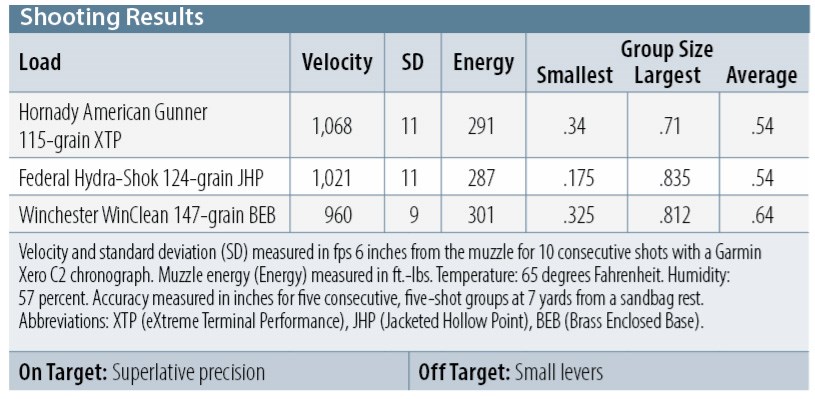
As for practical accuracy, once acclimated to the trigger and applying the grip technique micro-pistols demand, I routinely shot sub-2-inch groups at 7 yards, which is testa- ment to easily aligned and visible sights and a great trigger. The iron sights were correctly regulated to about 15 yards. The pistol was easy to control, and perceived recoil was mild even using Black Hills +P loads.
The VP9CC is a small package that is easy to shoot well if you apply the correct grip. Its noteworthy precision makes it viable to engage targets at greater distances, particularly with an optical sight installed, than many comparable-size pistols. Finally, the chassis design offers the possibility of customizing this gun down the road.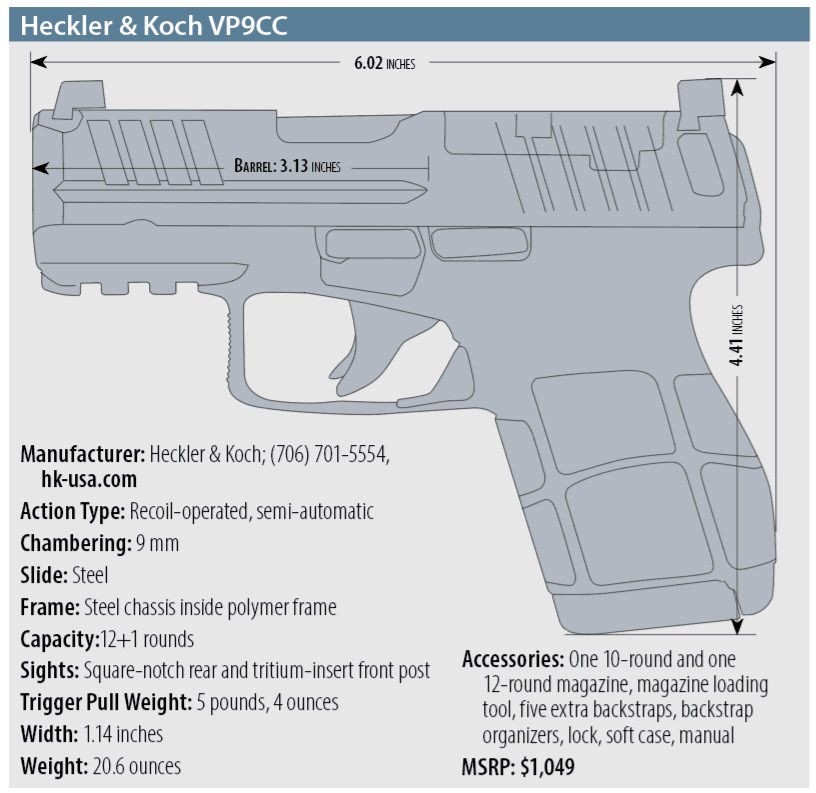
Most Popular