I’m going to start out with a confession: I’m not as big a fan of the Scout Rifle as Richard Mann. Now, I realize that’s not saying much, but it’s my way of saying that, while I understand the scout rifle’s place in the world, I’ve never really worked with one as such. The bolt-action rifles I own are either military surplus rifles I’ve acquired over the years really more as historical pieces rather than “working” rifles (although I do try to shoot them occasionally) or long-range rigs I’ve shot out to ¾ of a mile for most. Add to that I’m a pretty staunch supporter and enthusiast of the AR platform in both large- and small-receiver variety, and perhaps that might explain why my scout-rifle experience is limited.
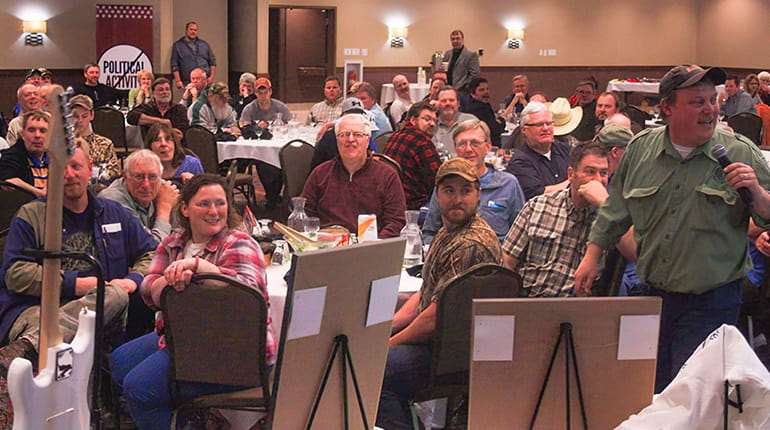
Imagine my surprise, then, when I got the news that I was to travel to Gunsite Academy (one of my favorite places, mind you) to cover the inaugural Scout Rifle World Shoot. Now, the aforementioned Richard Mann, scout-rifle enthusiast extraordinaire, decided to launch this event to highlight the scout rifle, designing stages to highlight the rifle’s strengths—and the reason it came into existence in the first place. We’ll have much more on this on American Rifleman TV, but suffice to say, Mann certainly succeeded in his aim for the shoot. Eight stages involving everything from iron sight shooting at close range to unknown-distance stages out to 350 yards tested participants’ ability to work with their chosen scout rifle to complete the course.
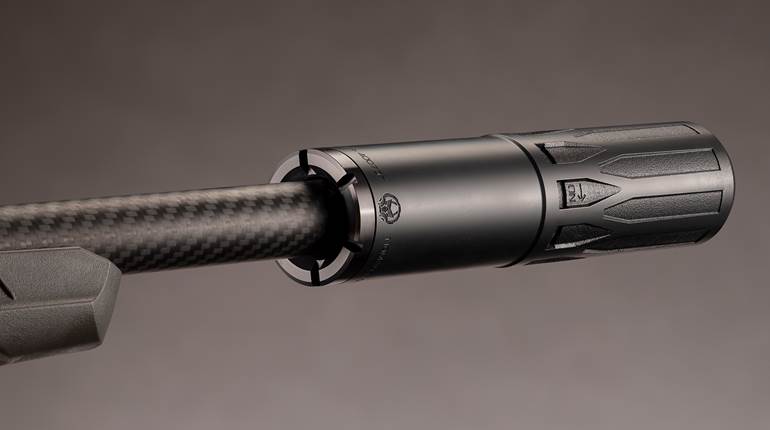
I hadn’t planned on participating in the event—my role was originally supposed to be solely that of media—but events beyond my control found me changing from media to competitor about a week and a half before the event. Yikes. Fortunately, I had already selected a very suitable rifle and gear to bring with me as an example of what to expect: Franchi’s excellent MULE bolt-action rifle in .308 Win. topped with (of course) a Burris long-eye-relief 2-7X Scout Scope, shooting Hornady’s excellent 168-grain ELD Match .308 Win. and quieted with a Dead Air RXD30Ti suppressor meant that I couldn’t blame my gear for any missed shots. Rounding out the gear was Magpul’s QD M-Lok bipod and a Crossbreed sling, and my gear was ready for the shoot. Me? Well, that’s another story entirely…
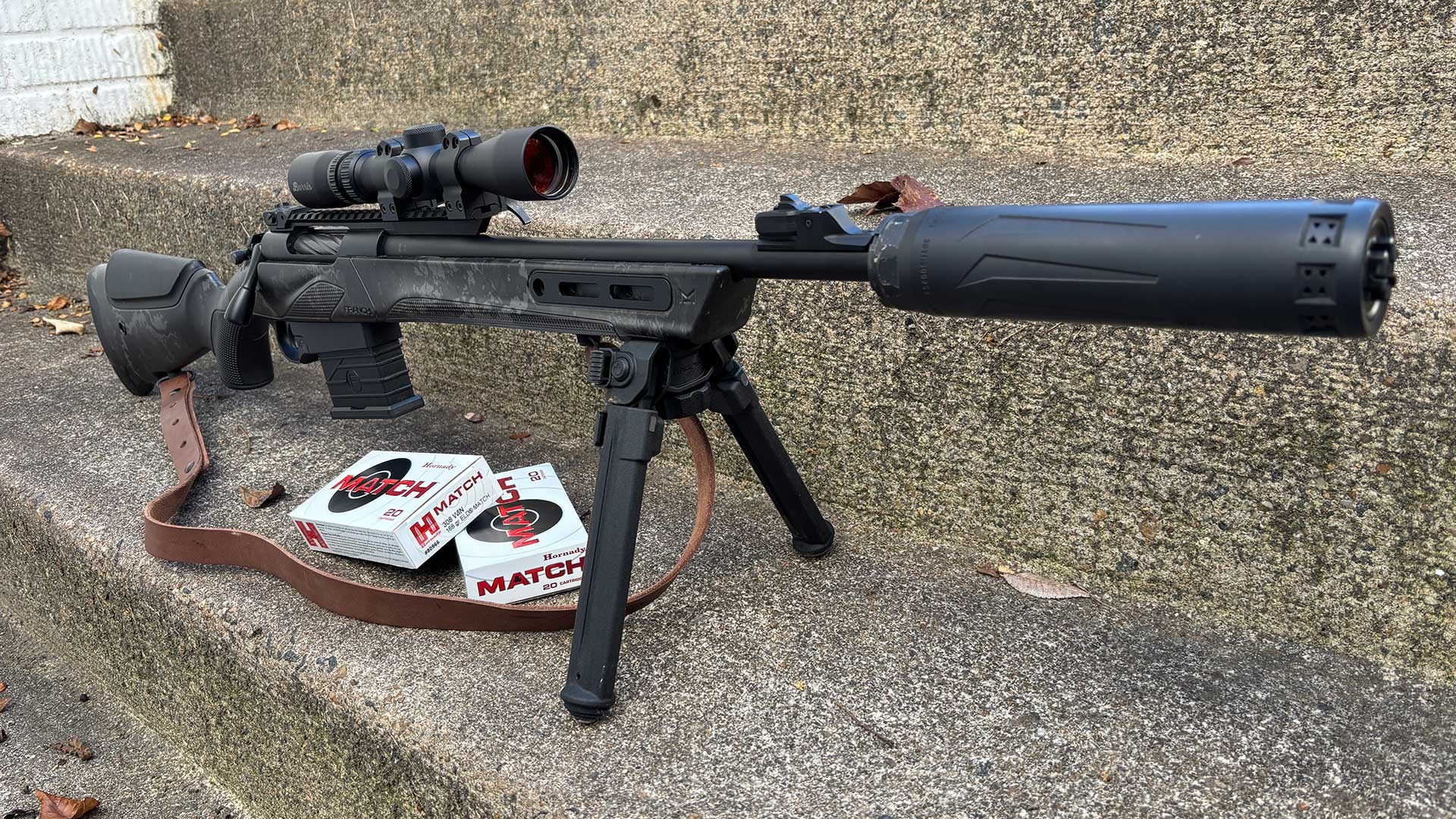
Because we were adhering to Col. Cooper’s scout-rifle criteria, rifles had to make a certain weight, length and power factor, with penalties assessed for exceeding the first two and failing to make the third. The MULE came surprisingly close for weight, considering that it includes the scope, mount, sling and bipod. Length was a different story, although that was primarily due to the addition of the suppressor. I’ll take the hit, thank you—comparing the report of even the supersonic Hornady 168-grain rounds through the Dead Air can to unsuppressed rifles, I’d rather take a hit on length than shoot in an uncivilized manner… Speaking of the Hornady ammo, it helped make up some lost ground by being more than capable in the power-factor angle, helping to claw back some of the lost points for length and weight.
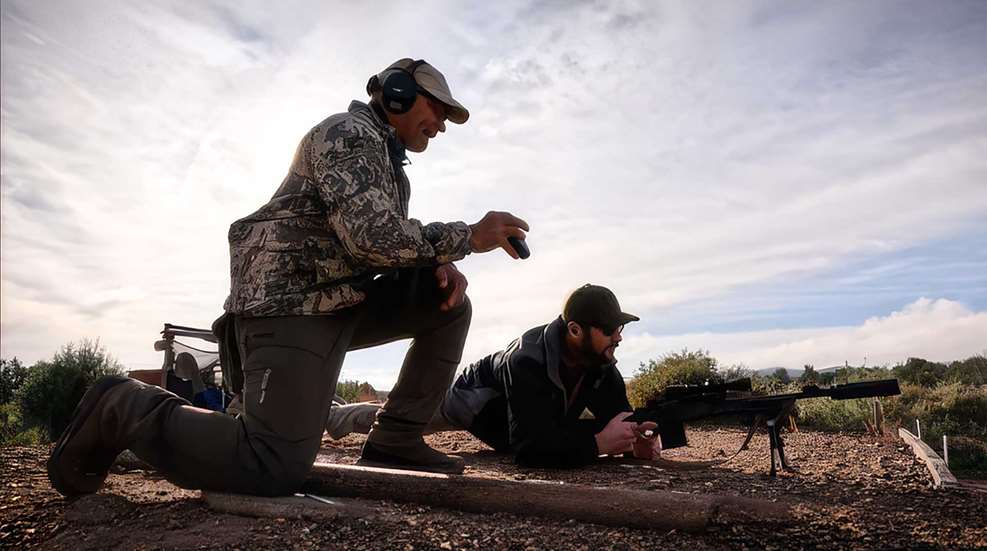
The organizers very wisely segregated the media folk from the rest of the participants and sent us off in our own squad. We started out at the known-distance range, where we engaged targets from 200 to 300 yards in 25-yard increments, and here’s where my lack of preparation bit me: I had first-shot hits at 200 and 225 yards, but held too high on the 250 and 275 yard targets. Realizing I was overshooting, I brought my hold down and secured a hit on the 300-yard target easily. All shooter error; more practice before hand at distance would have resulted in better performance. Lesson learned. Subsequent stages involved improvised rests, targets at both known and unknown distances, two “battlefield pick-up” stages where other firearms were used to run the course-of-fire and, where I had the most trouble, a stage where we were required to use the iron sights at close range. This is 100-percent on me; I didn’t practice with the sights and was woefully unprepared for this stage. Again, lesson learned.
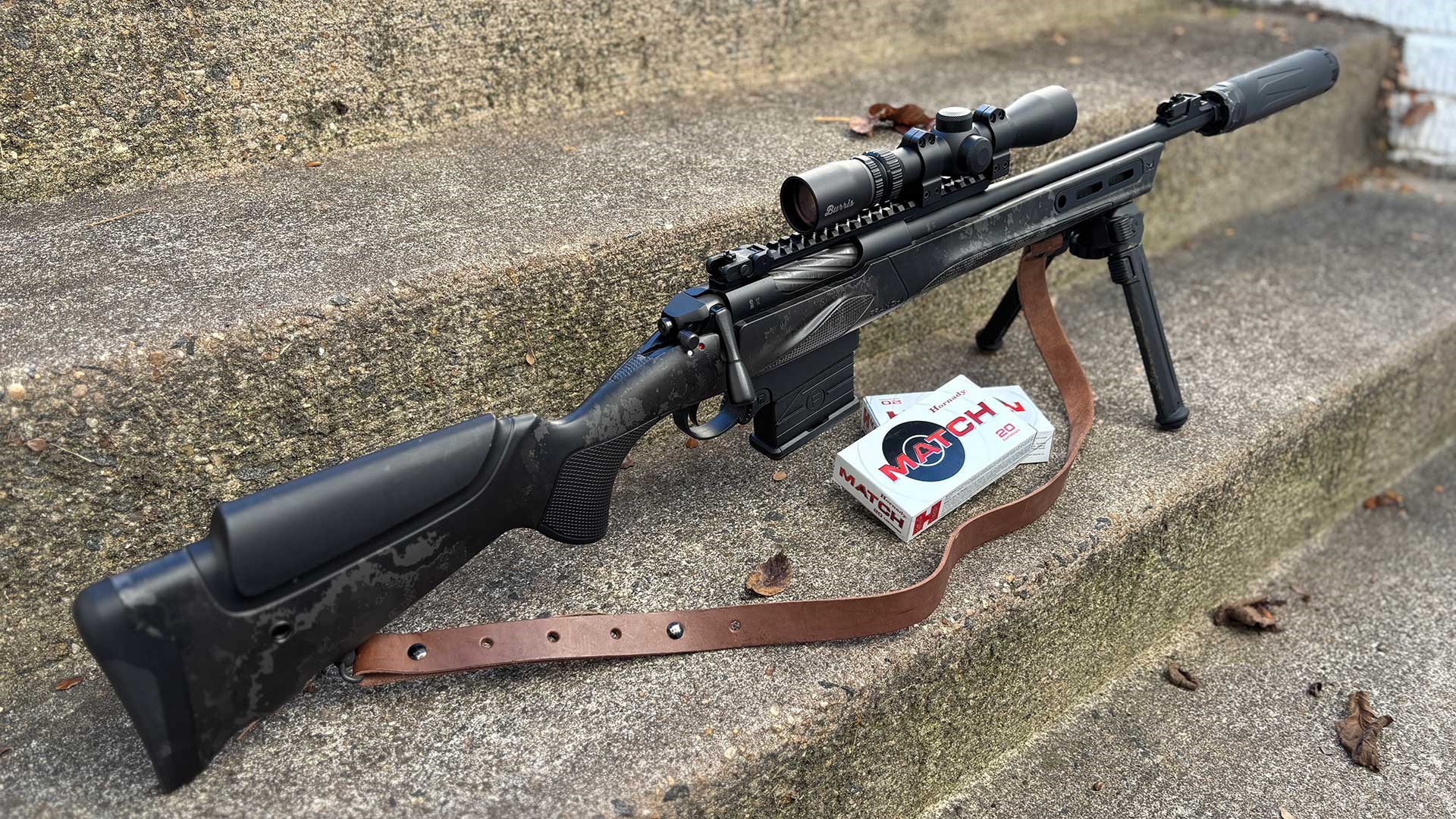
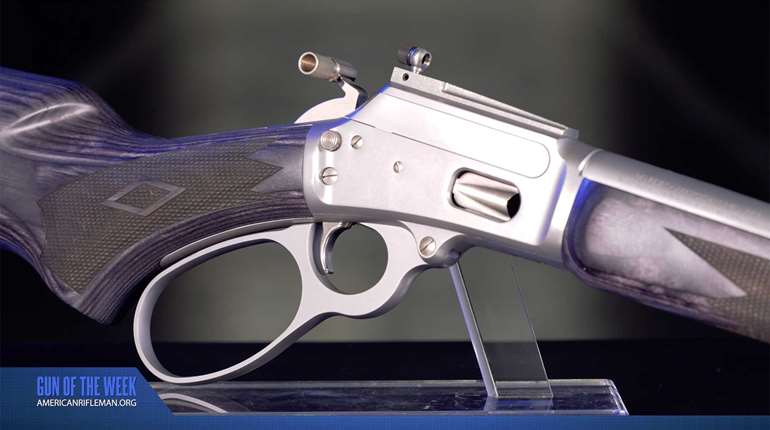
The biggest lesson I learned, though, was the utility of the scout rifle, at least for me. As Mann so eloquently put it, precision bolt-action rifles are a scalpel. The scout rifle is a Swiss Army knife. I love that analogy. For the ranges at which we were engaging targets, it was absolutely up to the task, assuming the person pulling the trigger was (ahem)… It highlights the practicality of the scout rifle—it is equally capable of hunting medium- to large game easily, as well as providing a defensive arm for any realistic distance. The short length makes it easier to maneuver, while the light weight means it can be carried with less effort.
Another lesson, one with twin results, is that simultaneously great gear helps, but does not overcome a lack of familiarity or practice. From the bench, I could easily put rounds on top of each other. From prone, making hits at known distance was not especially taxing. Once I got out of my comfort zone, though, with offhand work or using iron sights, the wheels fell right off the bus. This highlights the importance of competition, really; it immediately pointed out the areas of rifle shooting in which I was deficient. Could I have performed better with a different rifle, something like an AR-15 in 5.56 NATO that I have far more trigger time on? Probably. What would have made more of a difference, though, would have been to spend more time on the range getting comfortable with the gear I had, not the gear I wish I had. As I said before, lesson learned.
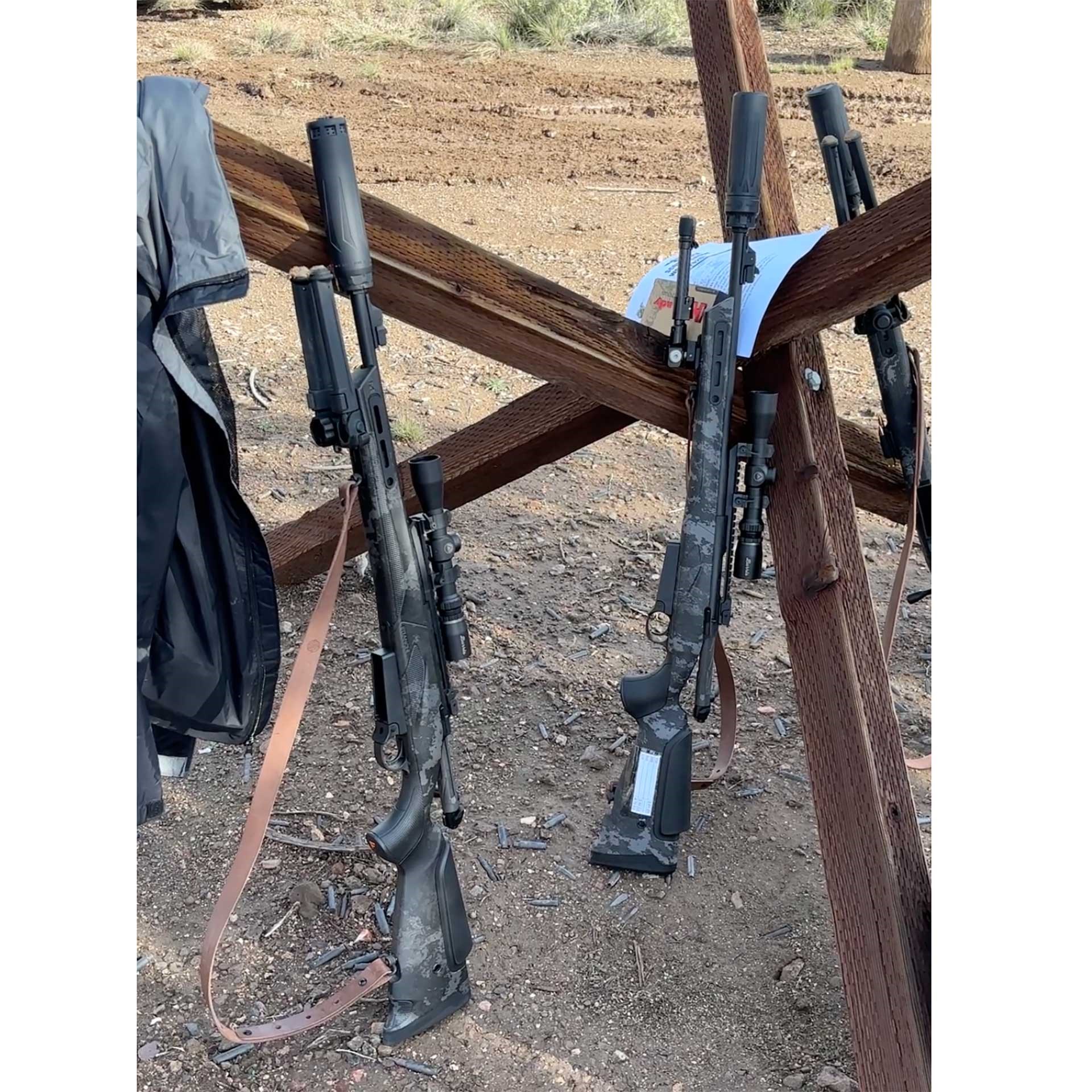
I get the scout rifle now. Having run a course-of-fire specifically designed to present scenarios for which the scout was created, I have a much better understanding of the rifle’s place in the world. Would a semi-auto AR-10 have been faster on some of the stages? Only slightly; remember, the scout was never intended as a battle rifle. Would a precision rifle have been better at long ranges? Undoubtedly, but I’d much rather carry an 8-pound rifle than a 15-pound one. Would 7 PRC fulfill the same power-factor criteria as .308 Win.? Certainly, however, good luck finding 7 PRC at a small-town gun shop should you need to resupply on a hunting trip. The scout concept was crafted to make the rifle as generic as possible, using extremely specific criteria. It’s hard to understand in conceptual form, but not in practice. Getting one in my hands and running it through a match really did make a big difference in my understanding of the concept.
It really is the answer to the “If you could only have one rifle” question, which is exactly why it came into being. All I know is, I need to devote more attention to my offhand shooting, as well as iron-sight shooting. I’m also going to remedy the hole in my armory that should be filled by a scout rifle. And, for anyone that's curious, I managed to fulfill my only requirement in the competition: I didn't come in last.
Most Popular