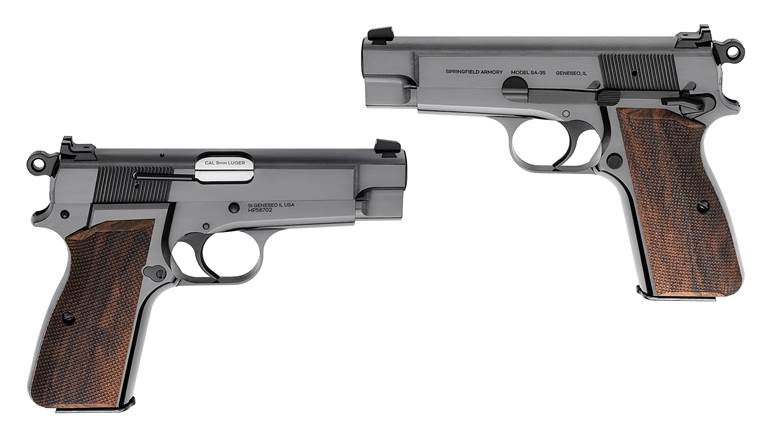
When Browning ceased production of the Hi Power pistol in 2018, it looked like it was the end of one of the most prolific fighting pistols of all time. However, in 2021, Springfield Armory introduced the SA-35 pistol, which was an updated clone of the iconic Browning Hi Power, and since then the platform has experienced a resurgence, with a lot of younger and newer shooters gaining an appreciation of the last gun design in which John Browning was involved. Now, Springfield Armory has made the SA-35 even more appealing to those interested in a compact, concealed-carry pistol with a new 4-inch barreled version of its SA-35.
Though many do not realize it, the venerable Hi Power (P35) pistol laid the foundation for the modern striker-fired, double-digit-capacity pistols so popular today. It had a linkless barrel, a double-stack magazine, a pivoting trigger and Browning’s original design—before it was perfected in 1935 after his death by FN firearm engineer Dieudonné Saive—was striker-fired. Though an abbreviated P35 was never offered by Browning or FN, over the years, some more compact Hi Powers have been produced by small custom shops.
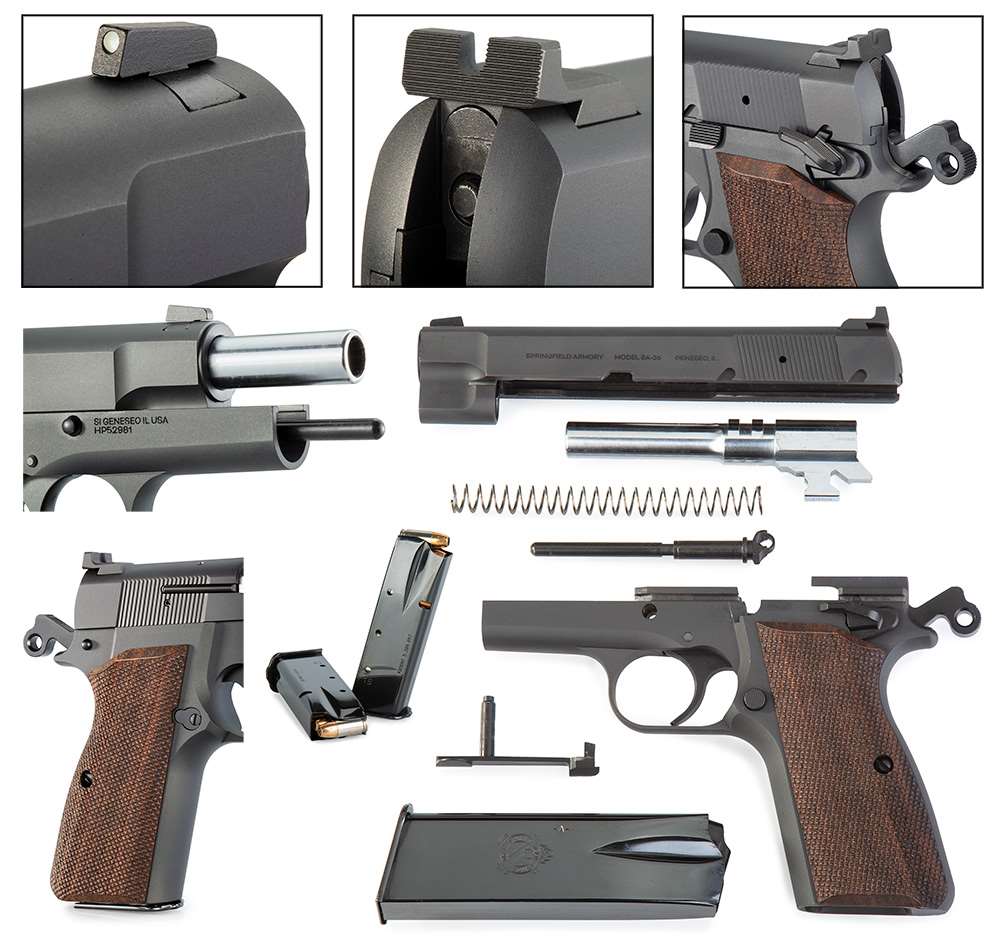
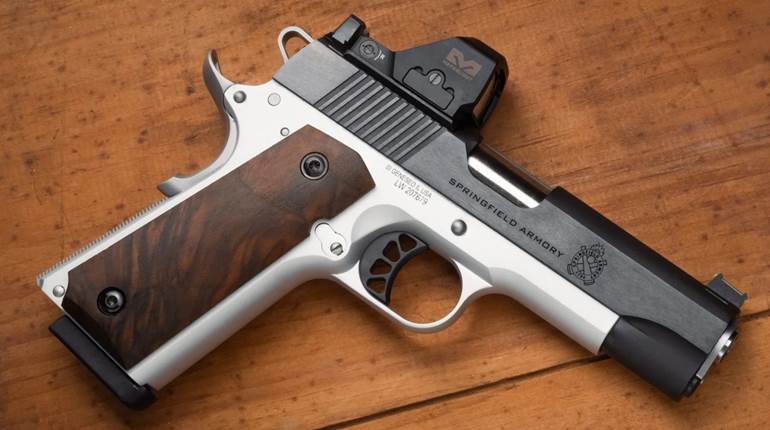
Springfield Armory did nothing to its new shortened SA-35 other than reduce the barrel and slide by .7 inch. Everything else about this pistol is the same as the company’s standard SA-35. The pistol features a forged, carbon-steel frame and slide with a blued finish. It is outfitted with checkered walnut grips and the classic, Commander-style hammer to help circumvent the hammer bite for which Hi Power pistols are notorious. The pistol is also fitted with a strong-hand, manual thumb safety and a good set of practical sights featuring a white-dot front sight and a notched-and-serrated, all-black rear sight. Finally, in an example of addition through subtraction, Springfield-Armory has left out the much-despised magazine-disconnect safety. Its utility was long debated and it compromised the quality of the trigger pull.
From a sandbag rest at 10 yards, I tested five carry-capable factory loads in the pistol. Precision on target averaged less than 1.5 inches, which I would rate better than average for a comparably priced, 4-inch-barreled, semi-automatic pistol, but the 4-inch SA-35 really liked Hornady’s Critical Duty load, printing an average of less than an inch for five, five-shot groups. This load also generated the most felt recoil by a noticeable amount. Nonetheless, it was not uncomfortable to shoot.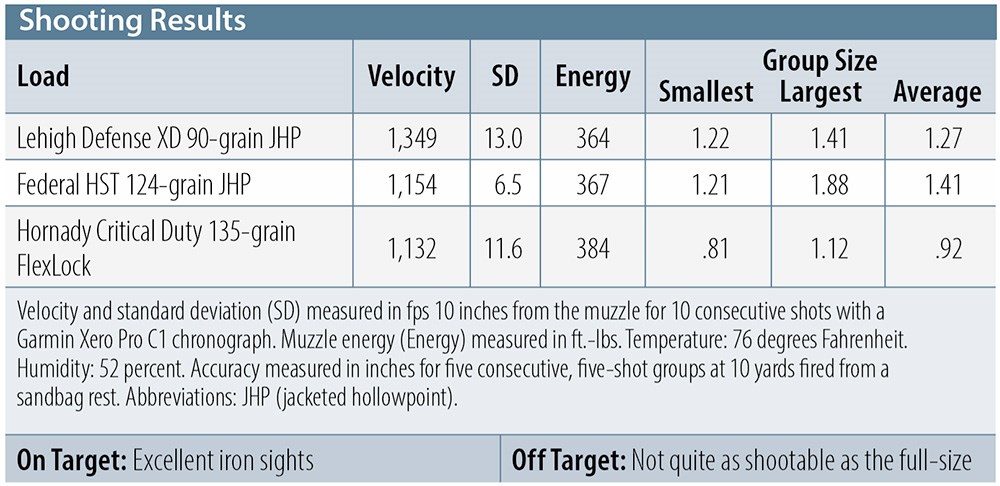
Of course, the most important test of a carry gun is subjecting it to practical drills. This is where shooting comfort is really established and where user-interface issues can come to light. I put a bit more than 175 rounds through this pistol conducting numerous drills with five different factory loads. No stoppages of any kind were experienced during the bench shooting or practical drills, and the trigger was superb. It is, however, worth noting that for me—because I have large hands and shoot with as high of a grip as possible—I did on occasion experience minimal hammer bite. The same is true for me with the standard SA-35, though more so with the shortened version, perhaps because of its slightly exaggerated recoil impulse.
From a concealed-carry standpoint, the advantage the 4-inch SA-35 has over the standard version with the 4.7-inch barrel is that the pistol is .7-inch shorter and also 1.7 ounces lighter. Though these numbers seem minimal, they fall short of accurately representing how much smaller and lighter the pistol looks and feels in hand.
Additionally, while those numbers only minimally increase the pistol’s ease of carry and concealability, the shorter sight radius and lighter weight do negatively impact shootability. Although on-target performance was seemingly indistinguishable from the full-size SA-35, engagement times for multi-shot drills were on average about 15 percent slower. You’ll have to decide if this sacrifice justifies the pistol’s enhanced carry comfort and concealability compared with a full-size SA-35.
Perhaps more important, however, is how this smaller and lighter version compares with other modern carry-friendly pistols. This new 4-inch SA-35 allows the single-action shootability and famously friendly grip of the Hi Power to favorably compete with the more popular and more modern, similar-size, striker-fired pistols. As a lifelong Hi Power aficionado, and as a person who carries a Hi Power daily, I did not want to like this abbreviated and—to me—kind of ugly pistol. However, after 350 rounds, I was admittedly impressed.
There is a reason at least one other manufacturer offers a condensed Hi Power and why shortened Hi Powers have existed in the custom-pistol world as “Grail guns” for a long time. A chopped-off Hi Power might look a little odd to a purist, but, in the context of a self-defense pistol, it makes good sense. Regardless, a reliable and accurate fighting pistol like this retailing for less than $800 deserves consideration, even if it is based on a design that’s more than 90 years old.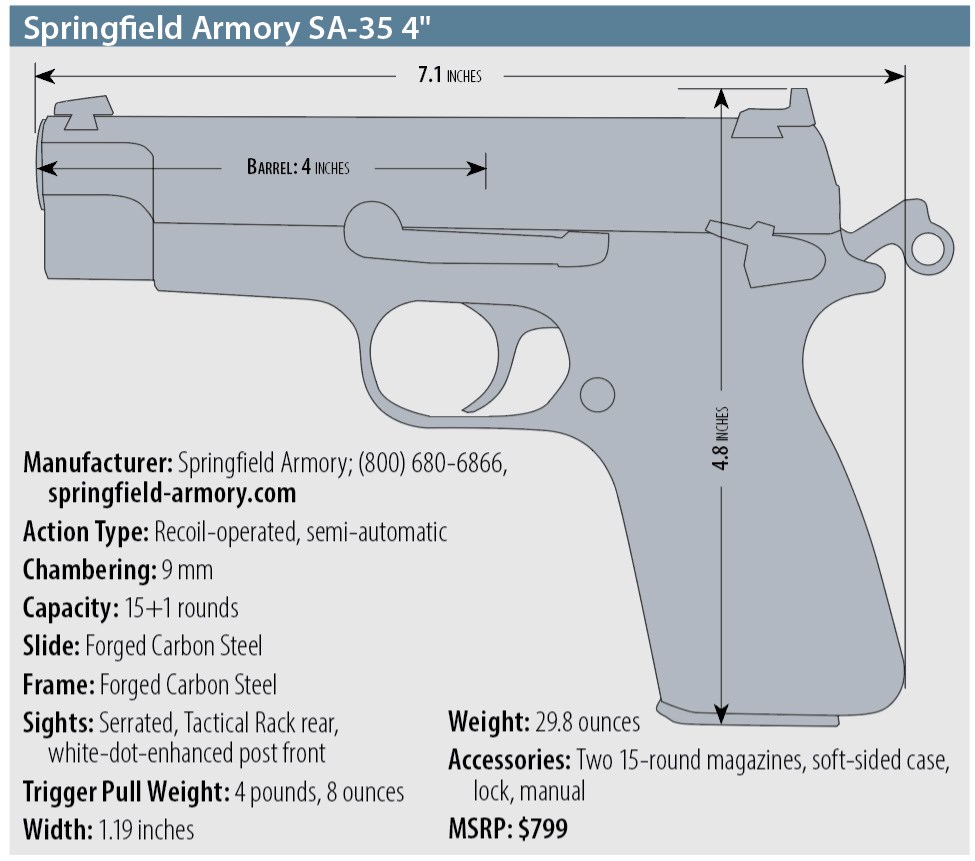
Most Popular