*“Adaptive shooting,” in NRA parlance, means adjustments made by and for disabled shooters to allow them to successfully complete a shot. However, Jeff Gonzales’ Trident Concepts, LLC, has long used the term to describe assessing the immediacy, distance and difficulty of a shot in order to engage successfully in an armed confrontation. As adaptive shooting is a critical part of Trident Concepts’ curriculum, be aware that this article uses that company’s meaning.
Accuracy has always been the standard by which shooting skill is judged. It is easy to measure, easy to admire, and easy to chase. A tight group on demand gives the shooter confidence and provides proof that the fundamentals are present. But, accuracy by itself is not the whole problem. In a defensive shooting, or any environment where conditions are changing, accuracy is only one part of the equation. The shooter must also account for time, distance and target size. This is where adaptive shooting begins.
The Firing Solution Is Never Fixed
Adaptive shooting is the ability to create a firing solution based on the conditions in front of you rather than forcing every problem into the same technique, speed or level of precision. A firing solution is not simply “aim and press.” It is the answer to a question: Given the time available, the distance to the target and the size or difficulty of the target, what level of confirmation do I need to make an acceptable hit? That answer is never fixed. It is in a constant state of flux.
The golden rule is simple: shoot as fast as you can guarantee the hits. That statement sounds simple, but it contains the whole problem. It does not say shoot as fast as possible. It does not say shoot as accurately as possible. It says speed must be governed by accountability. The shooter is free to go faster when the target, distance and conditions allow it, but must also be disciplined enough to slow down when the problem demands more. The guarantee of the hit is what controls the pace.
Time, Distance and Target Size
Time changes everything. With unlimited time, most competent shooters can refine the sights, stabilize the gun, manage the trigger carefully and produce an accurate shot. But, time is rarely unlimited. As time pressure increases, the shooter must decide how much visual information is necessary before pressing the trigger. Too much refinement may cost the shooter the opportunity to act. Getting too little confirmation may produce a miss. Adaptive shooting lives in this tension. It is not about being reckless with speed, nor is it about being paralyzed by the pursuit of perfection. It is about understanding what the moment allows and what the problem demands.
Distance also changes the firing solution. A target at 3 yards does not require the same visual patience as a target at 25 yards. The closer the target, the less refined the sight picture may need to be, assuming the target area is reasonable and the shooter can control the gun. As distance increases, the visual standard rises. The shooter must accept that the same trigger press, grip and presentation may be used, but the amount of confirmation needed before the shot changes. The error that is hidden at close range becomes obvious at distance. What was perfectly acceptable at one distance may be unacceptable at another.
Target size is the third major variable. A large target at close range may allow for a faster, more aggressive solution. A smaller target, a partial target, or a target with a defined scoring zone demands more discipline. The shooter cannot separate speed from target difficulty. Ten yards on a full-size IPSC steel target and 10 yards on a head-box shot are not the same problem. The distance may be identical, but the firing solution is different. The visual patience, grip pressure, trigger control and willingness to accept movement in the sights all change based on what must be hit.
The challenge is that these variables do not stand still. Time, distance and target difficulty are constantly interacting. The shooter may begin with one solution and need to adjust immediately. A target may appear close, but require precision. A distant target may present a large scoring area and allow for more speed than expected. A shot that seemed simple may become complex because the shooter’s position, balance or visual information changes. Adaptive shooting recognizes that the environment is dynamic. The shooter must continuously process what is happening, apply the correct standard and update the firing solution as the problem changes.
Beyond the One-Size-Fits-All Approach
This is what separates adaptive shooting from a one-size-fits-all approach. A rigid shooter, no matter the discipline, be it speed or accuracy, applies the same visual process and/or the same pace to every target. They may shoot everything carefully, sacrificing time when the problem allows for more speed. Or they may shoot everything aggressively, giving up accountability when the problem requires more precision. Both are forms of overcommitment. Adaptive shooting gives the shooter more options. It allows the shooter to move along the spectrum between speed and accuracy based on what is actually in front of them.
Building a More Resilient Shooter
That adaptability creates a more resilient shooter. Resilience in shooting is not just the ability to stay calm or recover from a mistake. It is the ability to continue solving problems under changing conditions. The resilient shooter does not fall apart due to variables such as a more distant target or a tricky angle. They do not need the conditions to match their favorite drill. They can recognize the demand, select the appropriate level of confirmation and perform.
The one-size-fits-all shooter is fragile because their success depends on familiarity. They are comfortable when the drill, distance, target and pace match what they have practiced most. Change one of those elements and their performance becomes less predictable. They may either slow down too much because they do not trust their process, or they may push too hard because they do not understand when the shot requires more control. In both cases, the shooter is reacting emotionally rather than solving the problem.
Adaptive shooting builds confidence because it is rooted in judgment. The shooter learns that not all acceptable hits require the same amount of sight refinement. They also learn that some shots absolutely require discipline. This produces a shooter who is neither addicted to speed nor trapped by accuracy. They are capable of choosing. That choice is the heart of resilience and emotional control.
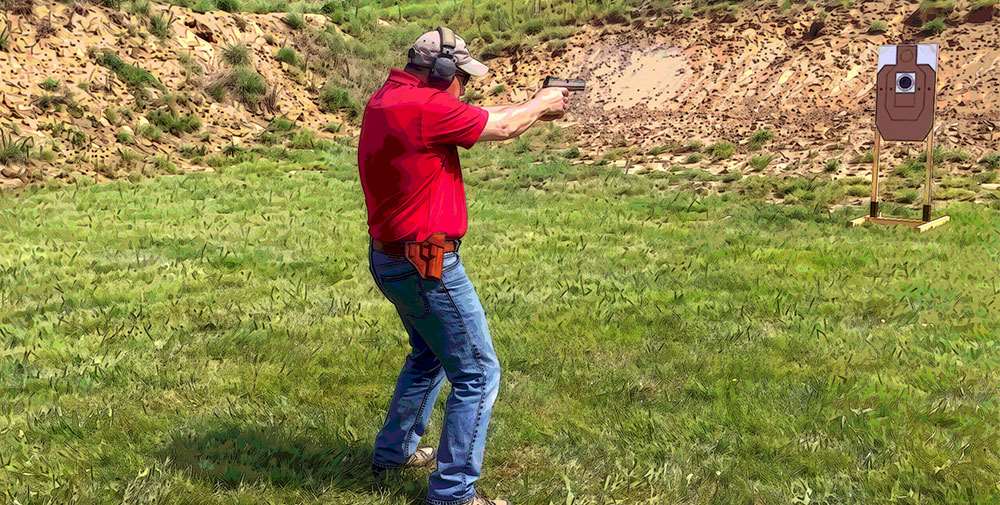
This type of shooter is also better equipped to recover from errors. A miss, a fumbled draw, a poor grip or an unexpected target does not end the performance. The shooter simply gathers new information and updates the solution. If the sights are not where they need to be, they refine them. If the target allows for speed, they take it. If the target demands patience, they give it. The ability to adjust without panic is a major advantage.
Adaptive shooting also improves decision-making. When shooters understand the relationship between time, distance and target difficulty, they begin to see shooting problems more clearly. They stop asking, “How fast can I shoot?” in isolation and begin asking, “How fast can I shoot this target, at this distance with this level of accountability?” That question produces better training, better performance and better judgment. It brings the shooter back to the golden rule: Shoot as fast as you can guarantee the hits.
Establish the Accuracy Baseline
Training for adaptive shooting begins with an accuracy baseline. Before the shooter can adapt, they need to know what their current skill will support. The baseline establishes what the shooter can do under controlled conditions. It should answer simple but important questions. At what distance can the shooter reliably keep rounds in a defined area? How much time is needed to make that hit? What happens when the target becomes smaller? What happens when the distance increases? The baseline is not meant to flatter the shooter. It is meant to provide him or her honest information.
A useful baseline should include both precision and accountability. One we use a lot is a version of our Pistol Standard Bravo 2, at 25 yards, slow firing 10 rounds from a single gun mount with no time limit on a B8 repair center or similar. The goal is to confirm grip, sight alignment, sight picture, trigger control and follow-through. This establishes the shooter’s current accuracy potential, and I suggest it be at least 80 percent or higher. Once that standard is known, time can be introduced gradually. The shooter should not abandon accuracy when the timer appears. Instead, the timer becomes a tool for measuring how much time is required to produce an acceptable result.
Change the Variables
From there, the shooter changes one variable at a time. Start with distance. Keep the target the same but move closer or farther away. Notice how the required visual information changes. At close distance, the shooter may be able to accept more movement and still produce good hits. At greater distance, the sights demand more respect. This teaches that the visual process is scalable. The goal is not to use a different set of fundamentals, but to apply the correct level of confirmation.
Next, change the target. Keep the distance the same but alter the size of the acceptable scoring zone. A full-size IPSC steel target, an 8-inch circle to simulate center mass and a 4-inch rectangle to simulate a head box all create different demands. The shooter learns that distance alone does not define difficulty. Target size matters. One of the most important lessons in adaptive shooting: The target tells you the required level of precision.
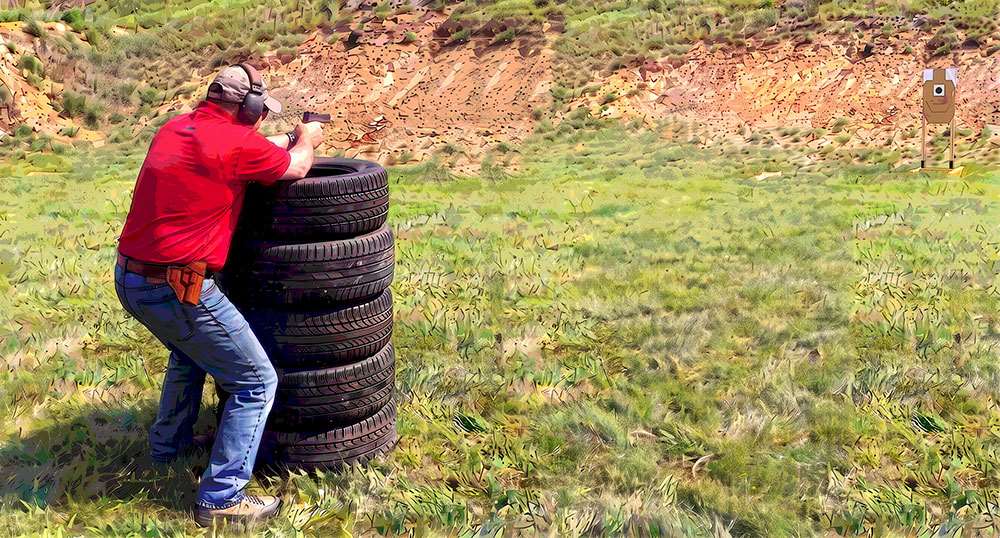
Then change the time. Introduce par times, different start positions, movement or decision-making elements. The point is not to create chaos for its own sake. The point is to force the shooter to keep solving the problem. If the time is generous, the shooter can refine the shot. If the time is tight, the shooter must determine what level of confirmation is enough. The shooter should learn to push and put on speed while still remaining accountable for the result.
Practice Contrast and Force Adjustment
Practice should include contrast. Place easy and difficult targets in the same string. Mix near and far targets. Combine large scoring zones with small ones. Require the shooter to transition from speed to precision and back again. This prevents the shooter from settling into one rhythm. It teaches them to see the target, assess the requirement and adjust the firing solution in real time.
The shooter should also review performance honestly. Hits matter, but so does the process that produced them. Was the shooter too slow on a target that allowed speed? Did they rush a target that required more precision? Did they recognize the change in distance or target size and adjust? Did they apply the correct visual standard, or did they default to habit? Honestly addressing these things is vitally important. These questions are where growth happens.
The Goal Is Adaptability
Adaptive shooting is ultimately about awareness, accountability and adjustment. Accuracy remains essential, but it must be connected to context. Time, distance and target difficulty are always shaping the problem. The shooter’s job is to read those variables and build the firing solution that fits them.
The best shooters are not simply accurate, nor simply fast. They adapt to conditions. They know when to accept speed, when to demand precision and when to change based on what the situation gives them. That trait does not appear by accident. It is developed by establishing a baseline, changing the variables and practicing under conditions that force you to perceive, process and perform.
Adaptive shooting is not a technique. It is a mindset supported by skill. It is the ability to recognize that every shot has a context, every context has a demand and every demand requires a firing solution. The goal is not accuracy for its own sake, and it is not speed for its own sake. The goal is to shoot as fast as you can guarantee the hits.