For the better part of nearly two years, Kimber hasn’t been shy about the double-stack 1911 conversation. Sure, this half-decade long or so trend was arguably catalyzed by STI’s revamping into Staccato, but Kimber has been surging full-steam ahead since its debut launch of the original 2K11.
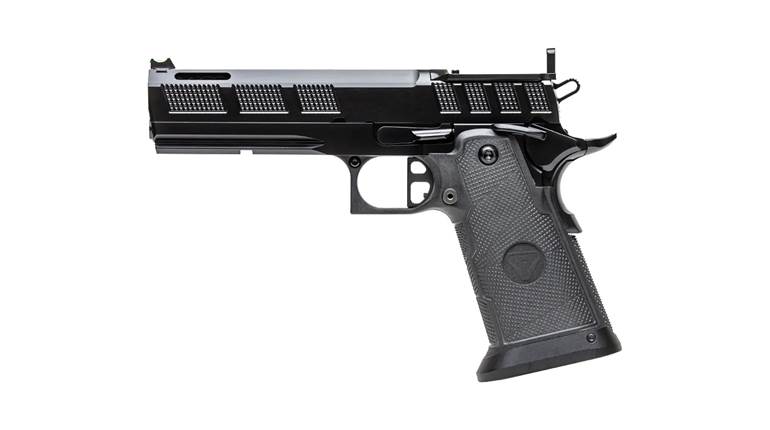
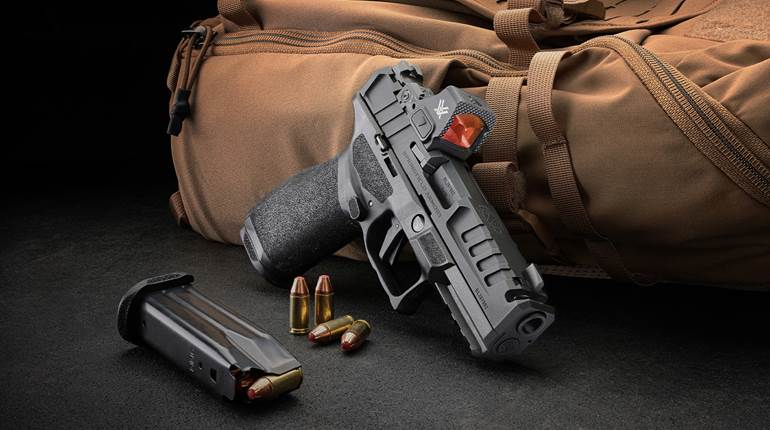
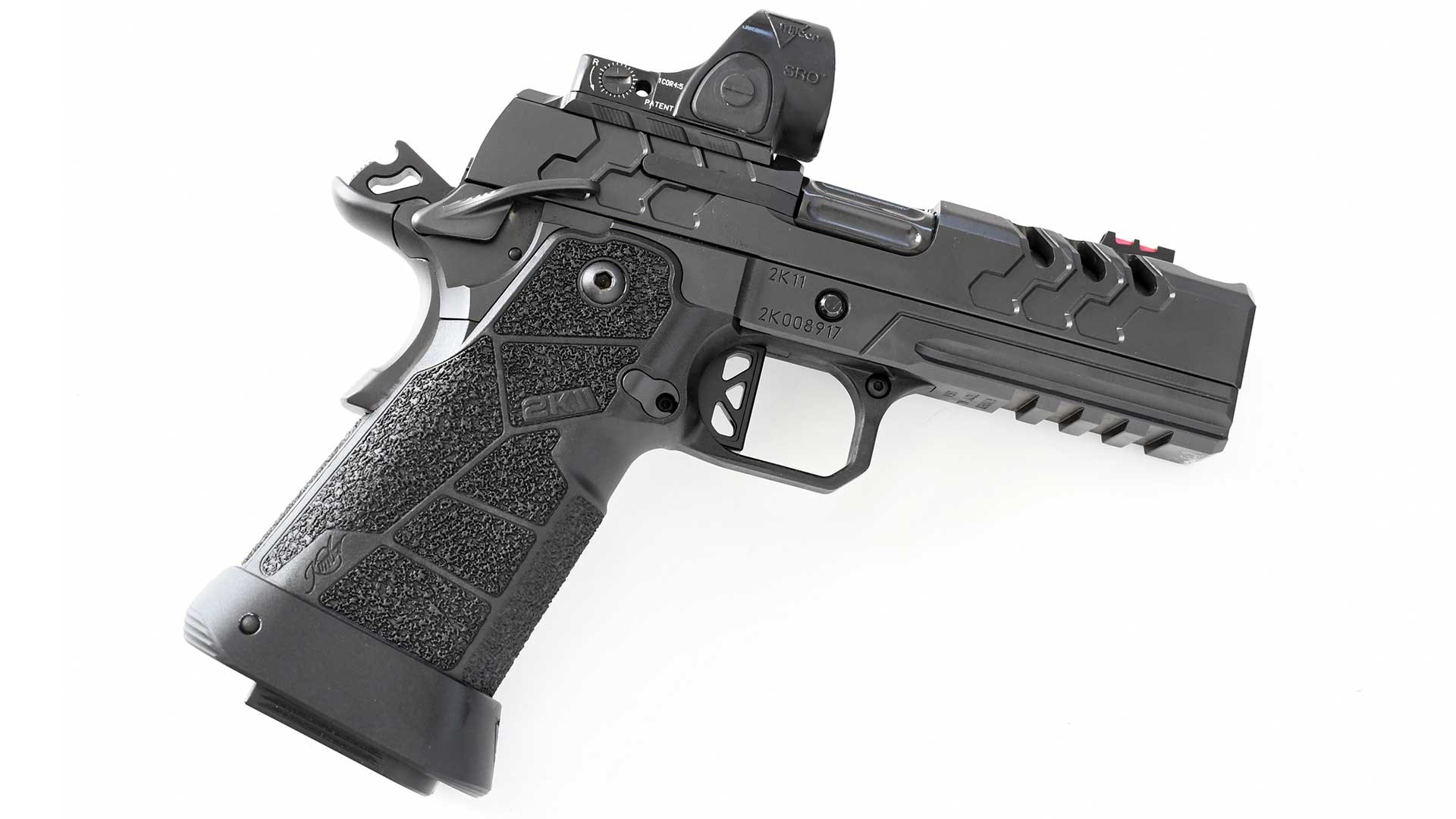
Since then, the Troy, Ala., gunmaker hasn’t stopped shipping newer iterations of its double-stack pistols. Among these is the newer Kimber 2K11 Pro Comp, an optic-ready, 9 mm, single-action, Commander-size pistol with an integral compensator.
“Pro” in Kimber nomenclature is the company’s reference to Commander-size handguns–Commander referring to the classic pistols with full-size grips and 4¼-inch barrels first debuted by Colt. 2K11 Pro Comps, like all Kimber double-stack models, still rely on traditional beavertail grip safeties.
In terms of double-stack 1911 configurations, this particular pistol’s architecture is quite traditional. The 2K11 Pro Comp is built around the typical 1911 single-action top-end that rides in a stainless-steel frame. Its frame accepts a double-stack polymer grip that’s molded from Kimber’s proprietary formulation that blends carbon fiber and glass into a matrix. Likewise, it feeds from “standard” 9 mm double-stack magazines. A magazine that fits in a Nighthawk or Staccato will also cycle in a 2K11.
Trigger And Ignition
Being a 1911 derivative, this Kimber enjoys the advantage of a sliding trigger. 10 trigger pulls on my electronic trigger-weight scale reveals a trigger breaking at an average of 3 lbs., 9 ozs. on my hardly worn-in specimen. The trigger shoe itself consists of a flat, skeletonized aluminum unit that has a little less than ⅛ inch of pre-travel before arriving at its button-like breaking point. It's difficult to complain about a 3½-pound 1911 trigger, and this easy-to-manage trigger is most definitely one of the most rewarding aspects about shooting this particular pistol.
2K11 Pro Comps appear to have something closer to a true “Series 70” (standard configuration) as opposed to a Series 80 or Swartz-style configuration. It perhaps seems ironic, since Kimber has been known to implement those types of safeties in their Series II single-stacks.
2K11 Pro Comp Sights, Slide & Barrel
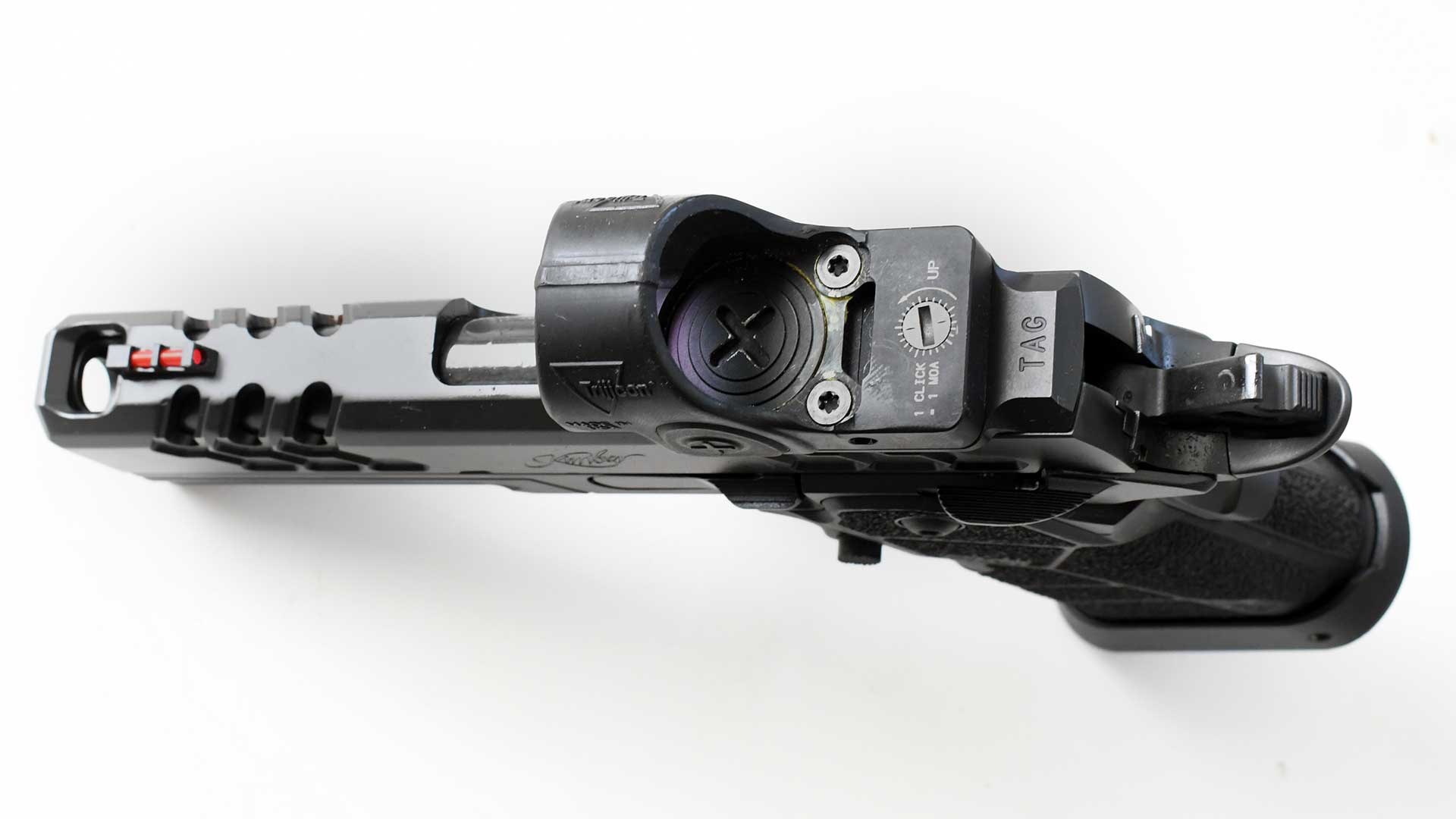
This pistol’s slide is optics-ready by default, and it comes with a nice pair of functional, fiber-optic iron sights. The front sight consists of a TAG Precision FiberLok, and the rear consists of a match-style adjustable unit with a square notch.
Since we live in the age of the red-dot, I wasted no time in mounting the TAG Precision Trijicon RMR pattern optics plate that Kimber includes with this pistol as a bonus. My 2K11 Pro Comp was itching for a performance red-dot sight, so one of my Trijicon SROs found its way there.
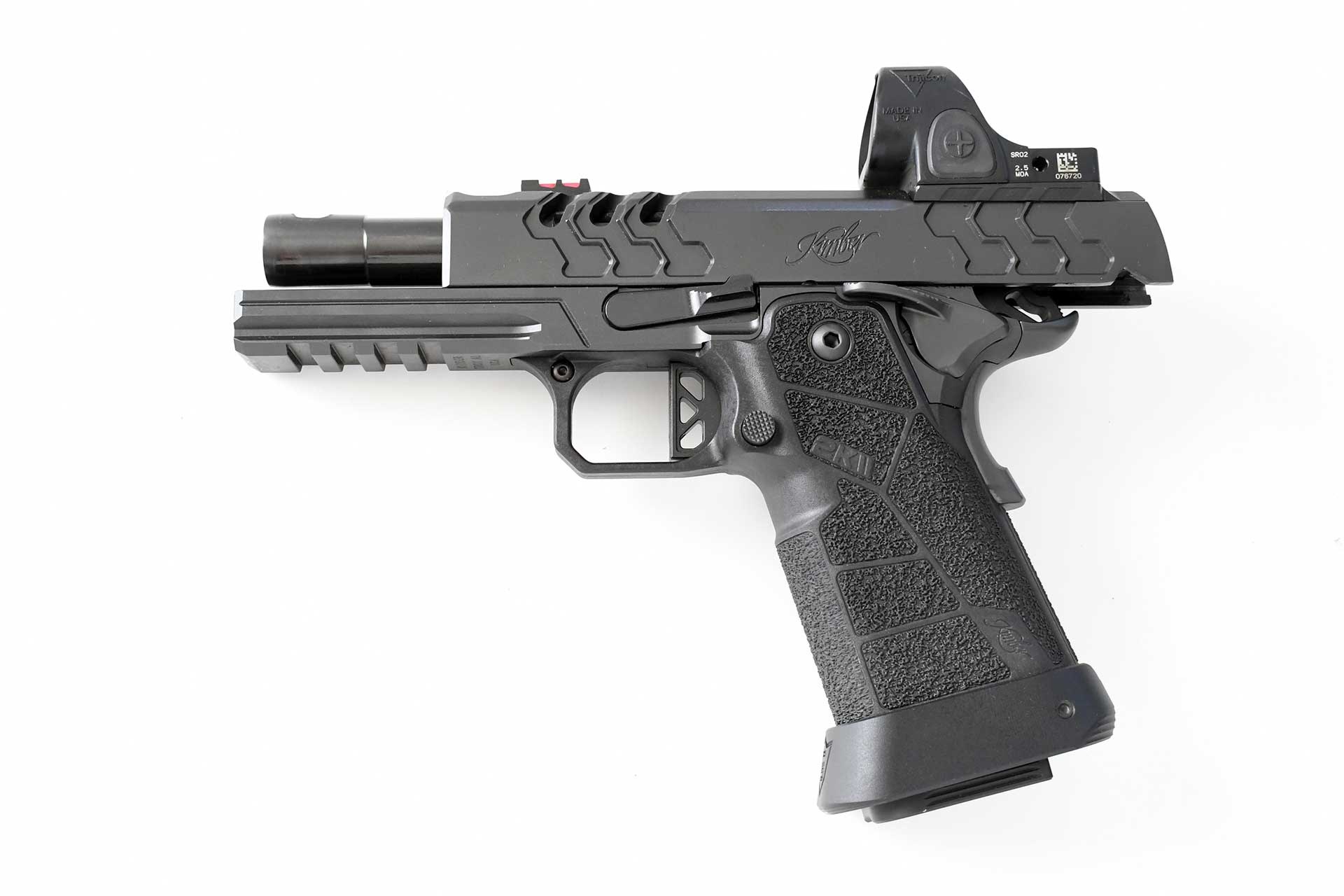
While the included TAG Precision RMR plate does not accommodate a built-in rear sight, it’s more relevant for competition use instead of defensive carry. By all means, it appears to be a sturdy unit. (Dawson Precision offers 2K11 optics plates with built-in rear sights).
The slide itself has slide lightening cuts that also serve as forward serrations. Both the front and rear serrations of this slide follow the futuristic hexagonal Kimber 2K11 motif.
The nominal length of the 2K11 Pro Comp’s bull barrel is 4¼ inches, but due to the integrated port, the 5R 1:10-inch twist rifling ends approximately half an inch behind the muzzle.
Kimber’s tool-less guide rod, which I found easy to work with, supports the 2K11 Pro Comp’s slide and barrel. This guide rod is sprung with a 12-pound recoil spring. All things considered, this weight provides a good slide-reciprocation rhythm for a gun this size in tandem with the integral port. By that, I mean that tracking my red-dot is effortless.
A Storm In The Port
The pièce de résistance in this model is its integrated compensator. Compensators reduce muzzle flip during recoil to help keep the pistol’s slide level so that the shooter can steer the sights back on target sooner.
Compensator efficacy depends on a myriad of factors, including the type of ammunition used and the size of the compensator’s vent(s). As it pertains to this particular pistol, it’s effective.
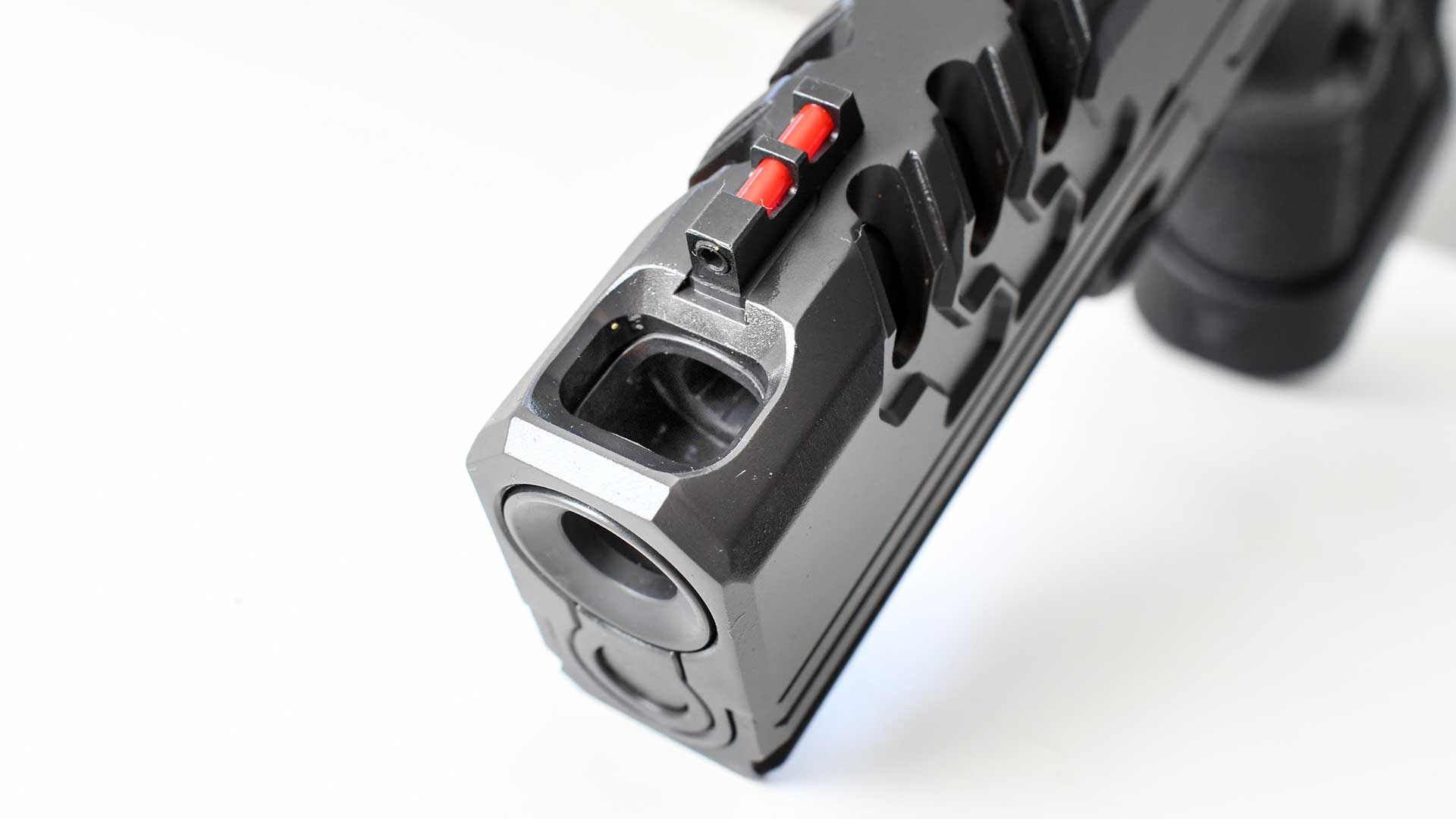
I had the opportunity to visually [informally] compare the 2K11 Pro Comp’s compensator against the two other well-regarded 9 mm compensators: the unit on the famous Staccato XC and Radian’s Afterburner. The Kimber’s chamber area is of a similar size, which would suggest similar efficacy during shooting.
I don’t have sophisticated testing equipment, but I am fortunate to shoot a diverse amount of different modern 9 mm pistols with red dots on a regular basis. For this review’s sake, I kept an eye on the way the Trijicon’s SRO bounced and how the slide felt as I shot nearly 300 rounds between a few range sessions with slow, deliberate drills and rapid-fire fire exercises.
I also recorded myself with a camera placed or held the side in order to capture how the slide moved during recoil. This proved useful because it also showcases the compensator’s venting of gasses under fire.
Does the 2K11 Pro Comp’s compensation package work? Yes.
Between the different ported and compensated 9 mm pistols designed to function with standard-pressure ammunition, this model’s attributes certainly affect its shooting experience positively. However, no matter how mechanically sound compensators or their ports are, they’re not a replacement for fundamental pistol skills, regardless of what YouTubers or other influencers say.
Reliability On The Range
As I previously mentioned in the last article I wrote about a compensated double-stack pistol, the Kimber 2K11 Pro Comp’s inherent features can be leveraged by skilled shooters for high-performance shooting.
When shooting brand-new handguns, it’s not unreasonable to experience a minor hiccup on occasion, especially as they’re wearing in from the first few hundred rounds being fired. Surprisingly, I’ve experienced no such thing with the Kimber 2K11 Pro, despite the fact that 98 percent of the ammunition I’ve fired is inexpensive aluminum or steel-cased 115-grain range ammo.
Shooting-wise, I’ve already mentioned that the 2K11 Pro Comp trigger is rewarding, and I’ve mentioned that the top-end tracks nicely while the integral port works as advertised.
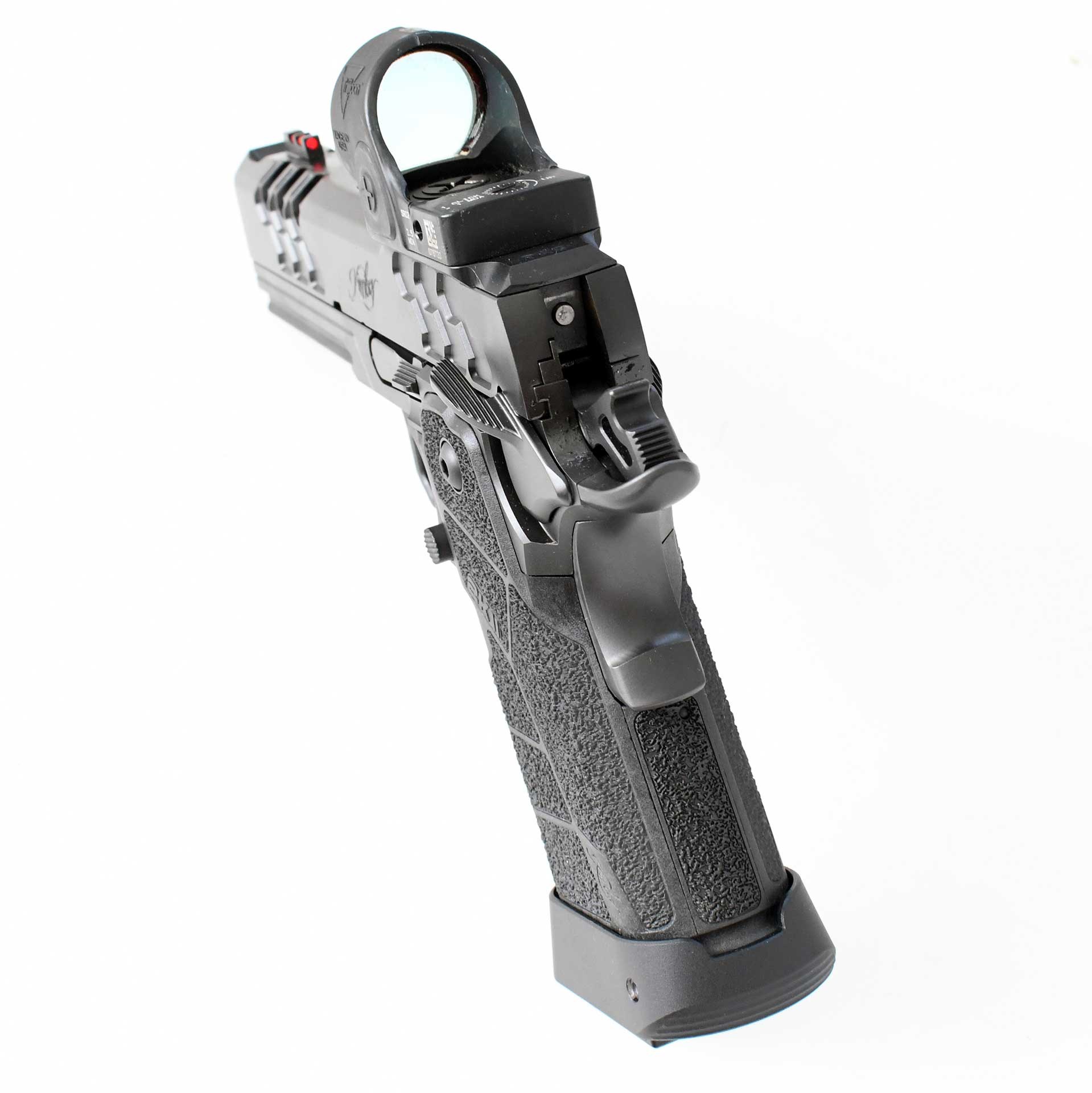
I’ve been shooting my Kimber 2K11 Pro Comp in Texas’ summer heat and unrelenting humidity. The 2K11 Pro Comp’s grip module would benefit from some type of texture treatment, as it lacks bite for the shooter’s palms in the context for performance shooting. The Stan Chen-supplied funnel magwell works well for gun games, but anyone seriously considering carrying this pistol defensively may want to remove it in order to avoid any pronounced printing.
While I didn’t notice any difference in loudness when shooting this pistol next to non-compensated pistols, it was interesting to note that the plume of gases vented by the port was 2 to 3 feet long. While I could not see this during shooting, I noticed this on video shot at twilight. It would be wise to consider flashiness in propellants if entertaining the 2K11 Pro Comp as a carry gun.
I won’t criticize a double-stack 1911 for having a wider-than-normal grip; it comes with the territory. While I do appreciate that the 2K11 Pro Comp comes with ambidextrous safeties, my only critique is that they’re not evenly sized. The safety lever on the right-side of the pistol is thinner than the lever on the left side. I would have liked for both levers to be a uniform size, but I am also left-handed, so I tend to notice this kind of thing.
The Takeaway
When Kimber formally entered the double-stack 1911 game with the 2K11, I just wrote it off as just another submission into an already-saturated 2011 market. But after nearly two years of being in the shooting public’s hands, so to speak, it appears Kimber’s 2K11s have been holding their own and earning good reputations. Don’t just take my word for it. As I write this in 2026, the online gun world is buzzing with discussion around Kimber’s guns.
This 2K11 Pro Comp is the first double-stack Kimber that I’ve spent any meaningful time with, and I’m liking what I’m seeing. I can admit that the Staccato HD P4.5 I reviewed for Shooting Sports USA has a “nicer feeling” fit and finish, but this Kimber in my hand is offering a tremendous value for what it costs. It has not skipped a single beat, even with the “cheap” ammo I’ve been using.
As I continue to shoot it, I really think Kimber read the room correctly with its 2K11 series. The shootability and reliability I’ve experienced so far has me thinking that Kimber’s double-stacks will only continue to grow in popularity and reputation.
Most Popular