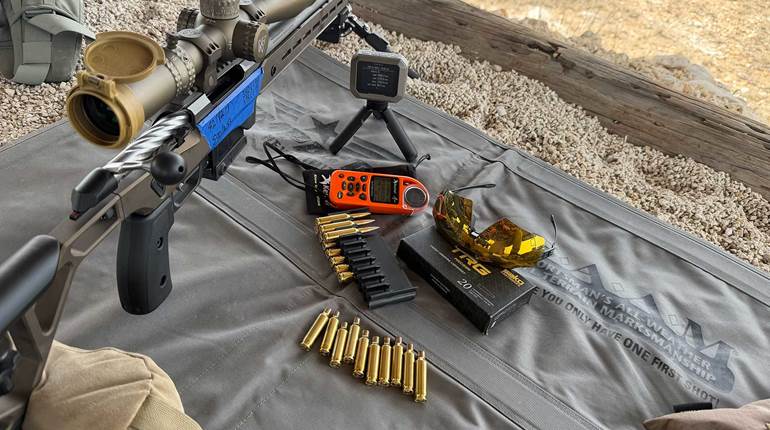
Earlier this year, I took a weeklong long-distance precision rifle shooting course at the famous FTW Ranch in Barksdale, Texas. This property is nestled in the state’s mountainous region and situated west of San Antonio. It’s a destination for shooters and hunters alike. The acreage holds scores of steel target arrays set out to distance while also taking advantage of the natural environment. This creates realistic shooting scenarios that cause the shooter or hunter to carefully take the wind and other environmental factors into consideration.
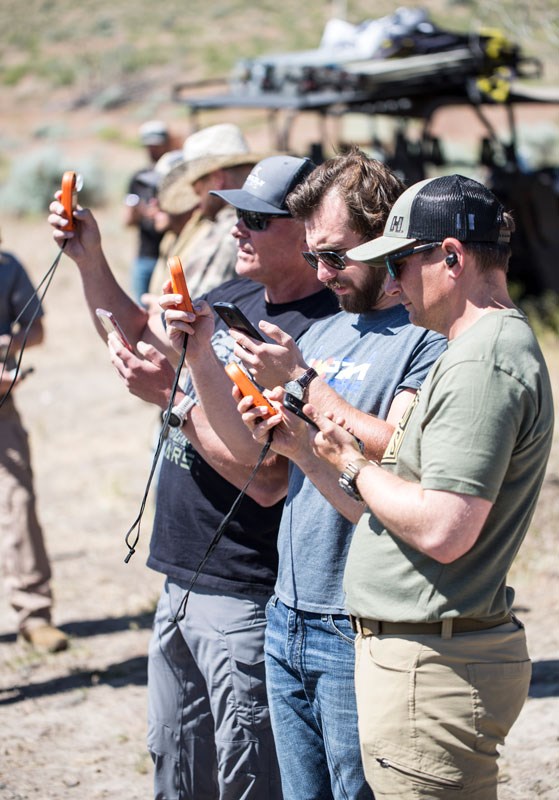
I specifically attended the FTW SAAM/Impact Precision Advanced Course, which leans heavily into helping students master the use of the well-known Kestrel weather station and ballistics solver. (For those not in the know, this handy little device tells the end user what adjustment to make on their scopes to hit the target).
Even though I’ve shot rifles at distance plenty of times in the past, nothing had been like my time behind the gun at the SAAM/Impact Precision Advanced Course. Below are some nuanced lessons I learned during my week there under the guidance of Doug Pritchard, the head instructor.
POI Shifts Between Elevation Are Not As Dramatic As You’d Expect
This short article doesn’t do justice to how thorough and immersive the SAAM/Impact Advanced Course actually is. We spent as much time in the classroom as we did on the firing line, and one of the most memorable classroom sessions was when Pritchard mathematically proved to us that the zero shift between elevations is not as dramatic as you’d expect. That came as a shock to me, because I travel frequently between Texas and the American West, where the delta in elevation is routinely several thousand feet.
It’s also relevant to hunters who zero their rifles and then head west to hunt. During this classroom exercise, Pritchard used some hypotheticals and plugged them into his Kestrel to prove that the mathematical shift in impact was only a few inches. This struck a chord, because it means I can no longer hide behind the elevation excuse.
Of course, it’s best practice to always confirm zero in the area one is shooting/hunting. As an aside, routinely keeping an eye on it doesn’t hurt (another insight I learned from Pritchard).

The Ballistic Coefficient Of A Given Bullet Isn’t Set In Stone
For most purposes, it’s generally fine to use the BC information printed on the cartridge box. But that week at FTW Ranch, I learned that in the context of precision distance shooting, a cartridge’s ballistic coefficient isn’t something that’s set in stone. Factors like temperature, elevation and air pressure change this figure. And not to mention, the ballistic coefficient also technically changes as a projectile’s velocity fluctuates. Rifle bullets start slowing down the moment they exit the muzzle.
This is one of the reasons why ammunition companies and ballisticians are paying more attention to G7 vs G1 drag models. The old G1 model is based on a very archaic artillery projectile contour that dates back more a century. Admittedly, this is probably one of the most arcane “rabbit-hole like” points in this article, and it's not really someone shooting a service rifle at a steel target at 500 yards really needs to worry about. However, the fact that ballistic coefficients aren’t set in stone ties into my next insight below.
DOPE Needs To Be Trued And Confirmed
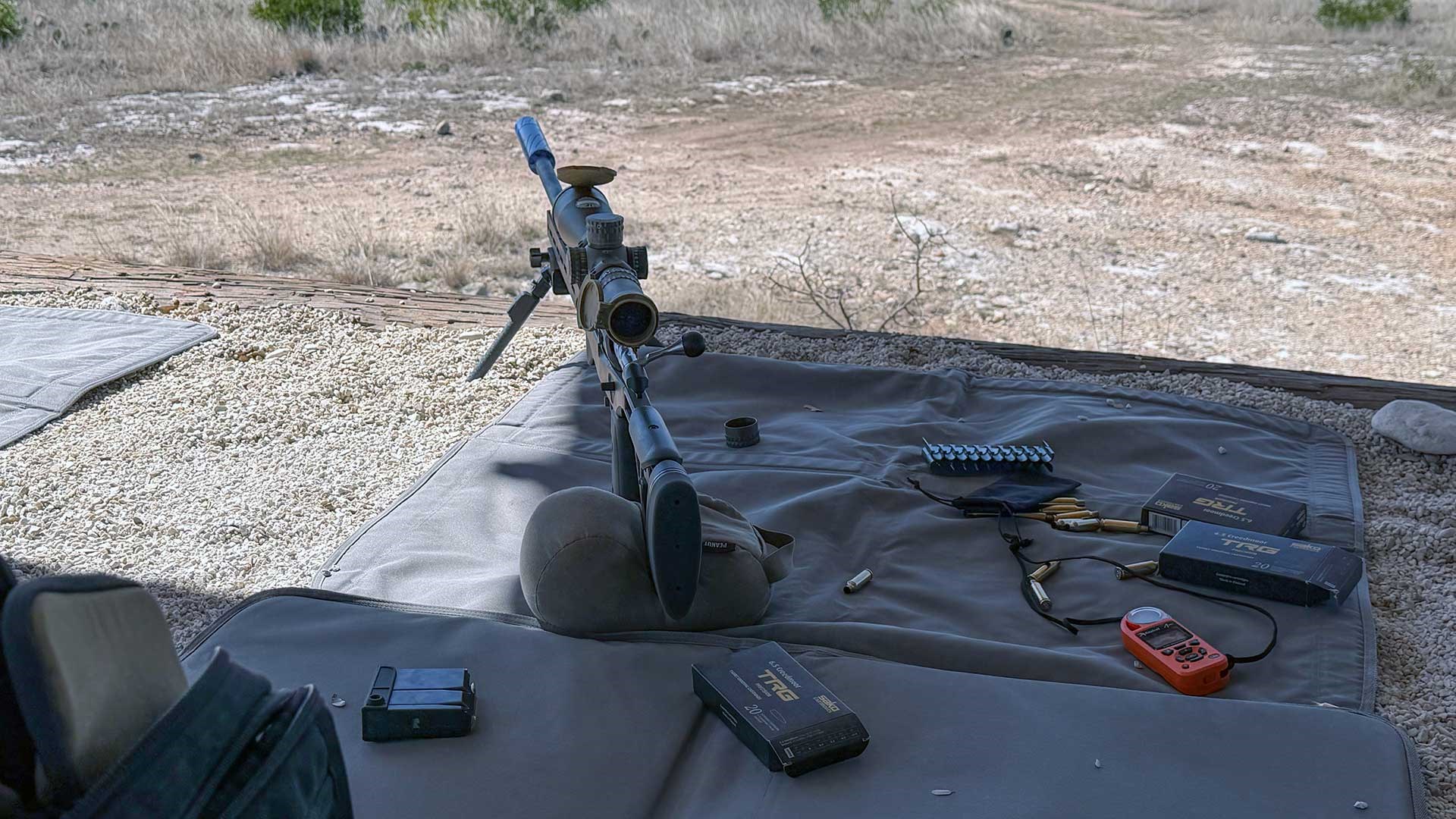
DOPE (or Data On Previous Engagements) refers to the sight adjustments needed for a given rifle-and-cartridge combination to hit targets in a specific environment. Devices like the Kestrel or other ballistic solvers make short work of doing all that math for the shooter. They make it very easy to cultivate DOPE in order to then make effective shots.
However, the information derived from a ballistic solver, whether it's a Kestrel or any other relevant device, still needs to be trued (aka verified). In terms of precision shooting, one can’t just accept the machine’s output and take it as gospel.
During the course, we spent some time truing our data in order to verify that the actual adjustments on the scope were in agreement with the information off the devices. Pritchard had us do this at extended distances. When truing your DOPE, strive for at least 700 yards, if possible, but 800 yards is more ideal. Truing at closer distances can mask errors.
A True Example
How does one true their rifle? Well suppose I’m on the firing line staring down a steel target at 800 yards. My Kestrel is already attuned to that environment and knows my elevation and temperature. Its screen states that I must dial 6.2 mils of elevation for my 800-yard target.
So I take my shot after dialing 6.2 mils and hold center. Either I dialed 6.2 mils and struck the steel which means my scope, cartridge and rifle in the physical world are aligned with my Kestrel/ballistic solver or, through trial and error and working with my spotter, we determine that the correct hold is actually 6.4 mils (for example).
To true my Kestrel or ballistic solver, I’d just need to change a variable like muzzle velocity or ballistic coefficient in order to have all calculations align with reality. Because we determined that it actually takes 6.4 mils to strike 800 yards, the device needs to be in agreement for the sake of precision.
On the firing line and on the fly, Pritchard had us shift through our muzzle velocity figures until the change added up with the mils. I am sure there is probably a deep rabbit hole about whether one is better off changing BCs or velocities, but I concede that’s currently above my understanding.
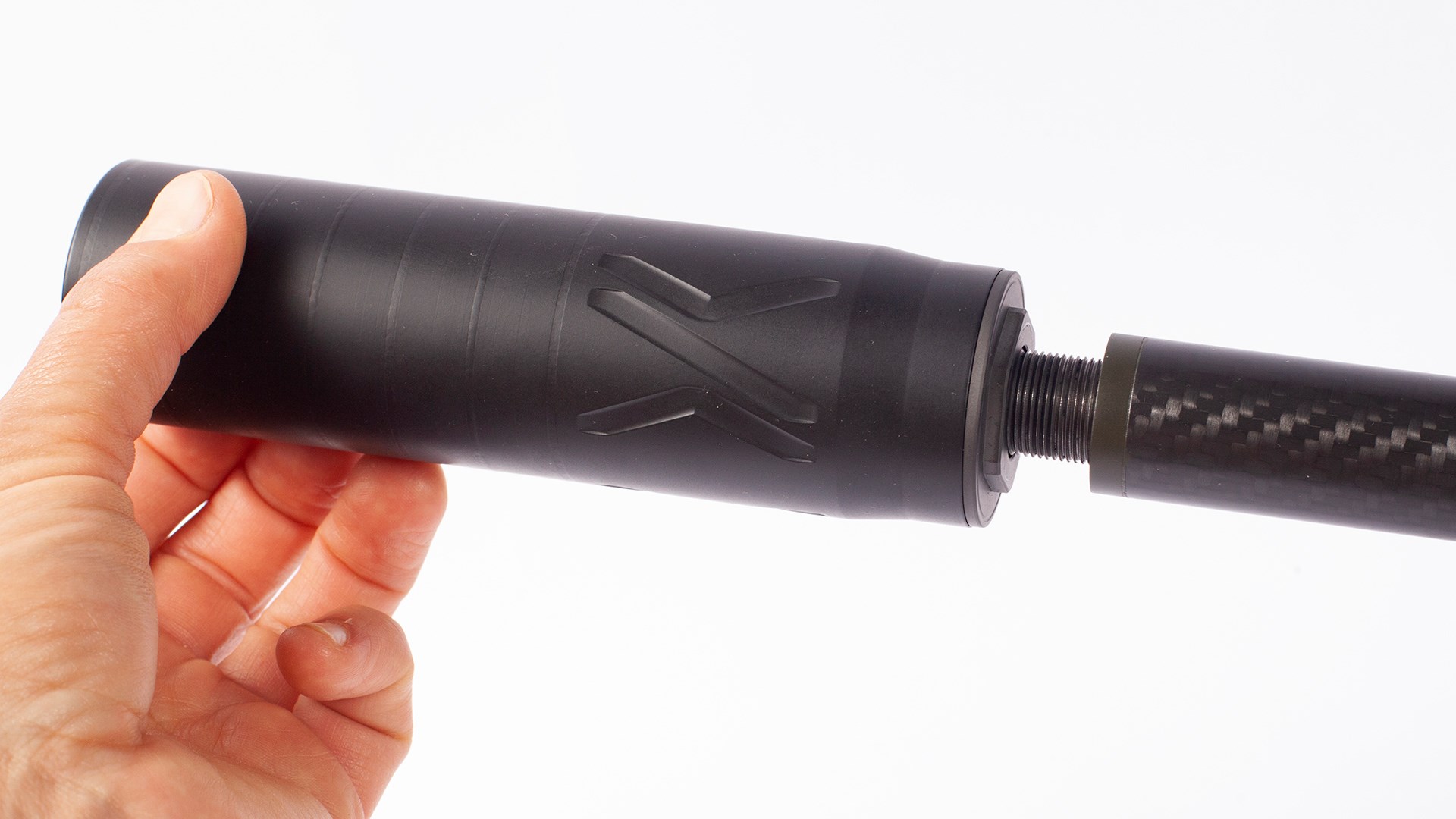
Check The Tightness Of Your Silencer Periodically
It’s almost comical to even write this since there’s nothing sophisticated about this. It’s a good idea to periodically check that the silencer is still screwed snug to the muzzle or its mount. If it isn’t, the loose can will trash the rifle’s zero and render the shot completely useless. In fact, that loose can would negate everything else I’ve written about in this article. That week, this resulted in a teachable moment.
A gentleman on the firing line beside me who was easily nailing each piece of steel all week long suddenly started missing shots at 300 yards. It took the whole class a few minutes (and a few wasted shots) to realize that a loose silencer was the culprit.
I’m not singling out this man either. Between all the shooting we did and the fact that all rifles spent time bouncing around the jeeps on FTW’s property as they snaked through the trails and topography of the Texas hill country, it could have happened to anyone’s rifle. So just check your silencer and make sure it’s snug from time to time.
Most Popular