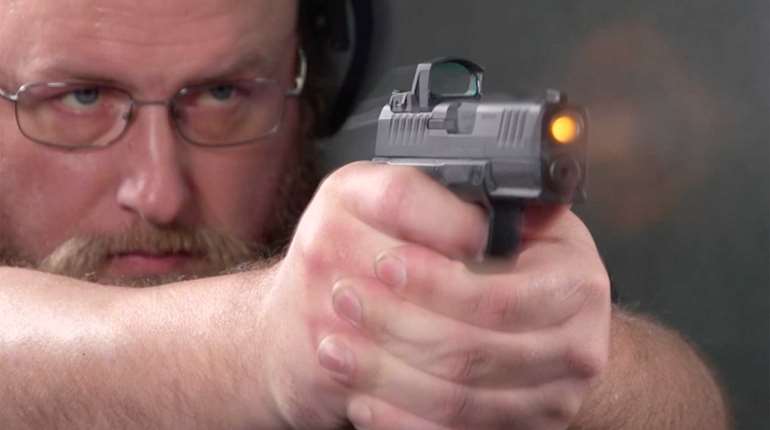
It happens to every shooter, whether competitive, tactical or hunter. You hit a slump and start missing targets you know you should have hit. Perhaps you are relatively new to shooting and are still developing your skills but have hit a plateau. Or maybe you are attempting to broaden your skill base with ambitions of being the next winner of "Top Shot." The good news is that there is always hope for improvement. The bad news is that there really aren't any shortcuts. It takes ammo-lots of ammo-sent downrange, under discipline, to make a superior shooter. Here are five simple sure-fire ways to improve your shooting.
1. Slow Down
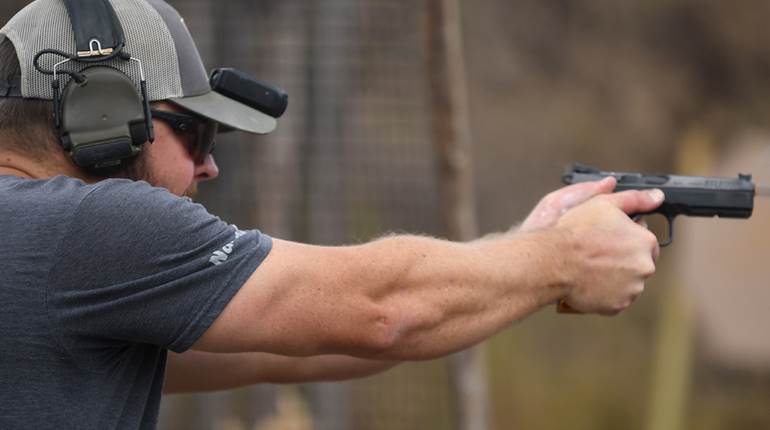
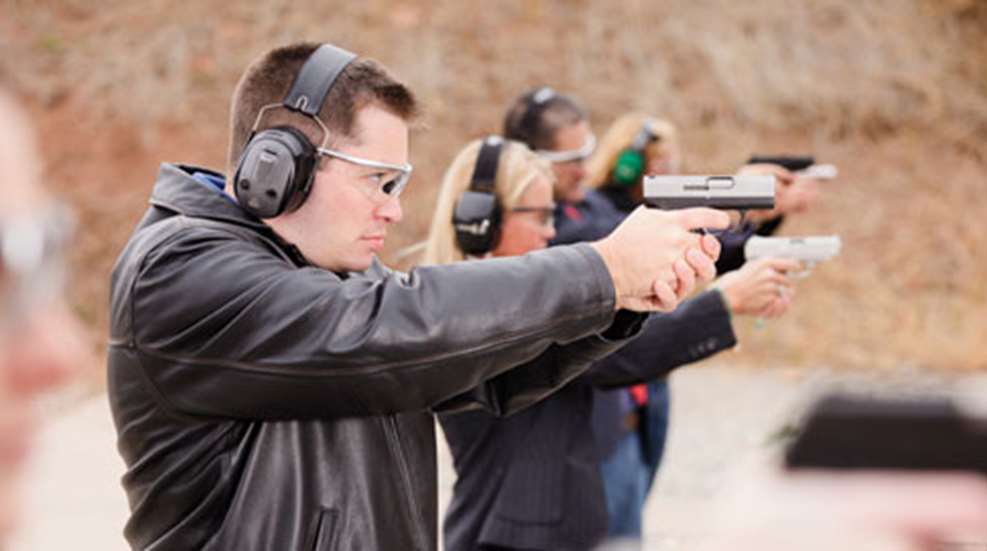
Everybody wants to shoot fast-faster than the other guy. But speed always sacrifices accuracy. If your groups look more like an improved-cylinder pattern from a shotgun, the best thing to do is slow down. Focus on sight picture and trigger control. Once your groups shrink back into an acceptable range, then, and only then, should you start to pick up the pace. Several years ago at event hosted by Springfield Armory on a rainy San Diego day, Rob Leatham gave a bunch of us gun scribes some pointers on how to improve our pistol shooting. One in particular stuck with me, and I regularly make it a part of my practice regimen. It is as applicable to a rifle as it is a handgun.
Put up a blank target-no bullseye or aiming point-at close range. If you're working with a handgun, start at 5 yards; rifles can start at 25 yards. Hold center of mass and fire one round. Now, taking as much time as you need, shoot the remainder of the magazine without enlarging the first bullet hole. Tough? You bet! Impossible? Theoretically, no, but the exercise focuses on the basics of shooting: sight picture, breath control and trigger control. This is a slow-fire drill. What this does is reinforce proper muscle memory for accurate shooting. When you are shooting one ragged hole at 5 yards, move back to 10 yards-50 yards for rifles-and repeat. This is also a great drill for curing a flinch.
2. Dry Fire
Plain and simple: There is no substitute for dry-fire practice. It really saves on the amount of ammo you send downrange. The downside is that it is excruciatingly boring. Nonetheless, dry-fire practice is as valuable as live-fire practice in terms of learning and polishing trigger control vis-à-vis sight picture.
Dry firing can be done at home. First and foremost, you must make absolutely sure that there is no ammunition in the firearm before engaging in dry-fire practice. Many instructors insist that all ammunition be removed from the room where the practice is conducted-not a bad idea. You can put up a dummy target on a wall across the room or pick something small-a light switch, for example-as an aiming point. Make every "shot" count. There is no recoil or noise to contend with, so your focus should, again, be on the basics.
Some caveats: Let the rest of your family or roommates know that you are dry-fire practicing in the room you choose. That way they won't come barging in and possibly find a gun pointed at them. In addition, you might want to consider pulling the shades on the windows, lest an excitable neighbor spot you, get nervous and call the police. Finally, resist the temptation to practice your fast draw in front of a mirror. Eventually you'll want to try it just one more time after you have loaded the gun for carry, and the results will be...less than pleasant.
3. Get Off the Bench
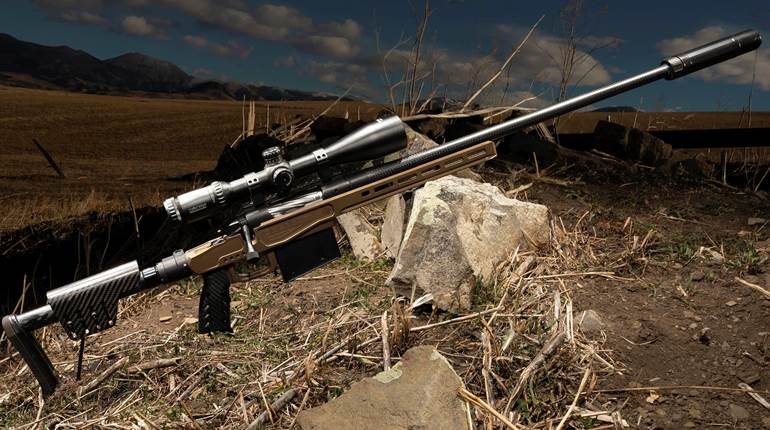
Rifle shooters often become wedded to the shooting bench because it makes it so much easier to shoot tiny groups. That's fine for sighting in or load development, but if you want to become a good rifle shot you'll need to be able to shoot from a variety of positions.
If you carry shooting sticks, by all means spend some time using them at various heights on the range. Learn to deploy them quickly so that when the time comes to use them on a nervous buck, you are able to concentrate on shooting instead of figuring out how to set them up.
Practice from all the field positions: prone, sitting, kneeling, squatting and off-hand. Whether rifle or handgun, determine your maximum effective range from a given position. Be brutally honest in your evaluation. That knowledge is extremely valuable when making a shoot/don't shoot decision.
4. Vary Your Training Routine
It can be easy to get into a rut. Shoot this drill, then that one, finish up with another one and head home. Do that and you'll be trained to shoot this, that and another, but when presented with something outside your comfort zone you may just fall apart. Look at the results of some of the "Top Shot" episodes where world-class shooters in a particular discipline look like amateurs in another.
Generally, I break practice sessions into three different stages: basic shooting skills, skills that I have learned fairly well and those skills that are difficult, new or very advanced. The basics take up about 20 percent of the practice session. Its purpose is to reinforce basic skills and provide a confidence base. Roughly 60 percent of the session is dedicated to honing and maintaining the overall base of shooting skills. Then I finish up with practicing advanced or new skills that are more difficult.
Within that framework, however, I vary the exercises so that they do not become boring. Sometimes I'll shoot paper; other times I'll shoot reactive targets. One of the best assets you can have is a shooting partner. He or she can provide variety in training scenarios as well as some inherent competition.
5. Know When to Shut it Down
There are times when it just isn't happening. You may be fatigued from work, your mind may wander toward other non-shooting challenges, or maybe you'd just rather be at the beach. In any case, if your focus is not on shooting, you are wasting ammunition and developing bad habits that will have to be fixed later.
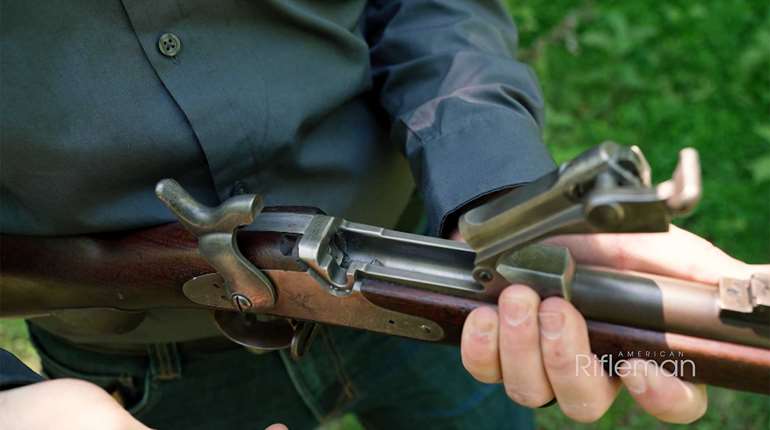
Recently I started to force a range session with my Sharps replica rifle. My enthusiasm to get out and shoot after a long, cold winter and to get the hang of its vernier sight got the better of me. It was nice and warm at the house, but at the range the wind was blowing 25 mph. My first shot was good; the second off a bit. The third shot sealed the deal for me. It was 10 inches off the mark, and I started shivering. So I put it all away and postponed the session.
I wish I could tell you to take a pill, buy a gadget or sing "Kumbaya," and your shooting performance will improve, but it's just not possible. But if you try any or all of these tips and practice with due diligence, I can guarantee that you will see improvement.
Most Popular