The hard numbers associated with firearm accuracy are woven into everything from gun reviews to conversations around campfires and over gun-shop counters. That makes sense in an era when product specifications figure so heavily into deciding which purchases best fit our budgets and specific needs. But, is having the capability to shoot as accurately as possible really that essential? In all but the most benign firearm activities, my answer is always “Yes.”
While it may seem excessive, pursuing the best possible accuracy from a system—firearm, ammunition, aiming device(s) and shooter—gives us more of a buffer for problems. For hunters, this helps ensure cleaner shots and more meat in the freezer. For competitors, their chances of getting choice picks from the prize table improve. For anyone using a firearm in defense of life, better accuracy increases the likelihood they’ll enjoy many more sunrises.
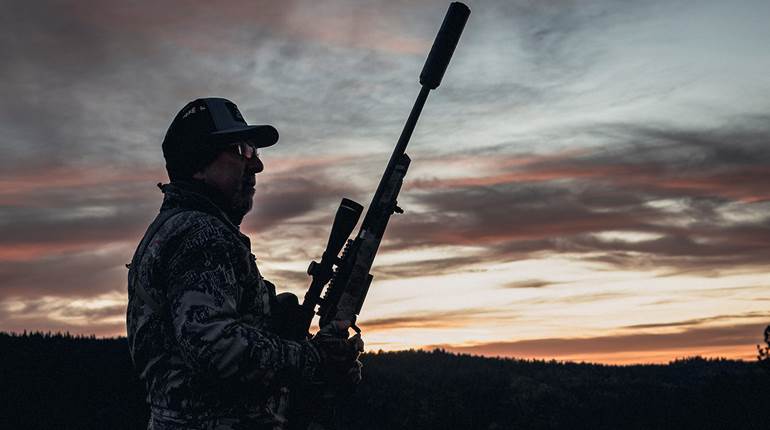
What constitutes good accuracy is subjective, of course. A few years back, I witnessed this in real time while evaluating the hunt-worthiness of an unmodified Mosin-Nagant M44 rifle. After seeing that 4-inch, 100-yard groups were the best I could manage in near-perfect conditions, I decided that every element in the system—including me—needed work before aiming at anything more alive than paper.
At the same moment, two other hunters appeared to be finishing up their own pre-season prep a few benches away. As one guy watched through binoculars, the other fired three rounds through a scoped, entry-level, bolt-action rifle on a soft-bag rest. The shooter appeared solid, taking care to steady himself and settle in for each shot. After a few moments, his buddy remarked, “Good enough to hunt with,” before they began packing to leave.
Naturally, I peeked downrange through my spotting scope. A loose triangle was spread around, and outside of, the 6-inch center bullseye of their target. Unfortunately for whatever game the shooter planned to hunt, his “good enough” group was somewhere around 8 inches in diameter.
Now, I can’t say exactly where this guy’s system was deficient, but something besides his judgment was definitely out of whack. We live in a time when out-of-the-box rifle accuracy is generally very good and tightening up older guns is a routine gunsmithing service. Riflescopes present clearer images at longer distances than at any time in the past and often contain integral tools to help us connect our shots. Accurate ammunition is no longer limited to handloads and match-grade paper punchers. There’s no reason to settle for that kind of “good enough.”
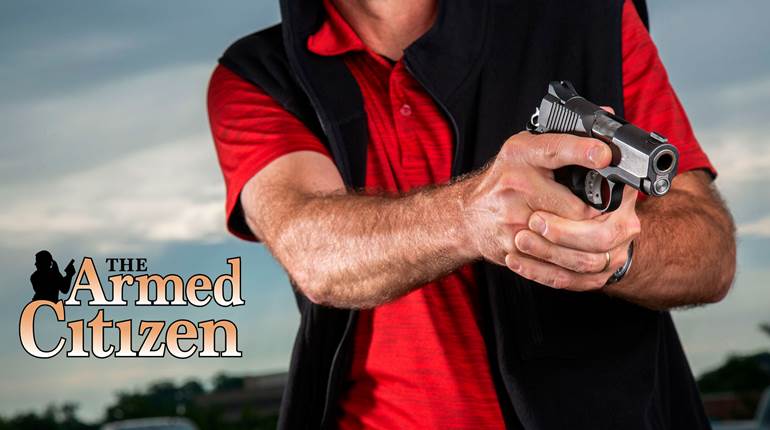
This isn’t just a rifle thing. In 30 years of teaching concealed, basic and advanced handgun courses, I’ve encountered many a student who began the class thinking success meant hitting anywhere on a full-size silhouette at rock-throwing distances. The justifications given for accepting mediocre on-target results seem to follow one of several themes:
Theme 1: My Super Expando-Match Penetrator bullet will do the heavy lifting.
While we should always strive to use the best-performing projectiles that fit our specific needs and budgets, that doesn’t excuse sloppy work on the user end of the equation. As of this writing, at least, commercial small-arm projectiles aren’t self-guided. It’s still up to us to provide as much “driver” input as possible to get them to their intended destinations.
Theme 2: I have a bunch of extra Super Expando-Match Penetrator bullets in case I miss.
Being prepared for contingencies is good. But, having to fire several shots at a single game animal or deadly threat because of poor accuracy isn’t a contingency—it’s a massive failure to prepare. I carry spare ammo for my EDC pistol and, when I’m in the woods, extra rifle magazines. Reloads are for the situations we hope to never encounter, but were smart enough to include in our defensive plan anyway.
Theme 3: My target is big/my distance will be close, so trying to be precise is a waste of time and money.
If every shot we fired went exactly where we intended, this would be a valid argument. But, we can’t count on a full target exposure or being close in every scenario, and in defensive-shooting situations there’s a good chance innocent people will be nearby. Because even the best-shooting rifles and handguns don’t consistently put every round through the same hole, the closer we can keep those holes to our intended points of impact, the more likely we’ll be to actually hit the important parts under less-than-perfect conditions.
Theme 4: I’m using a scattergun, so ...
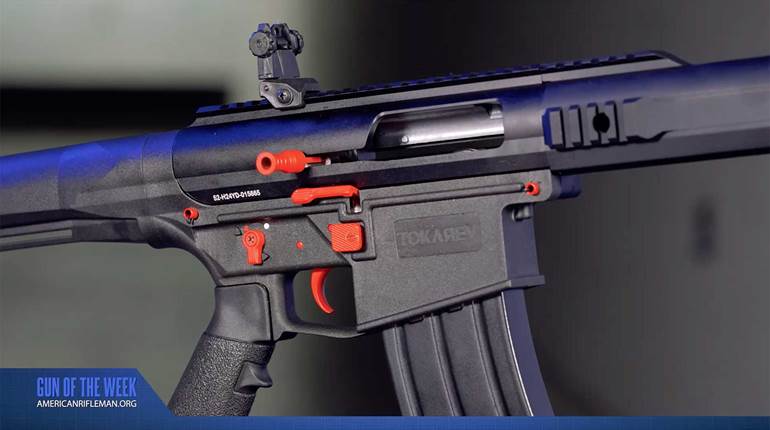
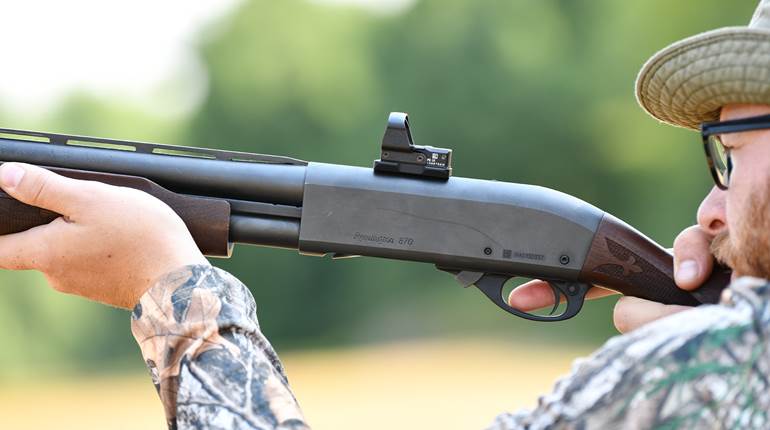
Here again, the concept that everything leaving a shotgun’s bore will hit exactly where desired falls apart once spherical shot begins to slow and spread over distance. Failing to properly aim only makes things worse. Unless you’re somewhere that no one can be unintentionally harmed by errant pellets, you have unlimited shells and a bomb-proof speed-reloading technique, it’s worth taking the time find the gun and ammo combo that puts the maximum number of pellets into the critical parts of your intended target at realistic distances.
Theme 5: Perfect conditions don’t exist in field settings, fast-moving competitions or gunfights, so there’s no sense in trying to be precise on a static range.
The first part of this premise is true: We’re wise to assume a worst-case scenario at the exact moment we’re presented with an important shot, regardless of the situation. Unstable positions, fogged lenses, obstacles in our line of sight, sweat-stung eyes, numb fingertips and a whole bunch of other problems make frequent appearances at the wrong times. But, with so many things that can possibly work against us, stirring sub-par shooting into the mix is a losing strategy.
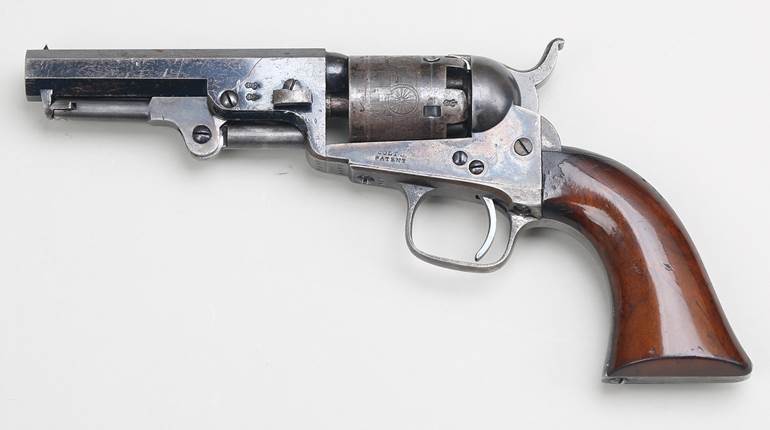
The challenges presented by real-life scenarios are exactly why we should strive to create as much of a performance buffer around each of the system’s components as possible. Inevitably, that means expending more ammunition, time on the range and effort to hone our skills and fine-tune our equipment. Whether you’re using a single-action revolver, a $4,000 custom rifle or an old “trench broom” that first saw service against the Hun during the Great War, resist the temptation to accept “good enough” if there is the possibility of better performance.
Most Popular