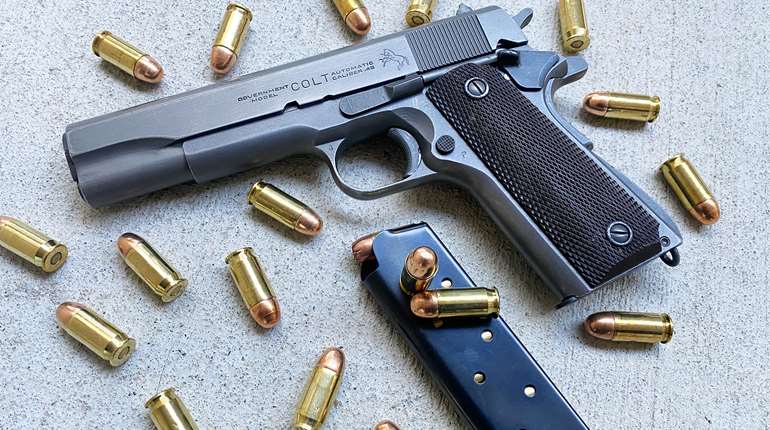
I have several 1911 pistols chambered in .22 LR, 9 mm and .45 ACP. When they fail to fire sometimes, my shooting buddy tells me that I am having an interruption in the cycle of operation. I don’t want to sound stupid, but what is the cycle of operation that I am interrupting?
J.T., via e-mail
Your question is not stupid at all. In fact, many American Rifleman readers may benefit from an explanation in helping to keep their firearms operational.
The cycle of operation is the mechanical sequence of events that it takes to fire one shot out of a firearm. The continuation of those events in sequence is necessary to fire multiple shots from the gun. If one of those steps fails to take place as designed, there is an interruption in the cycle of operation and the gun stops firing.
There are eight steps in the cycle of operation of semi-automatic pistols such as your 1911-style handguns. Variations of these eight steps apply to most firearms, with rare exceptions.
The first step is feeding. This is when a magazine of ammunition is inserted and seated into the magazine well and the slide is released to strip the top round of ammunition from the magazine and push it forward up the feed ramp toward the chamber. When the rim of the cartridge is released from under the feed lips of the magazine and slides up the breech face of the slide, under the hook of the extractor to align with the chamber, the transition is made to the second step of the cycle of operation, chambering.
As the slide continues forward to fully seat the cartridge in the chamber, during the last 1/8 inch of forward movement, the barrel and slide lock together mechanically, which results in locking, the third step in the cycle of operation. The pistol is now ready to fire.
As a side note regarding your .22 LR 1911, which is a blowback-operated pistol, there is no locking, just contact of the breech face against the back of the barrel, held in position by the recoil spring, which is referred to as closing.
Firing the gun is the fourth step in the cycle of operation. Pulling the trigger disengages the internal safeties and releases the hammer to strike the firing pin. This indents the primer and fires the cartridge.
When the gun fires, the barrel and slide recoil together as a unit approximately 1/8 inch where the barrel stops, unlocking from the slide as the slide continues rearward. In blowback-operated pistols, the slide simply breaks contact from the back of the barrel as it moves rearward. Since there is no mechanical lockup between the slide and barrel, this action is referred to as opening instead of unlocking.
As the slide continues its rearward movement propelled by the combustion of the powder in the cartridge, the hook of the extractor engages the rim of the cartridge case, extracting (pulling) the fired case from the chamber of the barrel. Extraction is the sixth step in the cycle of operation.
As the spent cartridge case travels with the slide rearward, held against the breech face by the extractor, it encounters the ejector, which pushes the cartridge case from under the extractor, up and out of the ejection port of the slide and free of the gun. This action is aptly termed ejection, the seventh step in the cycle of operation, as the spent cartridge case is ejected from the gun, its usefulness having passed.
The final and eighth step in the cycle of operation is cocking. As the slide moves rearward, extracting and ejecting the spent cartridge, it also overrides the hammer, cocking it to the rear in the single-action position, readying the pistol for the next shot as the slide returns forward. This begins the cycle-of-operation sequence over again by feeding and chambering the next round as well as interlocking with the slide.
Lack of lubrication on the moving parts of the gun is one of the prime culprits for causing interruptions in the cycle of operation. If these parts don’t move freely, it is easy to see how the cycle of operation can be adversely affected. Ammunition loaded outside of standard specifications can affect the cycle of operation as well.
Improper shooting techniques used by the shooter have been identified as affecting a gun’s cycle of operation and therefore reliable function. Nonstandard or worn-out parts can also be contributing factors as to whether a gun will operate.
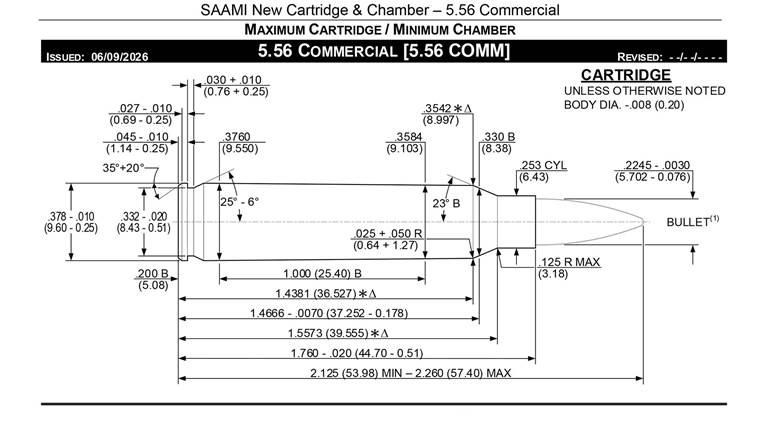
If you properly maintain your firearms according to the manufacturers’ recommendations and shoot SAAMI (Sporting Arms and Ammunition Manufacturers Institute)-accepted or mil-spec (military specification) ammunition in them, stoppages, malfunctions or any other interruption of the cycle of operation will seldom be part of your shooting experience.
Most Popular