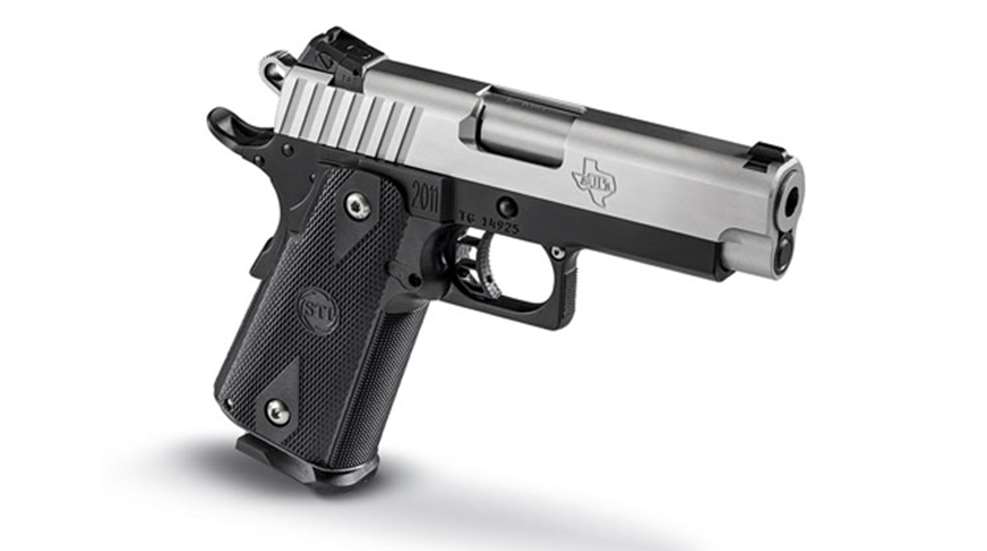
As a longtime aficionado of the 1911 pistol, I am always interested when someone offers a new wrinkle to my favorite autoloader. So when STI announced a light, compact 1911-style pistol with a high-capacity magazine I was like a kid at a carnival; I had to lift the tent flap and take a peek.
Though based upon John Browning’s most famous pistol, STI calls this series of pistols the 2011. The most obvious difference between a 1911 and STI’s 2011 is that the new gun is made to take double-column, high-capacity magazines. Much of the company’s history has been to cater to the competitive shooter, and in today’s modern competition, performing reloads is a time-consuming chore most want to minimize. That’s also true for those who carry a firearm for self-defense.
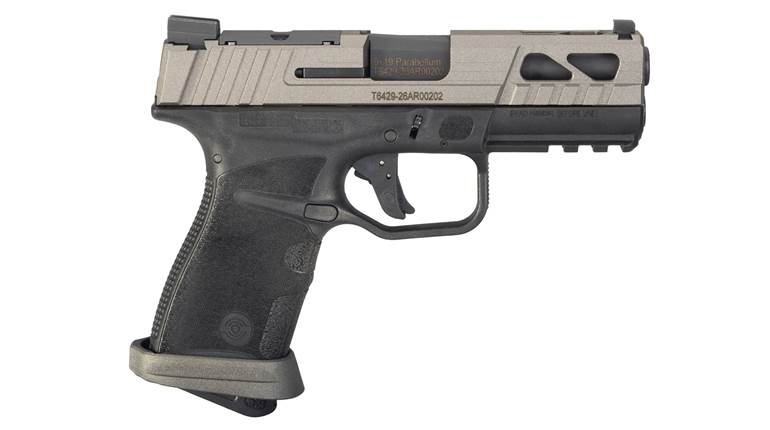
The Guardian features a two-piece frame; the upper portion being Cerakote-finished aluminum, while the lower portion is made from glass-filled polymer. Like all the 2011 series, the lower grip frame has a squared-off trigger guard for those shooters still lost in the ’70s. The grip panels are steel reinforced polymer and are of the shorter, Officer Model type—STI calls it their 2011 VIP grip. The company claims the polymer lower portion flexes enough to soak up some of the recoil, but I have no way to measure or determine whether that is true.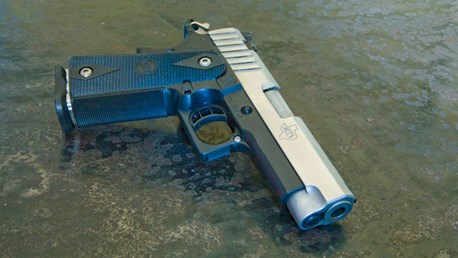
Up top, the slide is stainless with a bead-blast finish on top and polished sides. Barrel length is 3.9" and is sans the traditional barrel bushing. It is thought that, especially with such a bantam-weight pistol, the bull-barrel configuration helps the shooter control recoil better. Frankly, I’ve shot bull and bushing barrels side by side and could not discern much of a difference. The barrel is also ramped so that hollowpoint ammo will not chew up the frame’s feed ramp. Recoil is dealt with by STI’s Recoil Master system, basically a dual-spring, full-length guide rod system. Sights are a TAS (Tacital Adjustable Sight) fully adjustable rear with a pair of white dots and a ramped front with a white dot. They are not tritium. The slide features seven coarse gripping serrations at the rear, as is the norm of today. There are no front serrations.
For the fire-control system, STI uses a slightly different hammer. Like all modern 1911s it has a rounded rowel profile and is skeletonized, but the skeletonization is not the now-familiar oblong hole. Rather the hole remains round, and a pair of lightning slots the width of the hole on each side and extends from it to the front of the hammer. Sides of the hammer are brightly polished while the bottom of the slots have been bead blasted. The requisite beavertail grip safety with a cheater pad on the low end to guarantee disengagement protects the shooter from hammer bite. A Commander-style ejector positively ensures that fired cases will leave the pistol cleanly. The manual safety is extended but not lowered much and is set up for right handers only. A long, skeletonized trigger with a stop screw completes the fire-control system.
The 2011 Guardian is chambered in 9x19 mm only, and as such features a dual-column, 15-round magazine. To be honest, there have been some issues with the current crop of magazines, and STI is working on a new magazine that addresses these issues. One issue is that with the magazine fully inserted, there is an unsightly gap of about 3/32" between the bottom of the grip frame and the bottom of the magazine. More about this in a moment.
I confess that normally I am not much of a fan of double-wide magazines. They make it near impossible for my short, fat digits to make the trip to the trigger with a proper hold. However, STI has engineered the 2011 Guardian to have a grip profile a mere 0.25" larger than a standard steel 1911 grip profile. I was able to control the pistol fairly well in slow fire.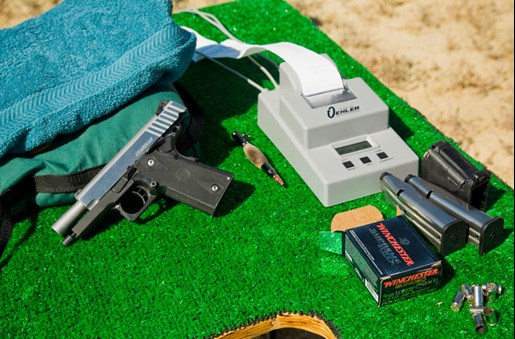
My first range session was rather frustrating. Normally, the Guardian ships with one magazine, but STI—who again is aware of the magazine problem—sent me four to test with. One mag failed to feed the first round when full; though once I got past that it fed flawlessly. Another mag interfered with the trigger and required more than twice the normal trigger pull (4 lbs., 6 oz.) to get the pistol to fire. The other two mags functioned without interruption and were the ones that I used to complete the test. As I said, STI is aware of this issue, and a new, redesigned magazine will be available by the first of the year. Meanwhile, STI will make good on any magazine that fails during testing.
Once we got past the magazine issue, I found the Guardian to be an accurate, dependable and pleasant pistol to shoot. Many groups were less than 2" at 15 yards, and I was pleasantly surprised at the velocities I recorded from the abbreviated barrel. The Guardian showed a definite affinity for lighter bullets; 115-gr. Barnes TACs as loaded by Double Tap produced groups consistently less than 2". Once the drudge work was completed, the fun drills of draw-and-shoot were done. I used my Yaqui Slide holster since I did not have a dedicated holster for the shorter pistol. It was a little slower getting into action and the shots consistently placed about 2" to the left of POI, but I attribute that to my short, fat digits. A short trigger would help me a lot. One happy occurrence was that, especially from the bench, all empties landed in about a five-foot circle. I didn’t have to sacrifice but a few rounds of brass to the desert gods.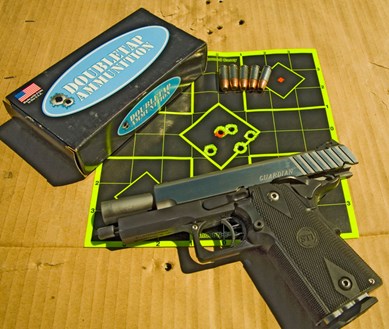

Despite its light weight—25 oz.—the Guardian is remarkably controllable. Much of that is due in no doubt to its 9 mm chambering—all of my personal 1911s are .45 ACP. Things I like about this pistol are: its controllability, firepower, ergonomics and reliability after the magazines were sorted. My only dings—outside of the mags—are the long trigger, the squared-off trigger guard and lack of tritium inserts in the sights. All of these can be addressed, however, and are particular to my sensibilities. At an MSRP of $1899, the Guardian is a premium pistol for those who desire the handling characteristics of a 1911 along with modern high-capacity firepower. For more info go to stiguns.com.
Shooting Results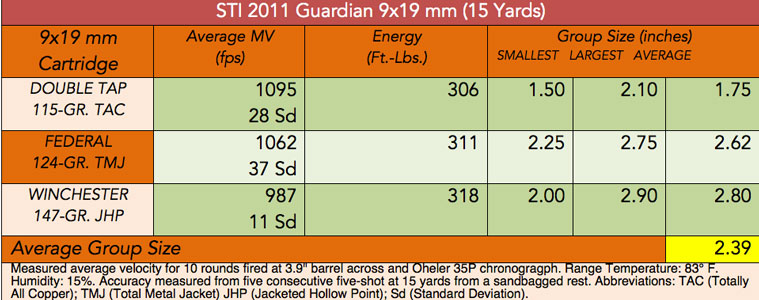
NRA Specifications
Manufacturer: STI International
Model: 2011 Guardian
Caliber: 9x19 mm
Action Type: Recoil-operated semi-automatic
Receiver: Aluminum/Steel Reinforced Polymer
Barrel: 3.9" bull barrel
Rifling: 1:10” RH
Magazine: Double-column, 15-round
Sights: TAS rear; ramped front with white dots
Trigger Pull: 4 lbs., 6 oz.
Grips: Black VIP
Overall Length: 7.5"
Weight: 25 oz.
Accessories: Allen wrenches, hard case
MSRP: $1899
Most Popular