If any two firearms were a juxtaposition of West versus East—free world versus tyranny—it would be the M16 and the AK-47. That’s why, at first glance, the phrase “American AK” seems odd. In a world where the AR-15 is as American as apple pie, the AK’s profile conjures up images of Iron Curtains, Evil Empires and third-world despots. Love ’em or hate ’em, the reality is that more than 100 million AKs have been manufactured and distributed around the world, so every serious student of the gun should know their way around one. These days, if imported is not to your taste, there are plenty of options made within our borders.
Americans first found themselves on the business end of the AK en masse during the Vietnam War., but the first AK-type firearms available on the U.S. civilian market were, ironically, not a traditional AK design, but a Nordic adaptation of it. In the late 1960s, Interarms began importing Valmet-made, semi-automatic versions of the Finnish M62 service rifle. As the 7.62x39 mm “Russian” was an obscure cartridge in this country at the time, most of the Valmet rifles brought into the U.S. were chambered in .223 Rem. and .308 Win.
When it comes to an authentic Soviet-pattern, stamped-receiver AKM, the first U.S. import was a semi-auto version of the Egyptian Misr. Manufactured by the Maadi company, original production was established under Soviet supervision, with rifles imported by Steyr beginning in 1982. These Maadi rifles were some of the first stand-ins for Soviet AKMs in movies shot in the U.S., most notably 1984’s iconic “Red Dawn.” AKs nonetheless remained expensive exotica. The Valmet and Maadi retailed for around $1,200 ($4,200 in today’s money), more than double the cost of a contemporary Colt AR-15.
When China was granted most-favored-nation trading status in 1980, Chinese products began to flood the market, including firearms. China had produced its take on the AK (the Type 56) since the mid-1950s and turned its eye to a semi-automatic version for the American civilian market. At its height, several thousand semi-auto Chinese AKs were rumored to have been coming into this country every month. Their popularity was aided by affordable Chinese-made ammunition. The 7.62x39 mm cartridge went from obscurity to the cheapest centerfire cartridge on the market—its per-round price often rivaling that of the .22 LR. Affordable firearms, cheap ammo and 75-round drum magazines made the Chinese AK a popular range toy and an economical option for self-defense.
During the halcyon (pre-1989) days of U.S. imports of military-style firearms produced in their native countries, Hungarian and Yugoslavian variants of the AK, along with Israeli-made Galils, also entered the U.S. market. It was in that year that the government banned the importation of numerous semi-automatic firearms with the new interpretation of the “sporting purposes” wording of the 1968 Gun Control Act. What followed was 15 years of attempts to comply with the import ban and the 1994 “assault weapons” ban to offer AK-type rifles on the U.S. market. Bulgarian, Chinese, Egyptian, Hungarian and Yugoslavian AKs began to come into this country with a one-piece “thumbhole” stock that combined the buttstock and pistol grip. A 1994 executive order by Bill Clinton banned the importation of Chinese firearms with a rifled barrel, ending the Chinese AK’s domination of the market. By the late 1990s, further restrictions on the import of firearms capable of accepting certain types of magazines led many imported AKs to be modified to accept only a limited-capacity, single-stack magazine.
The sunset of the 1994 ban led to a renaissance of the American AK. This time, the market was dominated by Romanian firearms. The WASR rifles of the early 2000s did what the Chinese rifles of the ’80s had done—introduce a new generation of American gun owners to the AK platform. Several companies began to take imported AKs with single-stack magazines and convert them to accept standard-capacity magazines, adding enough American-made parts so the product could be considered to be manufactured in the U.S. Soon, they were assembling complete firearms in this country using imported parts kits

The fact that they were made in the USA let them have their original features—like three-piece stocks, standard-capacity magazines and muzzle devices. The market-dominating Romanian AKs were joined by firearms assembled with Bulgarian, Polish, Russian and Yugoslavian components. Large-format pistols were also introduced, based on compact “Krinkov”-style AKs.
As they started manufacturing select parts for 922(r) import compliance, U.S. companies were slowly building more components for the AK, including stocks, barrels, magazines, receivers and fire-control units. As original AK parts in good condition began to dry up, American manufacturers began to produce AK rifles that were constructed completely of domestic components.
What is the current state of the “American AK?” To answer this question, I looked at three uniquely red, white and blue AK-pattern firearms currently on the market, as well as domestically produced ammunition and suppressors.
The Traditionalist: Century Arms BFT47
Century International Arms got its start in the 1960s importing used, surplus military firearms. As those disappeared, it shifted to importing and manufacturing new firearms, including those of the AK pattern. In the mid-1990s, the company was importing thumbhole-stock “ban” models, and by the early 2000s, it was making 922(r)-compliant firearms with imported parts. In 2014, Century introduced its first AK constructed entirely of American-made parts.
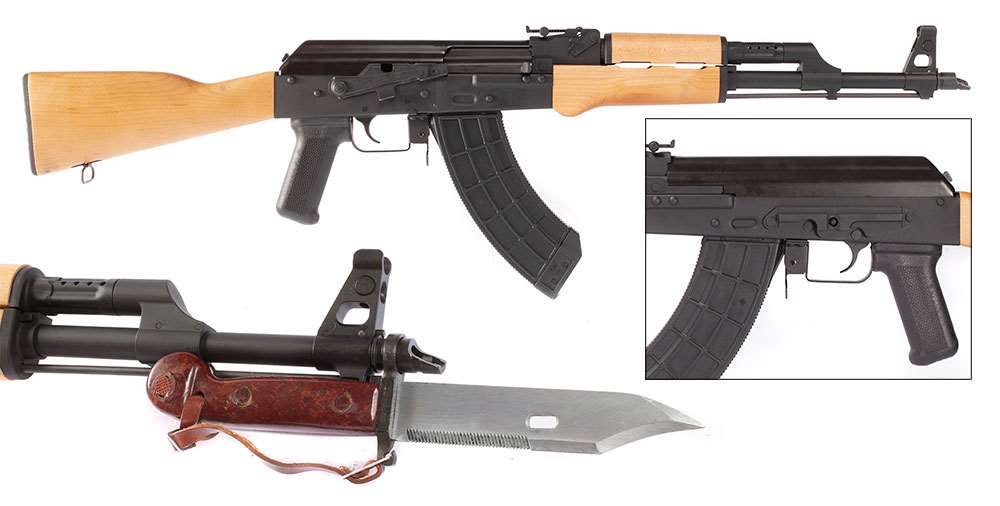
Century’s latest all-American AK is the BFT47, which differs from a traditional AKM in several ways. First, “BFT” stands for “bulged front trunnion.” This feature was incorporated into the Kalashnikov-designed RPK light machine gun to add durability for sustained fire and was also adopted by Yugoslavia for its native-built AK rifles. The BFT combines this piece of forged steel with heavier 1.5 mm-thick metal for the stamped receiver also used in the RPK, versus the standard AKM’s 1 mm-thick material.
The BFT47 has two contemporary “tactical” modifications. The first is an extension on the dust cover/safety selector, allowing the user to operate the safety with the right hand on the grip. The selector also has a cut-out that allows the bolt to be manually locked in the rearward position. This is not only great for range safety; swiping the selector off also allows the bolt to move forward and load a cartridge from the magazine. Finally, the BFT47 has an enlarged release that makes magazine changes easier
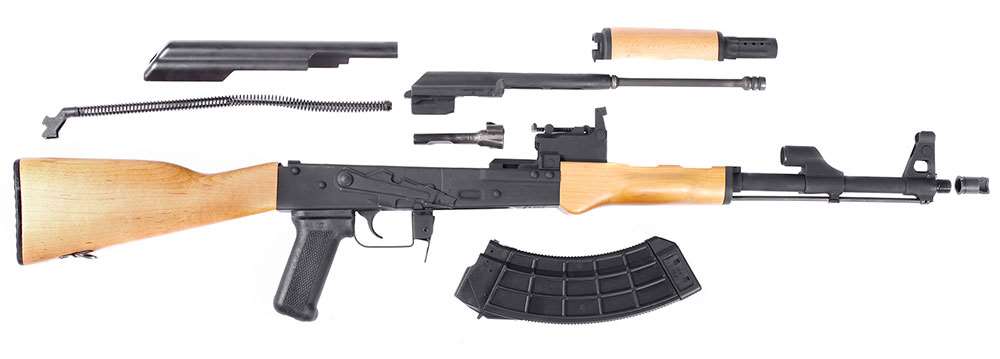
The remainder of the features are standard, stamped-receiver AKM, including its fixed hardwood stock, open iron sights, slant muzzle device, cleaning rod and bayonet lug. Century also makes BFTs chambered in 5.56 NATO and 5.45x39 mm. We all wax nostalgic for the days of cheap Chinese-made AKs, but when adjusting their mid-80s price of $200 to $300 dollars for inflation, you get $650 to $1,000 in today’s money—right in line with what many base-model AKs (like the BFT47) cost.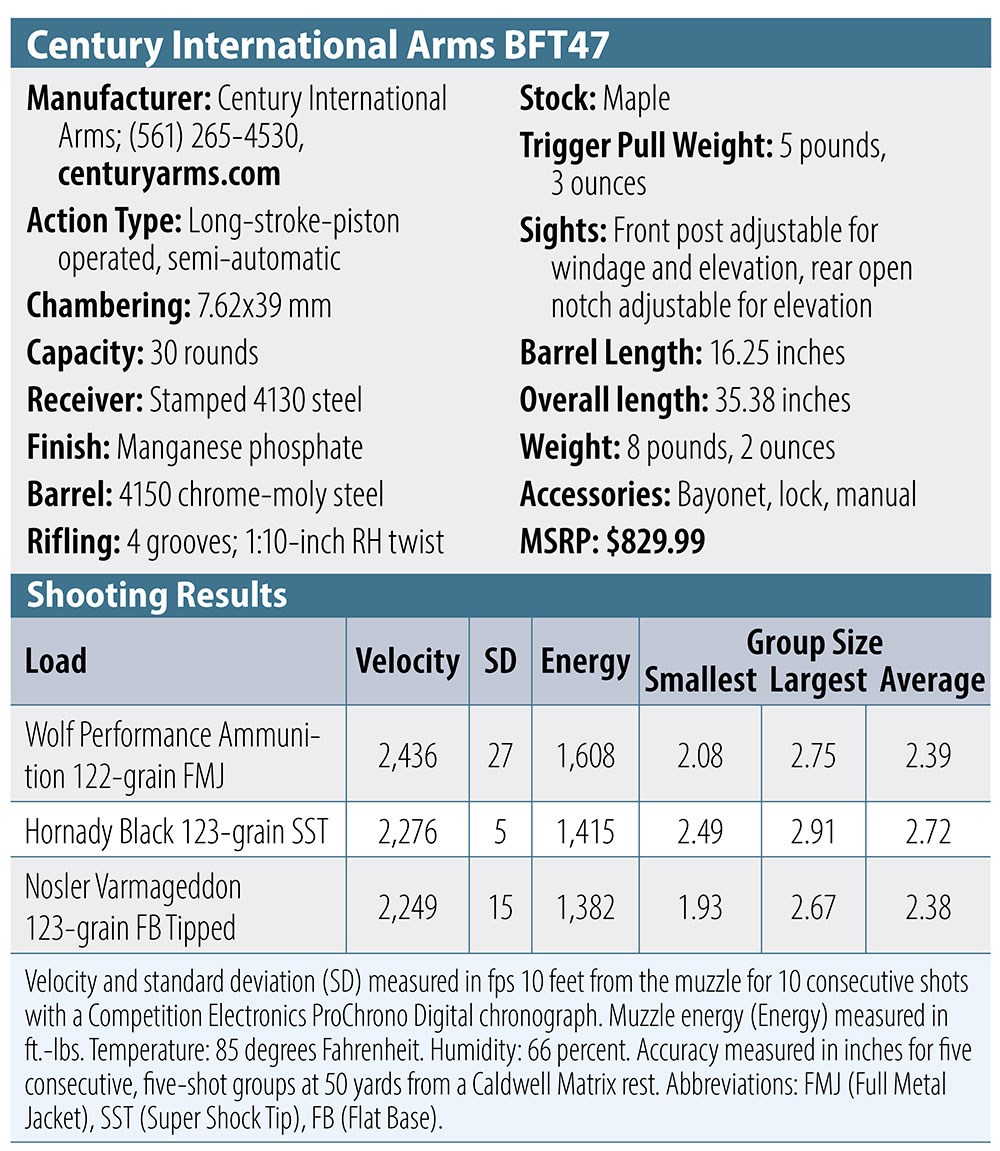
The AK With an American Twist: Arsenal Inc. AK-20
Bulgaria began manufacturing AK rifles in the 1960s at its State Military Factory 10, which evolved into Arsenal AD. The first Bulgarian AKs imported into this country appeared in the mid-’90s with thumbhole stocks. In 1998, Arsenal Inc. was formed as the company’s USA subsidiary, importing stamped- and milled-receiver Bulgarian firearms, and it quickly built a reputation for high-quality, authentic versions of the Kalashnikov.
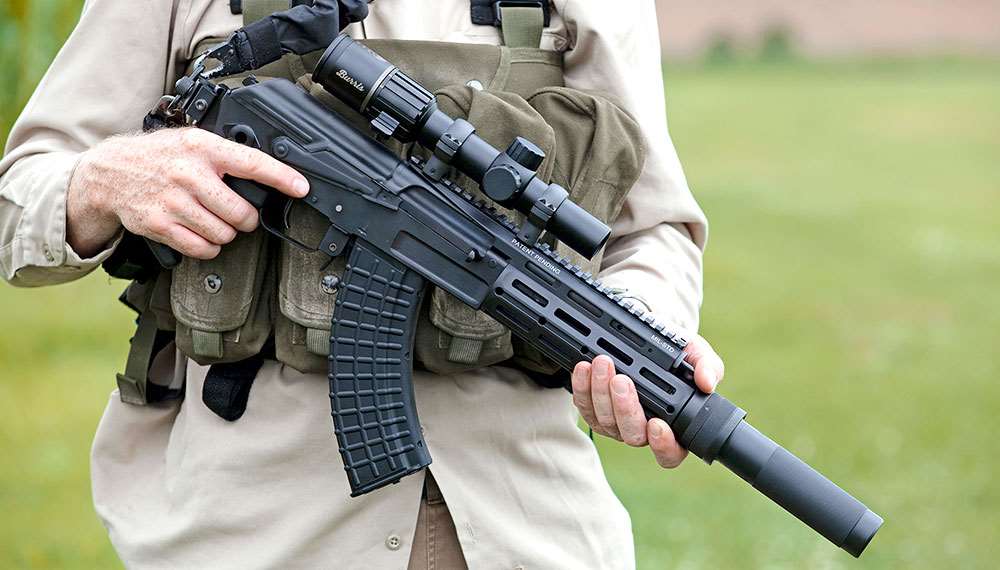
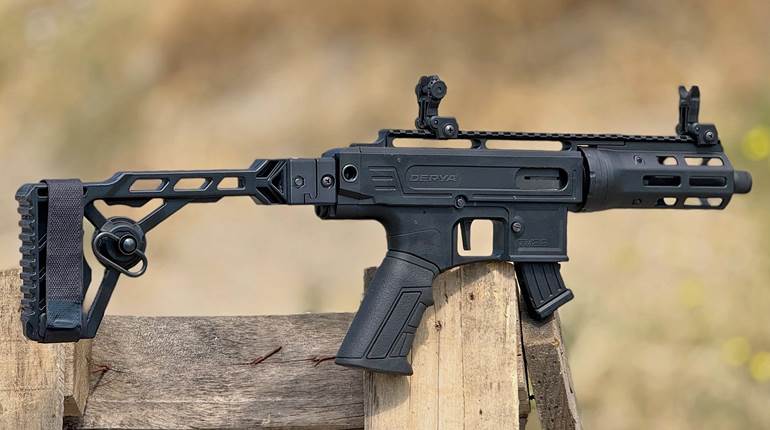
In 2020, Arsenal announced the AK-20, a new firearm that was not only a departure from traditional AKs, but also was fully made in the U.S. The AK-20, which reached full production in 2025, is based around a Bulgarian-style, milled receiver. Starting out as a solid block of steel, milled AK receivers have less flex to minimize recoil and increase durability. The fire-control group is Arsenal’s enhanced two-stage unit, and the safety lever and magazine release match other firearms in Arsenal’s SAM-7 milled receiver line-up.
The core of the gun remains the same, but it’s in front of the receiver where the innovation starts. Arsenal designed the AK-20 to give improved accuracy, be suppressor-friendly and make it easier to mount optics. For the former, it designed a patent-pending, free-floating barrel system. While the handguard and gas tube are mounted to the barrel on a traditional AK, the AK-20 isolates the barrel from these two components. Machined from 6061 aluminum, the upper and lower halves of the two-piece handguard mount to an extension from the receiver, without either touching the barrel. The gas tube is not fixed to either the front gas block or rear sight block, allowing it to “float” as the AK-20 heats up, preventing it from putting pressure on the barrel.
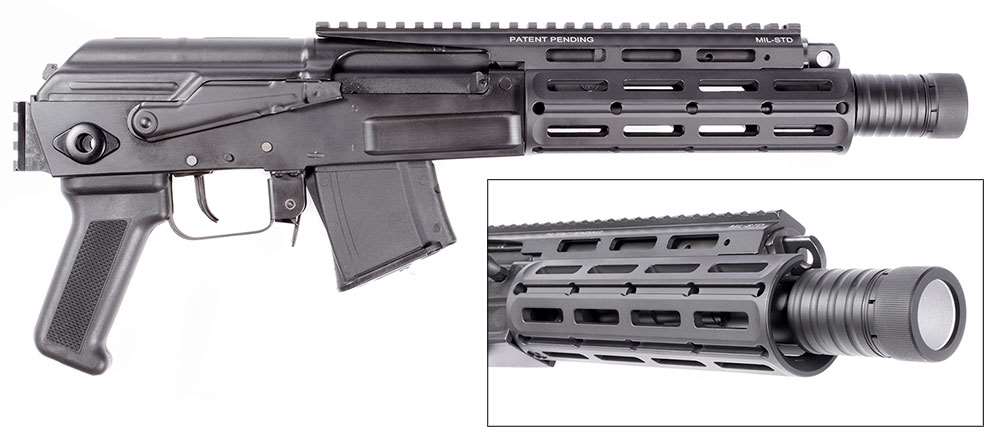
To optimize the AK-20 for use with suppressors, a three-position gas regulator was added with settings for supersonic and subsonic ammunition, and a position that shuts off enough gas so the action must be cycled manually when using subsonic ammo. The 8.5-inch barrel is cold hammer-forged with a chrome-lined bore, and the gas block is threaded with the “modern AK” M24x1.5 mm RH threads. This allows the AK-20 to be used with AK-specific suppressors like Arsenal’s ARS30-1. The AK-20 ships with a Bulgarian-style “Krinkov” muzzle device that functions as both a flash hider and muzzle booster to aid in cycling.
While mounting optics on an AK usually involves a dustcover or receiver side mount, the top half of the AK-20’s handguard extends rearward over the traditional-style stamped dustcover. With 10.2 inches of Picatinny rail, it has plenty of room to mount a magnified optic and achieve proper eye relief. The dustcover can be removed and the firearm fieldstripped with the optic in place.
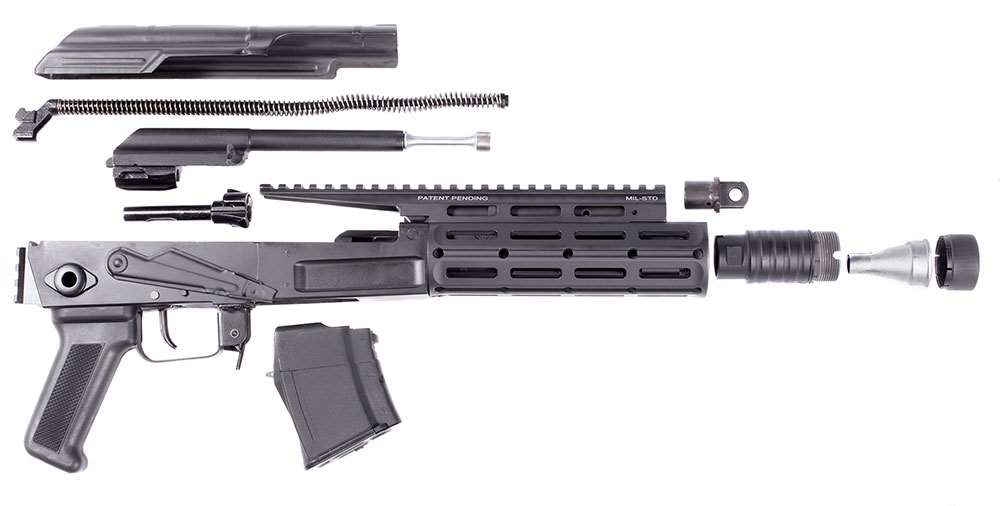
In addition to the large-format pistol I tested, Arsenal offers the AK-20 in SBR form, with plans to make a rifle version with a 16-inch barrel. There are also plans to expand the AK-20’s chambering options.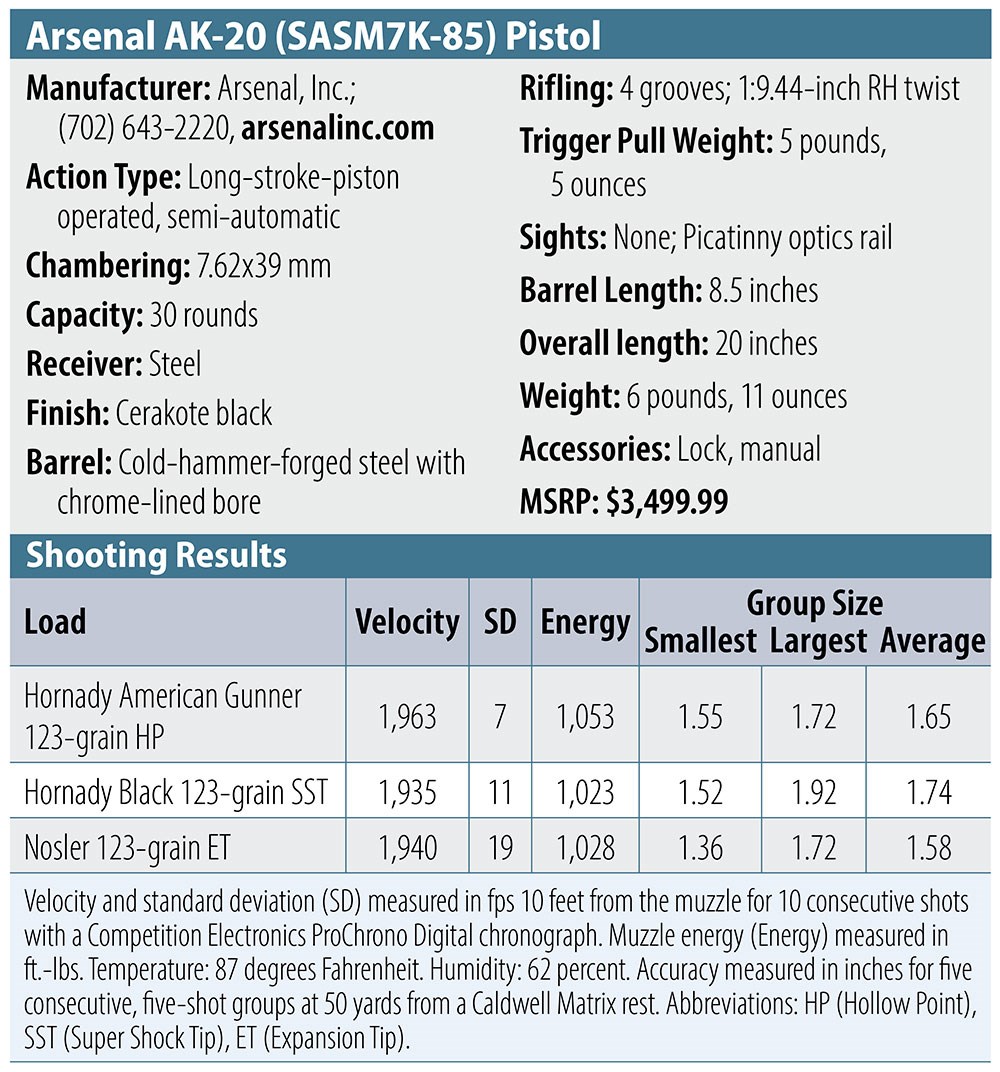
The Not-An-AK AK: Stenzel Industries SAK-21
With its name standing for “Stenzel American Kalashnikov–2021,” the SAK-21 is the brainchild of Joe Stenzel, a U.S. Army Ranger veteran who spent time both behind and downrange from AK-type firearms. While there are modern add-on solutions, the AK just wasn’t designed for optics, suppressors, laser aiming modules or to accommodate modern shooting techniques. With the SAK-21, Stenzel seeks to change that—keeping the robust reliability of an AK at its core, but refining the firearm for today’s enthusiast.
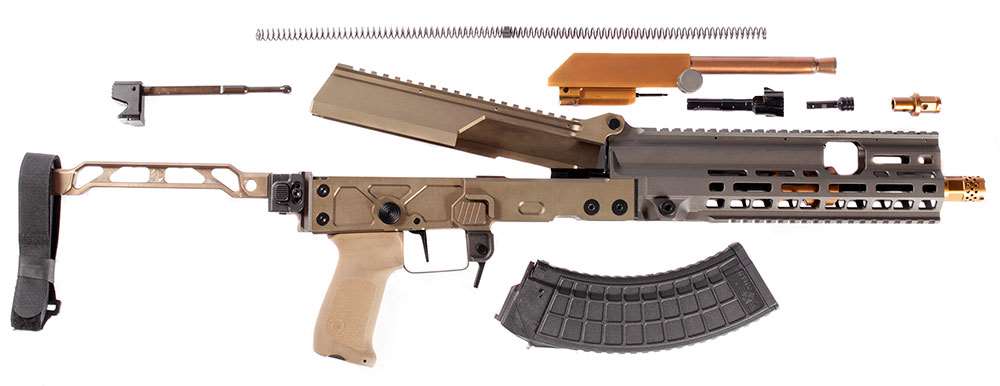
The SAK-21 makes three significant departures from a traditional AK. The first, and arguably most significant, is that it uses a short-stroke gas-piston system. Unlike the long-stroke design of the Kalashnikov, in which the gas piston is pinned to the bolt carrier, the Stenzel uses a short tappet that acts on an extension from its bolt carrier. According to Stenzel, this makes the SAK-21 more reliable when using a suppressor. Second, the SAK-21 has a true last-round-bolt-hold-open device, which means the bolt locks open on an empty magazine. A release is placed on both sides of the firearm. For the bolt to lock open after the last round, a standard AK magazine must have a special Stenzel follower installed. Lastly, the SAK-21 uses a push-through, cross-bolt safety like that used on the M249 SAW.
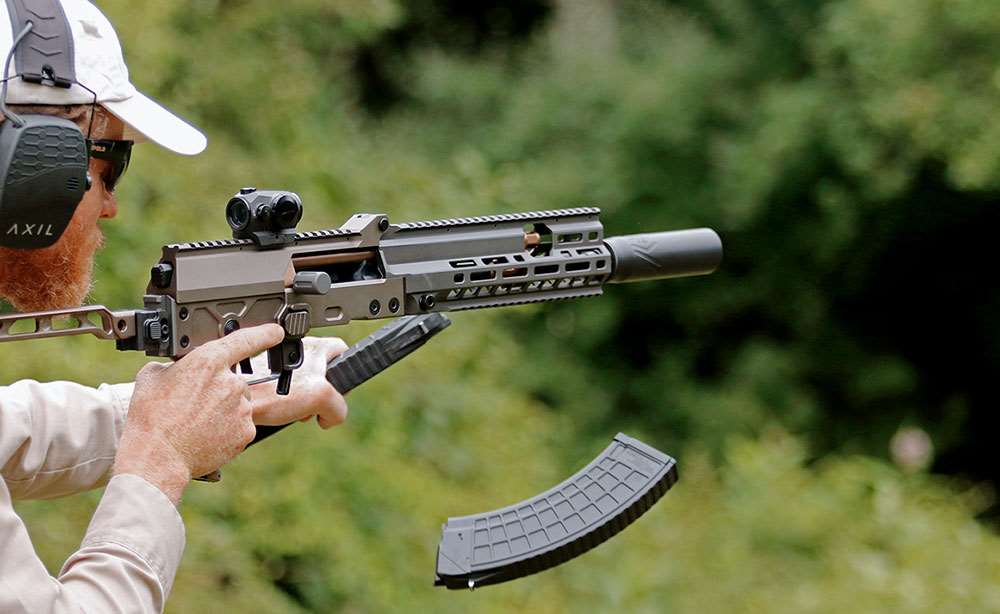
Construction of the SAK-21 is unlike any other AK. The receiver consists of two machined 7075 aluminum side plates that sandwich steel front and rear trunnions. The handguard is made of 6061 extruded aluminum and allows the barrel to freefloat. With a 5/8x24 tpi muzzle threading, the SAK-21 is compatible with the plethora of .30-caliber suppressors, so it is not limited to specialized AK suppressors. The company’s own muzzle brake comes installed.
The machined-aluminum dustcover mounts with a “dogleg” to the handguard, which gives a combined 20 inches of Picatinny rail for mounting optics and accessories. I experienced no zero shift after opening the dustcover for cleaning and returning it into position with an optic mounted.
The SAK-21’s gas regulator has two positions, one for supersonic ammo and the other for subsonic, both either suppressed or unsuppressed. It can be further fine-tuned by adjusting a screw in the regulator.
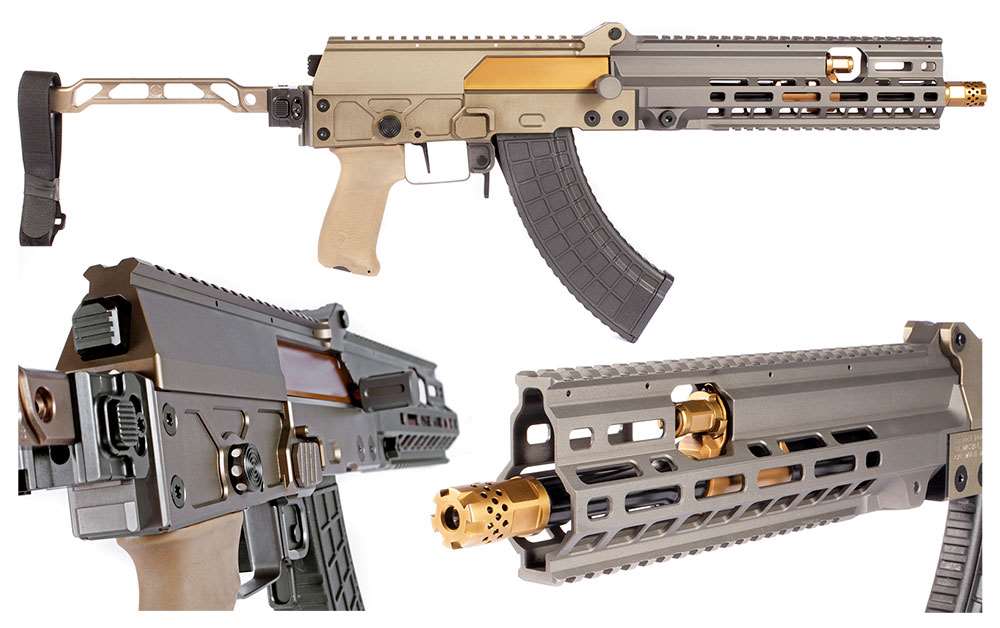
A modular design, the SAK-21 can also switch cartridges. In addition to changing the bolt and magazine, the barrel and gas system can be removed after loosening a set of bolts in the front trunnion. Any cartridge that can be utilized in an AK-type “rock and lock” magazine would be a possibility, including 5.56 NATO and 6.5 Grendel, with the company planning to offer conversions in the near future.
The story of the American AK is not complete without the story of American AK ammunition. Gone are the days where the only options were expensive European imports or military surplus of uncertain quality. Top American manufacturers, like Hornady, Nosler and DoubleTap, make high-quality 7.62x39 mm ammunition for hunting, self-defense and competitive shooting. My one concession to this all-American test was trying imported Wolf ammunition in the Century rifle, as this is the type of fodder that these entry-level blasters are most likely to eat.
Both the Stenzel and Arsenal showed the advantage of their free-floating barrels, and if made in a rifle configuration with a proper buttstock, I believe MOA accuracy would be achievable. All three lived up to the Kalashnikov reputation for reliability, with no malfunctions experienced. The closest to a traditional AKM, the BFT47 unsurprisingly delivers the most AK-like shooting experience. Its combination of a long-stroke gas system, stamped receiver and stock drop gave it the “harshest” recoil impulse, which is still quite mild. The trigger is noticeably nicer than your average AK and did not exhibit the tendency to “slap” when firing. The AK-20 gives an AK shooting experience with a touch of refinement. Though it uses a long-stroke gas system, its gas regulator softens the recoil impulse and its trigger is miles better than a standard AK. The SAK-21 had the best trigger and the smoothest recoil impulse.
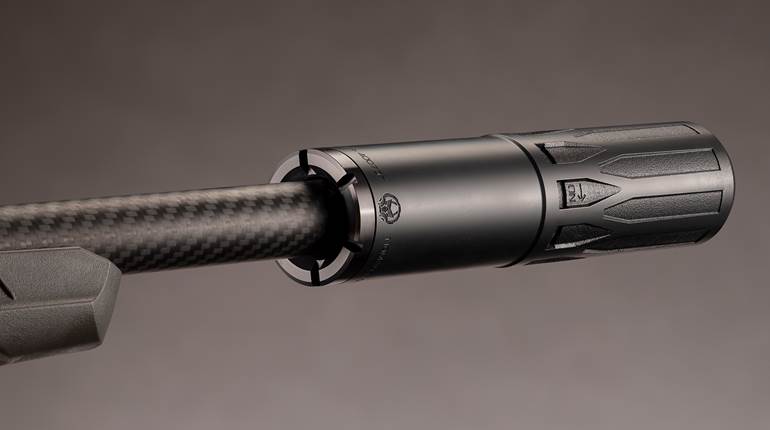
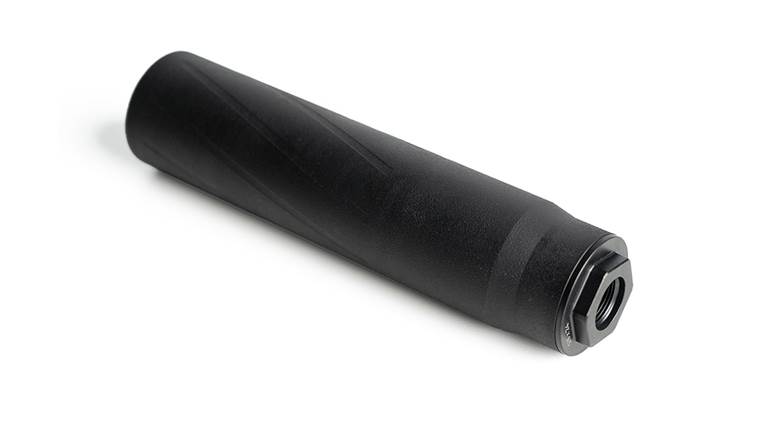
American-made AK firearms and ammunition are complemented by American-manufactured suppressors designed specifically for the platform. Dead Air pays aesthetic homage to the Soviet PBS-1 suppressor, while updating it with modern technology in the Wolverine. This can has a thread-adapter system that allows the suppressor to be used with virtually all AK-type rifles as well as common muzzle thread patterns or HUB adapters. A low-back-pressure design, the Wolverine works well with the non-adjustable gas system of most AKs. Made of Cobalt 6 and stainless steel, it weighs 22.6 ounces with the M24 adapter installed, can handle cartridges up to .300 RUM and is full-auto rated.
US Palm introduced its own line of suppressors this spring, including one specifically for AK-type firearms. Its Eye of the Storm (EOS) AK is 3-D printed from 718 Inconel and weighs less than a pound. A low-back-pressure design, the EOS AK incorporates a flash hider into its front plate. It has a 14x1 mm left-hand-thread (the traditional AK pattern) direct mount with a collar that locks into the indexing pin to secure it in place and it is full-auto rated.
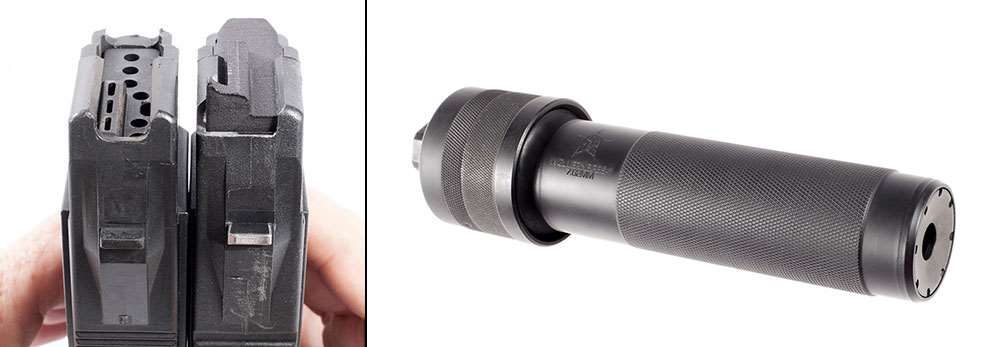
I was able to use the Wolverine and a Banish Backcountry suppressor on the Stenzel, the Wolverine on the Arsenal and the Wolverine and EOS-AK on the Century. The adjustable gas systems of the Stenzel and Arsenal allowed for perfect functioning of both pistols with both supersonic and Hornady Sub-X subsonic rounds. Despite its non-adjustable gas system, the BFT47 functioned perfectly with both supersonic and subsonic ammunition. Like the term “American AK,” the phrase “suppressed AK” is no longer an oxymoron.
The American AK is alive and well. There are more models to choose from, more specialized parts and accessories available and more quality-made ammunition on the market than ever. Americans have not only embraced the AK platform, they have also brought their own ideas and innovations to the original design. For anyone who wants to be proficient with the most prolific firearm in the world, there isn’t a better time than now to own an American AK.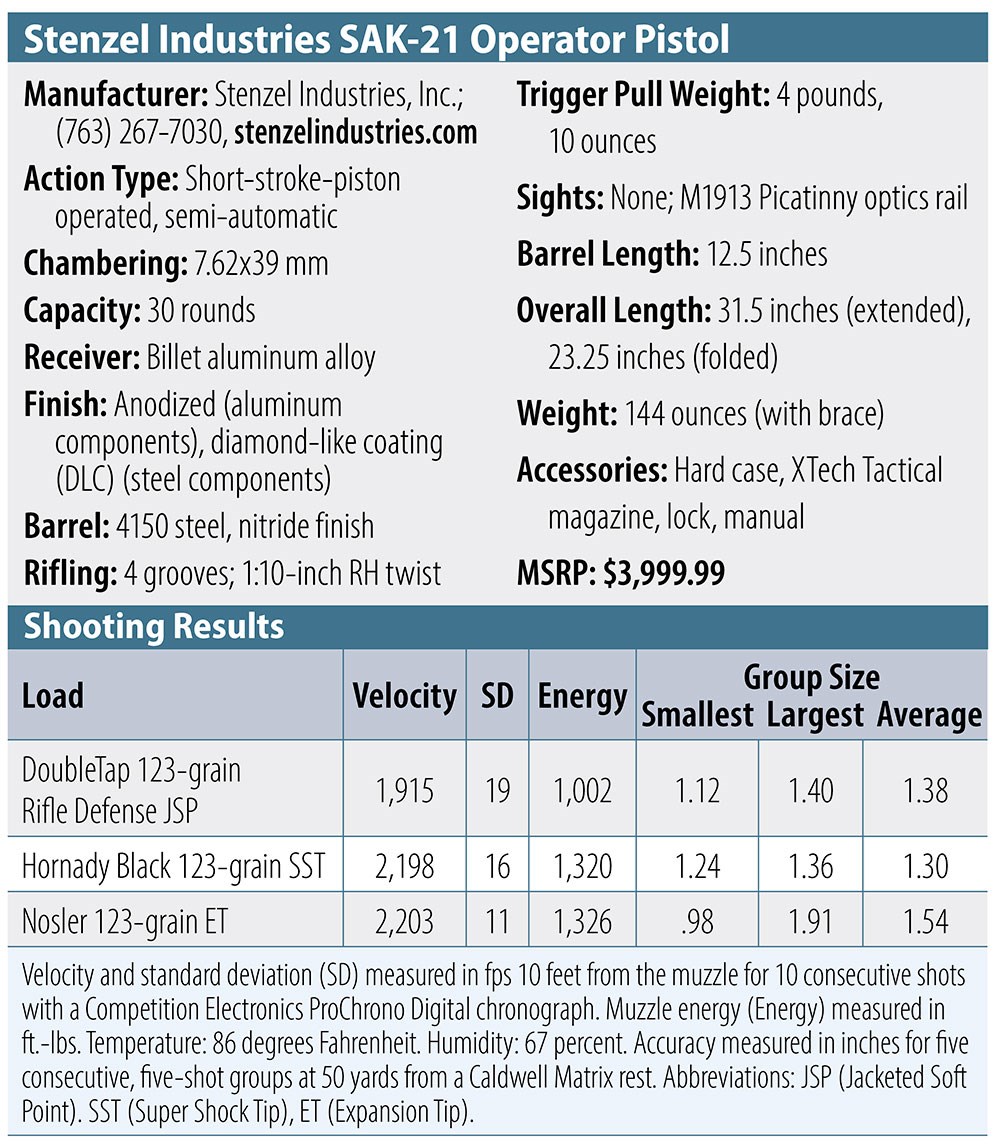
Most Popular