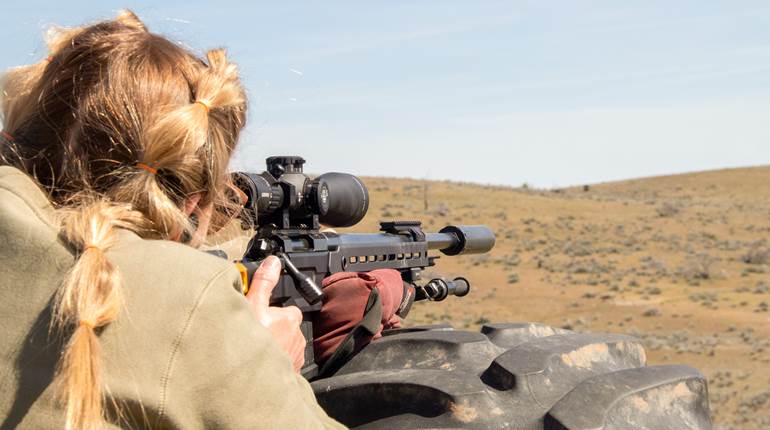
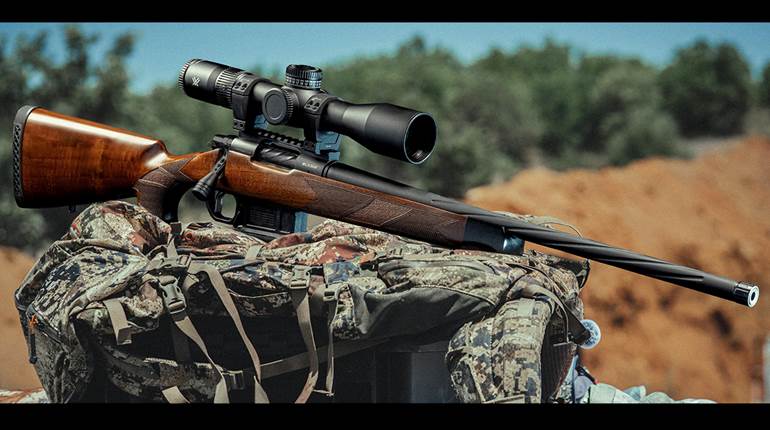
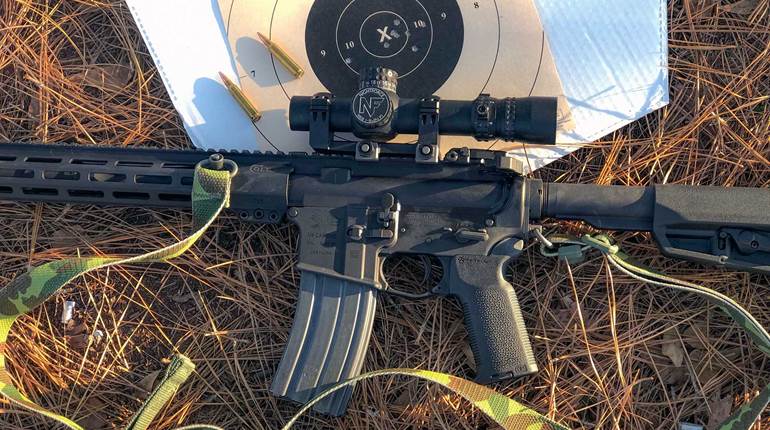
There is a particular jolt of joy when a shooter nestles behind a perfectly stable rifle and puts the ideal bullet exactly where intended.
The dopamine dose is often correlated with the difficulty of the shot. Thus, we riflemen spend a lot of time seeking the best possible support to steady the rifle and guarantee a hit. As the makers have given us ever-improving rifles, optics and loads capable of precision deep within fish-story territory a generation ago, there has been a parallel development in bipods, tripods and rests.
With these, a shooter can lock the rifle into position to take full advantage of the magnification and clarity of current optics. In the hang time between recoil and the proof of impact, there can be many milliseconds—or even seconds—for the anticipation to build, depending on range to the target.
Some years back, I was visiting my instructors conducting an advanced sniper course in the Southwest. One morning I grabbed one of the spare Mk 13 rifles chambered in .300 Win. Mag. to go see the 1-mile target students were using. That heavy rifle on its bipod was encouragingly steady as the spotter read the wind playing lightly across the saddle between us and the target on the opposite hill.
For a pile of brass, that hang time between shots, break and result was punctuated with the letdown of a near miss. However, once we figured the correct hold, time stopped for a split second until the steel gong rocked through the image in the scope and that authoritative clang drifted back over the small valley. That hit and a few after had me grinning from ear to ear and remains a cherished memory where pride and excitement intertwine.
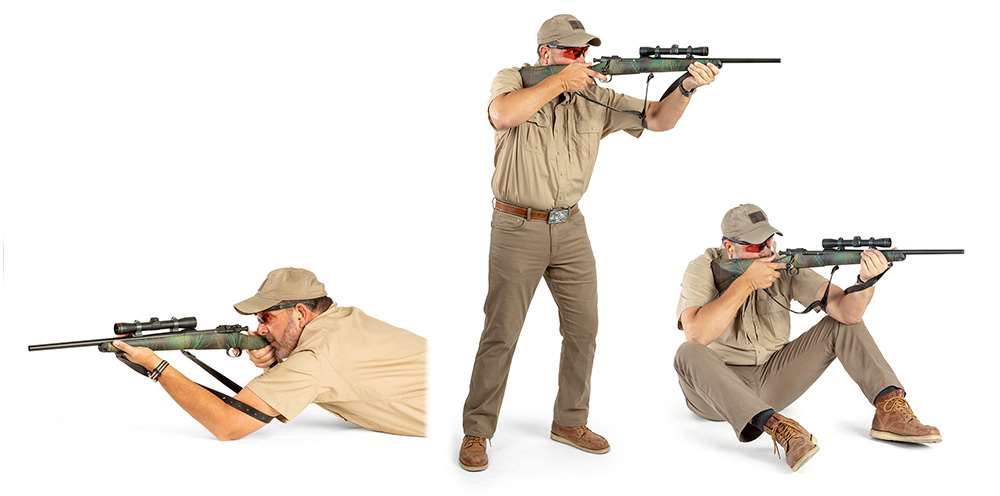
As clearly as there is a joy in placing the shot from a rested and supported rifle, however, there is another jewel hidden in the opposite: hitting with only your body to support the rifle. The term “classic marksmanship” is often used to describe the traditional four positions of standing, kneeling, sitting and prone—aided by only great form and the sling of the rifle. With the emphasis on rests and precision today, many shooters have not yet been exposed to the more subtle joy that comes from simply dropping to the ground in an open-leg, sitting position and having the rifle hang steady on target.
Using the architecture of the bones to support the rifle is the foundation of High-Power rifle matches, as well as the Olympic shooting disciplines. There is a small learning curve for a shooter to grasp how to “stack their bones” under the long gun, but it is time well spent with deep reward. Luckily, since this was the predominant mode used in both military training and rifle competitions for most of the last century, there is no shortage of well written and illustrated instructional manuals. The military manuals from the interwar period are particularly good.
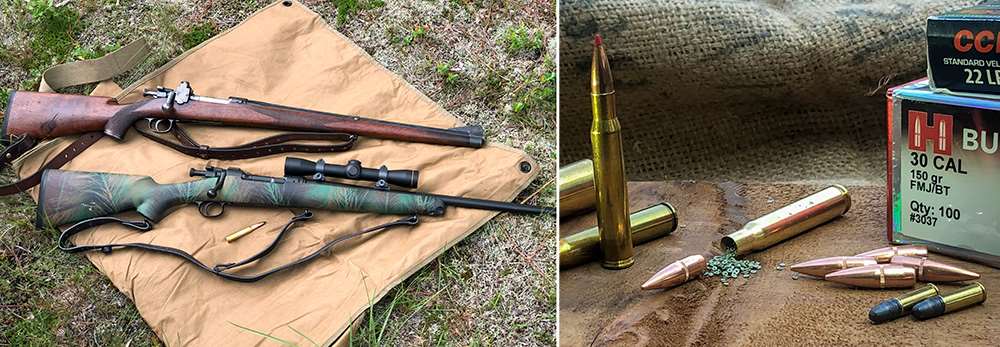
The shooting sling is the secret weapon in this approach, which turns a somewhat stable position into a rock-solid one. Most shooting slings today derive in function from the legendary M1907 sling, where the sling forms a loop around the upper arm of the support arm to tie the rifle into the body position. When in position, the sling takes the weight of the rifle and transfers it structurally into the position, allowing the shooter to release muscular effort otherwise needed to hold the weapon up and steady.
When the rifleman first experiences just how steady they can be when slung up and in a well-built position, there is an immediate confidence boost, and the rifle transforms into a radically more useful tool. The best hits from the loop sling come from a relaxed shooter where the rifle has settled into the position and the shooter is in harmony with his or her piece, the rifle remarkably steady and swaying ever so subtly as pulse and breath conduct from flesh through leather (or nylon) to wood (or synthetic/aluminum). Once a shooter feels that almost magical stillness and harmony with the rifle, there will always be a loop sling of some kind on at least one of their rifles.
I regularly use a variety of loop slings on my rifles, including my old competition 1907 and modern versions including Magpul’s RLS (Rifleman Loop Sling), Andy’s Leather’s Rhodesian and Galco’s Ching Sling (which requires an additional swivel midway down the fore-end).
For AR shooters, the common two-point tactical slings popularized by the adjustable Viking Tactics and Blue Force Gear slings (each heavily used across our military ground and special operations forces) can be used to achieve a similar effect as the loop sling. The rifleman builds a stable position with bone support and then tightens the tail of the adjustable sling to tie the rifle into the structure. This takes some of the weight of the rifle off the support arm and steadies the dot or reticle more than without sling tension. The two points work pretty well and are more versatile overall, but don’t allow quite the level of relaxation and stability the loop sling provides.
Pleasant Power
Just as there is a clear joy in having an accurate rifle perfectly supported, there is a closely related part of the pleasure, which is releasing raw power to do its work. Our ancestors probably never had a spear or arrow that was fully adequate to their liking for the largest game animals or the most dangerous predators. There is a primordial rush in firing a powerful cartridge. The roar and the recoil are firm testament to the rifleman as the apex predator.
Growing up in the South, it was a well-recognized rite of passage when you first shot a high-power or deer rifle, with bragging rights commensurate with the power of the cartridge. I can remember the first time I shot the mighty .30-’06 Sprg. We were visiting some friends in Montana, and one afternoon we young boys got permission and broke out the big rifles, shooting across a pasture at a makeshift target on the hillside about 200 yards out.
I had fired some deer calibers before, but this was the legendary ’06 and the actual Remington 700 in my hands had been used by its owner’s family to take many elk and even large bears. There was joy as I hit the target, sure, but there was also wonder at the power in the shot. A few years later, the same feeling of wonder repeated at the next scale as I nestled down behind a Marine Corps Barrett M82 Special Application Scoped Rifle to fire a .50 BMG bullet at an old armored vehicle far downrange.
A good friend of mine recently got into African rifles, and I could recognize that same electricity as he told me about trying to master making follow-up shots with the .458 Win. Mag. from his Blaser R8 rifle.
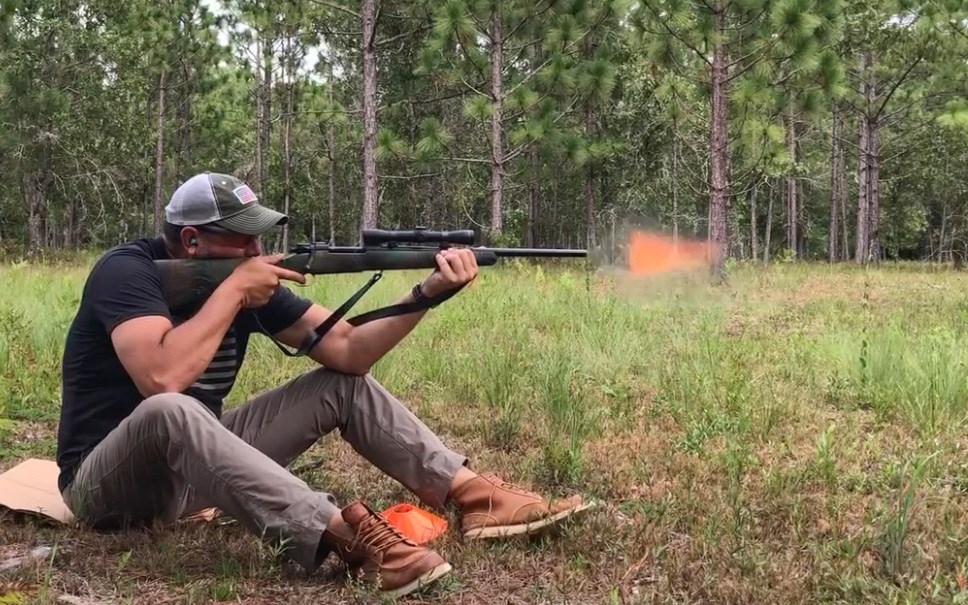
There is clearly excitement alongside horsepower. But, there is a hidden joy I highly recommend, and that is reduced-power loads in full-size chamberings.
I first stumbled onto the idea from a blog article by former technical editor Ed Harris, where he championed 13 grains of Red Dot powder as the universal practice load for a variety of military and game cartridges. Intrigued by the idea of economical and mild loads. I embarked on a journey that has been hugely rewarding.
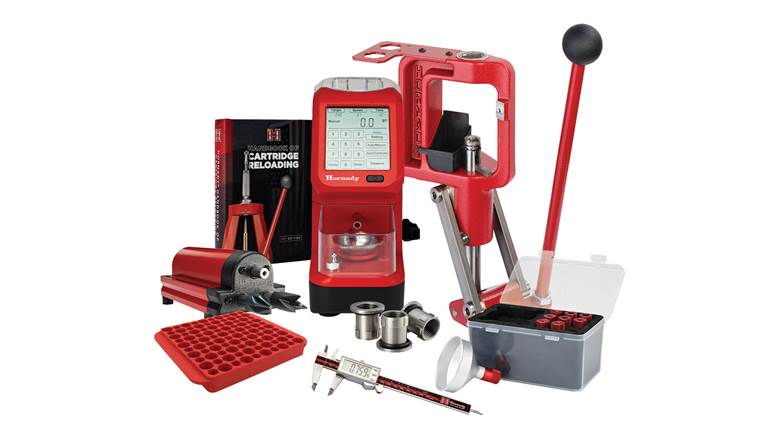
Reduced loads are a handloading-only proposition, but they are so much fun that by themselves they justify getting a simple loading press and taking the plunge. The manuals often call for cast bullets and mild charges of pistol powders. Most veteran loaders have “off the books” loads with preferred powders and projectiles. The safest way to get into the concept with jacketed bullets is to use Hodgdon’s super bulky Trail Boss powder. Multiple current manuals have data for Trail Boss across popular centerfire calibers.
I’ve used reduced loads in my Krags, 1903 Springfields and Garands, as well as hunting, scout and precision rifles. The loads have a relatively mild report—just a notch above a high-velocity .22 LR. The recoil is just enough push to let you know the load is still dangerous, but it is actually pleasant. They are a perfect match to the old steel buttplates on military and vintage rifles. My preferred velocity for what I describe as my “100-yard” loads is between 1,450 and 1,800 fps with bullets in the typical weights for caliber. In a number of my vintage military rifles, this lets me adjust the sights to the 550-yard setting and be very close at 100 yards.
In .30-caliber cartridges, I’ve loaded bullets from 110 to 200 grains, but predominantly have used Speer 130-grain varmint hollow points, Berry’s 150-grain plated flat points and Hornady’s 150-grain boattail FMJ. The ballistics of these launching at such mild velocities are similar to .357 Mag. fired out of a lever-action rifle and the venerable .30-caliber M1 carbine—both well-known and appreciated for being “fun” rifles. Most recently, I was working with a reduced .30-’06 Sprg. load of 17.5 grains of Trail Boss in Hornady brass and pushing FMJs out of the 19-inch barrel of a ’90s-vintage, custom 1903 Gunsite Scout Rifle. The fluffy powder launched the bullets at a mild 1,550 fps and put the impacts in a tight-enough cluster for me to reliably hit a 3-inch target.
I am continually surprised at just how much enjoyment these mild loads provide. With a little experimentation, 1.5-inch groups or smaller at 100 yards are possible. I use these to just enjoy some position work with the rifles, practice bolt manipulation for follow-up shots and work on snap shooting. That sounds serious, but truth be told, there is a decent amount of just plinking at steel targets and generally enjoying fine rifles as well. I particularly enjoy how my go-to reduced .30-’06 Sprg. load converts my M1 Garand into a straight-pull bolt-action, the recoil just unlocking the action but not overcoming the recoil spring to cycle it. An added benefit is the ease of instructing new shooters using light loads.
In several of Col. Townsend Whelen’s books, he talked about loading and using similar reduced loads on his many adventures. He could take just his big-game rifle on extended trips into the wilderness and, if opportunity arose for small game, chamber a reduced load to take the shot. I have found quite a few experienced riflemen since who adopt a similar approach and use a pet reduced load for their practical rifle for that target of opportunity.
Some riflemen will resist the handloading requirement of reduced loads (don’t—you’ll be grateful once you try it). For a broader segment of shooters, the stalwart rimfire trainer awaits. As much as I genuinely love my 100-yard loads in the .30 calibers, I still regularly enjoy rimfire therapy. I make regular use of an old Anschutz 64 that a friend gave me for pure position work and a scope-topped Tikka T1x with a Rhodesian loop sling to combine practical field work with position practice. Joy is the right word for time spent with a quality .22 on a beautiful day at the range. Many shooters “outgrow” the rimfire as their shooting pursuits change. I’m 40-plus years into a rewarding partnership with the rimfire, and hope I
never outgrow it.
Mastery and Mentoring
There is a lifetime of satisfaction along the path to mastering the rifle. I treasure the image of my first platoon of Marines coming off the 500-yard line with looks of accomplishment after completing the long-range stage of their annual re-qualification. Anytime I spend a little time away from the rifle while working primarily with handguns or other projects, all it takes is a quick session to remind me how much enjoyment the rifle has brought me and continues to.
There is another, perhaps equally sublime, joy available to the rifleman: sharing the rifle. Seek an opportunity to introduce or re-acquaint a friend or fellow citizen to the long gun.
A successful friend who is into Porsches once convinced his salesman to come shooting and asked me to give him a quick introduction to the rifle. We set up on the 100-yard line bench with a Ruger Precision Rimfire on a Harris bipod and he steadied the Leupold optic’s reticle on a small steel target. The sputuk! of the round merged seamlessly with the tink! of the impact, and the joy was electric in the air. The salesman’s expression looked like a kid with a new puppy—and I think we were as or more excited than he was.
Ask any shooter who’s been doing this for a while, and he or she can instantly recall the joy of that first hit for just about every shooter they’ve shared the rifle with. The very memory of it will light them up and trigger an animated story.
I have a file full of such memories from my daughters’ first shots, Marines achieving new marksmanship milestones and students and friends getting that smile from a great rifle. Re-introducing a friend or family member who hasn’t shot in some time can be nearly as rewarding. Chances are good that the rifles and optics are different and perhaps easier to use than what they remember or last fired. My dad still talks about a visit where we took a new scoped BCM AR out, and he was not only breaking clay birds placed on the 100-yard berm, but also sending Black Hills match ammo down to smash the pieces. Joy, indeed!
Most Popular