Smith & Wesson entered the modern pocket .380 market in 2010 with its Bodyguard .380, an internal-hammer-fired design with a six-round, single-stack magazine and a double-action-only trigger pull. After more than 10 years, the company discontinued production and began plans for a second-generation model. But the path to the Bodyguard 2.0 wasn't a linear process. Watch our "American Rifleman Television" feature above to hear the story of how the new Smith & Wesson Bodyguard 2.0 came into existence.
"So we were basically at the end of the Bodyguard 1.0 life cycle, and we had one ready to replace it," said Vincent Perreault, director of brand marketing, Smith & Wesson. "And through just this consumer insight research study that we were doing, which wasn't even about any of the micro handguns, it was just something that we kind of happened upon and started talking to these end users, and a lot of them carried the micro guns, and they weren't happy with them, but everybody had one."
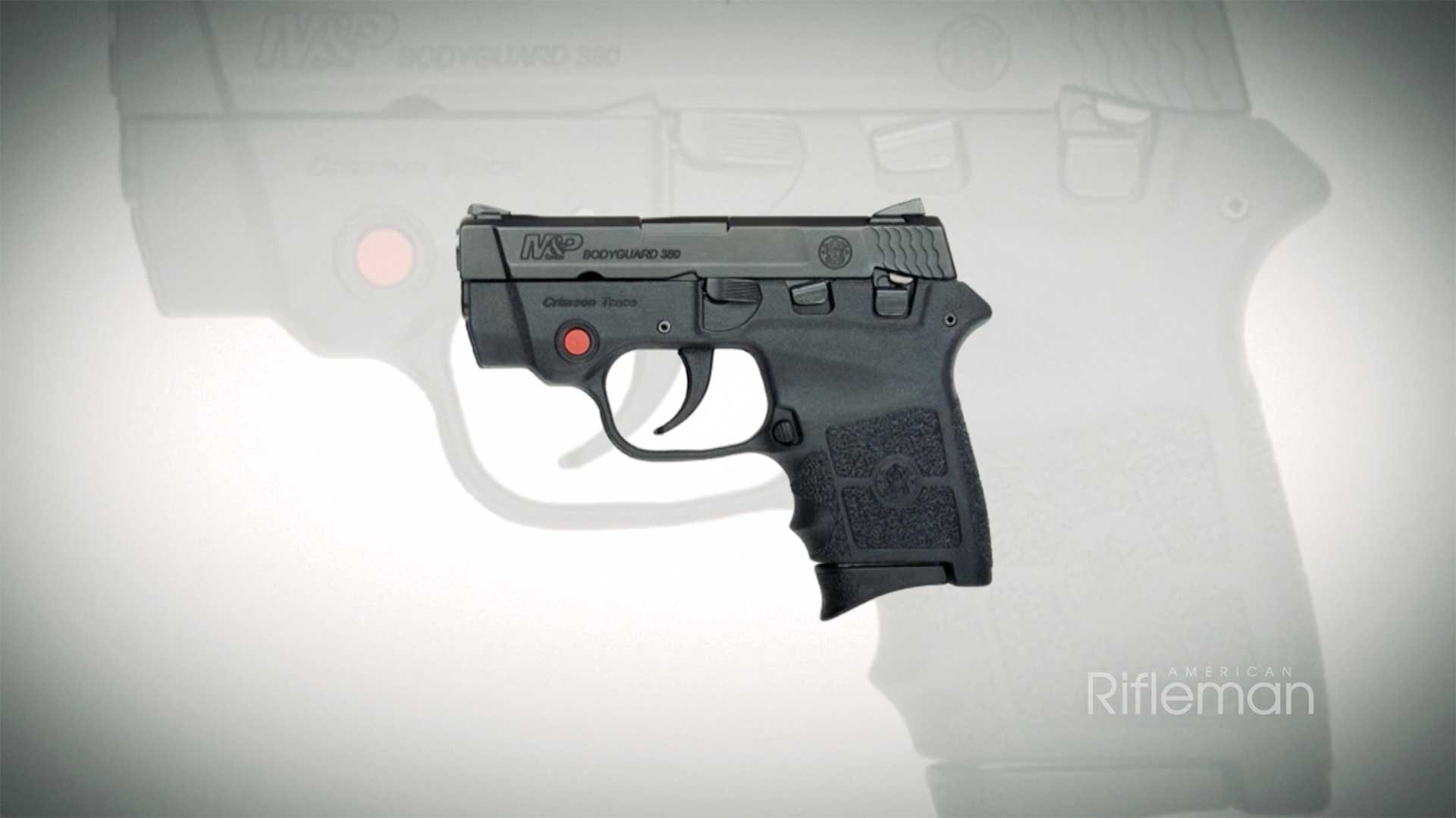
Until recently, many pocket-size .380 ACP-chambered pistols like the first-generation M&P Bodyguard were ideal for concealed carry due to their small size, but the small size came at a cost. Many of these early pocket pistols offered brutal recoil, leading to less training and range time needed to master these small semi-automatics.
"The Bodyguard came into existence because we identified a key gap with the micro .380s," said Corey Beaudreau, product manager, Smith & Wesson. "They're snappy. They're not fun to shoot. They're great for concealed carry, but that's it, right? Like concealed carry, but then it's not fun to shoot, so you're not going to practice at the range with it. So we went in, kind of wiped the slate clean with the Bodyguard and said, 'Let's make this ergonomic, as small as possible, fun to shoot.' And at the end of the day, we ended up with the Bodyguard 2.0."
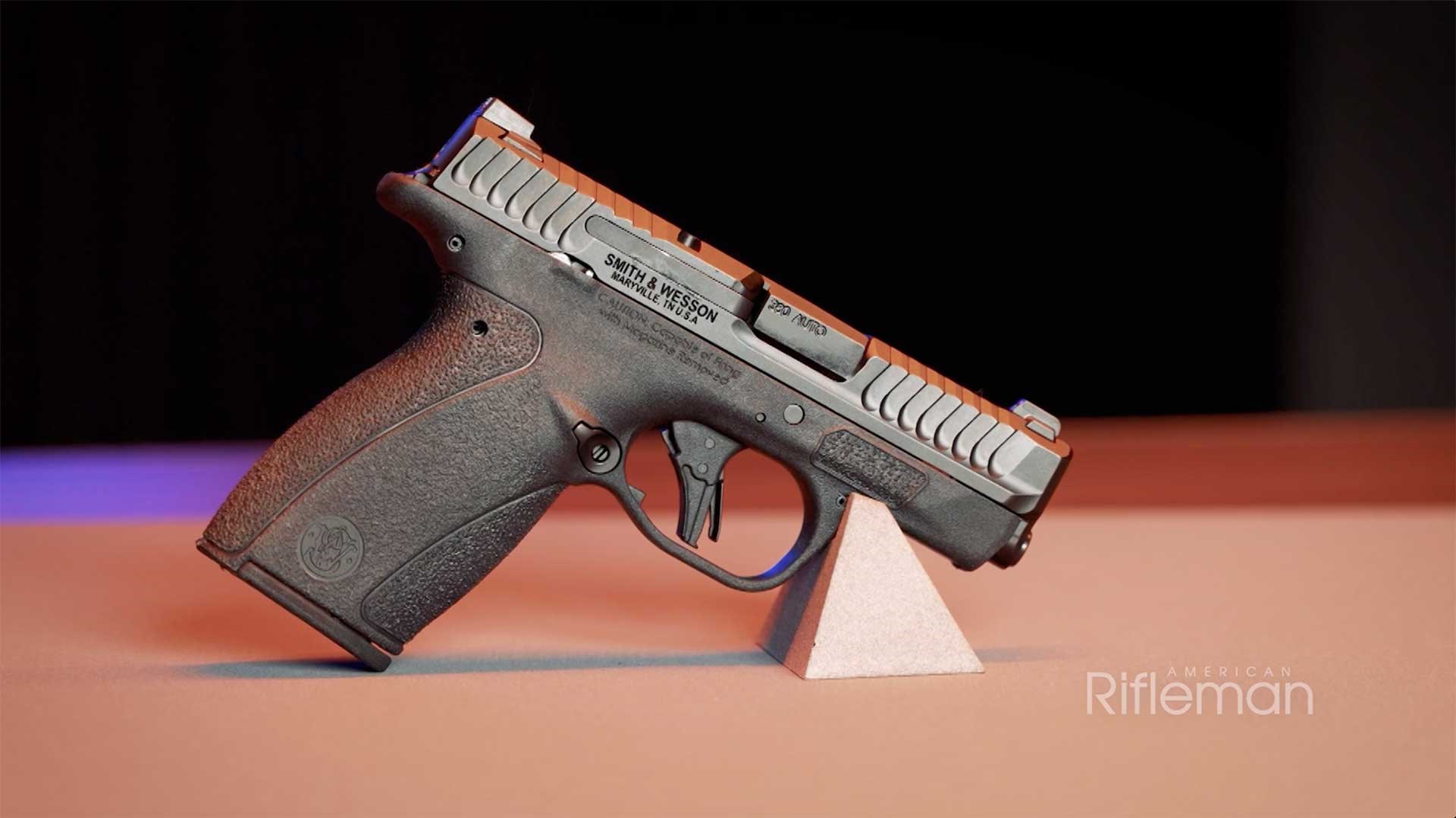
The new Smith & Wesson Bodyguard 2.0 measures 5.5 inches in length, 4 inches in height and is less than an inch in width. Within that package, there's a 10-round, flush-fit magazine, and each pistol ships with an extended 12-round magazine as well. Smith & Wesson incorporates its new bladed trigger safety on the gun, similar to those found in the new generation of M&P Shield Plus handguns and other recent M&P handgun releases from the company.
"For anybody who owns one, I think, you know, that's a range pistol as well as a self-defense pistol," Smith & Wesson CEO Mark Smith said. "It's pleasant to shoot. You know, it's, you know, recoil management's great. Trigger’s tremendous, you know, so it really kind of hit all of the, you know, it hit all of the requirements from the consumer right on the head. And the success of that product just, you know, is an outcome of listening to what the consumer wants."
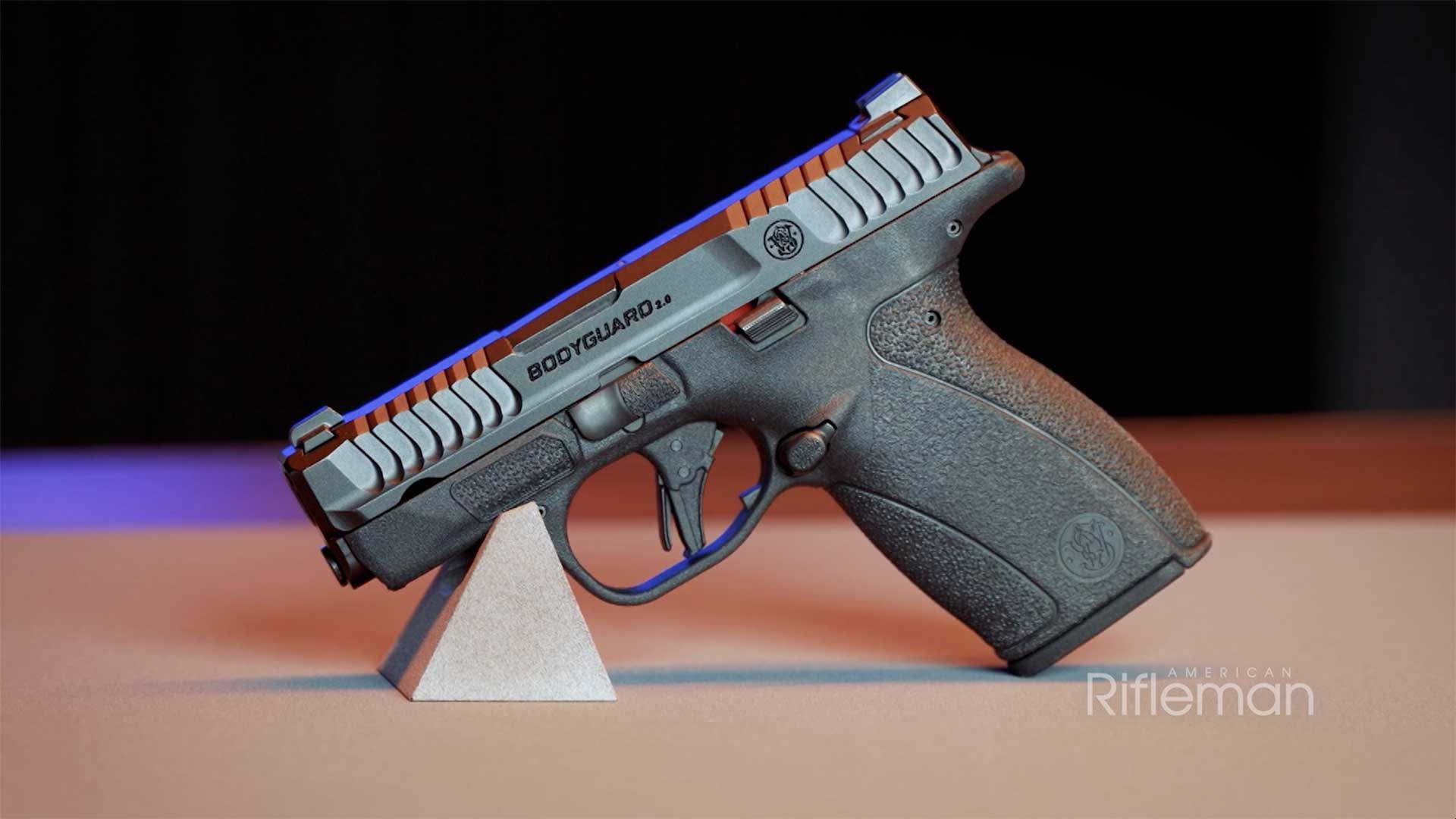
From the start, the design of the Bodyguard 2.0 went through several iterations to find the perfect balance between carry-friendliness and shootability. Several concepts made the rounds within the Smith & Wesson team, as people provided opinions and input on frame sizes, textures and shapes before settling on a final version.
"We did the 18-degree grip angle that the M&P has. We did the texturing, so it's a coarse texture, but it's not too coarse," Beaudreau said. "Again, this is a everyday-carry gun. You don't want it to be ripping you up, tearing up your clothes. So we did an undercut on the trigger to get your hand as high up as possible, a beavertail in the back to also help mitigate that recoil. Everything was designed to make this the most shootable .380, micro .380, that you could possibly carry."
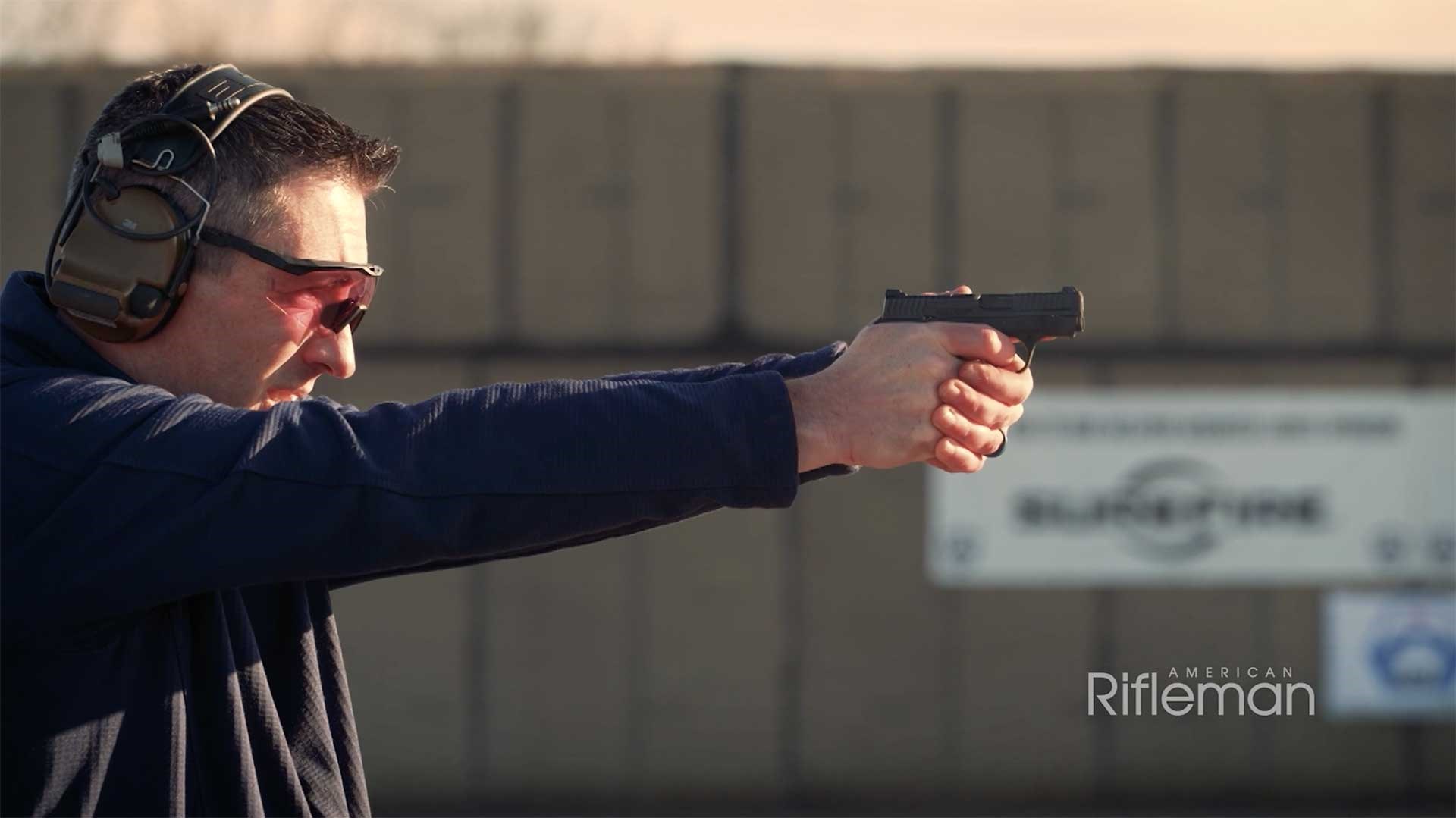
Once production began on the second-generation Bodyguard, early range events with the new gun proved that not only was the gun easily concealable, it was also a very shootable handgun that had incredible capability at distances far greater than are normally thought of for pocket .380s.
"A real eye-opener for me was when we were at one of the early events with the Bodyguard, and we had steel at 50 yards and able to shoot and hit steel with those little micro .380s at 50 yards and repeatedly hit it," Perreault said. "And that, to me, was just, like, that was it. That, I knew, right away, we had done something really great, to feel that comfortable shooting that tiny gun at that distance and hitting exactly where I wanted to hit."
To watch complete segments of past episodes of American Rifleman TV, go to americanrifleman.org/videos/artv. For all-new episodes of ARTV, tune in Wednesday nights to Outdoor Channel 8:30 p.m. and 11:30 p.m. EST.