Recently, I tried to describe the Mondragón rifle to a friend, using just a few words:
“A turn-of-the-20th-century semi-auto rifle, the first self-loading rifle accepted by any army, designed in Mexico, built in Switzerland and finally destined for use aboard German aircraft in World War I.”
Clearly, I am not a man of few words. But in my defense, the Mondragón is a unique rifle worth talking about.
Mexican artillery officer Gen. Manuel Mondragón began his firearm design career with a straight-pull, bolt-action rifle design named the Model 1893 chambered in 6.5×48 mm, a cartridge developed by Mondragón himself. Mondragón received patents for the M1893 in Belgium and France in 1892, and then in the United States in 1896.
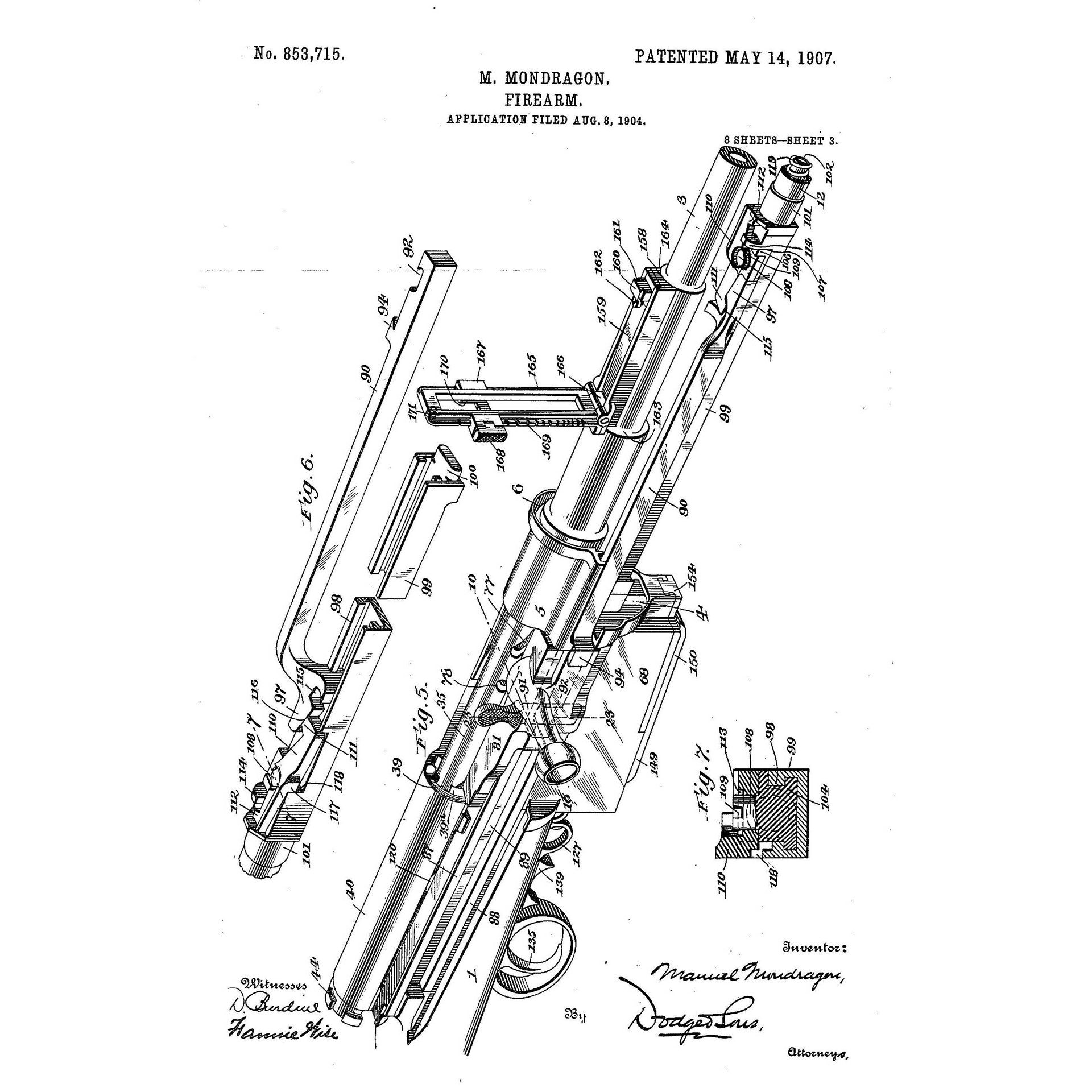
There was little interest in his first rifle, but Mondragón was a man on a mission. His next design was a unique and aggressive concept quite literally 20 years ahead of its time. By August 1904, Mondragón filed a patent application for a self-loading rifle. General Mondragón was a self-starter, and he began the design process on his own initiative, creating an ambitious self-loading firearm at a time when many nations were still using first generation bolt-action rifles. It is worthwhile to mention that Mondragón developed his rifle completely on his own, without relevant examples for influence, or earlier designs to copy or refine.
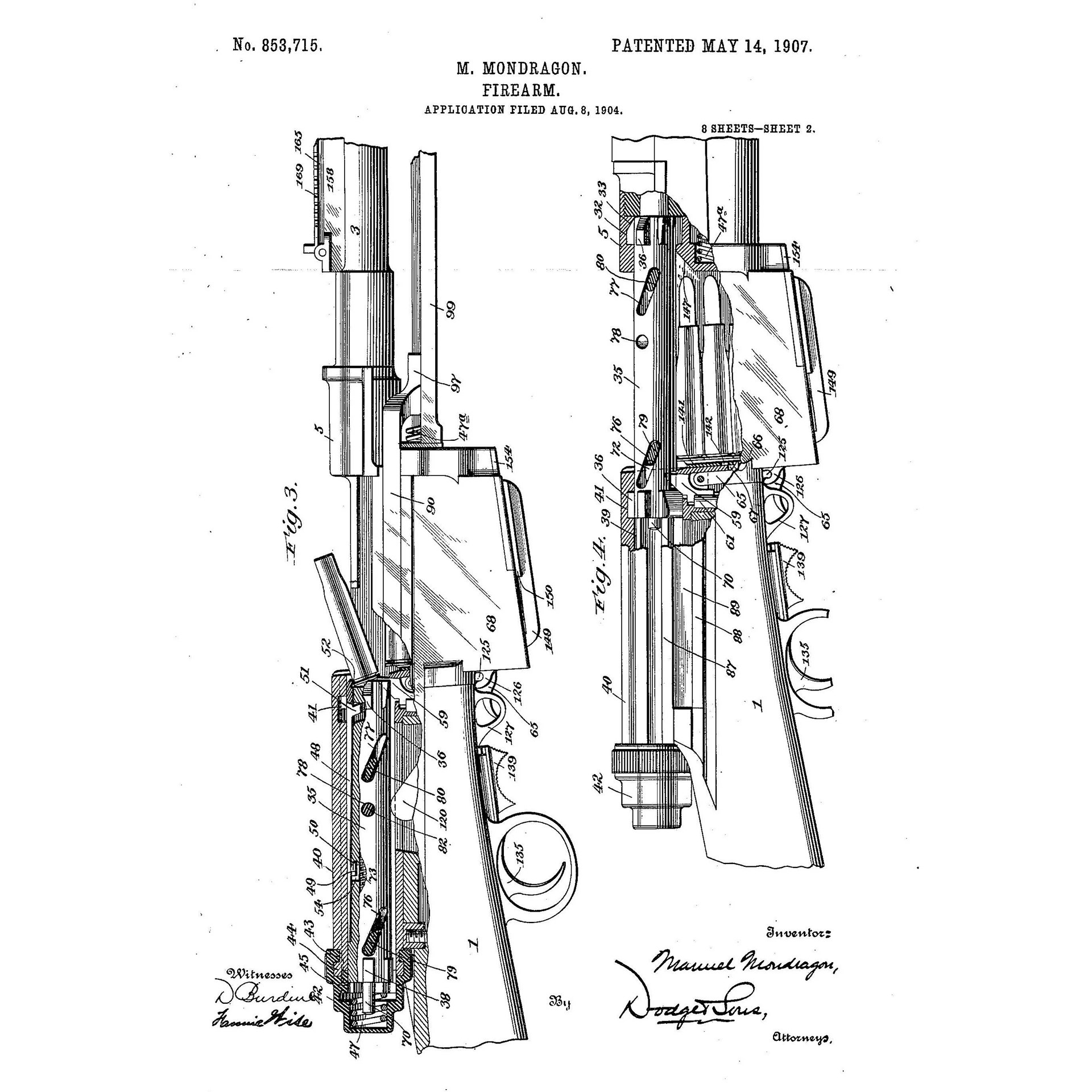
Despite working alone, he managed to create a semi-automatic, gas-operated rifle with a multi-lug, rotary bolt operated by a long-stroke gas piston. Propellent gas was drawn off through a small hole near the muzzle, and this drove the gas piston beneath the barrel. The gas impulse unlocked the bolt and operated the self-loading action.
More than 120 years later, Mondragón’s semi-automatic is still a great gun story, filled with political intrigue, financial drama, maddening mechanical intricacy and a strange appearance in World War I.
Porfirio Díaz: Dictator & Mondragón patron
The fact that the Mondragón rifle existed at all was due, in large part, to the patronage of Mexican President Porfirio Díaz. The dictatorial Díaz regime (1876-1911) brought about a period of relative political stability in Mexico, and his power base of technocrats (the “Científicos”) boosted innovation in Mexico as never before. Diaz’s military experience allowed him to see the great potential in Mondragón’s self-loading rifle, which would ultimately bear his name as the “Fusil Porfirio Diaz Systema Mondragón Modelo 1908.”
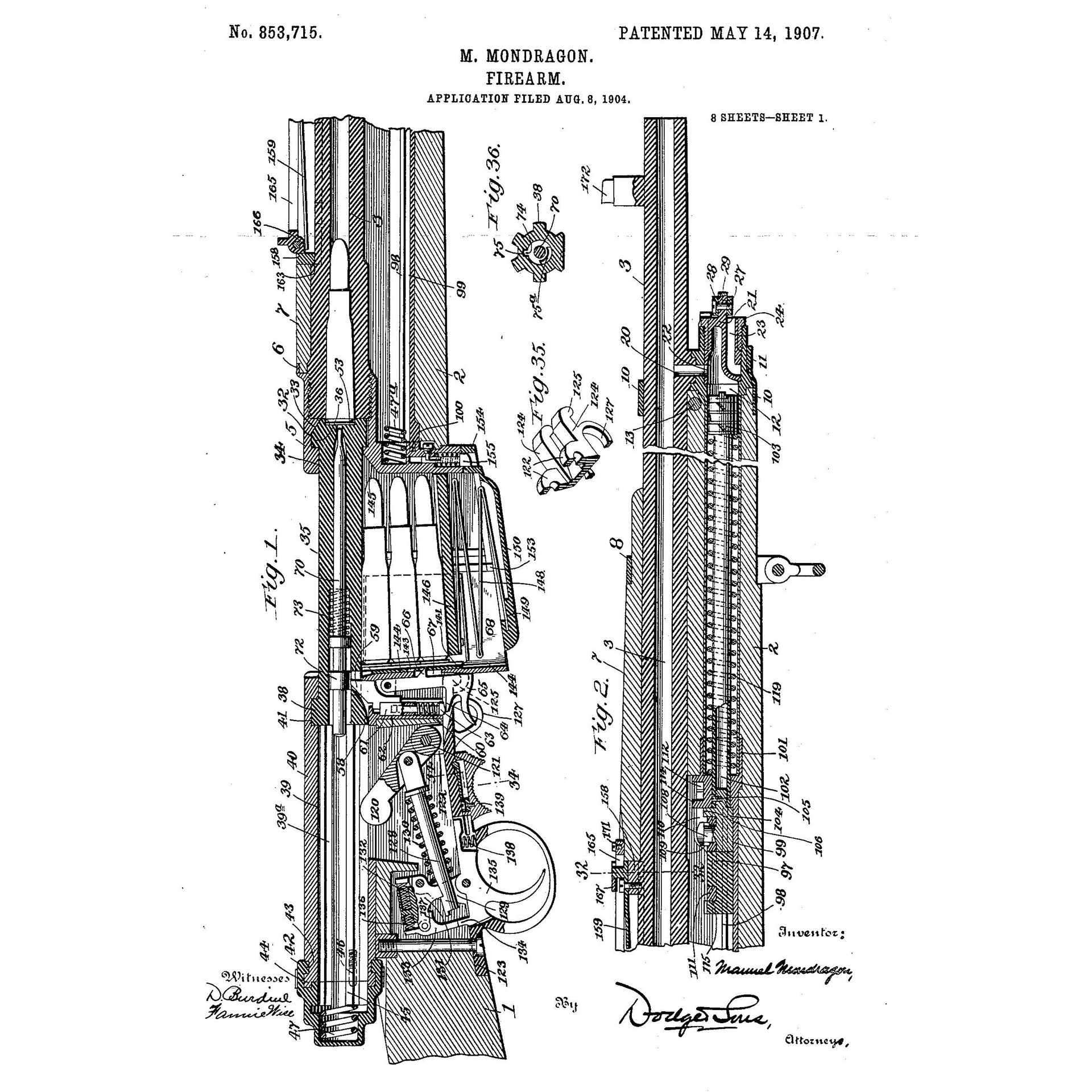
As Mexico lacked the necessary manufacturing equipment and skills to produce the design domestically, in 1894, Mondragón convinced the Swiss firm Schweizerische Industrie-Gesellschaft (SIG) to build 50 test samples of his fledgling self-loading rifle. Later that year, the Mexican army was impressed enough to order 200 more.
It took until 1904 before a few samples were completed and sent to Mexico. After some testing and further discussion, the Mexican government decided to move ahead with the project. It was a point of pride for President Diaz, and, he believed, it demonstrated that Mexico was becoming the equal of the military powers in Europe.
Development of the new rifle was frustrating, and a considerable amount of time was consumed in experimentation and negotiation. Various cartridges were tried, including a unique 5.2x68 mm round developed by Mondragón and Swiss Col. Rubin. Unfortunately, Mondragón’s complicated design was found to be ammunition-sensitive—the gunpowders of the era developed too much pressure, and several early tests ended in frustration with broken internal parts.
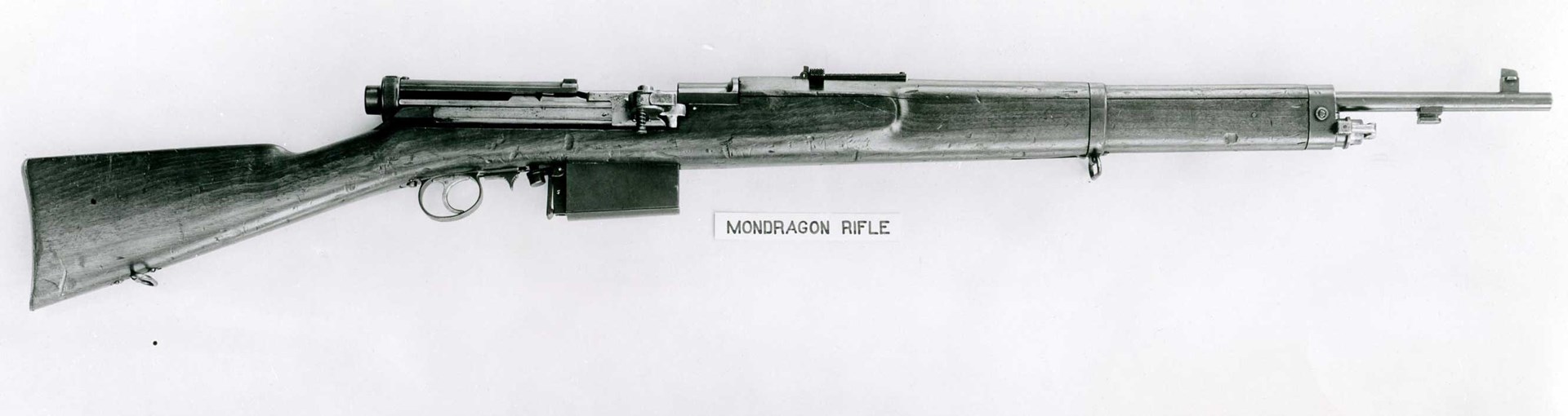
After flirting with several chamberings, Mondragón settled on the 7 mm Mauser cartridge, and on May 24, 1908, the Mexican government contracted with SIG to manufacture 4,000 of the self-loading Mondragón rifles, along with 4,000 dagger-type bayonets. The original rifles used an integral 8-round box magazine, with a 20-round detachable box magazine coming shortly thereafter. The new rifles were outrageously expensive. Each Mondragón cost the equivalent of four well-proven Mauser rifles.
Production lagged at SIG until early 1911, when the first group of 400 rifles were finally delivered to Mexico. Problems were noted with the initial shipment almost immediately—the Modelo 1908s did not work well with Mexican ammunition.
Conceptually, the Mondragón was a tremendous breakthrough in infantry firepower, but in practice, the design was dogged by its need for pristine ammunition and nearly perfect shooting conditions. Also, the rifle itself had to be kept exceptionally clean, and the fussy design simply would not allow it to be easily field stripped for maintenance—certainly not in the field, nor even on the test range where contracts are won or lost.
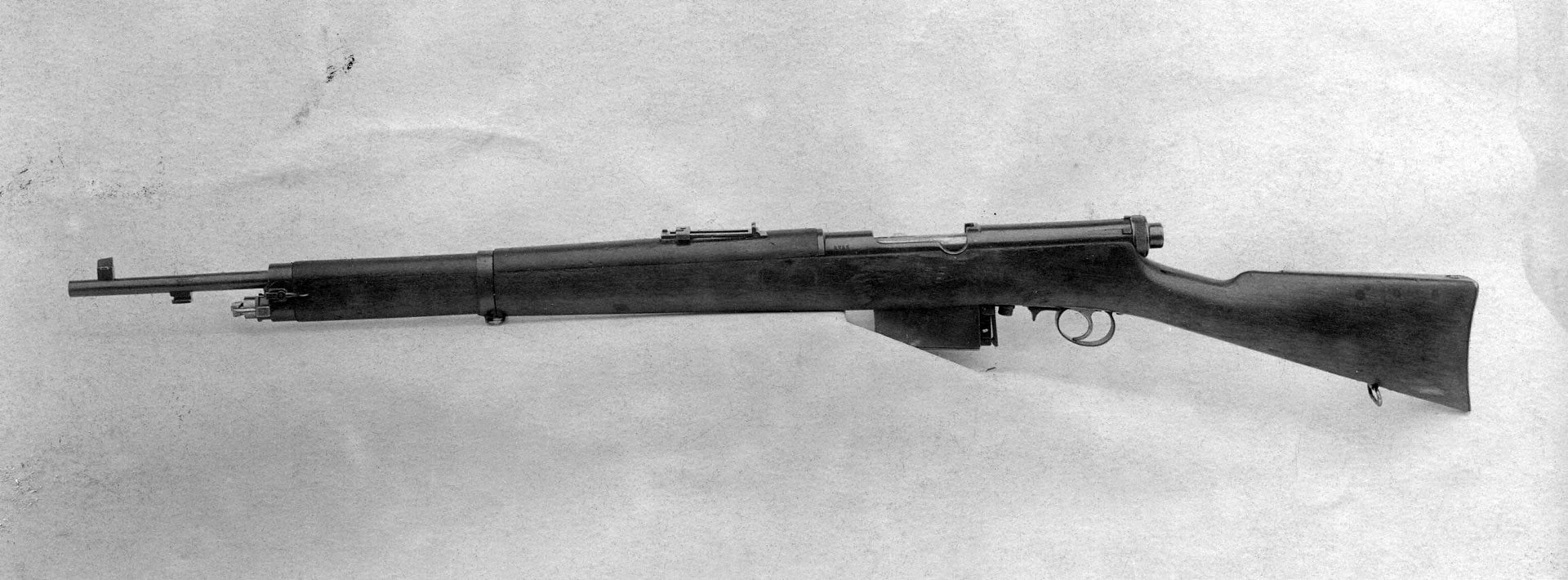
Disaster struck on May 25, 1911, as President Diaz, the ultimate sponsor of the Mondragón rifle, was forced to resign from office. The Mexican Revolution was underway and would not end until December 1920. Under those circumstances, no one in Mexico was interested in paying for expensive rifles that rarely worked. As for the rifles already in Mexico, there are rumors of their use in the revolution, but no hard evidence.
In Europe, SIG was temporarily stuck with about 4,000 Mondragón Modelo 1908 rifles. Little did the Swiss accountants know that a firearm-sales opportunity called World War I was soon to begin.
A German Windfall
In the fall of 1915, the Mondragón rifles languished in storage at the Swiss Neuhausen factory. On paper, the prospect of acquiring self-loading rifles (potentially at a deep discount) was particularly appealing to the German Ministry of War. Keeping them out of the hands of the Kaiser’s enemies was another important motivation, and by late October 1915, the German Rifle Testing Commission was investigating the combat potential of the Mondragón.
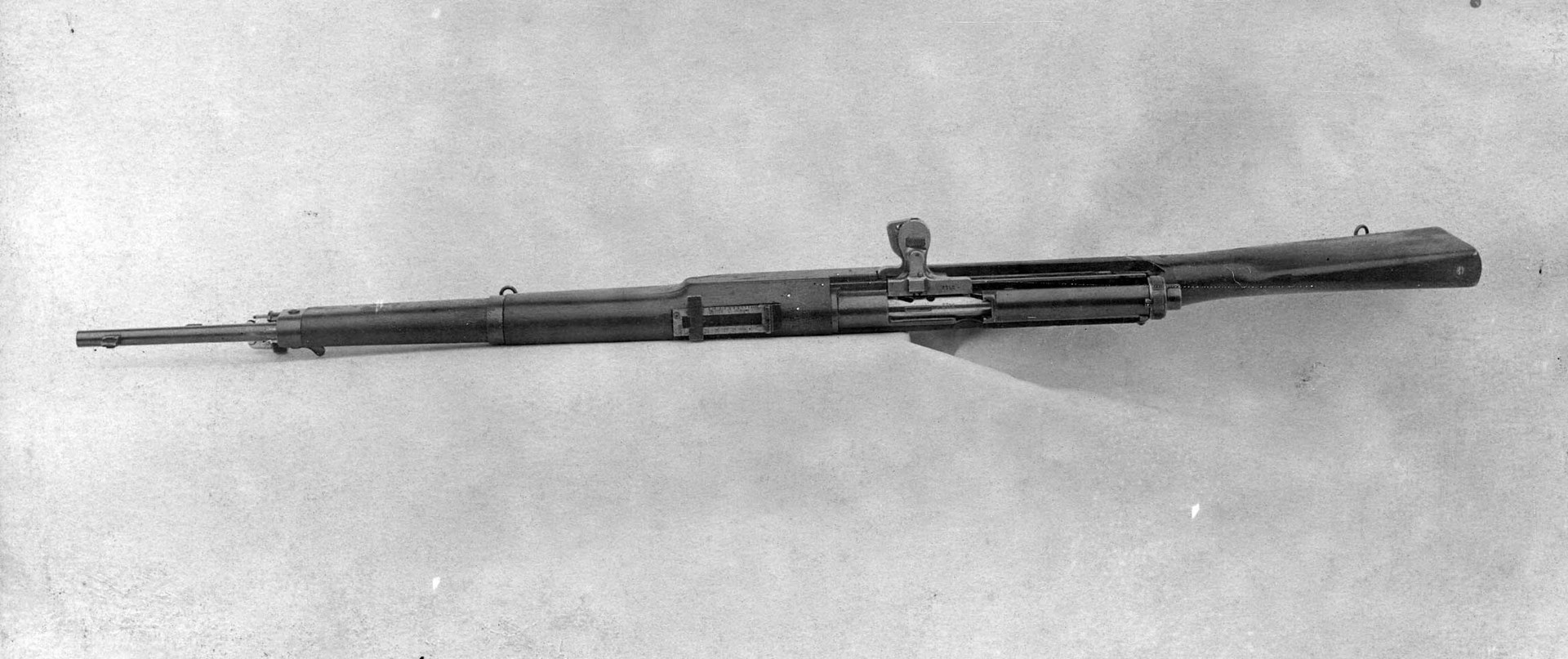
Again, ammunition was a consistent problem. The Germans originally tested the rifles with Belgian-made cartridges, which delivered poor results in muzzle velocity and accuracy. The commission recommended a change to German-made 7mm ammunition, and this provided acceptable ballistic performance. However, the commission realized that the Mondragón was specialized firearm not suited for the rigors of trench warfare along the Western Front.
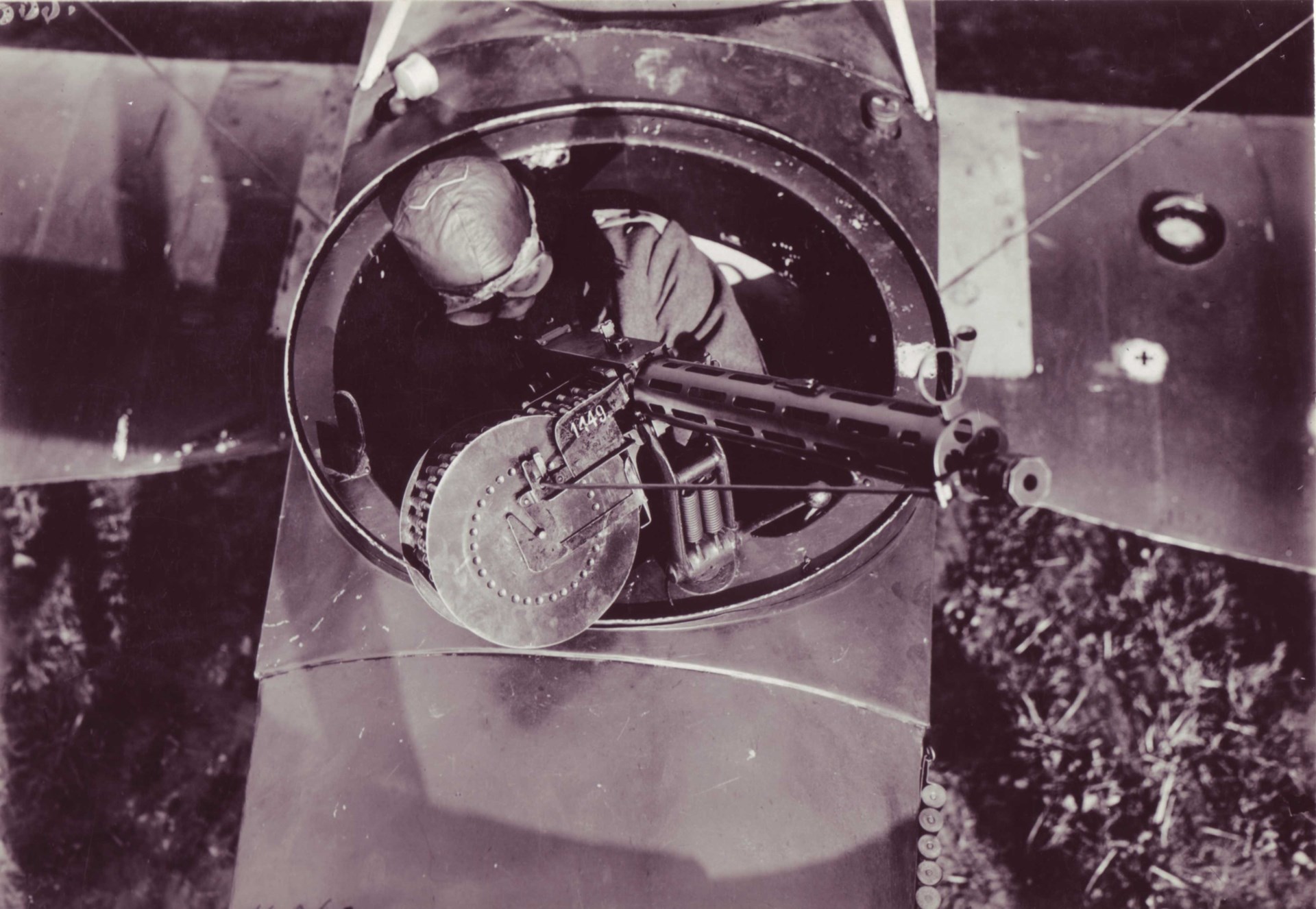
Their recommendation was that the Mondragón was best suited for use by airmen in the relatively clean environment of the first air war. To that end, the commission further recommended that the magazine capacity be increased—and this resulted in the development of a 30-round drum magazine mounted into the rifle’s floorplate.
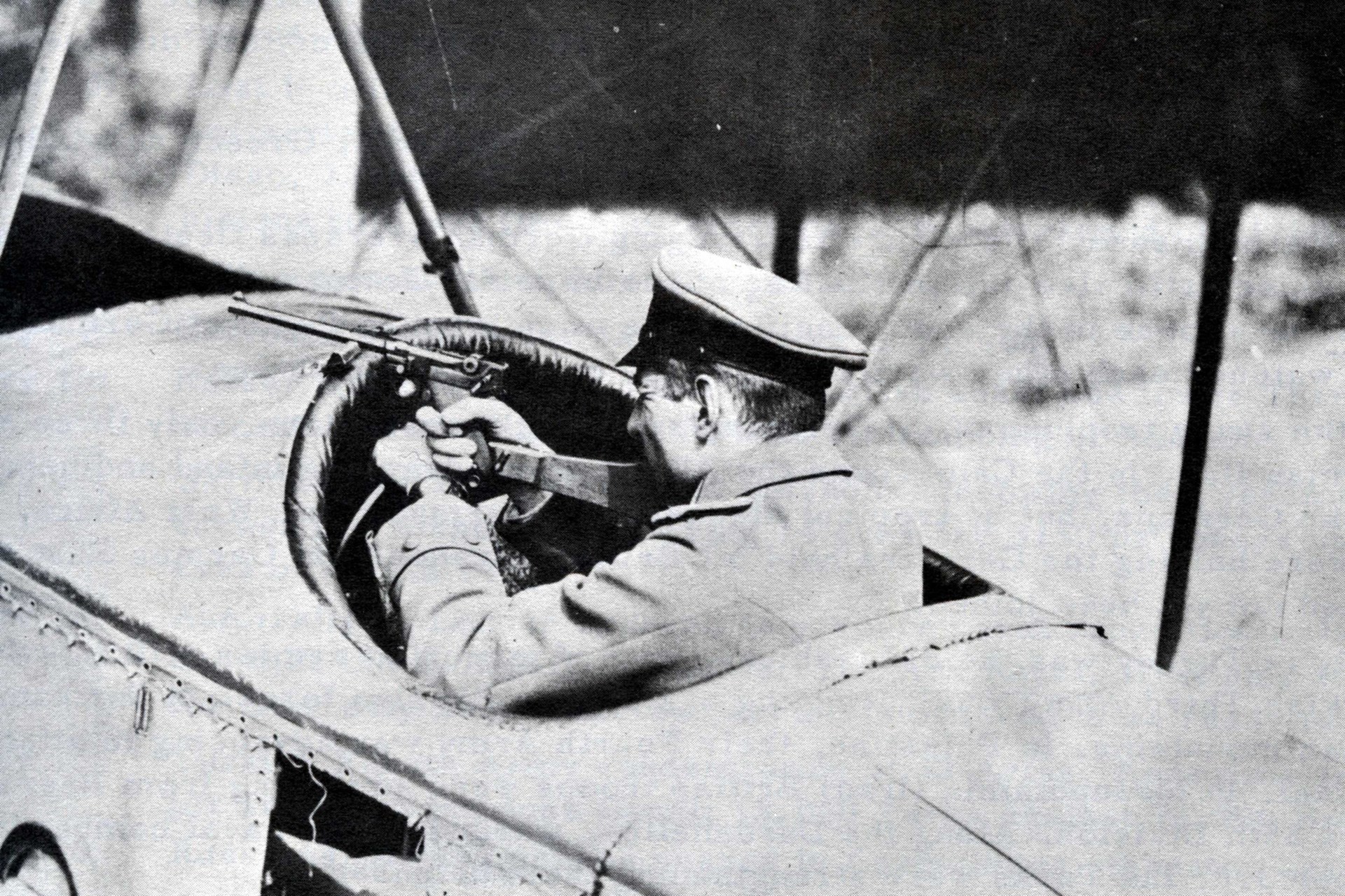
In late 1915, the German air force faced a serious lack of air-worthy firearms. Machine guns were in critically short supply, and observers used an odd collection of bolt-action carbines, Luger P08 and Mauser C96 pistols, along with the occasional use of shotguns. The Mondragón self-loading rifle, fitted with a 30-round drum magazine, was considered an emergency solution and was dubbed the "Air Force Self Loading Carbine M 15."
Tempered Expectations
Final inspections in German factories in January 1916 revealed a host of problems: extractors were weak and often broke, firing pins frequently malfunctioned, and several other internal parts needed a slight redesign and stronger construction. While these revisions were made, the German air force began to receive proper machine guns in useful numbers, weapons like the air-cooled Parabellum MG 14 and MG 08/15.
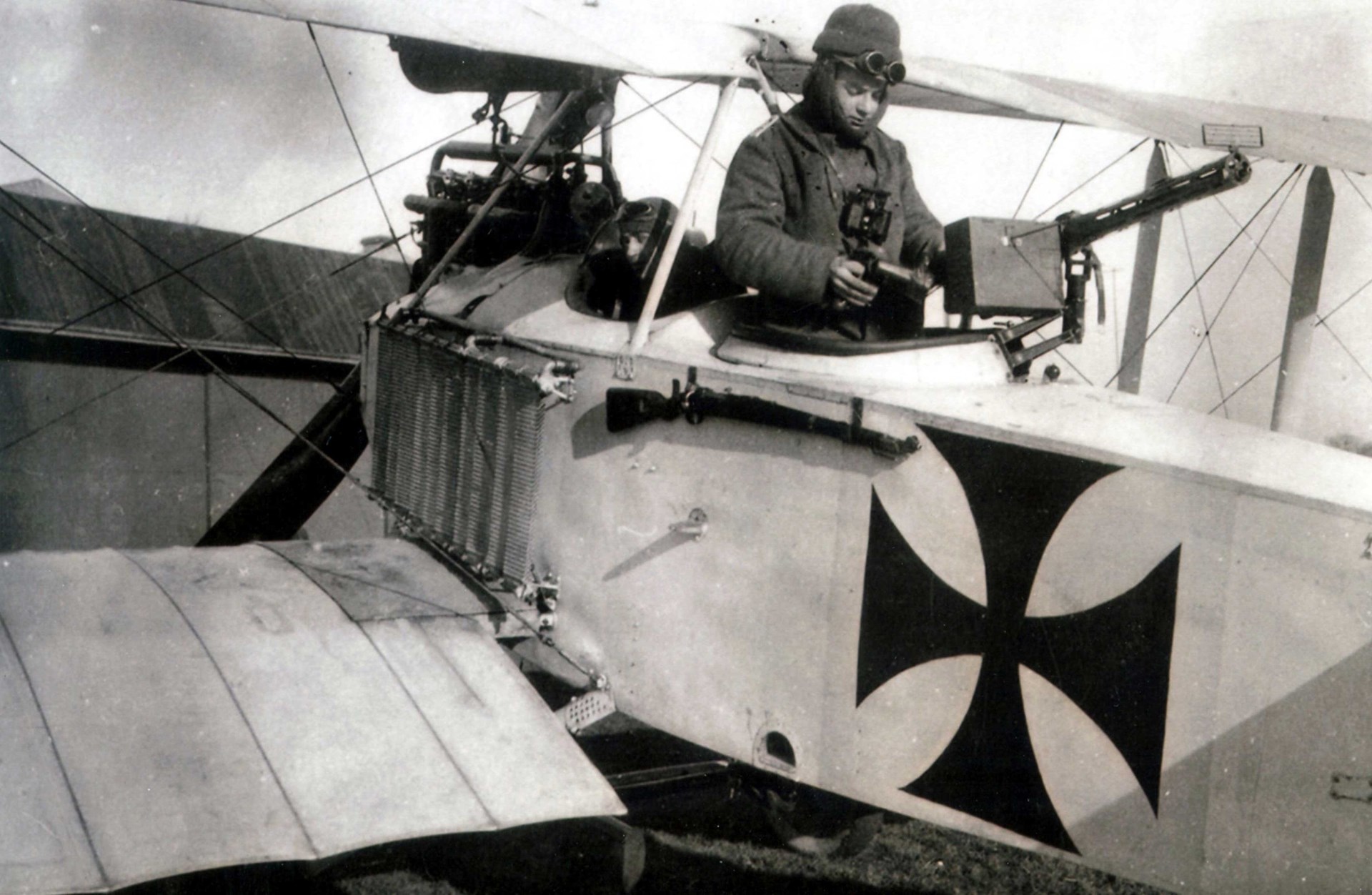
When the Air Force M 15 carbines were finally ready for service, they filtered out in small numbers to second-line squadrons. Even so, the Luftstreitkräfte armorers had no illusions, and the Mondragón was considered an emergency-use arm only, requiring careful maintenance by specifically trained personnel. The following are excerpts from the German manual on the Mondragón/Air Force Carbine M 15:
Instructions for the use of the Air Force Self-Loading Carbine M 15 with 7mm Ammunition
The 7mm Air Force Self-Loading Carbine M 15 is a gas-operated self-loading rifle. At 165mm behind the muzzle, the gases flow through a 1mm hole into the gas cylinder located beneath, pushing the piston back and activating simultaneously the main spring placed around the piston.
The piston rod is hollow to take up oils for self-lubrication of the gas cylinder; for the same reason, the gas piston is provided with three drill holes.
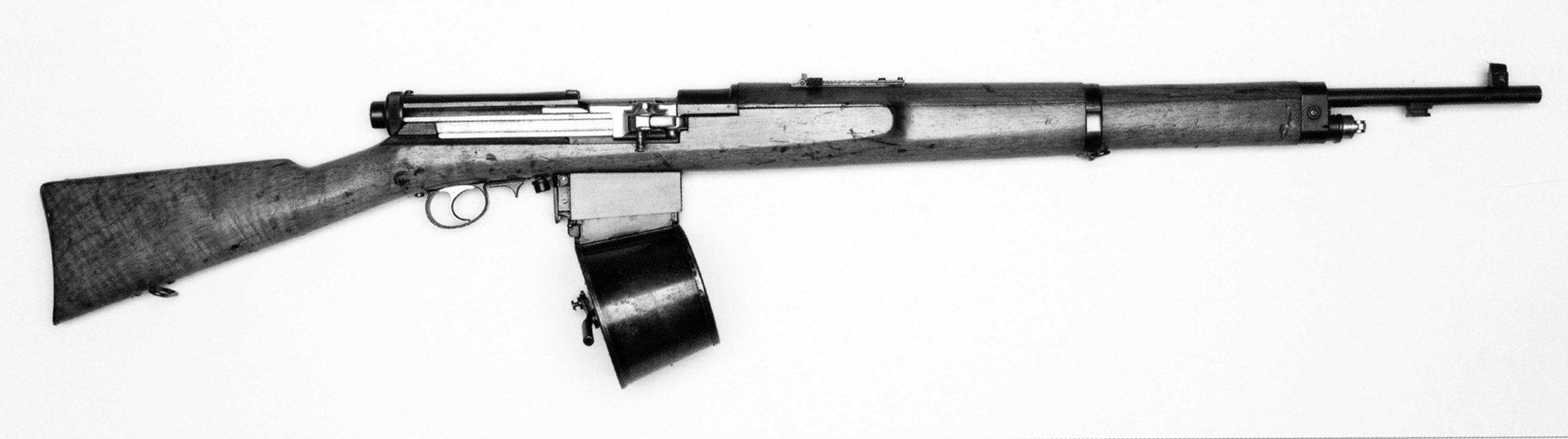
General description of detachable magazine
The 30-shot, detachable magazine for the Air Force Self Loading Carbine M 15 consists of the following major parts:
- An outer case, the drum, with detachable neck.
- An inner case, the spring case with winding device and lid for the spring case.
- The feeding spring with footplate and follower plate.
Dimensions for the outer and inner case are designed in such a way as to form a hollow space, the cartridge canal, between the two cases after assembly of the magazine. Onto the cocking lever shaft running through the center of the two cases, the flat coil spring which is located in the interior of the two spring cases is hooked. This spring can be wound by turning, counterclockwise, the winding device which is located at the back wall of the drum.
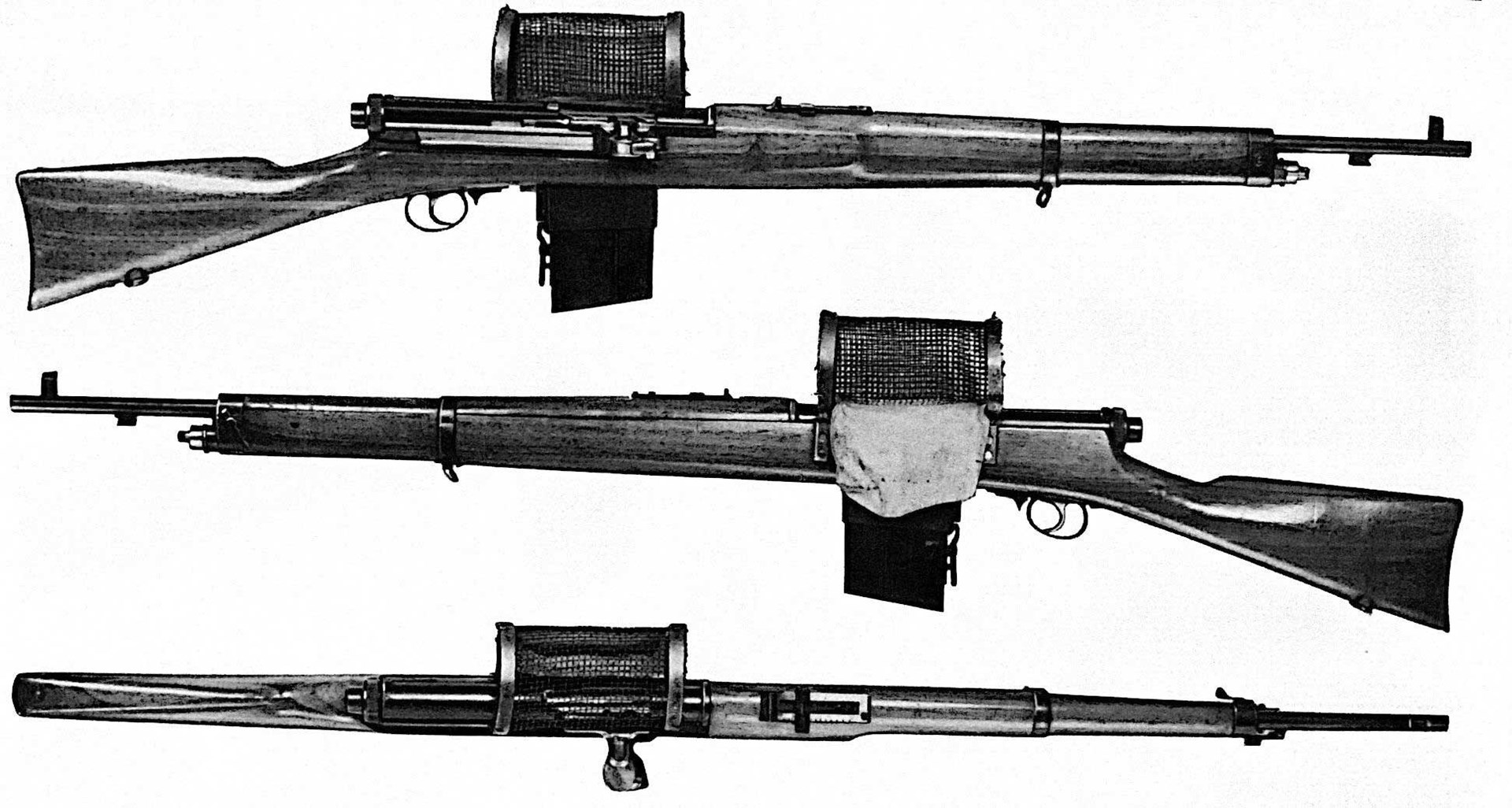
The pressure of the spring is transferred to the cartridges by means of the transferring lever which is rigidly connected to the cocking lever shaft of the winding device. The follower spring screwed to the transferring lever at its foot provides for the feeding of the last 10 cartridges. There is one feeder device and one filling block for each six magazines.
By 1917, the German Air Force no longer considered their armament situation to be an emergency and were keen to pass along their 7mm Self-Loading Carbine M 15 to someone else, maybe even almost anyone else. The German army wasn’t interested in the semi-auto rifles, not even for propaganda purposes. It seems that the M 15 Carbines ended up with the German navy, in a sort of limbo between the ships and the shore.
Mondragón: The First Self-Loading Rifle Adopted by Any National Army
That distinction may seem like an obscure answer in a game of firearm trivia, but the Mondragón rifle is much more than that. Flawed in many ways, it still offered a preview of the infantry rifles to come. And the circumstances of the Mondragón’s birth showed that not all firearm innovation comes from the hallowed halls of Springfield, Colt, Mauser or Enfield.
Most Popular