So, a company that I first became aware of as two guys, a card table and a good idea two decades ago was just sold for nearly $100 million. In case you had not heard, Smith & Wesson just purchased Crimson Trace Corp. with “assets on hand,” for $95 million, with the deal to close in August.
While you can read the details in the official Smith & Wesson press release, I must say that it came as something of a surprise in some ways, but not in others. Smith & Wesson has a history of just going ahead and buying companies that were good vendors. Exhibit A is Thompson/Center Arms. Smith executives looked at T/C as a barrel maker, then just decided to buy the whole thing. More recently, S&W has been looking to get more into the accessories business. Just so you know, margins are typically much higher on accessories than on guns. Exhibit B is the recent purchase of Battenfeld Technologies (a very well run and profitable company), and of course S&W just bought Taylor Brand knives for $85 million, too. Call that Exhibit C.
Smith & Wesson has sold LaserGrips on its guns (look for CT in a gun’s nomenclature in the Smith catalog) for some time. Even though they have been and are made by Crimson Trace, they bear the S&W logo. And from everything that I've been told, they are top sellers.
Crimson Trace is a company that has continued to grow and expand from its humble beginnings. Those two guys were Lew Danielson and Adam Wolander, and the product was a LaserGrip that replaced the factory stock panels on a Ruger Mk II .22 pistol that turned a laser on when you grabbed the gun. It is a company that was and is very well run, invested heavily in engineers and good people. A few years ago we gave the founder, my friend Lew Danielson, the NRA Golden Bullseye Pioneer Award. And for good reason.
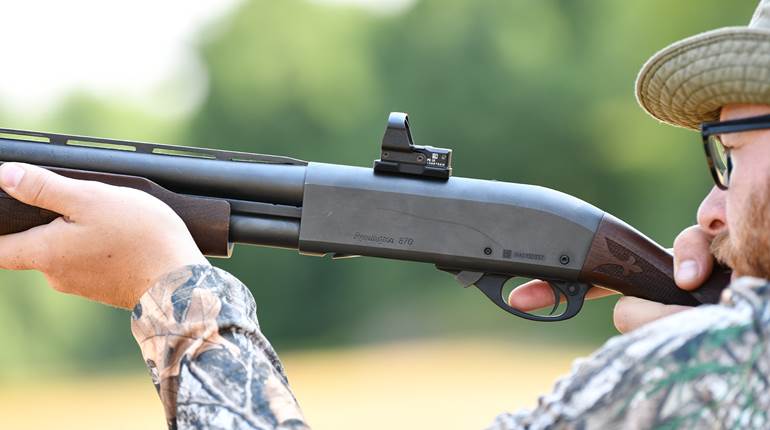
This has been a very flexible and adaptive company. But the reason it was created, the replacement LaserGrip with instinctive activation, came to be less and less relevant in new firearm introductions. It turns out the polymer frames are here to stay. In case you hadn’t noticed, polymer pistol frames don’t have stock panels. That means you cannot replace them with LaserGrips. Crimson Trace took note of this and developed its LaserGuard series of instinctively activated lasers using an ingenious clam-shell system that in my experience hold zero just as well if not better than laser grips locked in by screws.
And Crimson Trace is not just a red laser company anymore. It makes things that don’t involve red diodes. Its LightGuard series provides powerful gun-mounted illumination, again activated by merely squeezing the grip.
And, of course, Crimson Trace spent a lot of brainpower and R&D money on its line of green lasers. Green lasers, of course, are easier for the human eye to see during daylight. And there were some heat and power source issues that took a while for CTC’s engineers to work out.
Crimson Trace, of course, has been making laser grips for virtually every company in the firearm industry. It is rare that there is a new production gun that does not have some form of LaserGrip available. Crimson Trace even makes them for Bersas, telling the world it’s OK to spend more on your laser than on the gun itself.
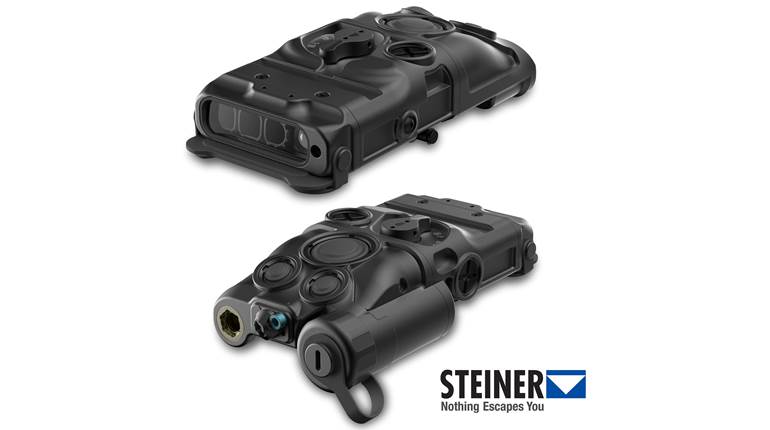
Not surprisingly, while lasers seem old hat to us now, Crimson Trace has been and no doubt will continue to be a technology company. When I asked myself “Why did S&W buy CTC now?” the most obvious answer is the soon-to-be released LINQ system. It is a wireless activation system in which a light and/or a laser on the front of a gun are activated remotely through a form of wireless technology by a grip that is not linked by wires. I've been told that each system is absolutely unique, too. That way, if your local SWAT team has five guys with such devices, one dude in the stick turning it on doesn't activate everyone else's.
It is my belief, and I have not spoken directly with anyone at either company at this point, that LINQ had a lot to do with the sale at this time. I've handled pre-production units, but have not received a factory production LINQ yet. Hopefully, I will have one in hand soon.
Smith & Wesson may appear to be spending money like a drunken sailor on acquisitions (If Smith has it, why not?), but Crimson Trace is a well-run, profitable technology component the Massachusetts company lacked.
Most Popular