What most people believe about crime is wrong in a way that matters. They believe it is chaotic—that there is no rhyme or reason, that it is driven by impulse, desperation or some unknowable darkness that strikes at random. They hold this belief because it is comforting, because it removes responsibility: If crime is random, then preparation is pointless. If it is chaos, then there are no signals to read, no patterns to interrupt, no leverage points to exploit. But, that belief does not survive contact with reality.
Crime, especially the kind most people are exposed to everyday, is rarely random. It is recognizably patterned, selective and plainly observational. It unfolds less like a lightning strike and more like a silent scan.
Predators are not wandering blindly into situations. They are surveilling environments, reading people, seeking indicators and making decisions. These decisions are guided by a simple calculation that rarely fails them: Which option offers the highest reward for the lowest effort, risk and resistance? That is the entire decision process.
That calculation is constant. It happens in parking lots, on sidewalks, in neighborhoods, in shopping centers and on residential streets at night. It happens quickly, often subconsciously, and it is built on a language of signals, referred to as “soft-target indicators.”
These signals are broadcast through behavior, appearance, environment and routine. And, most people have no idea they are broadcasting anything at all.
This is the quiet crux of the problem. You are communicating constantly, whether you intend to or not. You are telling a story about your awareness, your capability, your predictability and your vulnerability. Your car is telling a story. Your home is telling a story. Your daily patterns are telling a story. And, the people who matter most in this context are the ones who are trained, through repetition and experience, to read those indicators quickly and act on them.
The uncomfortable truth is that many people are advertising themselves as soft targets (easy opportunities) without ever realizing it.

Start with the individual, because that is where most encounters begin. In public spaces, predators are not looking for just any target; they are looking for indicators. These are subtle, often fleeting cues that suggest a person will be easier to approach, easier to control or easier to exploit. It is not about strength in the conventional sense. It is about perception. It is about whether you appear aware, present and capable of reacting.
Watch how people move through the world. Many walk with their attention buried in a phone, headphones sealing off their environment, posture collapsed inward. Their pace is irregular. Their awareness is narrow. They are mentally elsewhere. To the predator, this is not just distraction. It is opportunity. It indicates delayed reaction time, reduced situational awareness and a higher likelihood that an approach will succeed before resistance can be mustered.
Contrast that with someone who moves with purpose, head up, scanning naturally without appearing paranoid, aware of who and what is around them. Nothing about that person needs to be aggressive or confrontational. The signal is simply different. It communicates presence. It communicates that this person is not asleep inside their own environment, that they could make things more complicated and are therefore a more difficult (hard) target.
The difference between those two signals is often enough to determine who gets approached and who is bypassed.
Then there is the matter of visible reward. Humans are visual creatures, and predators are no exception. Jewelry, electronics, cash and even subtle indicators of wealth can change the equation instantly. A person displaying high-value items in an environment with limited oversight is increasing the perceived reward side of the equation.
But, reward alone is not enough. Predators are not looking for the highest reward. They are looking for the best ratio of reward to effort and risk. A person with visible valuables who is alert and aware may still be bypassed in favor of someone with less visible wealth, but far lower perceived resistance.
There is also a category of soft-target indicators that is rarely discussed openly, but is widely understood among security professionals. Body language that suggests uncertainty, hesitation or impairment can shift perception dramatically. Someone who appears lost, disoriented or intoxicated is signaling reduced capacity to respond effectively. This does not make them deserving of victimization, but it does make them more likely to be selected by someone who is already looking for an advantage.
Vehicles extend these indicators in ways most overlook. A car is not just transportation, but also a mobile profile. It tells a story about what might be inside, how attentive the owner is and how difficult access will be.
A vehicle with valuables visible through the windows is not a mystery. It is an invitation. Bags, electronics, tools, cash or even loose change left in plain sight reduce the effort required to decide. The predator does not have to guess whether there is value inside; it is already confirmed. That alone can shift a passing glance into an actionable decision.
Unlocked doors take this further. They remove friction entirely. There is no need for forced entry, no noise, no time investment. The barrier between intent and action disappears. In many cases, predators will simply test door handles as they move through parking areas. They are not targeting a specific person. They are sampling for opportunity. The moment resistance drops to zero, the decision is made for them.

There are also more subtle signals embedded in vehicles that extend beyond immediate access. Stickers, logos, decals and visible personal identifiers can reveal patterns about the owner’s life. They can suggest when someone is likely to be away (like a military spouse), where their children go to school, what interests or affiliations they have, whether a firearm may be present and even what valuables might be stored at home. These are not just expressions of identity; in the wrong context, they become clues in a surveillance profile a predator builds.
Homes and property amplify all of this because they introduce time into the equation. Unlike a passing encounter on the street, a home can be observed, revisited and assessed over multiple days or weeks. Predators do not always act immediately. Many watch, waiting for patterns to emerge.
A house with no visible security measures sends a clear message—a positive indicator. No cameras, no alarm signage and no motion lighting suggests that detection is less likely, that entry may go unnoticed and that the risk side of the equation is low. Even the absence of something can function as a signal.
Lighting plays a critical role here. Darkness creates cover. It allows approach without visibility, reduces the chance of being seen by neighbors and increases predator confidence. A well-lit exterior, especially with motion-activated lights, disrupts that cover. It introduces unpredictability. It forces exposure during approach.
Landscaping is another overlooked factor. Overgrown shrubs, tall hedges, and cluttered yards do more than affect appearance; they create hiding places, provide concealment during approach and time for manipulation of entry points. A clean, open line of sight from the street to the home reduces opportunities.
Accessible tools like shovels, sledgehammers, ladders and even sporting equipment like baseball bats or a tennis racquet can be used to force entry.
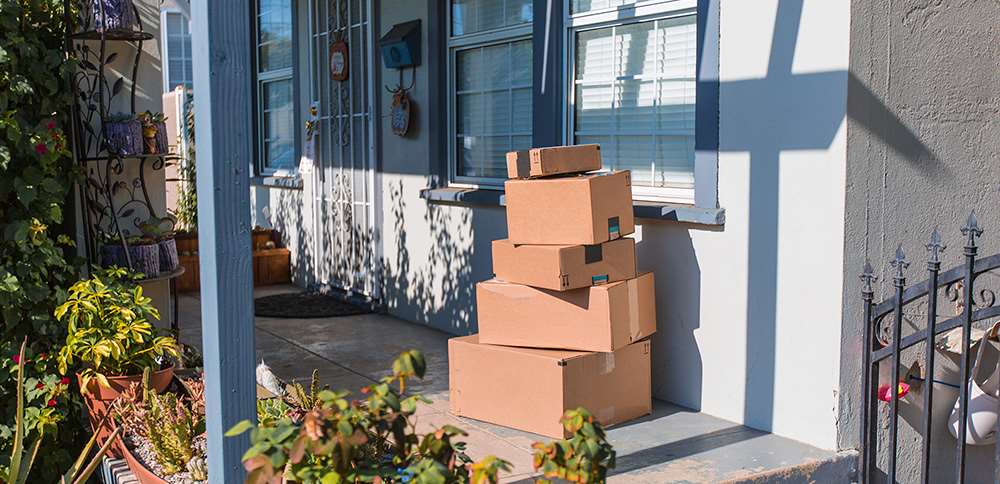
Then, there are the signals of absence. Mail piling up, packages left unattended, junk mail stacked, lights that never change timing are not just signs of neglect, but also indicators that no one is home. Predators watching for patterns will notice when a house appears unoccupied during certain hours or days. That predictability becomes part of their decision-making process.
Entry points often require less effort to open than people assume. Unlocked doors, open windows, poorly secured garages and even pet doors can provide access without force. Each of these reduces the complexity of the task. Complexity—including time—is something predators actively avoid when easier alternatives exist.
Even something as mundane as trash cans become indicators. Boxes from new electronics left at the curb announce what is likely inside the home, removing uncertainty and confirming reward. It tells a story upon which someone may be willing to act.
What ties all this together is not fear. It is operational planning. The end game is simple. Predators seek the path of least resistance. They are not looking for the hardest target but seeking the easiest one that meets their criteria.
This is where most discussions about safety go wrong. They focus on extreme measures, on fortress-like solutions, on turning a home or a person into something that looks impenetrable. That is not necessary for what we normal earth walkers need. What matters is shifting your position within the environment. You do not need to be the hardest target; you need to not be the softest. That shift can be achieved through small, deliberate changes that alter the signals you are sending.
For individuals, it begins with awareness. Not hypervigilance, not paranoia, but simple presence. Head up. Occasional scanning of the environment. Awareness of who is near you and what is happening around you. This alone changes how you are perceived. It does not eliminate risk, but it reduces the likelihood of being selected.
Managing visible valuables is equally straightforward. What is not seen cannot factor into the predator’s initial calculation. Keeping items out of sight removes one of the primary drivers of opportunistic decisions.
When it comes to vehicles, the same principle applies. Locking doors is not just a habit. It is a barrier. It introduces effort where none would otherwise exist. Removing valuables from sight or taking them with you eliminates immediate reward. Even something as simple as parking in well-lit areas can shift the equation. None of this is rocket surgery.
At the home level, the goal is not to create an impenetrable fortress. It is to introduce uncertainty and increase perceived risk. Visible cameras, even basic ones, suggest that actions may be recorded. Alarm signage, whether or not a system is present, can act as a deterrent by introducing doubt. Motion-activated lighting removes darkness as a cover and creates exposure at critical moments.
Maintaining the exterior of the property matters more than most people realize. Trimmed landscaping, clear lines of sight, the absence of tools and sporting gear all contribute to the perception that the space is monitored and maintained. Timers on lights or devices can create the appearance of occupancy even when no one is home, disrupting patterns that might otherwise be exploited.
There is also a broader layer that extends beyond the individual property. Communities where neighbors are aware of each other’s patterns and notice anomalies, create an environment where predators face increased uncertainty. The presence of multiple observers, even informal ones, raises the perceived risk across an entire area.
None of this guarantees safety, as there are no guarantees in life (other than the proverbial death and taxes), but it changes the landscape in a way that matters. It shifts the balance of the equation. It makes your environment less attractive compared with others.
The core idea is not complicated, but it is often ignored. You are part of a system of signals. You are constantly communicating information about yourself, your habits and your environment. Predators read those indicators, whether you realize it or not. The question is not whether signals exist—they do. The question is whether you are aware of them and whether you are willing to adjust them.
Predators do not need a perfect target; they need an easier one. And when you understand that, when you see how small changes alter perception and shift decision-making, you begin to move out of the category of convenience to that of effort. And effort, in this context, is often more than enough to make a predator read their criminal clues and ask themselves, “Are there softer targets?”
Most Popular