History repeats itself because mankind rarely pays attention to its own past. A quick look at the calendar recently revealed the fourth anniversary of the full-scale war in Ukraine. Since the Russian invasion in late February 2022, we’ve witnessed the largest military action in Europe since World War II. The scale of the destruction and the casualty numbers are staggering. Nearly 1.2 million Russian troops have been killed or wounded, along with more than 500,000 Ukrainian. Civilian casualties in Ukraine have reached 60,000. Sadly, the end does not appear to be in sight.
Almost 90 years ago, Europe hosted a bloody preview of the Second World War, as the Spanish Civil War raged from July 1936 until April 1939. Like the current war in Ukraine, casualties were surprisingly high, particularly among civilians. Nearly 200,000 men died on the battlefields of Spain, closely split between Nationalist rebel and Republican government forces. Ultimately, it was the Spanish people who suffered horribly, with as many as 300,000 civilians killed in fewer than three years. Man’s inhumanity to man was on full display, as war crimes and reprisals were commonplace on both sides of the lines.
Like what we see in Ukraine, the Spanish Civil War became an international arms bazaar and testing ground. The firearms, both innovative new types and older, reliable designs, coupled to create a dramatic impact on the battlefield. At the baseline, the conflict in Spain was an infantryman’s war, and by 1939, you could find at least a handful of almost every military rifle, submachine gun, light machine gun (LMG) and heavy machine gun from around the world in use by either side.
Acquiring Arms at Any Cost
Records show that there were roughly half a million military rifles in Spain at the start of the conflict. Republican government forces secured a little fewer than half of these, then quickly turned to foreign sources to buy arms. The Republicans were starved for manpower, and they embarked on a risky strategy of recruiting communist and anarchist militias into their army. What’s more, the Republicans needed an inordinate number of rifles for their growing force. While not every man required a rifle, there was a tremendous shortage of support arms in the Republican ranks. Machine guns and artillery were in short supply, and the ability to train specialist troops was particularly limited. However, both male and female volunteers could be trained to use a rifle. Consequently, nearly 60 percent of Republican brigades were equipped with rifles. Compare that with U.S. Army brigades at the time, which equipped about 50 percent of their men with rifles, with the rest employed in specialist roles.
Meanwhile, the Spanish Republic faced significant roadblocks to obtaining modern firearms. In America, the Neutrality Act of 1935 prevented U.S. involvement in foreign conflicts, and this blocked arms sales to either side. Despite concerns about the growth of fascism—and the opportunity for American arms makers to make sales during the Great Depression—President Franklin D. Roosevelt maintained a specific non-intervention doctrine and demanded an arms embargo on Spain. Congress agreed, and both houses overwhelmingly passed the resolution into law in January 1937. Consequently, neither Spanish Nationalists nor Republicans would receive arms shipments from America.
At the same time, England and France led a non- intervention committee of 27 nations to keep the war from spreading throughout Europe. Germany, Italy and the Soviet Union were also members of the committee, even while they intervened, providing arms, advisors and even combat troops to the warring factions in Spain. Nazi Germany and fascist Italy supported Ferdinand Franco and the Nationalists, while the communist Soviet Union quickly became the Spanish Republic’s largest supplier of arms. By 1937, fascism and communism had squared off in a murderous brawl, with the Spanish people as their proxies. In America, the Neutrality Act, as applied to Spain, was condemned by some as favoring fascism. Yet at the same time, American neutrality did not contribute to the spread of international communism. All these years later, the Spanish Civil War still presents a brutal paradox for historians. Neither communism nor fascism was, or is, an acceptable ideology to free people, but those were the only choices visible during the war in Spain.
A Logistical Nightmare
While both sides suffered from complicated logistics, managing Republican small arms and ammunition required herculean efforts. With the Soviet Union as their primary supplier, the Spanish Republic received its first shipment from Russia in September 1936. By March 1939, the Soviets had delivered nearly 400,000 firearms of an extremely wide variety.
Already in possession of Spanish gold, Stalin decided to clean out Soviet arsenals of the rifles left over from the Czarist era. The first Russian delivery was a dismal collection of forlorn rifles ranging from disparate models like 8 mm Lebels and 6.5 mm Arisakas to long-obsolete, black-powder guns like the Italian Vetterli (10.4x47 mmR) and French Gras (11x59 mmR). Newer rifles were often shot-out, rusty or broken. The antiques were essentially useless as combat arms. Whatever the rifle, its age or chambering, there was rarely enough ammunition for sustained use.
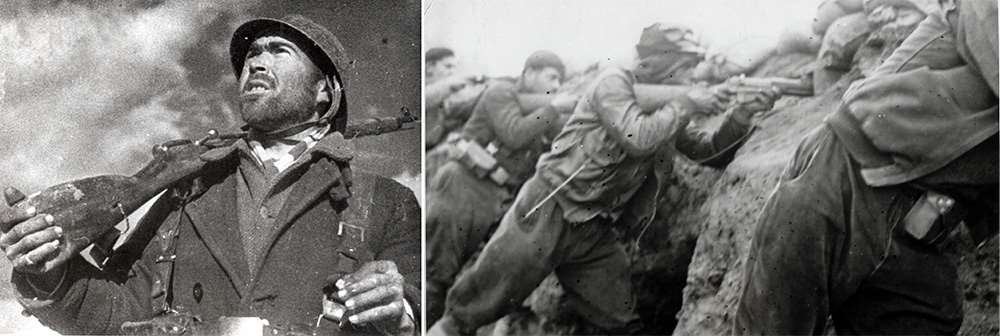
Author George Orwell went to Spain and served with the Workers’ Party of Marxist Unification (POUM) militia. He commented on the varied quality of ammunition for Republican arms: “Ammunition was so scarce that each man entering the line was only issued with 50 rounds, and most of it was exceedingly bad. The Spanish-made cartridges were all refills and would jam even the best rifles. The Mexican cartridges were better and were therefore reserved for the machine-guns. Best of all was the German-made ammunition, but as this came only from prisoners and deserters there was not much of it. I always kept a clip of German or Mexican ammunition in my pocket for use in an emergency.”
Late in 1936, the Soviets began to deliver more modern arms, consistently chambered in the Russian 7.62x54 mmR. Among the first of these was the Winchester M1895 lever-action, a robust and well-made rifle when first delivered to the Russian Empire in 1915. But by 1936, the guns that reached Spain were mostly worn out. Orwell remarked: “There were also a few Winchester rifles. These were nice to shoot with, but they were wildly inaccurate, and as their cartridges had no clips, they could only be fired one shot at a time.”
By early 1937, the quality of the Soviet imports began to improve, and this meant significant deliveries of the Mosin-Nagant M91 rifle (7.62x54 mmR). Again, Stalin would send the most elderly examples first, delivering tens of thousands of the original M91 rifles through the summer of 1937. By the autumn, the Republicans would begin to receive newly manufactured M91/30 rifles. By the war’s end, nearly 105,000 Mosin-Nagant rifles were provided to Spain, with the USSR providing the lion’s share, plus Poland and Mexico providing smaller amounts.
The American volunteers of the Republican Abraham Lincoln Brigade created an enduring legend of the Spanish Civil War when they nicknamed their M91 rifles the “Mexicanski.” American-made Mosin-Nagant rifles, produced at Remington and New England Westinghouse (originally made for Czarist Russia during World War I), had been acquired by Mexican gun dealers, who then sold them to the Spanish Republic. Enough of these U.S.-marked M91 rifles were issued to American volunteers of the Lincoln Brigade to create the circuitous nickname. Whatever markings they carried—U.S.; Mexican; Polish; Czarist; or Soviet—the Mosin-Nagants became the backbone of the Republican infantry.
A New Era of Infantry Firepower
Twenty years before the civil war in Spain, the combatants of World War I launched a breakneck arms race for infantry firepower, ultimately driving the design of portable, fast-firing machine guns. Consequently, the immediate post-war years saw an intense period of development of light machine guns (LMGs) and automatic rifles. By 1936, several full-automatic firearms that would play a major role in the battles of World War II were already in production, and many of them would see use on the battlefields of Spain.
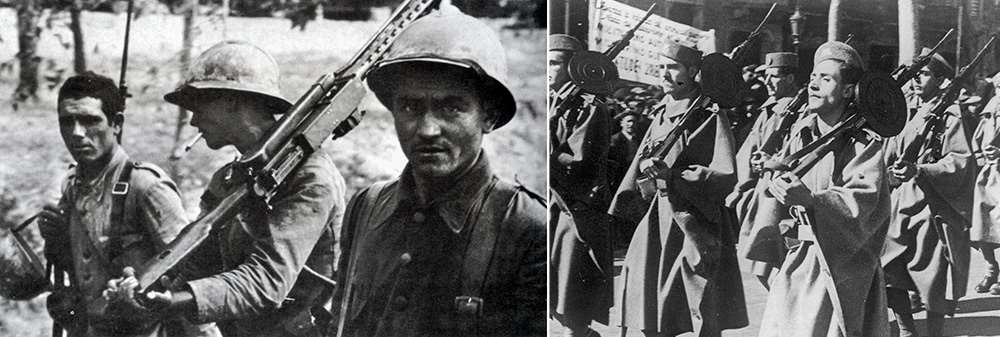
The troops in the Spanish Civil War continued to build on the deadly lessons learned in World War I, and almost every type of machine gun, old or new, could be found there. The logistical problems experienced with the wide range of imported rifles were only magnified with machine guns. Again, these challenges were more pronounced on the Republican side. At the beginning of the war, the Nationalists secured a larger portion of Spain’s meager supply of full-automatic firearms—primarily the Spanish-built version of the heavy Hotchkiss Model 1914 machine gun in 7 mm Mauser, and the Hotchkiss Model 1922 O.C. LMG, also in 7 mm Mauser. The Hotchkiss Model 1922 was a 19-pound machine gun that fed from a top-mounted, 20-round box magazine in its Spanish variant, or a 15-round metal feed strip. The rate of fire on the Model 1922 was a pedestrian 400 rpm, but in the first months of the war, it was the only LMG available in any numbers to either side. Spain had also adopted the excellent Madsen LMG in 7 mm Mauser (with a 25-round, top-mounted magazine), but these guns were quite expensive, and it seems there were very few in service when the war started.
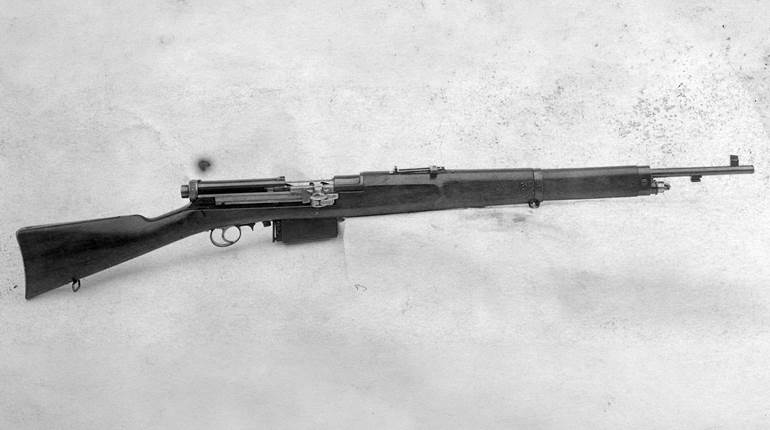
In early 1937, as foreign arms shipments began to arrive, other machine guns reached Spanish shores. These early deliveries con-tained some of the most unusual LMGs to ever be used in combat. The Mexican government provided the Spanish Republic with arms, and along with 20,000 Mexican Mauser rifles (conveniently chambered in 7 mm) came about 100 Mendoza Model C-1934 LMGs (7 mm Mauser). The 18-pound Mendoza was a modern, efficient design, fed by a top-mounted 20-round box magazine, and cycling at 450 rpm. Unfortunately, I’ve never found a report on the Mendoza’s use in Spain.
Another rare machine gun that entered combat for the first time in Spain was the Soviet Maxim-Tokarev (7.62x54 mmR), a bulky, 34-pound, air-cooled beast fed by a 100-round belt in a drum carrier. The Maxim-Tokarev was almost an LMG, at least in name, and yet another example of the Soviets cleaning out the odds and ends of their arsenals in exchange for Spanish gold. Even so, Republican infantrymen were grateful to have anything like an LMG, and more than 1,000 Maxim-Tokarevs were used in Spain.
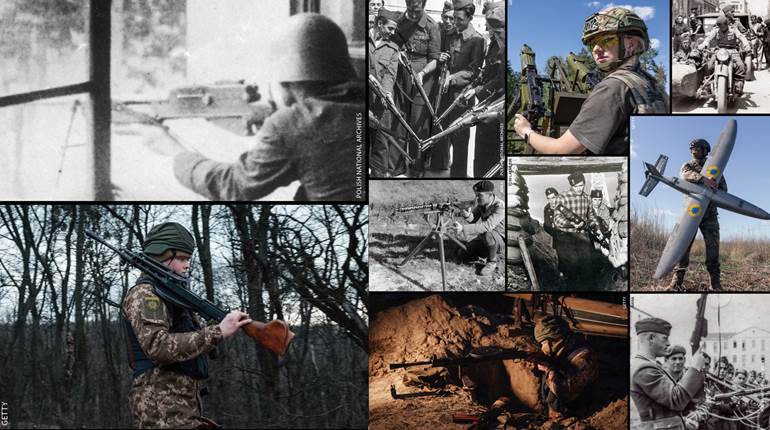
In 1937, the Soviets finally began to deliver modern small arms to Spain, including the Degtyaryov DP-27/28 LMG (7.62x54 mmR). The 25-pound DP-27 was fed by a distinctive, 47-round pan magazine. While the DP-27 saw its first action in Spain, that wouldn’t be its last appearance. The iconic machine gun served Soviet troops throughout World War II and saw use with communist forces around the world in multiple conflicts during the Cold War. In 2022, the DP-27 was still seen in action with Ukrainian troops resisting the Russian invasion.
Poland became the Spanish Republic’s second-largest weapons supplier, and the Poles provided some of the excellent Rkm wz.28, their version of the M1918 Browning Automatic Rifle chambered for the German 8 mm Mauser cartridge. The wz.28 was highly prized by troops on both sides of the lines in Spain. So, too, was the Czech-produced ZB vz.26 (8 mm Mauser), sold to the Spanish Republic in violation of the non-intervention treaty. The vz.26 was the forerunner of the British Bren gun, and in Spain, it provided a preview of how potent LMGs would be during fighting in World War II.
On the Nationalist side, the German Condor Legion brought the MG13 (8 mm Mauser), a 25-round, box-magazine-fed design that was employed as a general-purpose machine gun by the Wehrmacht before the emergence of the MG34/MG42 family of machine guns. The Italians brought their fixed-magazine, stripper-fed Breda Model 30 (6.5 mm Carcano)—the Spanish war saw some of the best and worst LMGs of the era.
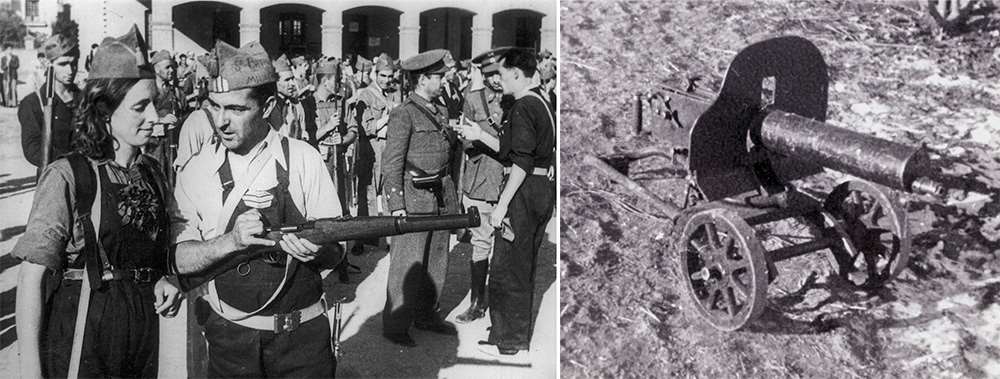
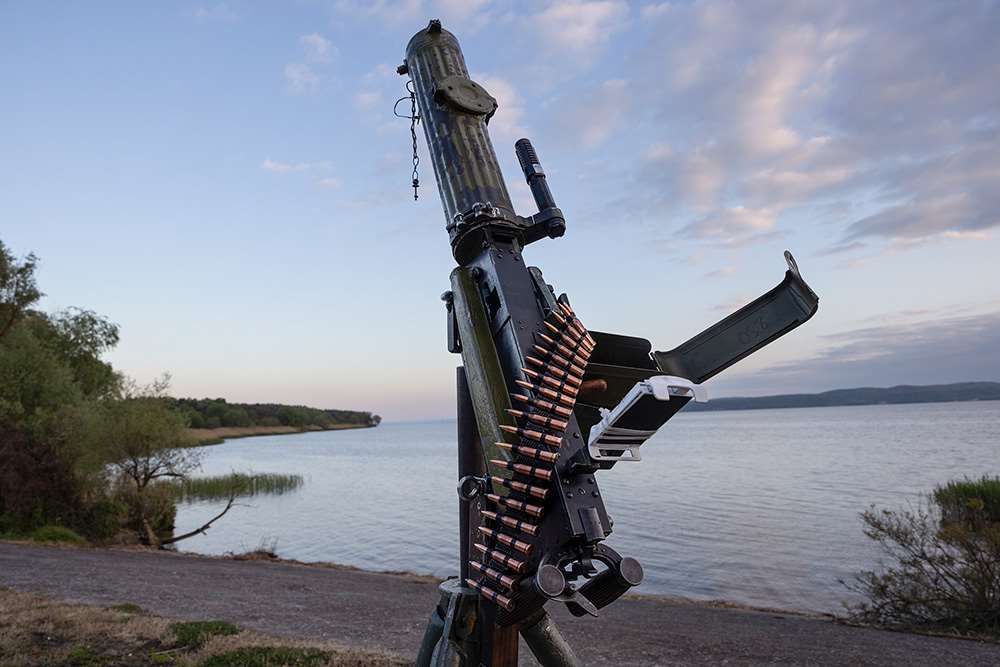
As in World War I, heavy machine guns often dominated the battlefields of Spain. The Soviets provided the Republicans with a significant number of Maxim PM1910 water-cooled machine guns (7.62x54 mmR). The Maxim was weighty (nearly 140 pounds on its wheeled mount), but its steady 600-rpm cyclic rate provided the sustained fire that deterred all but the most fervent (and costly) Nationalist infantry assaults. Albert Prago served in the Abraham Lincoln Brigade, and described his experience with the Russian Maxim in his war memoir “We Fought Hitler”:
“The great majority of all the weapons used in Spain were Soviet manufactured. We tested the superior quality of the Soviet Maxim-type machine gun in action. The simplicity of its mechanism (any soldier can learn in a day’s time how to field strip it; any trained machine gunner can strip it completely within 100 seconds), in no way detracts from its quality; I have seen its deadly hail of 600 bullets per minute mowing down wave after wave of attacking enemy infantry. The members of the Tom Mooney Machine Gun Company can tell you of their respect and admiration for this machine gun; in one of the daily battles at Jarama it was a Soviet gun that saved the day after all others jammed or had gone haywire.”
Interestingly, the M1910 Maxim soldiers on even today, fighting with Ukrainian forces as a heavy machine gun in fixed emplacements, and coupled in twos or fours as an anti-drone platform mounted on light vehicles.
Personal Firepower
The Spanish Civil War, like most of the conflicts of the 1930s, featured a new type of firearm: the submachine gun (SMG). Before the war started, the Spanish arms industry was busy making selective-fire pistols, similar in appearance to the Mauser C96, for sale to the lucrative Chinese market. Spanish manufacturers Beístegui and Astra both had success with 20-shot, selective-fire pistols fitted with shoulder stocks. These automatic “broomhandle” pistols (chambered in 7.63 mm, 7.65 mm and 9 mm Largo) were very fastfiring, some up to 10 rounds per second, and were popular on both sides in the civil war.
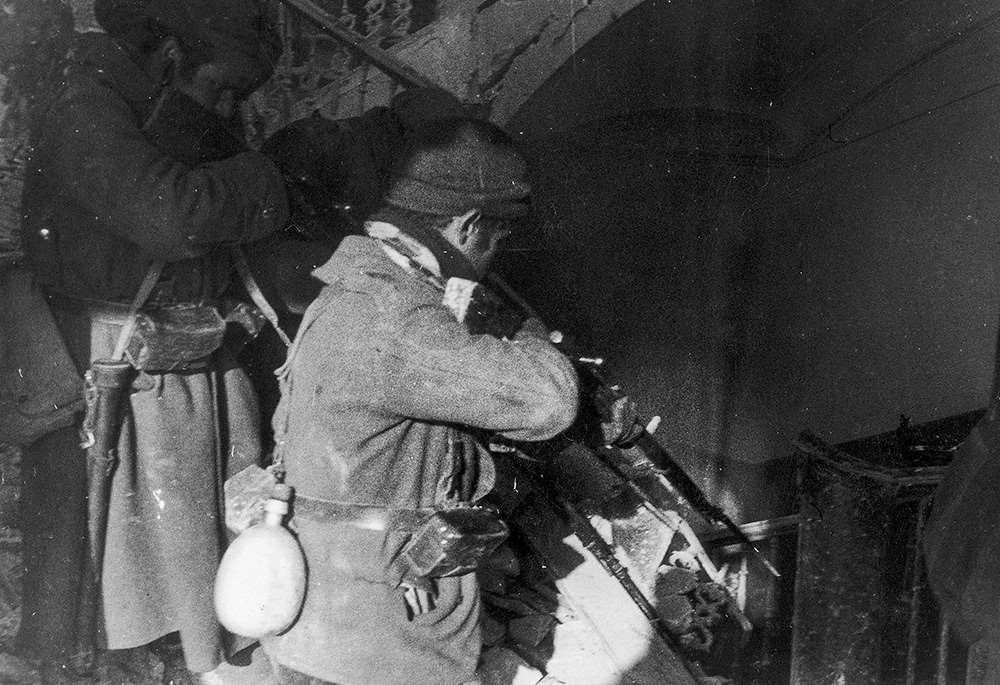
The Republican government intended to purchase a significant number of Thompson submachine guns from America, but the neutrality act(s) quashed that hope. Instead of the Thompson, several European submachine guns were used in Spain, most notably the MP28/II (9 mm) and the Erma EMP (multiple calibers). One of Spain’s first submachine guns was a MP28/II copy manufactured before the war and called the Modelo 1929 (9 mm Largo). About 5,000 were made. The Erma EMP was also produced (unlicensed) in Spain by the Republicans, and again, it was chambered for the 9 mm Largo. The issue of SMGs and the doctrine for their use in Republican forces seems to have been rather ad hoc. However, the impression they made far outpaced the actual numbers that served.
Lessons Learned, Ignored or Forgotten
On April 1, 1939, the Spanish Civil War came to an end as the Nationalists defeated the Second Spanish Republic. Francisco Franco became the head of state and would remain in that position until his death in November 1975. Although closely associated with fascists in Germany and Italy, Franco maintained Spanish neutrality during World War II. Throughout his tenure as the Spanish head of state, he remained a fervent anti-communist.
There was much for the world’s military powers to observe in Spain. With the battleground confined to the Iberian Peninsula, the conflict was quickly acknowledged as a combat testing ground. Col. Stephen Fuqua, the military attaché to U.S. ambassador Claude Bowers, wrote in 1937: “It is generally accepted that the civil war in Spain is not only a laboratory for testing equipment, particularly of German and Russian design, but also a ‘dress rehearsal’ for the next war.”
With so much to examine, certain weapon systems gained a much higher profile, particularly aircraft, tanks and anti-tank guns. Germany, Italy and the Soviet Union committed their latest aircraft, and the German Condor Legion debuted its combined-arms tactics employing close air support. For many students of military arms and tactics, the aircraft and the armored vehicles drew more attention, often obscuring the myriad small arms involved in infantry combat. Regardless, the information was there for the world’s armies to analyze. In the end, very few chose to, particularly in the U.S. The Soviets probably learned quite a bit in Spain, but much of this was lost or suppressed during the purge of Red Army officers from August 1936 through November 1938. Britain and France showed only mild interest in the lessons of Spain, regardless of what their intelligence services reported. It is apparent that German forces learned the most from their experiences in the Spanish Civil War, particularly about how to use their equipment to its full potential, as well as details about the arms and techniques of their opponents in the coming war. Their preparation in Spain would pay tremendous dividends during the Blitzkrieg.
Time marches on, and history has a curious way of repeating itself. Four years into the war in Ukraine, I wonder what we are learning about the changes in firearms, tactics and technology. It seems that some things never change, and it still takes a determined infantryman with a rifle to occupy and hold a piece of ground before one side or the other can claim it. Technology gives us the tools, but brave humans must do the dangerous work. Just like in Spain 90 years ago, the information is there for us to analyze. What we do about it will define our future.
Most Popular