One of the many joys of my work has been talking with firearm owners around the country. Sharing experiences, listening to stories and exchanging ideas all make for pleasant, informative conversations. Some of the more serious topics make regular appearances, such as having the ability to reach out farther than would-be evildoers can reach in.
The U.S. military sometimes refers to this as achieving overmatch, though that term has nearly as many definitions as there are commissioned officers writing papers about tactics and strategy. In simple terms, this form of standoff is the firearm equivalent of using a stiff arm to keep a bully just out of reach and swinging wildly at the air while you decide when to issue a smackdown.
It doesn’t take much imagination to see having a standoff defensive capability could be useful in several of the world-gone-sideways scenarios that seem possible today. This is especially true if law enforcement can’t reach your area before armed attackers do.
To be clear, I’m not talking about a “Hey, that might be a ne’er do well way out yonder” situation. This is a lawless scenario where innocent people are being violently attacked and killed by identifiable aggressors who are trying to add you and yours to their tally. Obviously, this is an extremely unlikely event—but still has a non-zero chance. If you’re interested in covering all your defensive bases, it is worth consideration.
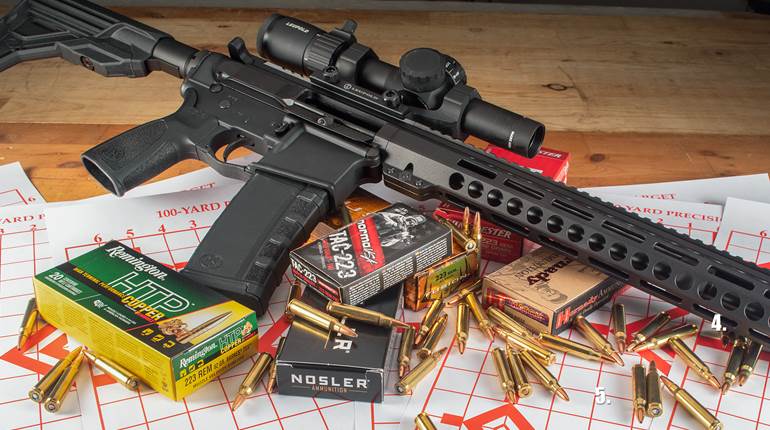
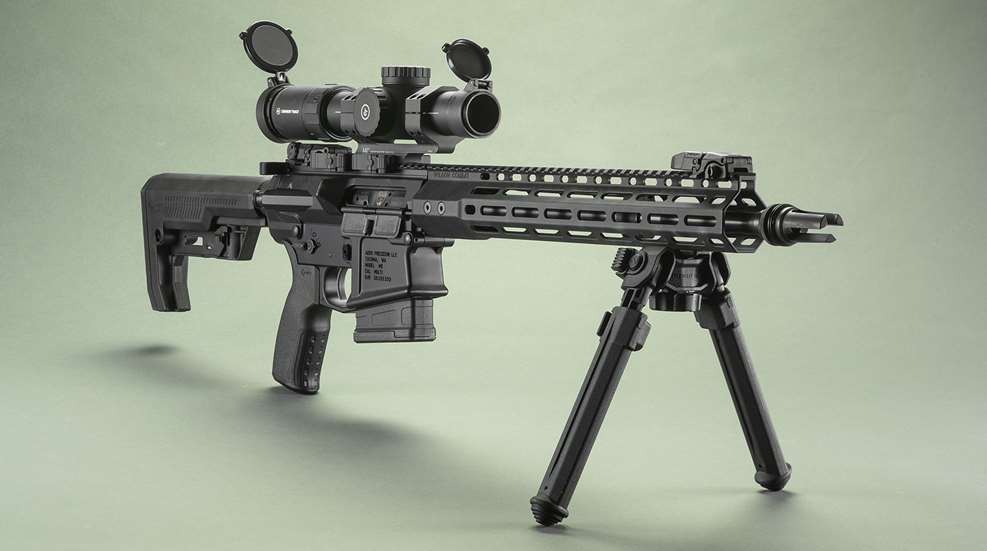
Within our military, select infantry and Special Operations personnel have traditionally relied on variations of Designated Marksman Rifle (DMR) and Special Purpose Rifle (SPR) semi-auto platforms to cover the performance gap between standard-issue carbines and sniper systems. These rifles have typically been chambered in 7.62 NATO or 5.56 NATO, but that’s changing as new cartridges and weapons enter the scene.
Our needs may be simpler and our personal logistics more agile, but we’re also more likely to be flying solo when the heat is on. So long as we’re not talking about a “Red Dawn”-style invasion, being able to stop a deadly threat out to at least 300 yards is a reasonable goal. If you really want to extend your zone of security, being able to push that distance to around 600 yards creates a comfort zone for a wider range of lethal problems.
While large swaths of the country have much longer distances with which to contend, the main focus is to simply stop the average armed attacker in their tracks before you’re within their effective range. Semi-autos are highly favored for their flexibility across all practical distances, but any suitably accurate rifle and ammunition combo capable of reaching out will suffice. Whether using a gas gun, manual repeater or single shot, your setup doesn’t need to be elaborate or win style points, it just needs to buy distance.
Opinions vary widely on suitable calibers, but there’s no need to get all parochial here. We’re not planning for trophy animals or long-range records; we’re trying to determine whether a given cartridge is capable of hitting and stopping an armed attacker at moderate distances. A commonly used metric is the whitetail rule-of-thumb, which says that if a caliber is capable of taking whitetail deer with a vital organ shot, it’s suitable for defensive work. I tend to agree, so long as the specific load used can do that at the required ranges.
A riflescope that’s rugged enough for all-weather field use and has clear glass should handle basic, mid-range tasks fairly well. Graduated iron sights and unmagnified red-dot optics can certainly function for the shooting part of the equation, but positively identifying the threat is just as critical. Unless actual eagle eyes have been transplanted into your sockets or the bad guys are of the “Hey, fellas, let’s all stand bolt upright and attack at a saunter” variety, magnification that allows precise identification of and aiming at a small target should be part of your system.
Some form of rifle rest will also be helpful. A folding bipod provides an on-board solution in areas where vegetation and obstacles don’t block lines of sight. Extended bipods, tripods and shooting sticks are better over ground cover, deadfall and broken terrain, but less mobile. Expedient soft rests, such as a day pack or rolled coat, provide flexibility for support on flat ground, over a log, rock or barrier, across a vehicle hood or on other elevated surfaces.
I’m a big fan of using the simplest solution: learning how to “wrap in” to a good-quality rifle sling that’s always on-hand and useful in most shooting positions. The key word there—learning—underpins this and every other aspect of a mid-range defensive system. Having the gear to reach out to several hundred yards is the easy part; making consistent hits at those distances—under a direct and deadly threat—takes time, effort and a suitable range.
The farther we plan to shoot, the more important it is to have accurate distance-to-target measurements. Pocket-sized laser rangefinders are excellent tools, but may not be in the budget or on hand at the needed moment. Measuring distance with a scope’s reticle graduations yields accurate results if done correctly. The same goes for wallet-size, commercial or homemade range-estimation cards, which work well at the distances we’re talking about. Neither method requires much more than time and space for training.
Knowing the distance is useless if you can’t compensate for it to get your rounds where they need to go. The same goes for estimating wind speed and direction, which also requires practice. Holding over/off the target by using reticle reference points is the fastest manual method of making elevation and windage corrections.
Dialing corrections on tactical or target knobs is another proven technique. However, rifle shooters who are new to distance shooting often find it difficult to keep track of their elevation knobs’ settings when dealing with multiple targets at different ranges. Always returning knobs to their zero positions after finishing at a specific distance may seem unnecessary, but it’s a habit that helps prevent problems when you’re in a hurry.
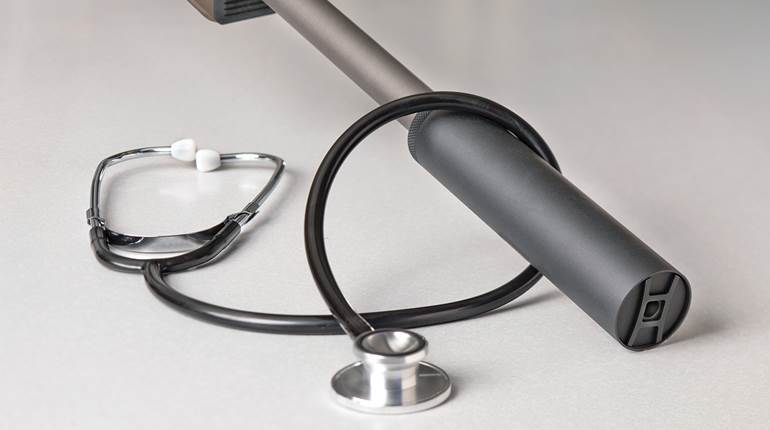
One final note: Since this topic centers on dealing with armed miscreants who are trying to kill you, think about reducing your rifle’s visual signature. As a military sniper, I spent a lot of time ensuring the people opposing me couldn’t spot my muzzles’ signatures—even when looking in my direction. Most people don’t need that level of concealment, but there’s no sense making yourself a bullseye. Sound suppressors provide flash and blast management, while prong-style flash hiders do a decent job of taming the flame.
Sometimes things move so fast that remaining out of sight is impossible. Hopefully, we’ve done everything else we can to keep the aggressors swinging wildly while we remain out of reach and in control. I can say from past experiences that’s the preferred position in which to be.