I am as guilty of this as anybody: Slap a new scope on a rifle, take it to the range for a quick sight-in and go hunting. For 95 percent of my hunting, this serves me well, even on longish shots. But precision riflemen often do more in order to know exactly where a bullet will land and are able to adjust their scope settings to affect a perfect hold.
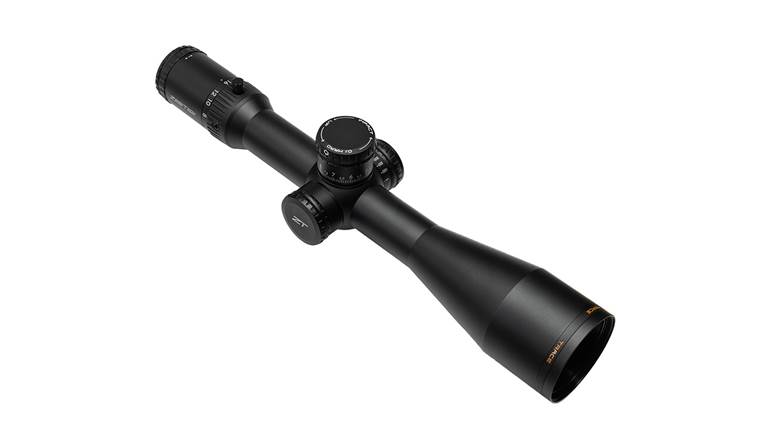
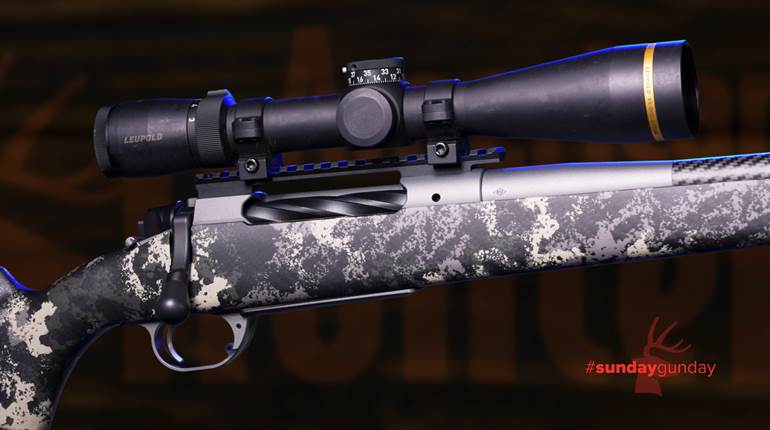
Today’s riflescopes are incredibly precise. Windage and elevation adjustments are typically measured in 1/4 minute-of-angle (m.o.a.) increments, even on bargain-basement scopes from uber-large discount outlets. Some scopes even claim 1/8 m.o.a. adjustments. But even the highest quality scope is a mass-produced product manufactured within tolerances. The knobs on the scope may claim each click will move the reticle 1/4 m.o.a., but how do you know that? You don’t, but you can find out fairly quickly. More importantly, you can also determine the repeatability of your scope’s adjustment knobs. It’s called shooting the square.
Shooting the Square
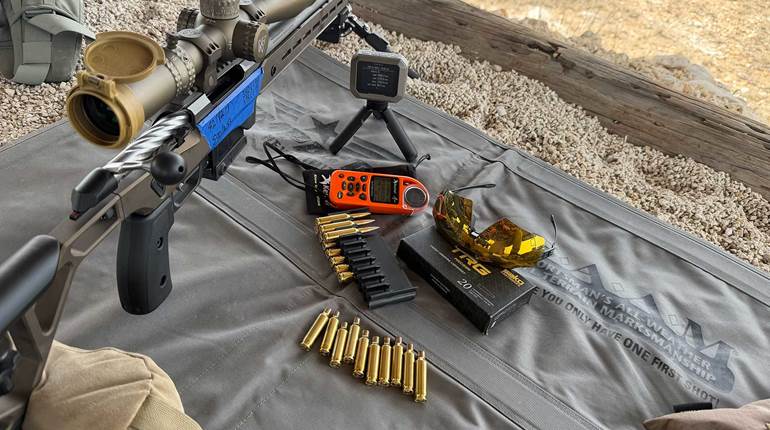
You can shoot the square with a couple of 20-round boxes of ammo. This exercise works best if you have pre-centered the reticle during bore-sighting. How do you do that? Easy—first turn the windage and elevation knobs as far as you can in one direction. Then count the number of clicks it takes each adjustment knob to reach its hard stop on the other end. Divide that number in half and set each adjustment there. Then bore-sight the rifle. You now have the most latitude within the scope adjustments.
Sight the rifle/scope combo to be dead-on at 100 yards. Let’s assume your scope claims 1/4-m.o.a. adjustments. You will want to move the point of impact 6 inches right, so turn the windage adjustment knob 24 clicks to the right (four clicks to the inch times 6 inches). Now, with a dead-center hold, shoot a three- or five-shot group. I prefer a five-shot group because the larger sample size provides a more accurate assessment. The center of the group should be 6 inches to the right of your sight-in group. If it isn’t, note the differences in terms of elevation and windage.
Now let’s see what the elevation adjustment does alone. This time lower the elevation adjustment 6 inches (24 clicks for 1/4 m.o.a. adjustments), and shoot another group. Note any deviation from what the group should be. Then, turn the windage adjustment knob 24 clicks (6 inches) to the left, and shoot another group. Note any deviation from where it should be. Finally, turn the elevation adjustment knob up 24 clicks to check its repeatability, and shoot another group. This group should coincide with your first sight-in group.
Now What?
If you go through shooting the square and all of your groups are dead on, yippie-skippy for you! As often as not, there will be some minor discrepancies—usually an inch or less. For most hunters, it’s no big deal. Typically, hunters sight their rifles in for a specific yardage and use mil-dots, hash marks or Kentucky windage to adjust for range and wind.
Precision shooters, however, prefer to make adjustments with their scopes to account for range and wind conditions. Unless the discrepancies between the adjustments and point of impact are large—more than an inch or two—the only option is to burn the ammo necessary and record the results in a log book to determine the number of clicks it takes to be able to hold dead on under a given range and wind condition. The knowledge shooters can gain from shooting the square and determining the accuracy and repeatability of their riflescope can save them a few rounds in that exercise.
Most Popular