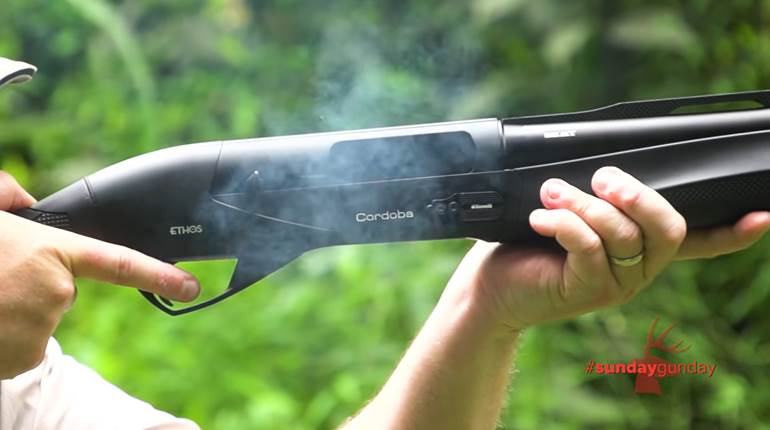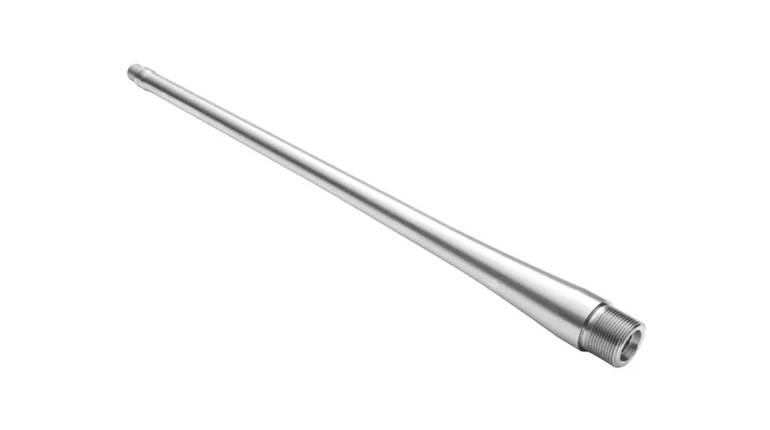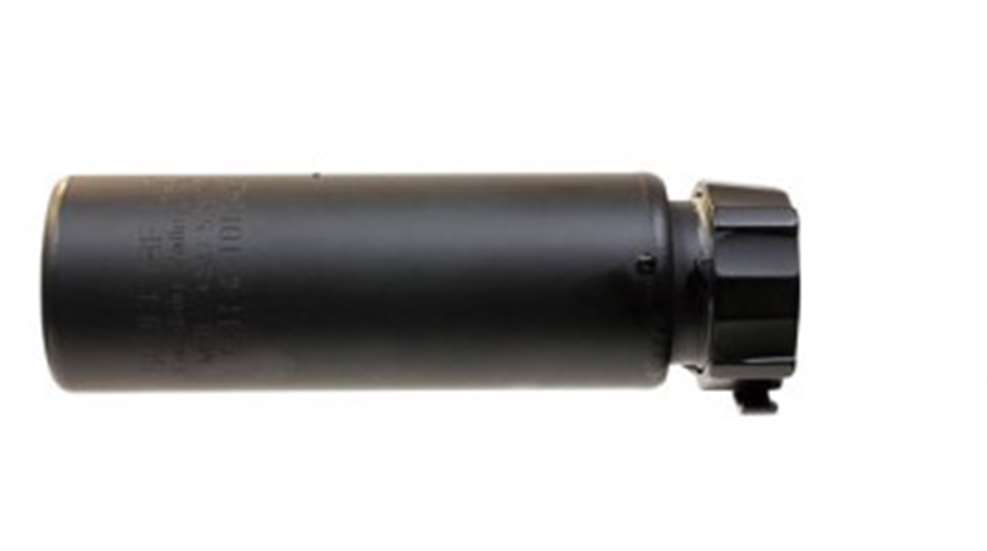
In case you hadn’t noticed, guns are loud. Hearing loss is forever. Once it’s gone, it’s gone. And I’ll admit that I was not as careful as I should have been when younger. My wife calls me “Miracle Ear” more than she calls me Mark. That’s when I hear her at all.
Around 70 to 95 decibels is where the “risk” of damage starts to be a problem. Once you get above 100 dB, you are in the danger zone. You get to 140 dB, and you are going to have damage if you are not wearing hearing protection. Gunshots, according to a 1975 Rifleman article, start out around 143 dB with .22 Shorts, and the .458 Win. Mag. comes in at 174 dB. When I shoot rifles or pistols, I usually wear both ear plugs and muffs-especially if it’s on an indoor range. On the shotgun range, I wear one or the other, but usually a set with electronic amplification that cuts out when a loud noise occurs. You know, like a gunshot. The only time I don’t wear hearing protection when shooting is when I am using a suppressor.
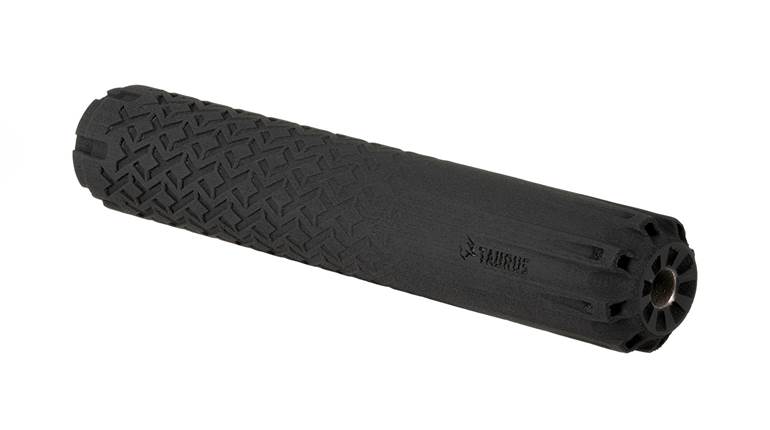
Suppressors, often called silencers (though they do not make gunfire completely “silent”), reduce the decibels of a gunshot to levels that are safe-or at least less prone to damage-human hearing. Some are better than others, and some cost considerably more than others, with units ranging from a few hundred dollars to several thousand.
Think of a firearm suppressor as a muffler for your gun, much like your car or ATV has a muffler. Before the 1930s, it was considered good manners to have a suppressor. Theodore Roosevelt had one on his Model 1894 Winchester so as not to disturb the neighbors as he dispatched pests at his Sagamore Hill home.
Suppressors are covered under the National Firearms Act of 1934, and as such the paperwork necessary is much like that for legally obtaining a fully transferable machine gun. Unlike legal machine guns (the fully transferable number of which was frozen in 1986), new suppressors can be made by licensed manufactures and transferred to individuals through properly licensed dealers. According to BATFE data, as of April 2013 there were 494,452 suppressors legally registered in accordance with National Firearms Act in the United States, and that number continues to increase each year.
Suppressors are legal to own in 39 states, and many that allow their ownership also permit their use in hunting varmints or big game, depending on the state. If you live in one of the 11 states that do not permit their lawful ownership by law-abiding civilians, you are out of luck. In addition, you have to be a U.S. resident, at least 21 and qualified to own a firearm under federal and state law.
The journey to suppressor ownership starts with identifying the suppressor that’s most appropriate for you. Obviously, an effective suppressor for a .308 Win. rifle takes a lot more engineering than one for a .22 pistol and will typically cost more. After you have identified the right suppressor, you have to find a dealer licensed by BATFE to sell NFA items in your state. Not all FFLs carry suppressors as there’s an additional license required. If you’re bored yet, you should just skip to the hilarious yet informative parody video below, produced by Silencerco. I think it was voiced by the same guy who did my 8 mm driver’s education films in the '80s.
Most dealers that regularly do business in suppressors can help walk you through the process, and some actually inventory suppressors. But that doesn’t mean you can just buy one, pass a background check and leave with the can.
The process starts with the BATF Form 4. Dealers typically know exactly how the paperwork should be filled out. They’ve done it before. If you are applying as an individual, you must get the signature of your area’s Chief Law Enforcement Officer (CLEO), as well as supplying two sets of the forms with two photographs and two fingerprint cards. Then you put the package together with a check for $200 and send it to the BATFE. This is for the “tax stamp,” literally, a $200 stamp that looks like it should go on an envelope, likely printed in 1934, that is affixed to your paperwork. Once you pass the BATFE’s background check and your forms are processed, they are shipped back to your dealer. Once the dealer has the paperwork back from BATFE, you fill out a Form 4473 at the dealer and the suppressor is transferred to you.
And be patient. I am told the process takes about a year at present from start to finish.
Most Popular