This is a story about guns and motorcycles, but it has nothing to do with the Hell’s Angels’. It’s a story about a rifle that begins in the last century in Aldo’s Harley-Davidson shop in Massachusetts and, now, ends another chapter at PARA USA’s factory in North Carolina.
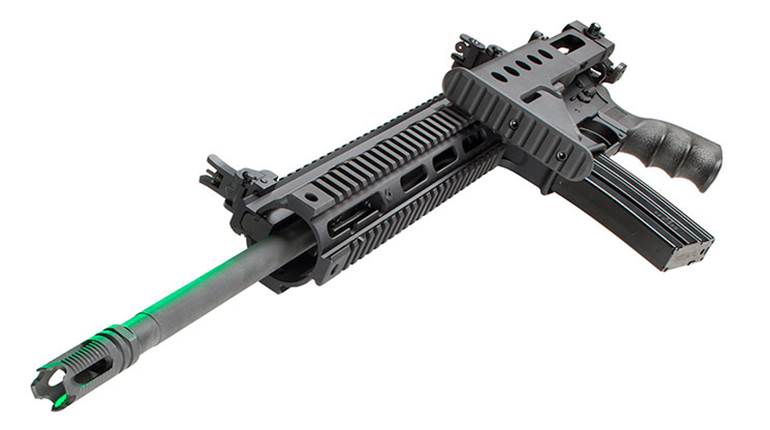
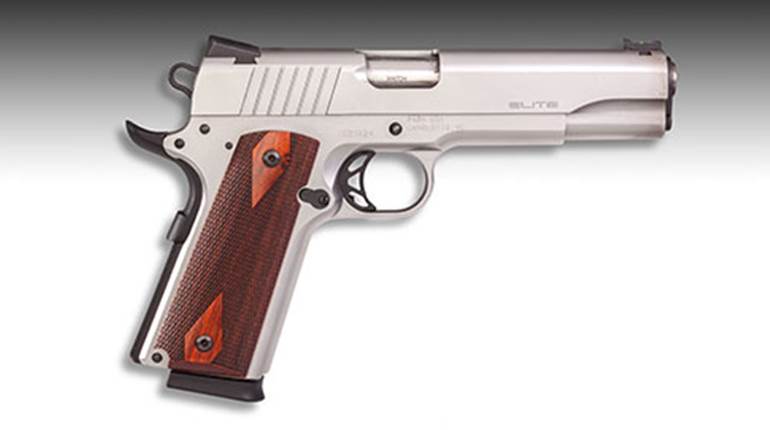
The rifle is the LR-300, an innovative conversion of an AR-15 to a novel operating system. The LR rifle (for Long Range) is the brainchild of Alan Zitta, a blunt-spoken, chisel-jawed Harley rider who owns Aldo’s H-D shop. Zitta licensed the right to manufacture the LR-300 to PARA USA several years ago. PARA marketed the gun as the Tactical Target Rifle until last week, when it was announced that the maker of .45 caliber 1911 pistols will exit the rifle market. The reason: to focus on its core product, the legendary P14-45 pistol.
Thanos Polyzos, CEO of PARA, said, “PARA has some exciting new projects in development that will continue the innovation we started with the high-capacity P14-45 pistol. We want to bring these exciting new major caliber handguns to the firearms market and we need to focus our attention on them.”
Zitta has hoed a tough field with the LR-300 since it debuted in the mid-‘90s. Originally sold as an upper receiver kit to install on a customer’s AR lower, the LR-300’s main claim to fame is that it relocates the bolt carrier return spring into the fore-end, thus eliminating the receiver extension and allowing for a side-folding, collapsible stock.
The LR-300 also boasted a flat-top upper receiver with M1913 Picatinny rail slots for mounting electro-optics, a step ahead of the AR market that was only then discovering the M4. Zitta’s company, Z-M Weapons, marketed the LR-300 as an accessory (not as a complete gun) but it looked like the rifle would make the Big Leagues as a stand-along rifle when Para picked up the design.
It was not to be. Para’s Tactical Target Rifle was introduced in 2008. The rifle was expensive, approaching $3,000, and it was a hybrid—not quite a piston system and not a DGI (direct gas impingement, the traditional operating system of an AR). Production was delayed and by the time the wheels were rolling, the panic buying frenzy on 2008 and 2009had dissipated.
The timing was bad for another reason as well. Ted Szabo, PARA’s co-founder, had died in 2007 at the age of 60. It was an unexpected and devastating loss for the company as Ted had been the principal engineer and firearms designer. I don’t think my good friends at PARA would be insulted if I refer to Ted as the brains of the operation, for that’s what he was.
Without Ted to direct new product developments, taking on the LR-300 as PARA’s entry into the tactical rifle market was the only way (at the time) for the company to enter the market.
No one will ever replace Szabo, but in the ensuing four years, PARA has augmented its engineering team and is now focusing on its pistols. The LR-300 has thus fallen back to Zitta to try again. It’s a good rifle, but it might be “out there” for the average shooter to understand.
Most Popular