What is this thing we call the shooting industry or, to put it another way, what is the business of the gun business? Unlike other industries that can be analyzed, quantified, objectified and measured, the metrics of the gun business are largely unknown. It’s amazing how mysterious the industry is when you think about it. Even an industry analyst like the Insider cannot get hold of basic data that other industries take for granted.
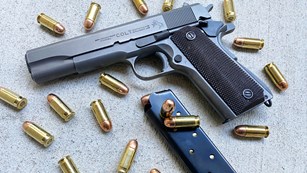
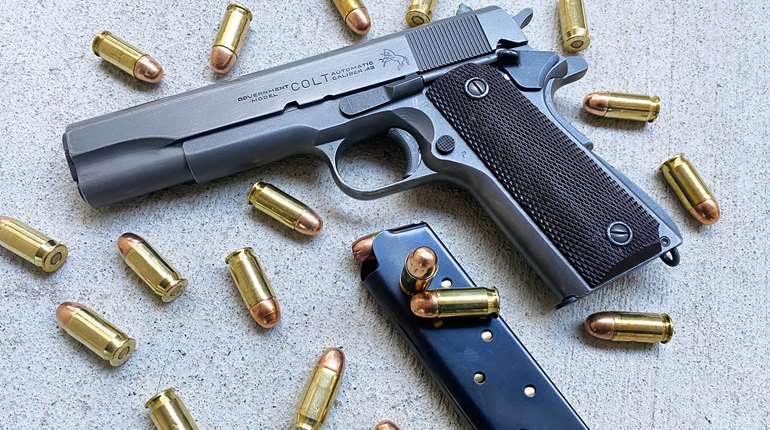
Consider market share, a common measure. In most industries, analysts can tell you to the second decimal what percentage Apple owns of the cell phone market, how big is Ford’s cut of the pick-up pie or even how many orders of French fries McDonald’s sells compared to Burger King. The best a firearms analyst can do is make an educated guess on, for example, how much market share does Kimber own of 1911 handgun sales (my best guess: somewhere around 35 percent).
What about a broader measure like determining the market share of Glock versus SIG versus Smith & Wesson in law enforcement sales? I’ve heard Glock controls everything from 60 to 85 percent of handguns sold to police agencies. If these pistols were tennis shoes, we’d know exactly how many Nike sells compared to Addidas.
Why such scanty information in the gun business? Two reasons: first, many companies in the firearms industry are privately owned, so there are no quarterly statements or annual reports available to the public; second, even though firearms production is licensed by the federal government and theoretically should be easy to track, the ATF embargoes the annual firearms manufacturing data for one calendar year, meaning 2008 data is released in 2010.
Complicating an analyst’s job is the manner in which ATF catalogs firearms production numbers. It’s not by make and model, but by caliber. Furthermore, as new calibers are introduced, like the .357 SIG or .40 S&W, ATF does not create new categories but instead lumps the new birds into existing pigeonholes.
For instance, you can study firearms production date and learn that Smith & Wesson produced X-number of .45 caliber pistols, but it doesn’t tell you how many of those are 1911s or other models. In fact, it doesn’t even tell you how many .45s were manufactured because the .40 S&W was assigned to the .45 caliber category when it was first introduced.
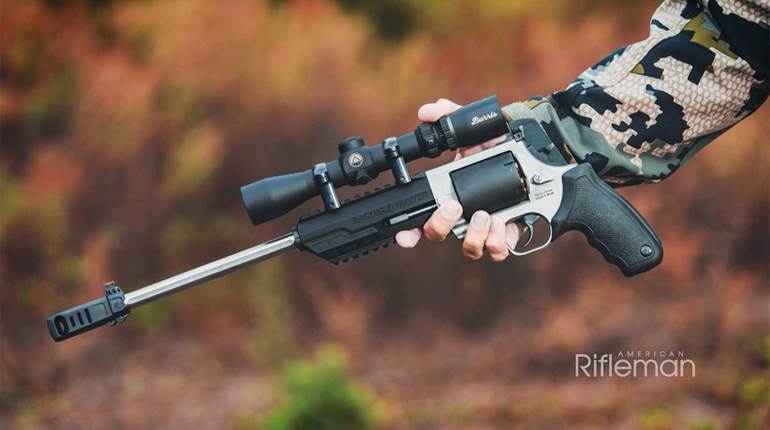
Want to compare market share of big bore revolvers? Fat chance. The .454 Casull, .480 Ruger and .460 S&W are all “.45 caliber revolvers.”
Shotguns are similarly lumped together. If you want to compare how Remington’s semi-automatic 12 gauge sales compare to Mossberg’s pump-action numbers, you can’t.
Interestingly, the data on the number of imported firearms is not embargoed for a year, probably because ATF doesn’t collect that data. Who does? The Census Dept., of all things. You can find out the gross number of import pistols, rifles and shotguns from a given country, but that’s all. This can be helpful in the case of something like the XD because it’s the only handgun made in Croatia, but it's not muchhelpin cases like Germany or Italy where there are numerous manufacturers.
I would love to analyze the firearms market the way a restaurant industry insider can track burrito sales, but it’s just impossible. In fact, I can only make an educated guess on the total size of the 1911 market (around 150,000 units a year) which is hardly scientific.
Without solid, timely market data, the shooting industry remains an enigma compared to other industries, but that’s not the only aspect of the gun business that makes it so hard to plumb. Next time we’ll look at how the distribution channel is even more confusing.
Most Popular