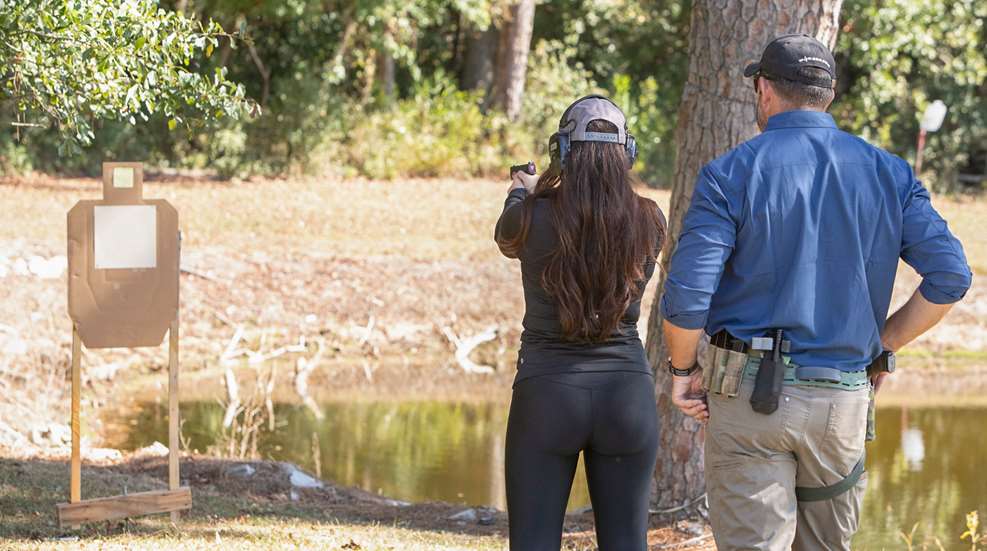
The “A+” answer to a loved one wanting to learn to shoot is to get them professional instruction from a reputable trainer who specializes in beginners; however, the reality is that many friends and family will strongly resist that ideal approach and prefer to just gain exposure from a trusted family member. I’ve trained special operations Marines, SWAT guys and myriad instructors—all of whom require a quite different style of instruction and interaction from teaching family.
When exposing friends and family to firearms, my goals are largely to give them a solid understanding of basic handling and function with a baseline capability to operate the handgun safely. From this point, skill can be layered on over time, whether that is additional work on or off the range.
I’ve picked up a few lessons in helping true beginners that I feel pretty strongly about. Following these will often “earn a second session” and might just turn that loved one into a shooter.
1. Do the important stuff away from the range—the range is challenging enough.
My mentor, the legendary trainer Pat Rogers, used to joke that many shooters lose 10 IQ points once they step onto the firing line. That is overstatement for effect, but it underscores an important truth. A public range is a terrible and intimidating learning environment. Can you imagine a sky-diving class where the instructor waited until the plane was noisily climbing to altitude to give you instructions mere seconds before you jumped? You wouldn’t hear much and you’d comprehend even less as your anxiety heightened. That is what your loved one is going through when you hand them a dangerous instrument over muffled instructions as nerve-rattling gunfire booms and crashes around them.
Ideally, a family member can get familiar with the big-picture stuff in the comfort of a familiar environment. I’ve used airguns, non-lethal marking rounds and laser trainers to cover the foundational aspects of safety, handling, loading and unloading, and basic technique where the learning can be more casual and interactive. The range should be confirmation and practice of what was learned at home.
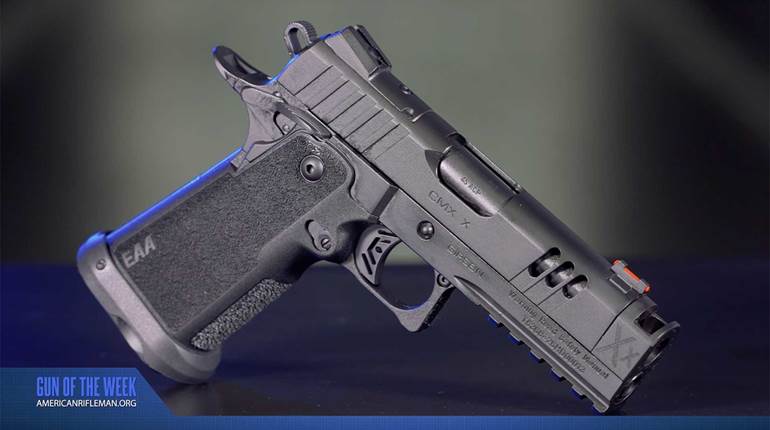
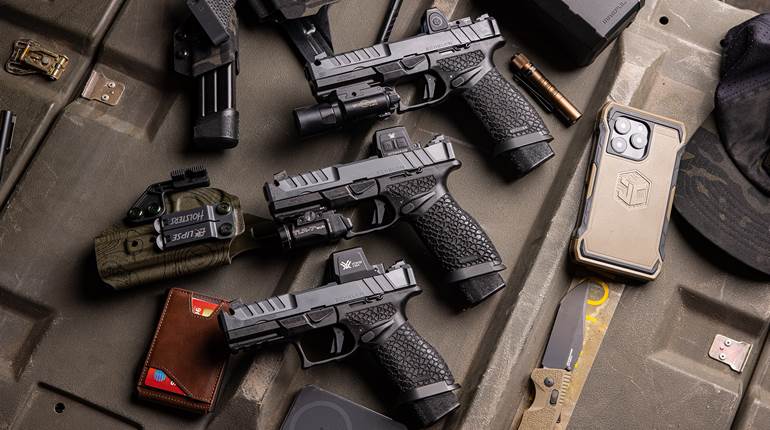
This applies equally to refresher or review. For this project, my daughter and I spent about 15 minutes at home reviewing handling and then practicing/tweaking grip and trigger by using a Next Level Training SIRT pistol, a “Glock-like” non-firing trainer that “fires” a laser. We then reviewed and dry-fired with the test pistols. I’ve seen well-meaning shooters sour their families on shooting by having to stressfully correct basic handling or safety errors because all review was left until they stepped onto the range.
2. Keep range sessions short and end on a high note—leave them wanting more.
Both of my daughters enjoyed shooting with me when they were younger, but shooting with me is a lot like work. I’m usually at the range for three to four hours, and their active interest waned at about an hour—and they were well over it by the time I was ready to leave. For some years after one long range trip too many, the girls would find any reason to avoid coming along. They will now occasionally come out if the weather is nice, but I’ve learned the hard way to make the trip all about them and pack up as soon as their fun meter begins to waver.
Another aspect that matters is realistic performance. I have to actively guard both my wife and girls from frustrating themselves by trying to hit targets that are too small or far away and then quickly becoming discouraged. Since they are not regular shooters, they have less sense of what “good” is and can sometimes have unrealistic expectations, despite shooting quite well. I make a genuine effort to provide them with targets or suggestions that are within their skill levels and that will result in high satisfaction. We will occasionally try a “stretch” shot, but I’m careful to not let them get pulled into a self-critical downward spiral of frustration if the hits don’t come.
3. Communicate clearly and address one thing at a time.
Our loved ones are just like us; they can only focus on one thing at a time. Too many well-intentioned corrections and exhortations coagulate into a confusing mush when the shooter has a pistol in hand and their own thoughts and reactions swirling. Unless there are multiple safety issues that must be addressed, I try to speak as clearly as possible about the one “big” thing they should correct.
Try mightily to phrase instructions in simple and positive terms rather than negative; think “try to see the pistol lift in recoil” rather than “don’t flinch.” Sometimes, corrections can be handled in deliberate sequence where the shooter can tackle them thoughtfully in turn; say, standing erect, tightening the support hand grasp and finally steering the trigger straight back. A direction/correction should ideally be five words or less—more and it is probably too complicated for range conditions with the pistol in hand.
The more that can be done to attenuate noise while aiding communication, the better. I like having new shooters put foam ear plugs in loosely while using quality electronic ear protection. The electronic assistance aids communication, while the doubling-up cuts the distracting blast to the best possible level.
Most Popular