by
Support NRA American Rifleman
DONATE
** When you buy products through the links on our site, we may earn a commission that supports NRA's mission to protect, preserve and defend the Second Amendment. **
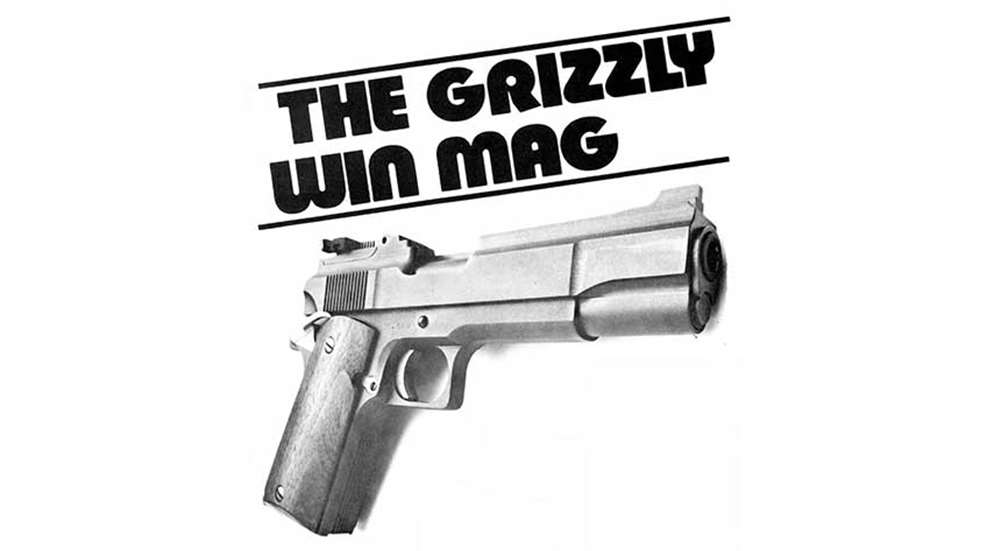
There was a great deal happening in the world of handgunning in the '70s and '80s. Many new models became available, as the proverbial envelope was pushed in all directions—bigger, smaller, longer, et cetera. It stands out in my recollections as a time when the concept of the semi-automatic pistol was more aggressively explored than ever before.
Since it was also a time when Americans were lusting for ever more powerful handguns, we saw several interesting and powerful semi-autos. In this short piece, we'll look at one of my personal favorites, but we need to briefly look at what has to happen when you make a semi-auto pistol more powerful.
Since there were already a number of powerful revolvers from S&W, Ruger, Colt and others, we already had a standard for handgun cartridge power. Since the mid-1950s, the most commonly used big handgun cartridge was the .44 Magnum. There is plenty of power in this aging slugger, so much so that if a big semi-auto was chambered for it, it might have got a lot more attention than it did. The grand old .44 is a cartridge that is configured with a rim that headspaces against the back of the cylinder of a big revolver. Making that cartridge feed through a typical magazine and up a feed ramp is very difficult. The answer is a new rimless cartridge.
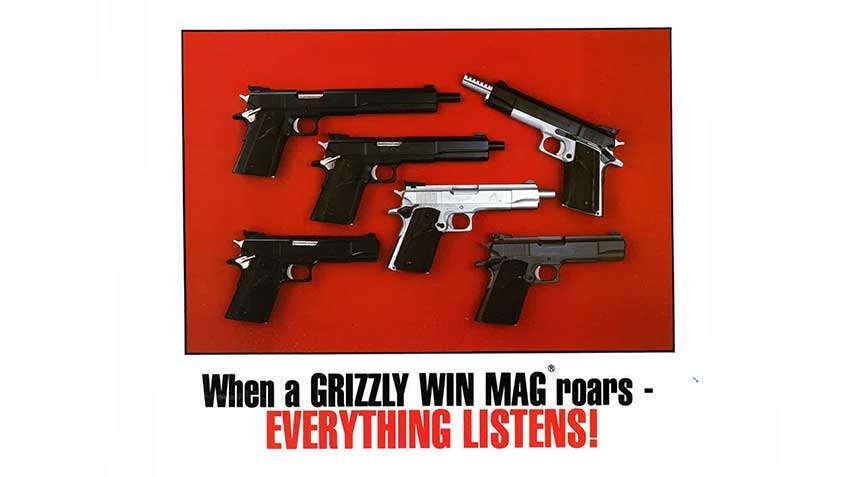
There were four different magnum-power semi-automatic pistols. They were the AutoMag, Wildey, Desert Eagle and Grizzly. Another model, called the Coonan, was a fine gun, but never went over the .357 Magnum level of power. Both the AutoMag and Wildey used special rimless cartridges. For the Automag, it was the .44 Automag—usually wildcatted from .308 Winchester brass.
Wildey promoters were able to persuade Winchester to build special 9mm Winchester Magnum and .45 Winchester Magnum ammo. Wildey pistols never managed to get made in commercially profitable quantities. Clever engineering permitted the Desert Eagle to use regular Magnum ammo: .357, .41 and .44 Magnum. That may have had something to do with the fact that they are the only survivor in the quartet. Still made, the guns are both reliable and accurate.
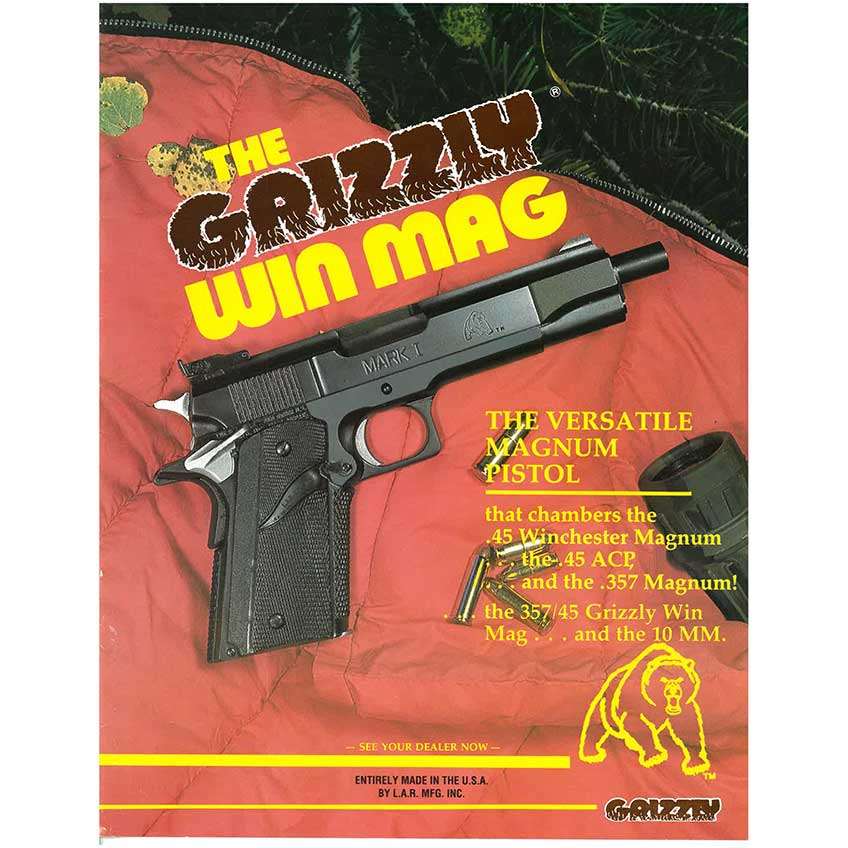
This leaves the Grizzly, which caught my fancy for several different reasons. I had several review samples of this interesting gun and shot them extensively. They proved to be nearly trouble-free guns that did what they were supposed to do with rare malfunctions. Grizzlies were chambered for several long cartridges, but the main round associated with the gun was the .45 Winchester Magnum. About the same length as the .44 Magnum (or .45 Long Colt), this round was essentially a lengthened and strengthened .45 ACP. Extra case capacity meant more propellant and velocity. Winchester was delighted to see the gun enter the market, because they had produced quantities of .45 Win. Mag. ammo for use in the Wildey, which promptly tanked.
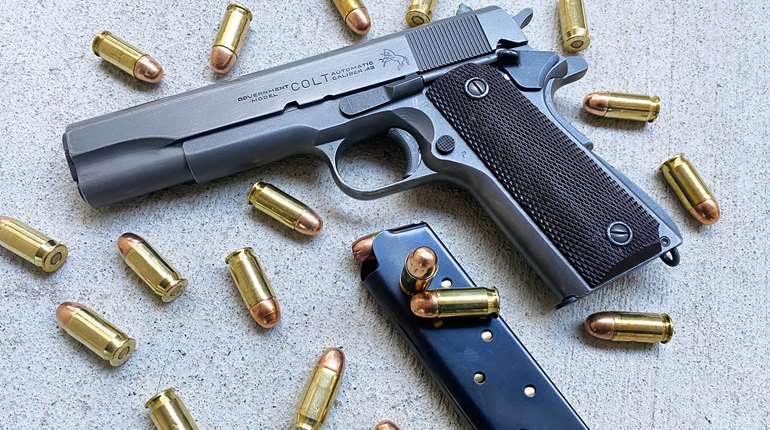
There were some 15,000 Grizzlies made and the majority were .45s. Several sources have identified the Grizzly as a “scaled-up” 1911. The plan was influenced a great deal by the grand old gun, but the Grizzly is best described as a lengthened 1911. With a cartridge as long as a .44 Magnum, you have to have a 1911-looking magazine that is longer by a good bit. The designers at LAR came up with a seven-rounder that filled the bill. Naturally, the magazine was longer than a 1911 in the fore-and-aft vector. It went into a suitably extended magazine well of the longer receiver.
The Grizzly got a longer slide and 5.4" barrel. Many versions of the gun had barrels that extended beyond the front of the slide. The most common was probably the 6.5" version. While every part on the Grizzly performed the same function as its counterpart in a 1911, almost all of them are longer and very few are interchangeable. The major point is that the shooter who has gone armed with the 1911 gun will have no problem managing the Grizzly. Same properly-located thumb safety, crisp four-pound trigger, drop-free magazine—all just like what he's used to. The Grizzly came with a nice rear sight adjustable for windage and elevation.
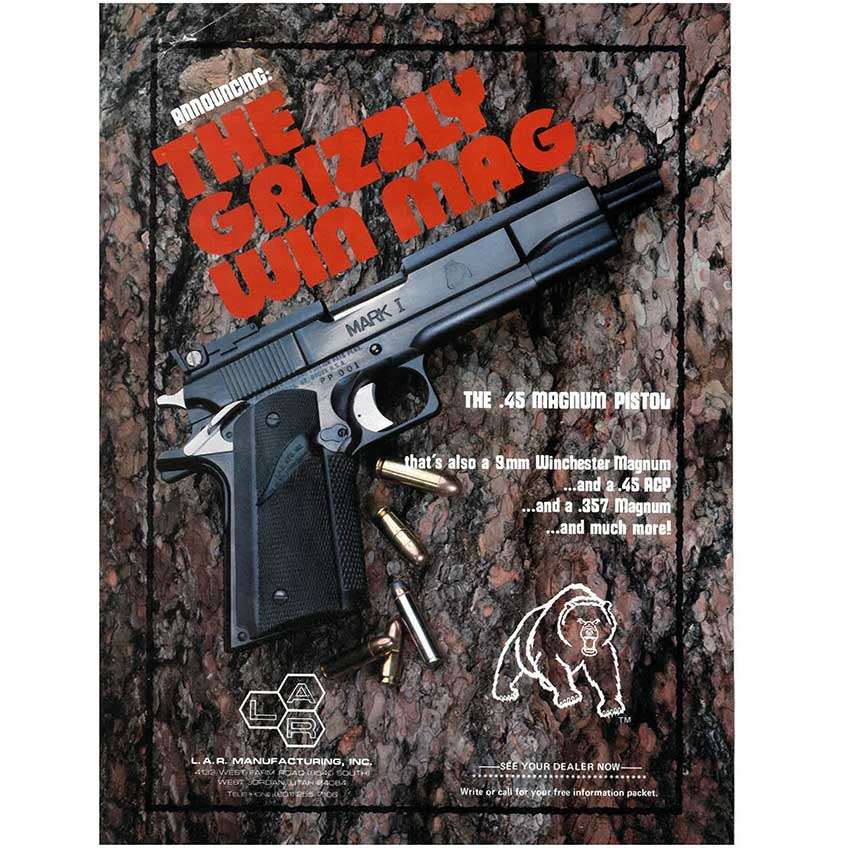
The lengthening process did nothing for the pistol's ergonomics. This was a big handgun, and a lot of shooters just could not master the sheer mass of the arm. Also, shooting heavy bullets at high velocity spells recoil. The Grizzly kicks—hard. But there is nothing you can do about it. You just plain have to get past the blow that comes with every shot. It is, by the way, slightly less than any of the other magnum semi-autos.
In the course of those long ago stories, I fired the Grizzly in .45 Win. Mag. more than any other caliber. It was very accurate, particularly with special ammo from Pro Load Ammunition. Later in the production life of the Grizzly, they were able to perfect a (rimmed) .44 Magnum, and I worked with one of them. The Grizzly in that caliber was just as accurate as all but a small percentage of revolvers. I also did some work with a wildcat called the .357/.45 Win. Mag. It was a .45 Winchester Magnum case, necked down to take .357-cal. bullets. It was an excellent performer, particularly in the accuracy sense.
For a couple of years, there was a great deal of interest in the big .45. I had nothing but pleasant recollections of range sessions that went smoothly. That's more than I can say about the other magnum semi-autos, although the Desert Eagle seems to do just fine. I speculate that some of the Grizzly's good performance stems from the gun's operating system—just like the 1911.
Since it was also a time when Americans were lusting for ever more powerful handguns, we saw several interesting and powerful semi-autos. In this short piece, we'll look at one of my personal favorites, but we need to briefly look at what has to happen when you make a semi-auto pistol more powerful.
Since there were already a number of powerful revolvers from S&W, Ruger, Colt and others, we already had a standard for handgun cartridge power. Since the mid-1950s, the most commonly used big handgun cartridge was the .44 Magnum. There is plenty of power in this aging slugger, so much so that if a big semi-auto was chambered for it, it might have got a lot more attention than it did. The grand old .44 is a cartridge that is configured with a rim that headspaces against the back of the cylinder of a big revolver. Making that cartridge feed through a typical magazine and up a feed ramp is very difficult. The answer is a new rimless cartridge.
There were four different magnum-power semi-automatic pistols. They were the AutoMag, Wildey, Desert Eagle and Grizzly. Another model, called the Coonan, was a fine gun, but never went over the .357 Magnum level of power. Both the AutoMag and Wildey used special rimless cartridges. For the Automag, it was the .44 Automag—usually wildcatted from .308 Winchester brass.
Wildey promoters were able to persuade Winchester to build special 9mm Winchester Magnum and .45 Winchester Magnum ammo. Wildey pistols never managed to get made in commercially profitable quantities. Clever engineering permitted the Desert Eagle to use regular Magnum ammo: .357, .41 and .44 Magnum. That may have had something to do with the fact that they are the only survivor in the quartet. Still made, the guns are both reliable and accurate.
This leaves the Grizzly, which caught my fancy for several different reasons. I had several review samples of this interesting gun and shot them extensively. They proved to be nearly trouble-free guns that did what they were supposed to do with rare malfunctions. Grizzlies were chambered for several long cartridges, but the main round associated with the gun was the .45 Winchester Magnum. About the same length as the .44 Magnum (or .45 Long Colt), this round was essentially a lengthened and strengthened .45 ACP. Extra case capacity meant more propellant and velocity. Winchester was delighted to see the gun enter the market, because they had produced quantities of .45 Win. Mag. ammo for use in the Wildey, which promptly tanked.
There were some 15,000 Grizzlies made and the majority were .45s. Several sources have identified the Grizzly as a “scaled-up” 1911. The plan was influenced a great deal by the grand old gun, but the Grizzly is best described as a lengthened 1911. With a cartridge as long as a .44 Magnum, you have to have a 1911-looking magazine that is longer by a good bit. The designers at LAR came up with a seven-rounder that filled the bill. Naturally, the magazine was longer than a 1911 in the fore-and-aft vector. It went into a suitably extended magazine well of the longer receiver.
The Grizzly got a longer slide and 5.4" barrel. Many versions of the gun had barrels that extended beyond the front of the slide. The most common was probably the 6.5" version. While every part on the Grizzly performed the same function as its counterpart in a 1911, almost all of them are longer and very few are interchangeable. The major point is that the shooter who has gone armed with the 1911 gun will have no problem managing the Grizzly. Same properly-located thumb safety, crisp four-pound trigger, drop-free magazine—all just like what he's used to. The Grizzly came with a nice rear sight adjustable for windage and elevation.
The lengthening process did nothing for the pistol's ergonomics. This was a big handgun, and a lot of shooters just could not master the sheer mass of the arm. Also, shooting heavy bullets at high velocity spells recoil. The Grizzly kicks—hard. But there is nothing you can do about it. You just plain have to get past the blow that comes with every shot. It is, by the way, slightly less than any of the other magnum semi-autos.
In the course of those long ago stories, I fired the Grizzly in .45 Win. Mag. more than any other caliber. It was very accurate, particularly with special ammo from Pro Load Ammunition. Later in the production life of the Grizzly, they were able to perfect a (rimmed) .44 Magnum, and I worked with one of them. The Grizzly in that caliber was just as accurate as all but a small percentage of revolvers. I also did some work with a wildcat called the .357/.45 Win. Mag. It was a .45 Winchester Magnum case, necked down to take .357-cal. bullets. It was an excellent performer, particularly in the accuracy sense.
For a couple of years, there was a great deal of interest in the big .45. I had nothing but pleasant recollections of range sessions that went smoothly. That's more than I can say about the other magnum semi-autos, although the Desert Eagle seems to do just fine. I speculate that some of the Grizzly's good performance stems from the gun's operating system—just like the 1911.
Most Popular