Ruger’s Lightweight Carry Revolver (LCR) has enjoyed commercial success since the series was launched in January 2009 with a five-shot .38 Spl. rated for +P ammunition. In June 2010, a .357 Mag. version was added, followed by an eight-shot .22 Long Rifle version in 2011. For 2013, Ruger unveiled the LCR-22MAG, a six-shot revolver chambered for .22 Winchester Magnum Rimfire (WMR) ammunition.
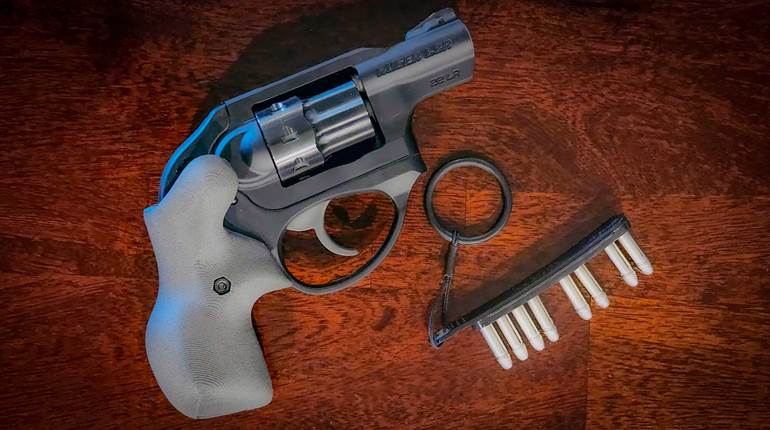
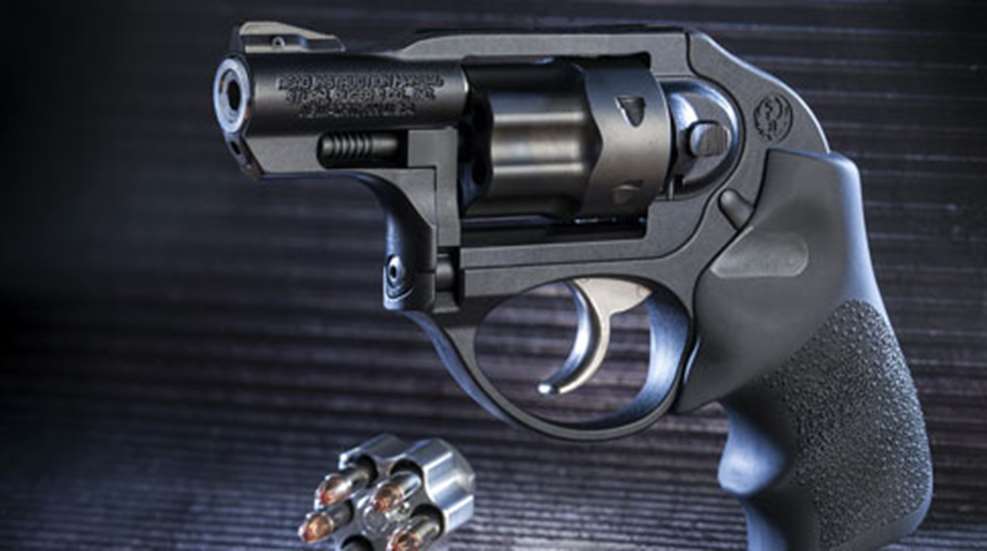
The LCR offers proven Ruger revolver features blended with innovative modular design and mixed materials manufacturing. At first glance, shooters will see the attributes that have become standard for many revolvers in this class, including the 17⁄8-inch barrel, U-notch rear and fixed front sights, and the double-action-only trigger configuration with a fully shrouded hammer. But Ruger has stepped away from the traditional single- or dual-metal revolver construction to incorporate the best characteristics that aluminum, stainless steel and modern polymers have to offer.
The upper frame and barrel sleeve of the LCR is forged from lightweight 7000-series aircraft-grade aluminum. It’s called a Monolithic Frame by Ruger because it is formed as a single unit instead of being pieced together as with other revolver designs. A 1714 stainless-steel barrel is threaded into and supported by the frame. Steel bushings are added to reinforce the area surrounding the center pin and firing pin. The six-shot stainless-steel cylinder is uniquely and deeply fluted for the dual benefits of reducing the weight of the revolver and the chances of its printing when carried concealed. The cylinder has been treated with an Ionbond Diamondblack coating for added durability and a matte-black finish.
The lower frame assembly, or fire-control housing, is where the LCR departs from typical revolver design. Instead of using steel or aluminum, it is constructed of glass-filled nylon, which is light, strong and resistant to the corrosive effects of perspiration. It also flexes a little during recoil to help reduce impact to the shooter’s hand. Inside the polymer frame, steel is used for critical moving parts such as the trigger and cylinder release button, which adds a little weight to the revolver, but increases its working life. The fire-control group can be locked to prevent the gun from firing by removing the grip and engaging the safety mechanism with the provided key.
Few pocket pistols can be deemed “fun” to practice with, especially short-barreled revolvers. The stout recoil and long trigger pull of most small wheelguns require that real dedication be applied to mastering shooting them well. The LCR-22MAG, however, proved to be an enjoyable exception to the rule. The overall fit and finish of the LCR-22MAG were excellent, with the cylinder snapping snuggly into place while remaining easy to swing out for reloading.
The sight system is rudimentary, which is common for similar revolvers, but certainly adequate to the task of close-range self-defense. The front sight is pinned into place to allow the owner to trade it out for a fiber-optic or night sight. The hand-filling rubber grip firmly seats the revolver into the shooting hand, which in turn creates a solid fulcrum for the long trigger pull. Although the trigger tipped the Lyman trigger gauge at more than 12 pounds, the patented friction-reducing cam makes the pull feel smoother and lighter than it measures. Because the trigger swings through the arch of travel without any hang-ups or stacking, it’s more intuitive to work with.
The LCR-22MAG was test-fired with a wide variety of ammunition, from practice-grade rounds to those specifically marketed for self-defense applications. They all fed and ejected without any problems. Reloading was made quick and easy using aluminum J2-22MAG speed loaders and loading blocks from 5 Star Firearms. There was a single failure to fire. Re-chambering the round so as to present a fresh section of the cartridge rim two more times demonstrated the problem lay with unequal priming compound distribution, not the firing pin.
The LCR was originally designed to be as comfortable to shoot as it is to carry. Designers worked to mitigate the stout kick produced by .38-cal. center-fire pistol ammunition. Because of that, the LCR-22MAG produced exceptionally mild levels of felt recoil using .22 WMR self-defense loads. This made accurate shot placement and quick follow-up shots easy. It should be noted though that the .22 WMR cartridge usually produces a loud report and bright muzzle flash from a short-barreled revolver. In other words, it has the bark of a big-bore revolver without biting the hand that feeds it.
While the .38 Spl. +P and .357 Mag. LCR models offer some of the best stopping power available in pocketable revolvers, the .22 Long Rifle version allows shooters to plink and practice with reduced-cost ammunition.
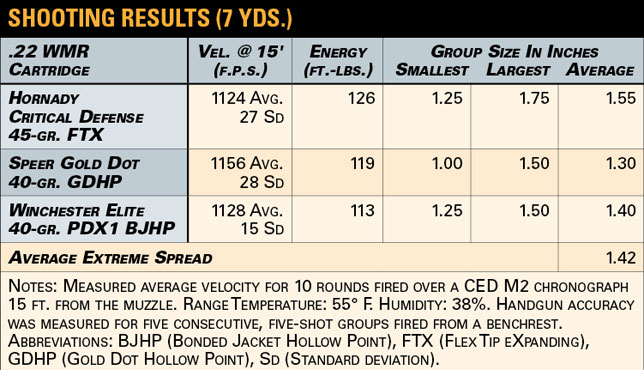
Ammunition companies such as Hornady, Speer and Winchester have developed loads specifically designed for use in short-barrel revolvers such as the LCR. Although they are not as powerful as center-fire pistol cartridges, they produce energy levels comparable to those of the .32 ACP and .380 ACP cartridges when fired from pocket-size semi-automatic pistols. The reduced cost of rimfire ammunition encourages regular practice, and tames the kick for those who want, or need, a low-recoil self-defense handgun. The LCRs are easy to operate and light enough to carry in a pocket or purse. All of those factors make the LCR-22MAG an ideal addition to the Ruger family of handguns.
Manufacturer: Sturm, Ruger & Co., Inc.; (603) 865-2442; ruger.com
Action: double-action-only rimfire revolver
Caliber: .22 WMR
Frame: aluminum/glass-filled nylon polymer
Barrel: 17⁄8" stainless steel
Rifling: six-groove. 1:9" RH twist
Cylinder: six-round capacity
Sights: pinned ramp front, U-notch rear
Trigger: double-action; 12-lb. pull
Grip: Hogue Tamer Monogrip
Overall Length: 61⁄2"
Height: 41⁄2"
Width: 1¼"
Weight: 16.6 ozs.
Accessories: lock, soft case, owner’s manual
Suggested Retail Price: $529
Most Popular