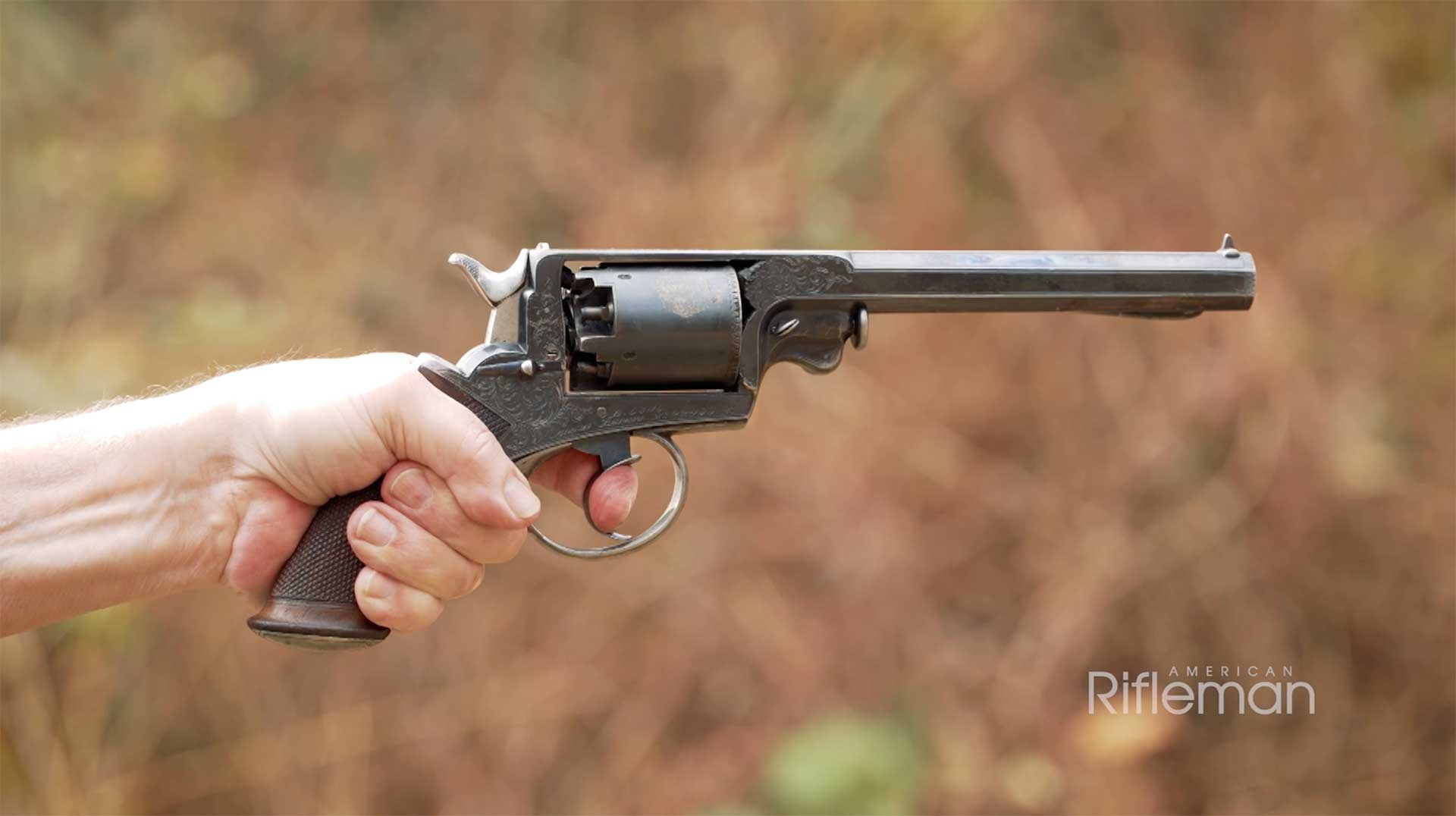
Sam Colt famously invented his single-action revolver in the 1830s and is rightfully credited with the subsequent development and growth in popularity of the revolver in America. But across the Atlantic, the British soon had their own revolver design, and it offered a different feature not available on Colt’s guns. Watch our “American Rifleman Television: I Have This Old Gun” segment above to hear the history of the Beaumont-Adams revolver.
“It would take a bunch of years before the Colt factory would produce a decent double-action revolver. Not so with the British,” American Rifleman Field Editor Garry James said. “In 1851, a man called Robert Adams came up with a superb, what he called ‘self-cocking revolver.’ Double action. Interestingly enough, it was double-action-only. It had no hammer spur. It could only be fired by pulling the trigger.”
By 1856, a lieutenant in the British Royal Engineers, Frederick Beaumont, developed a mechanism that allowed the Adams revolver design to be fired in single-action mode with an exposed hammer spur.
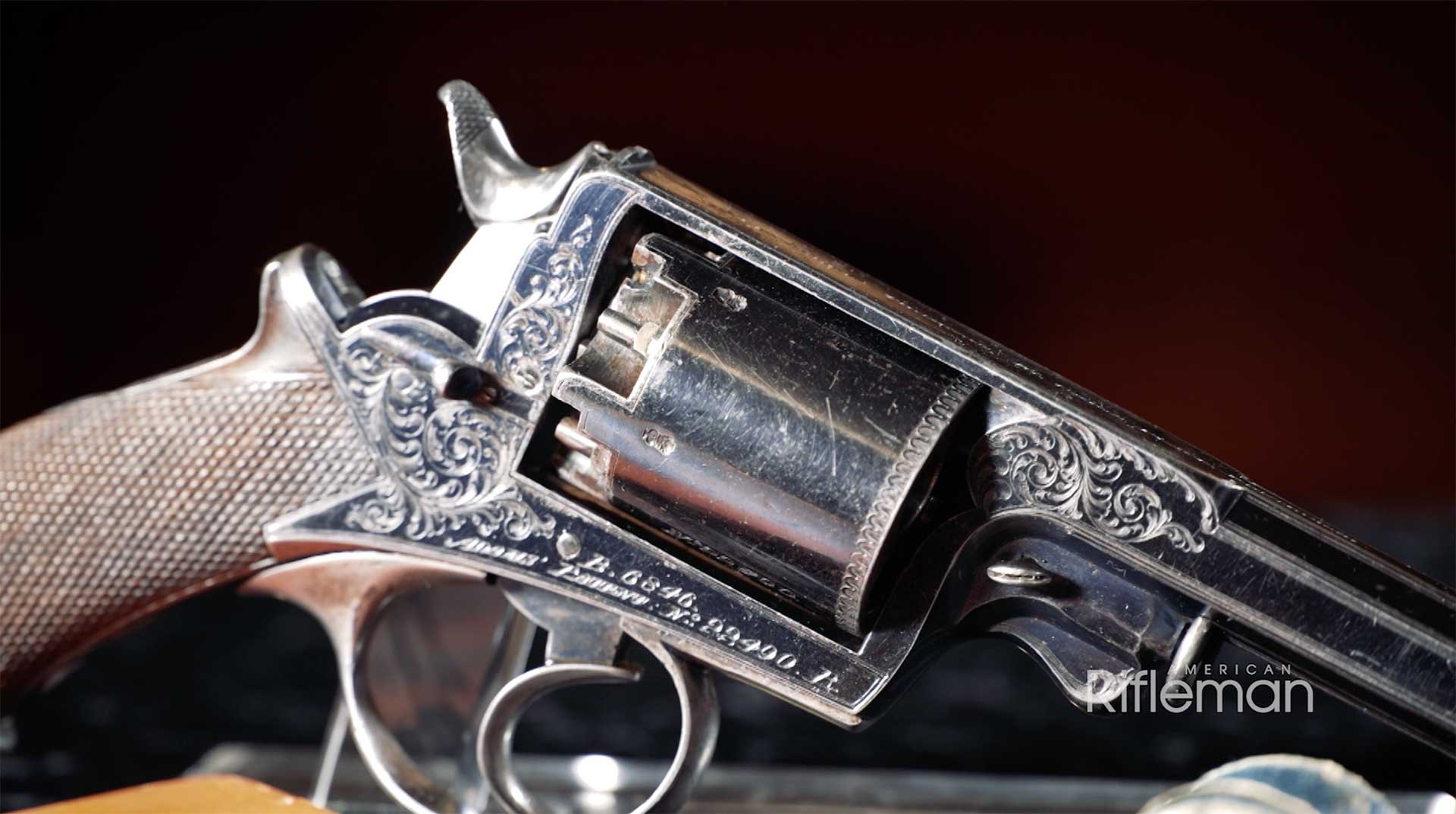
“They were made in a range of bore sizes,” American Rifleman Executive Editor Evan Brune said. “The most common ones that you'll encounter are .442-caliber revolvers. They also made them in .479 caliber, and quite a few guns were actually made in .500 caliber, as the British would say, or .50 caliber. And the one that we have on the range is actually one of these .50-caliber examples. It's a behemoth. It's a handful to shoot.”
Another benefit of the Adams and later Beaumont-Adams revolver designs is that, unlike Colt’s guns, they were produced using forgings that incorporated both the barrel and a solid frame in a single piece, making for an incredibly robust revolver design that could handle powerful cap-and-ball charges.
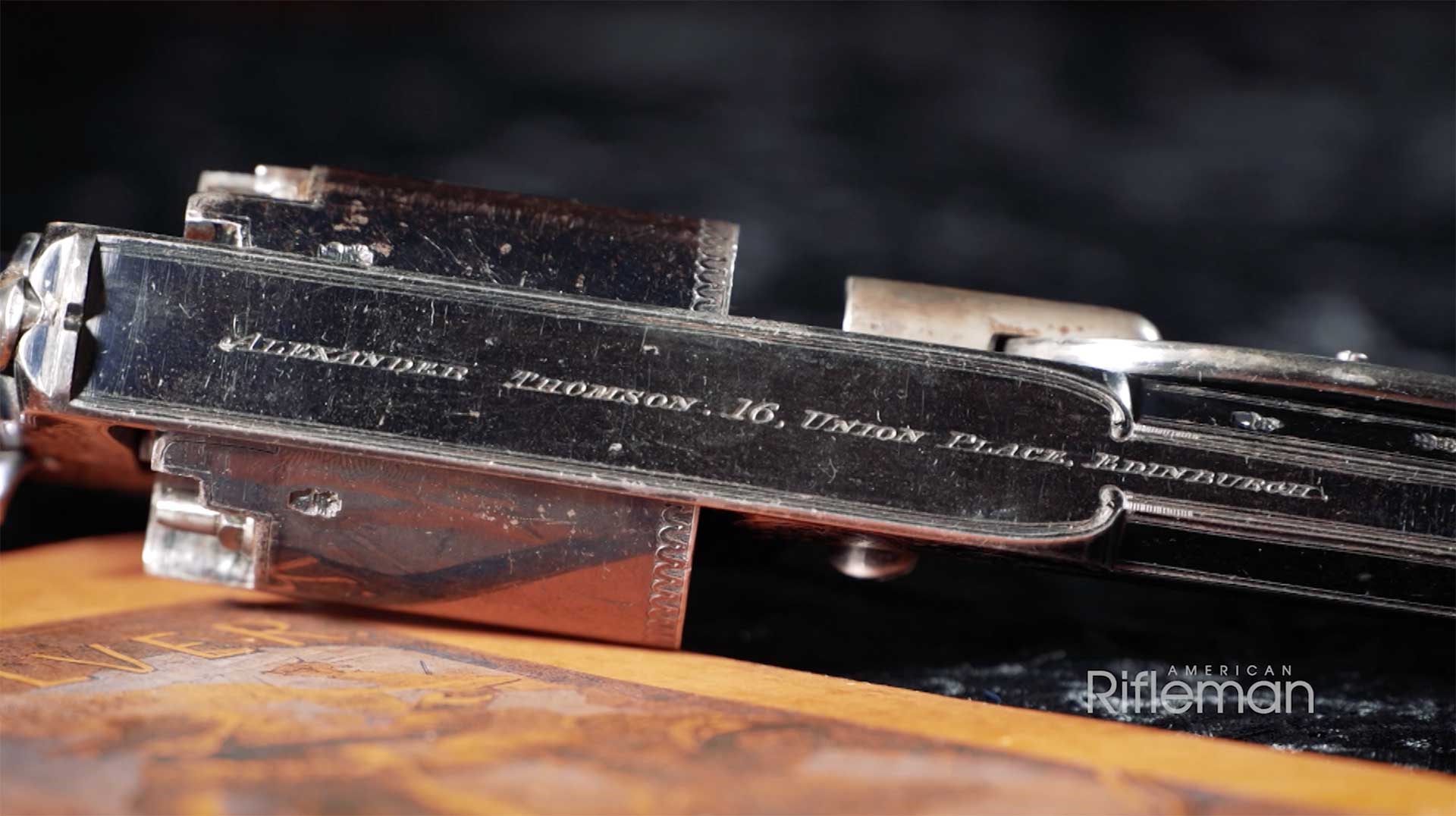
“Unlike Colt revolvers, which were mass-produced, all of these Adams revolvers were pretty much, you know, kind of hand-built,” James said. “And so interchangeability of parts, except in some of the later guns, was not a common feature. But, that being said, the quality of workmanship on them was superb.”
As the self-contained metallic cartridge came to the forefront, the Beaumont-Adams design survived the transition from cap-and-ball to the cartridge era.
“Eventually, by the late 1860s, a lot of these guns are being converted to the .450 Adams cartridge, which is a round that was designed, actually by Robert Adams's brother, John Adams,” Brune said. “And these are guns that see really substantial British military use going all the way until the early 1880s, when you have the adoption of the official Enfield pattern revolvers in a .476 self-contained cartridge.”
To watch complete segments of past episodes of American Rifleman TV, go to americanrifleman.org/videos/artv. For all-new episodes of ARTV, tune in Wednesday nights to Outdoor Channel 8:30 p.m. and 11:30 p.m. EST.