We live in an amazing modern world of turn-key solutions. Especially in America, we have an astounding variety of tools, technology and instant access to information at our finger tips for solving our day-to-day problems. While many of these assets are convenient, they can make us mentally lazy if we let them. We could start to think that being in possession of the "right" or "best" equipment will solve our problems for us. To help shake off this mass media languor, here are a few tips to consider when sharpening up your concealed-carry mindset:
Concealed Firearms Do Not Make Us "Safe"
When was the last time you heard someone say, "I am so glad to have my driver's license, a good set of seat belts and air bags in my car. Now I can drive down that iced-over canyon road as fast as I want." Most of us would agree that driving with this kind of attitude is both impractical and dangerous. Instead, when we think of automotive safety, we look to defensive driving techniques to keep us safe. It’s understood that devices like seat belts and air bags are the last line of defense, not the first. Drivers around the world get to their destinations safely each day, not because of the equipment in their car, but because of their good driving habits.
This practice-good-habits approach should be applied to carrying a concealed handgun as well. One bad habit in particular that can get folks into trouble when carrying, just as when driving, is a lack of situational awareness. Just as the finest set of automotive brakes will not prevent a crash if not applied in time, the very best defensive gear is practically useless if we’re mentally asleep at the wheel. Cues to dangerous situations will present themselves if we're paying attention. Carrying a concealed firearm does not prevent danger or cause threats to swerve out of our way (it is concealed, after all). Instead, we need to pay attention and steer clear of potential dangers.
Move Away, and Stay Away, From Danger
It was my first time inside of a live-fire simulator. The instructor explained that this portion of the cinderblock structure was staged to represent a long household hallway leading to a bedroom. The plan was to move forward to the bedroom as I engaged targets, representing threats, along the way. My adrenaline was pumping and my head was swimming with all of the newly learned tactics I needed to apply.
When we reached and completed the final room in the simulator, the instructor asked me some interesting questions. Where was the threat in this room? In the back left corner. Where did you originally engage the threat with your pistol? From the hallway while I was using the door frame as cover. Where are you standing now? In the back left corner of the room. So why, exactly, did you rush forward toward the threat and leave the protection of cover? I didn't know then, but I do now.
Behaviors shown on TV and in movies can creep into our self-defense tactics. We are constantly bombarded with images of law enforcement personnel, soldiers and action movie heroes bravely running into danger. While this forward motion makes for an exciting screen play, it’s foolish in real-life situations. As soon as a threat is identified, a self-defender should be moving away from it and to cover. Once there, stay behind cover until the threat is neutralized or until forced to move to new or better cover. Generally speaking, moving away from the threat, and staying away, is the best choice.
Defensive Firearms Provide Options, Not Solutions
This point is best illustrated by a story I heard years ago from the woman who experienced it. For the sake of this telling, we'll call her Jane. Jane and her husband ran a small gun store downtown. She was walking out to her car from an indoor shopping mall when she stopped, turned around and went back. A group of tough looking young men was loitering right next to the driver’s side door of her car. This made her very uncomfortable, especially since it was known around town that she and her husband often transported firearms for their business.
Jane walked the mall for a few minutes until she found Fred, a uniformed security guard and a family friend. Jane explained the situation and asked if Fred would walk out with her to the car. Fred looked annoyed, rolled his eyes and asked Jane if she had left her concealed-carry handgun at home. No, Jane had it right there in her purse. Fred’s reply was, "Then what do you need me for?" Jane remained firm in her request until Fred walked her out. As they approached the vehicle, the young men disbanded and moved away. Jane thanked Fred, drove safely away and was perfectly happy never knowing what the intentions of those men might have been.
Fred and Jane had important differences in their defensive mindset. Fred treated Jane's handgun like it was a solution to the problem. Of course, Jane could boldly wade into the hooligans around her car because she could protect herself, right? Jane, on the other hand, understood the truth of the situation: Choosing to walk into a close-range gun fight is a bad idea—if it can be avoided. She had given herself additional choices by using situational awareness. Having a concealed handgun provided her with a powerful defensive option if forced to fight, but there were better, less dangerous solutions at hand. She could wait for the men to go away, call someone to pick her up or find a security guard to walk her out to the car to neutralize a potential conflict. Remember, lethal force is always the last option.
There Is No “Best” Defensive Handgun
When I got serious about defensive shooting, I did what many other shooters do and started on my own personal quest for the “Holy Grail of Handguns.” You know that handgun, right? The Grail is small enough to carry comfortably, but big enough to shoot accurately. It’s loaded with technically advanced features, but utterly reliable. It has massive knock-down power, but the felt recoil of a baby's burp... and so on.
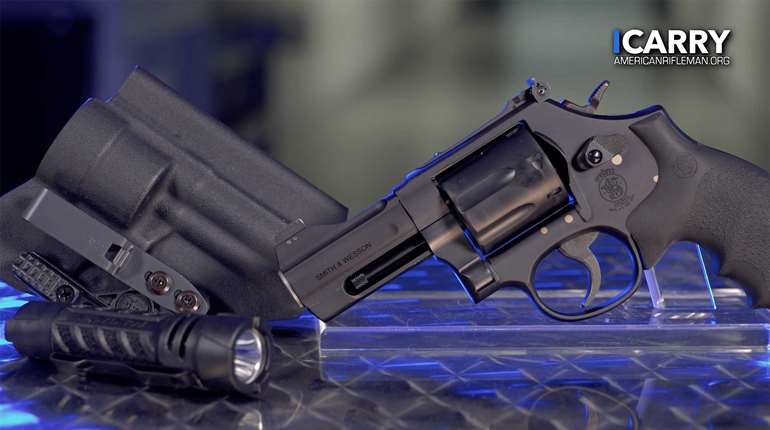
This search has led to the enjoyment of shooting a variety of handguns, but the elusive Grail has yet to appear. Recognizing the absence of absolute shooting perfection is important for a few reasons. It's OK for shooters to seek out the handgun that's the best fit for their personal needs, even if the guy behind the gun counter gives them a hard time about it. You may choose to sacrifice grip size for easier concealment, stopping power for reduced recoil or ammunition capacity for simpler operation. Trust what your instincts tell you when test firing the guns you're thinking of buying. A reliable handgun carried daily, practiced with regularly and shot accurately, will always be the best defensive handgun on the market.
Acknowledging that every handgun has limitations allows the operator to plan and practice accordingly. How many reloads should be carried? Will changing the ammunition improve accuracy or reduce recoil? Is the practical accuracy of this pistol (when I'm shooting it) 7 yards or 15 yards? These are the kinds of questions to be thinking about. Finally, it's important to recognize that no handgun and ammunition combination is guaranteed to do what you want it to do, right when you want it to get done. A “Plan B” should be kept handy in case the handgun jams, fails to stop the threat or in case a dangerous situation does not justify the use of lethal force.
Most Popular