I was introduced to Bersa pistols some years ago by a friend who picked up a Thunder .380 ACP for concealed carry. Although this particular pistol was a basic model, the slide was tight and smooth, the accuracy was right on the money and it proved to be reliable with a variety of ammunition. When I heard my friend had paid less than $300 for this solid little shooter, I was even more impressed.
Bersa of Argentina has a loyal following here in the States among shooters who are looking for affordable, reliable defensive pistols. Bersa handguns may not be as fancy as some shooting options, but they run well and are comfortable to shoot. This year marks a real departure from its previous Walther look-a-like handguns with the release of new BP9cc chambered in 9 mm.
Pistol Features
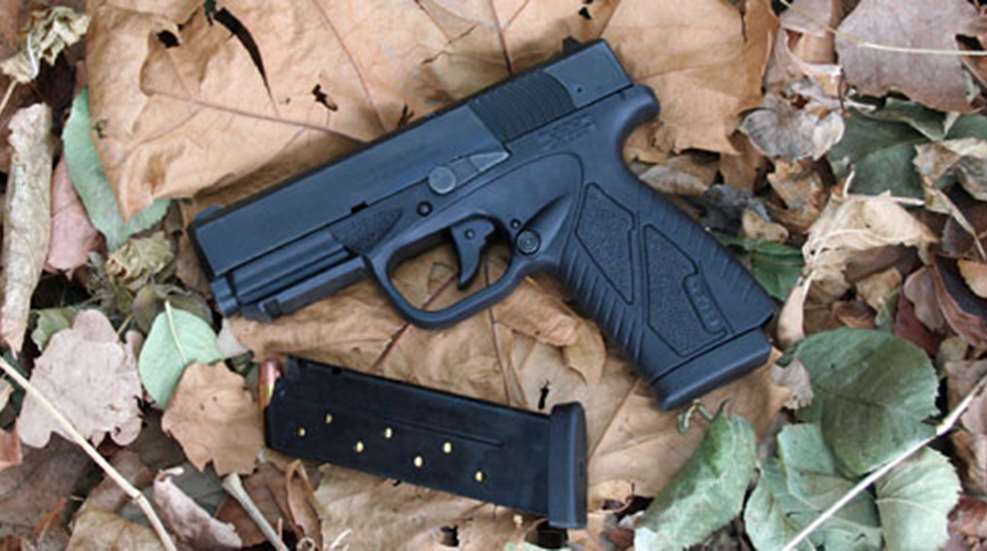
The name of the BP9cc stands for Bersa Pistol 9 mm Concealed Carry. It's a polymer-frame striker-fired pistol with a feature set tailored to meet the needs of shooters who want a shootable pistol that's also easy to carry. This pistol arrived with a matte-blue steel slide and a 3.3-inch barrel cut with polygonal rifling. A nickel slide will also be made available for this model.
Although the slide shows a GLOCK influence around the rear slide plate and the ejector, the deeply cut curved rear cocking serrations and rounded edges give the slide a distinctive profile. The recoil assembly features two captured recoil springs and a steel recoil rod. The three-Dot sight system features a GLOCK-type front sight blade and a SIG Sauer-type rear sight. Mixing sight systems seems like an odd choice, but they work together just fine.
The high-impact polymer frame is molded with a Picatinny accessory rail for the attachment of various light and laser modules. Pebble-textured, wedge-shaped indentations have been added to the frame behind the rail and above the square trigger guard. This provides a natural resting place for the pad of the trigger finger that can be easily indexed by touch.
In a departure from many of the polymer 9 mms in this size category, Bersa chose to slenderize the pistol by designing it to load single-stack instead of double-stack magazines. Fully loaded, this gives the BP9cc an 8+1 capacity. The magazine release is ambidextrous, and the slim textured grip frame provides enough length for a full three-finger hold. The BP9cc contains a variety of safety features. The slide contains a key-activated safety lock below the rear sight and a firing pin safety. A loaded chamber indicator is located on the top of the slide. When the pistol is loaded, the indicator can be seen standing up from the slide, but it can also be felt with a finger tip in low-light situations.
The defining feature of this pistol is what Bersa calls the Short Reset Double-Action-Only Trigger. It contains a passive safety similar to a GLOCK pistol. However, instead of a switch in the center of the trigger that has to be depressed, the whole trigger pivots about 1/4-inch on a steel pin to release the safety mechanism. This 1/4 inch represents half of the trigger's total travel distance to fire the pistol and it only requires 1-pound 8-ounces of pressure.
With the trigger safety disengaged by the pressure of the trigger finger, the last 1/4 inch of the trigger stroke requires only 3 pounds, 10 ounces of pressure to complete. The overall effect of the trigger design produces an exceptionally light and smooth pull, especially since the trigger's transition from safe to ready-to-fire does not produce any stacking or hang-up in the course of a natural trigger stroke.
Once the trigger has been fully depressed and the pistol has fired, the shooter can fully release the trigger to re-engage all of the safeties. No de-cockers, levers or buttons are required. If the shooter wants to fire a follow-up shot, releasing the trigger from the fully fired position by about 1/8 inch will reset the trigger for the next shot. The light, short stroke of the reset trigger makes emptying the pistol's magazine quick and easy.
At the Range
The BP9cc was a pleasure to work with at the range. The slim grip, clear sights and light trigger made placing shots on target a cinch. I had to remind myself that what felt like trigger creep during a slow trigger stroke was the safety disengaging. I mention this because shooters who are not familiar with the mechanism may think the trigger is sloppy when just the opposite is true.
I did have a problem with magazine release feeling stiff and rough. Part of the problem was the raised ridge in the frame surrounding the release button. The ridge is there to defend against accidental magazine ejections. The ridge does its job so well that it’s easy to channel most of the pressure applied by the shooting-hand thumb into the polymer ridge instead of the metallic button. The problem was solved by changing the angle of the thumb or by using the trigger finger to press the release from the other side of the frame.
With finger placement corrected, the release was still rough. With the pistol fully unloaded, I applied a drop of lubricant to the magazine release and worked it back and forth repeatedly from both sides of the pistol. This breaking in action significantly reduced the roughness and made the magazine release smooth enough to comfortably work with. This was not a show stopper, but it would be nice if the problem was resolved in future pistols.
A variety of full-metal-jacket and hollow-point 9 mm loads were fired through the BP9cc to check it for reliable function. Only one failure to feed occurred during the first 30 rounds. Since it was inexpensive, bulk ammunition being fired at the time, and no other failures occurred out of the hundreds of rounds fired, it was likely a problem with that particular cartridge.
The BP9cc is safe to fire with +P ammunition, with the caveat that a regular diet of spicy ammunition will cause the pistol to wear out more quickly. Although some +P rounds were tested, light pistols like this one are much more manageable without the extra hot sauce. Formal testing was conducted with standard pressure loads firing five-shot groups into targets set at 25 yards. The best single five-shot group of 2.75 inches, and the best group average of 3 inches, were both produced by Hornady 115-grain Critical Defense FTX loads. Winchester 147-grain PDX1 jacketed hollow points produced an average group size of 3.1 inches, followed by Remington UMC 115-grain jacketed hollow points at 3.4 inches.
Final Thoughts
The new Bersa BP9cc pistol fills an important niche many manufacturers of polymer pistols have currently overlooked or passed by. Although a certain peace of mind comes with having upwards of 15 rounds of ammunition on board and ready to launch, double-stack medium frame pistols are not always a good fit in a shooter's hand. Pocket 9s are easily concealed, but at the price of trimming away the features needed for comfortable practice sessions.
The design of BP9cc provides a pistol that successfully splits the difference. It has the handling and tactical features of a medium-frame pistol, while providing the slim grip of a pocket pistol. When you add to this the exceptional trigger, a lifetime service contract and the reasonable price, the BP9cc becomes a defensive option well worth checking out.
Manufacturer: Bersa Firearms; http://www.bersa.com
Model: BP9cc
Action: Short Reset Double-Action Only
Caliber: 9 mm
Finish: Matte Black or Duotone
Frame: Hi Impact Polymer
Slide: Steel
Grips: Integrated
Front Sight: Interchangeable White Dot SIG Sauer Type
Rear Sight: Interchangeable White Dot GLOCK Type
Safeties: Integral Locking System, Firing Pin, Trigger
Barrel Length: 3.3”
Overall Length: 6.35”
Height: 4.8”
Width: 0.94”
Weight: 21.5 ozs.
Capacity: 8+1 Rounds
Rifling: Polygonal
Twist: 1:10” RH
Suggested Retail Price: $429 Matte Black, $440 Duotone
Most Popular