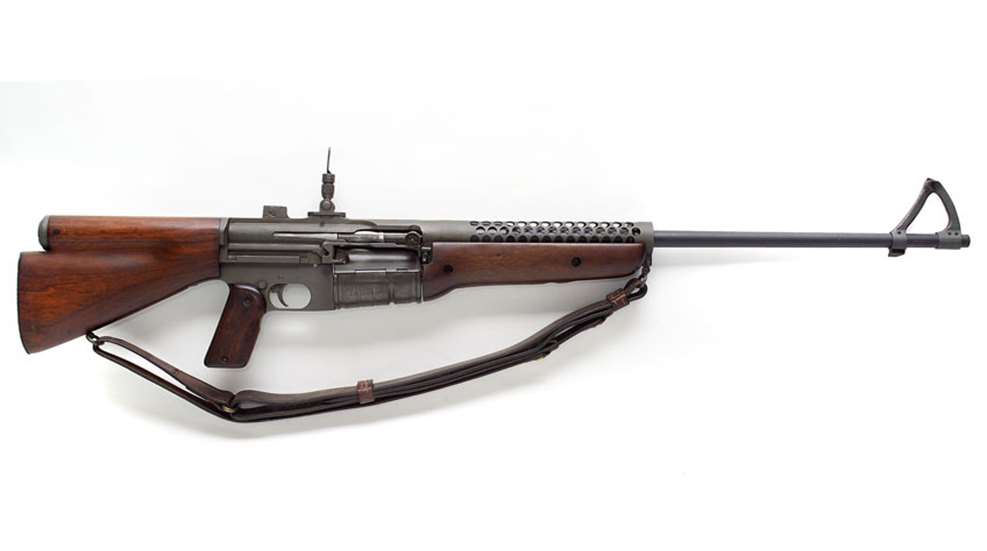
There was a little-known but fascinating prototype developed by Melvin M. Johnson Jr. that had the potential to be a very useful infantry arm and, possibly, something of a “game-changer” had it received the attention and development it seems to have deserved. The genesis of the novel design occurred while the Johnson company was manufacturing the Model of 1941 semi-automatic rifles and Light Machine Guns for the Netherlands Purchasing Commission (NPC). As with any ambitious businessman, Johnson was looking for new products. Since the typical East Indian was a small-statured individual, and the full-length rifle could be a bit cumbersome, Johnson reasoned that a shorter, lighter and handier gun might appeal to the Dutch for use by their colonial troops garrisoning the East Indies. Johnson and his engineering team designed a rather unusual semi-automatic that was, almost literally, a cross between the Model of 1941 Rifle and Model of 1941 Light Machine Gun. Johnson designated the gun as the “Auto-Carbine.” Reportedly the NPC nominally supported development of the new weapon but was non-committal regarding the potential for any orders (which never materialized).
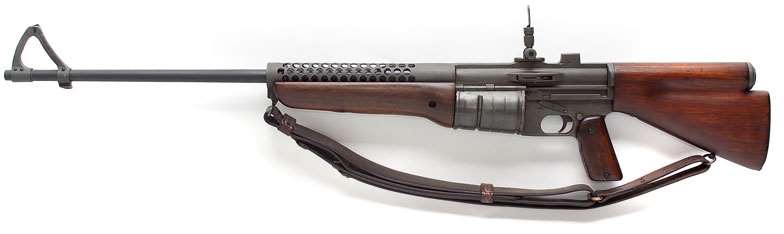
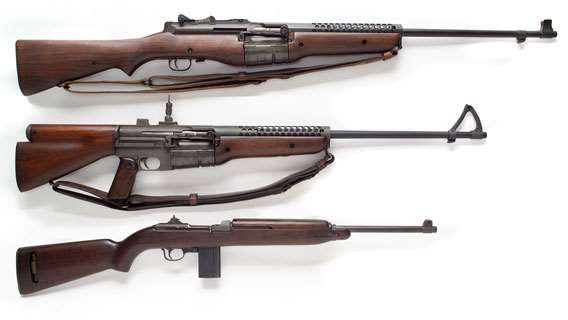
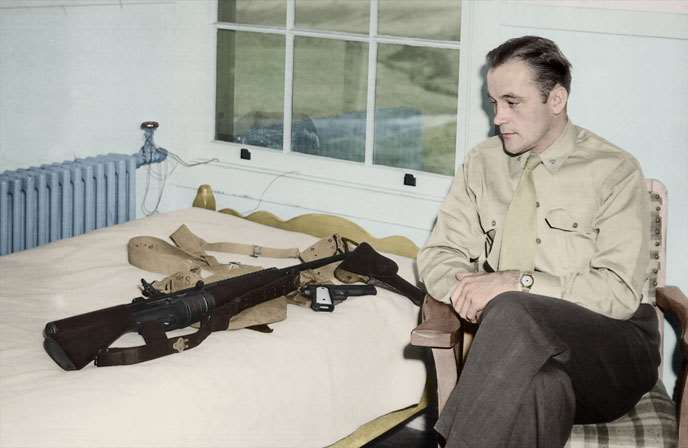
The Johnson Auto-Carbine utilized the Model of 1941 Johnson rifle’s 10-round rotary magazine but resembled the Model of 1941 Light Machine Gun in general configuration. The resulting design was an attractive arm that was lighter and more compact than either the Johnson rifle or light machine gun. The Auto-Carbine used the same 22” barrel as the Model of 1941 Johnson Light Machine gun. Its quasi-bullpup configuration permitted the use of a full-length barrel while, keeping the overall length short. This solved the problem that had proven vexing to designers trying to create a short, carbine-type arm firing a full-power rifle cartridge without excessive muzzle blast. It is believed that only five complete Auto-Carbines were made by Johnson Automatics. The single-digit serial numbers were individually hand-stamped with a “S” prefix (for “Sample”). Photographic evidence indicates that at least three of the Auto-Carbines had slight differences in configuration as would be expected with prototype weapons.
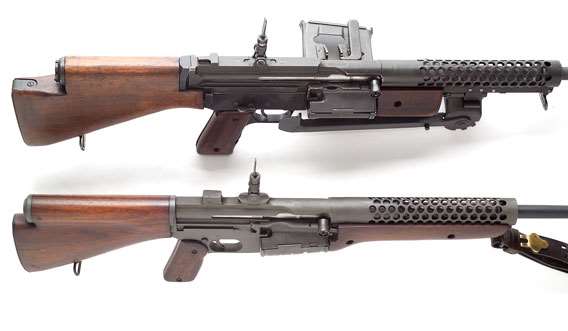
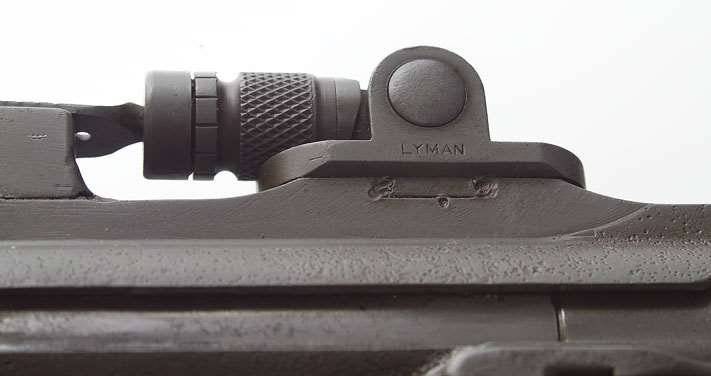
In September 1941, the US Marine Corps expressed some interest in procuring 100 of the Auto-Carbines for testing but, for whatever reason(s), this did not transpire.
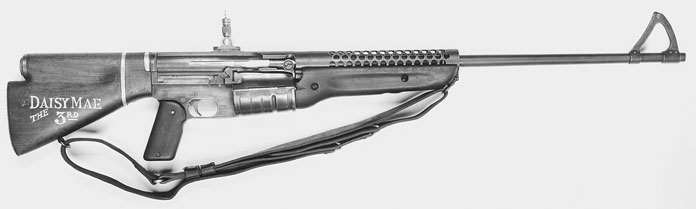
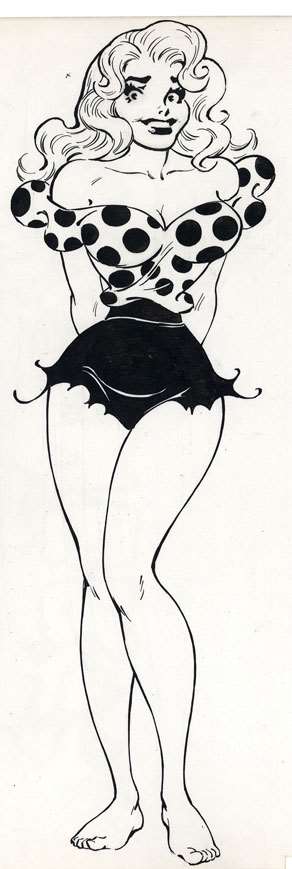
As an interesting aside, Melvin Johnson, Jr., gave all of his designs pet nicknames. He christened his sem-iautomatic rifle “Betsy” and the Light Machine Gun “Emma.” The Auto-Carbine was “Daisy Mae.” Johnson did not reveal his inspiration for these nicknames in his memoirs or writings. Although sheer speculation, it is possible that Johnson naming his sleek and attractive Auto-Carbine “Daisy Mae” was inspired by the buxom, sexy girl of the same name featured in the “Li’l Abner” comic strip popular at the time.
Marine paratrooper officer Harry Torgerson, an avid proponent of the Johnsons, developed a friendship with Melvin Johnson, Jr., and visited the Rhode Island plant on several occasions. On one of his visits, just prior to the departure of Torgerson’s unit to the Solomons, Johnson showed him one of the prototype Auto-Carbines. Torgerson was immediately smitten with Daisy Mae, but Johnson was adamant that, under no circumstances, would any of the Auto-Carbines be allowed to leave the plant since they were still under development.
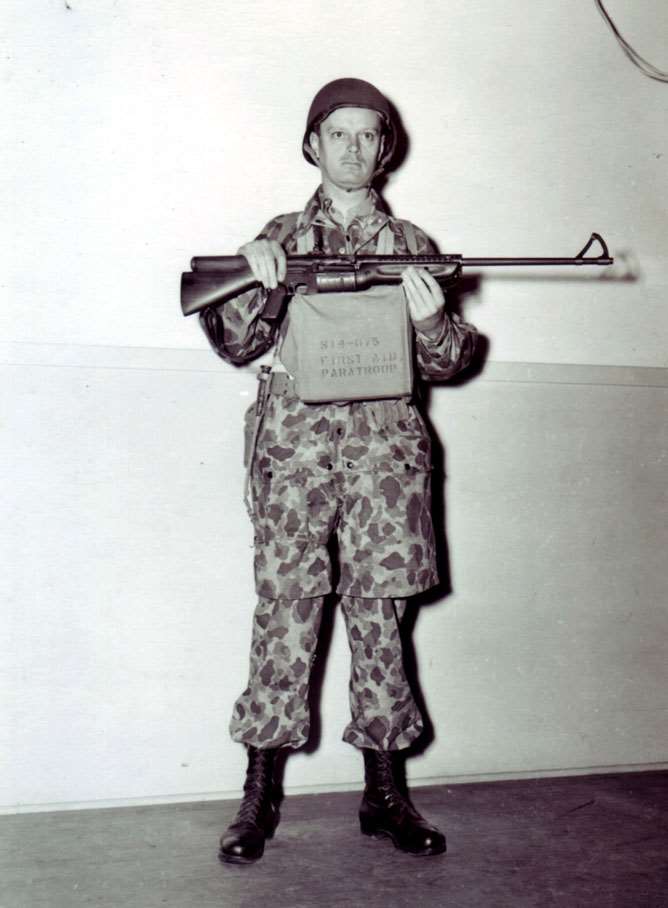
Apparently, Torgerson’s powers of persuasion were sufficient to talk Johnson in parting with one of the nifty little carbines, and it accompanied Torgerson overseas. Torgerson permitted some of his fellow Marine paratroopers to pose with the mysterious new design, and the gun accompanied him during the Bougainville campaign. Johnson’s decision to permit Harry Torgerson to take along one the Auto-Carbines elicited some interest within the Marine 1st Parachute Battalion as referenced in an August 1942, memo which made the recommendation to replace the Reising submachine gun with the “Johnson .30-06 carbine.” Obviously, this did not transpire as none were manufactured beyond the handful of prototypes.
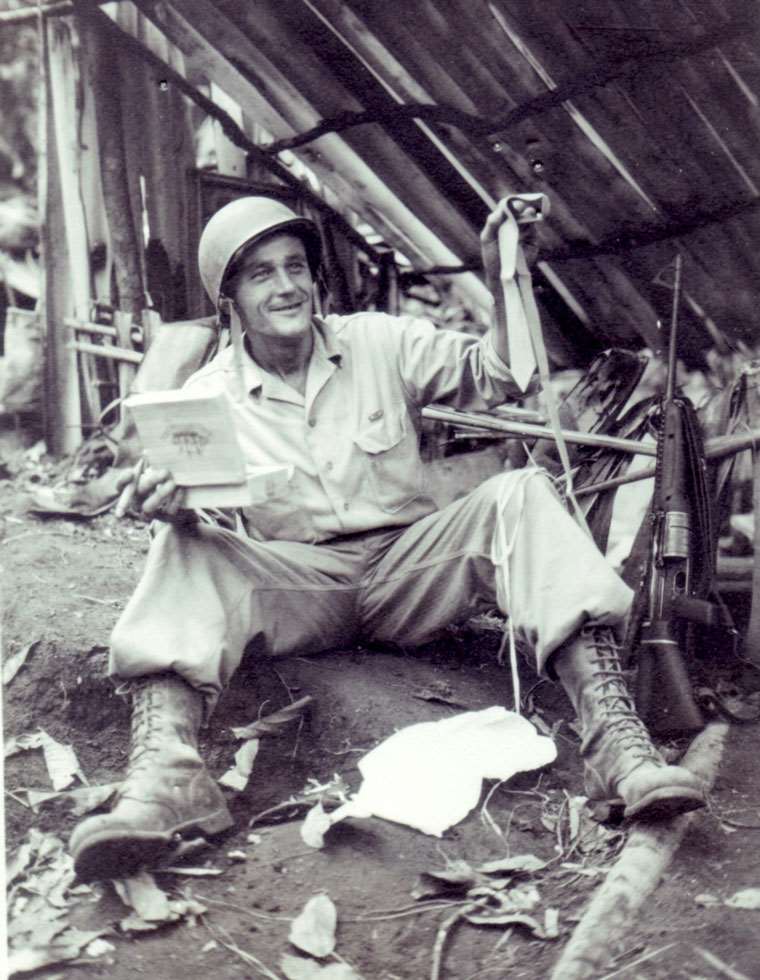
The Johnson Auto-Carbine had the potential to be a valuable arm for certain applications by our armed forces. The .30 caliber M1 Carbine was popular during the war due to its light weight and compactness, but it was often maligned by the .30 Carbine cartridge’s lack of range, accuracy and power. Although a couple of pounds heavier than the M1 carbine, the Johnson Auto-Carbine would seem to have been a good compromise, combining the unquestioned effectiveness of the powerful .30-’06 Sprg. cartridge in a semi-automatic shorter and lighter than the Model of 1941 Johnson Rifle or M1 Garand. In addition to being ideal for airborne use, such an arm would have been useful for Army Rangers, Marine Raiders and similar units needing a light and compact, yet accurate and powerful, carbine. However, this was not to be. Instead of possibly making a name for itself as a “ace” infantry arm of World War II, the Johnson Auto-Carbine is forever relegated to a little-known footnote in ordnance history.

Additional Reading:
The Model of 1941 Johnson Rifle in Marine Service
Most Popular