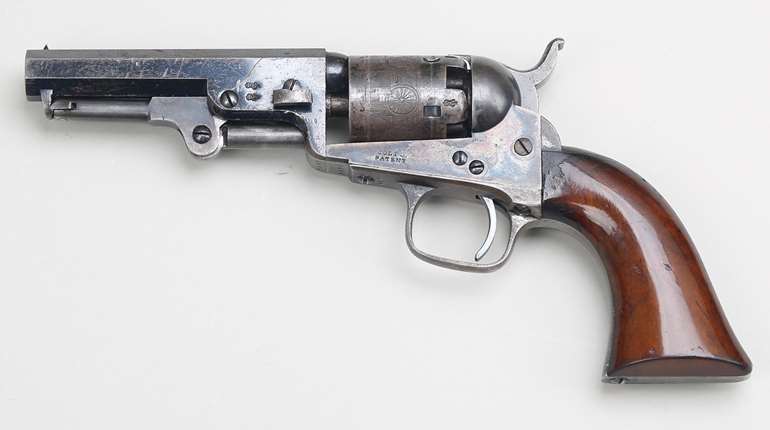
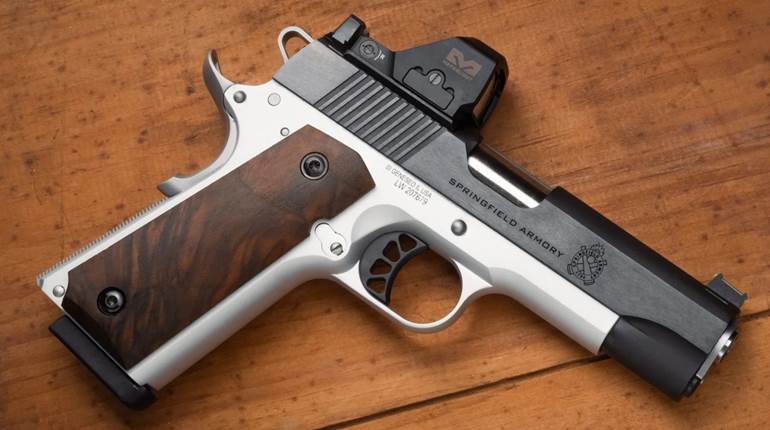
Compared to pistoleros of the 19th century, today’s handgunners have it easy. If it’s a revolver, all you need is a box of ammo, and you’re good to go. The same holds true for semi-automatics, unless you decide to up the ante with extra magazines and perhaps an alternate sight setup. But for the shootists of yesteryear, it wasn’t enough just to plunk down a few greenbacks and take possession of a new 1851 Colt Navy or Remington New Model Army, for example. You also had to acquire extra items to make those revolvers shoot.
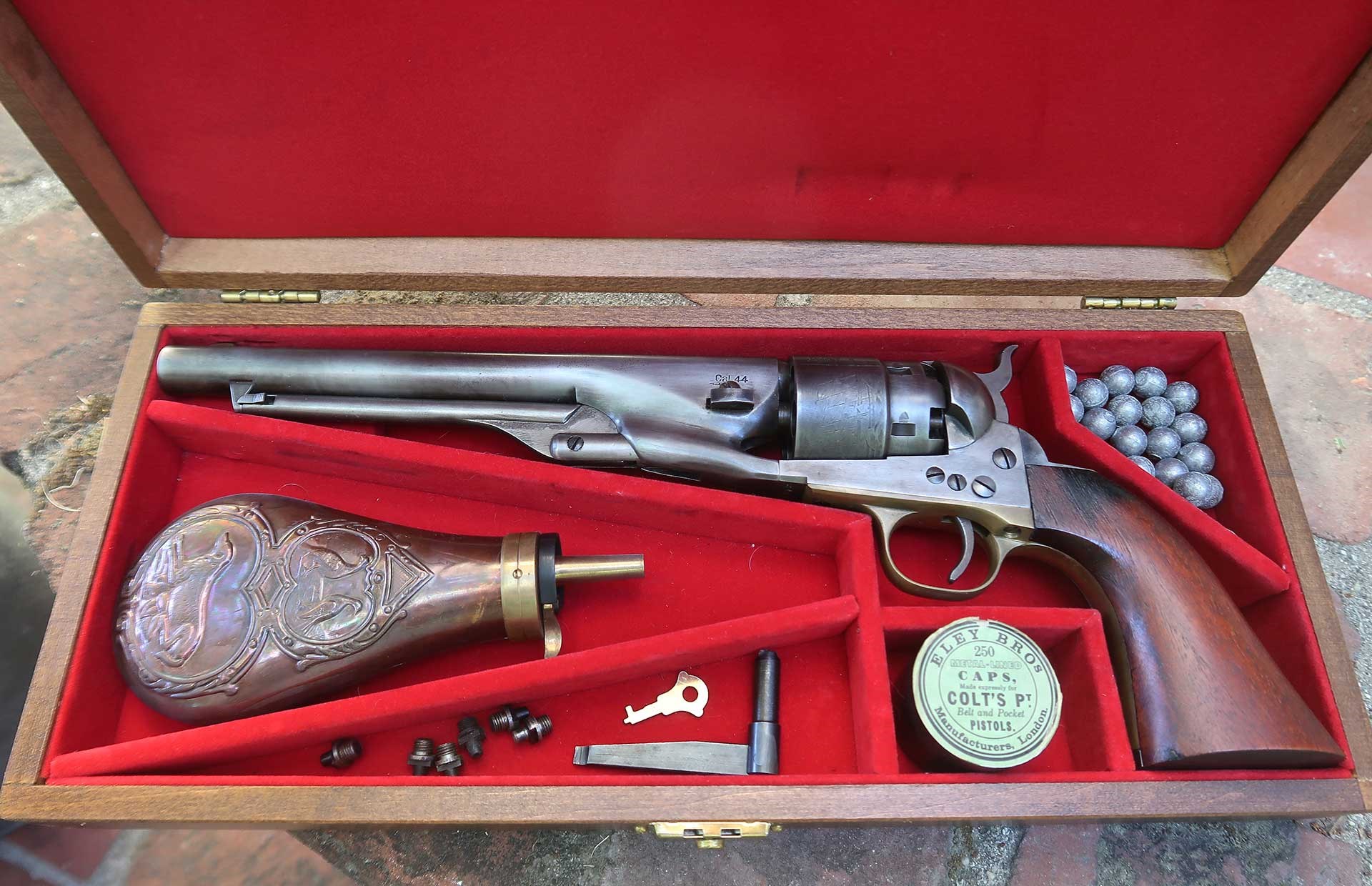
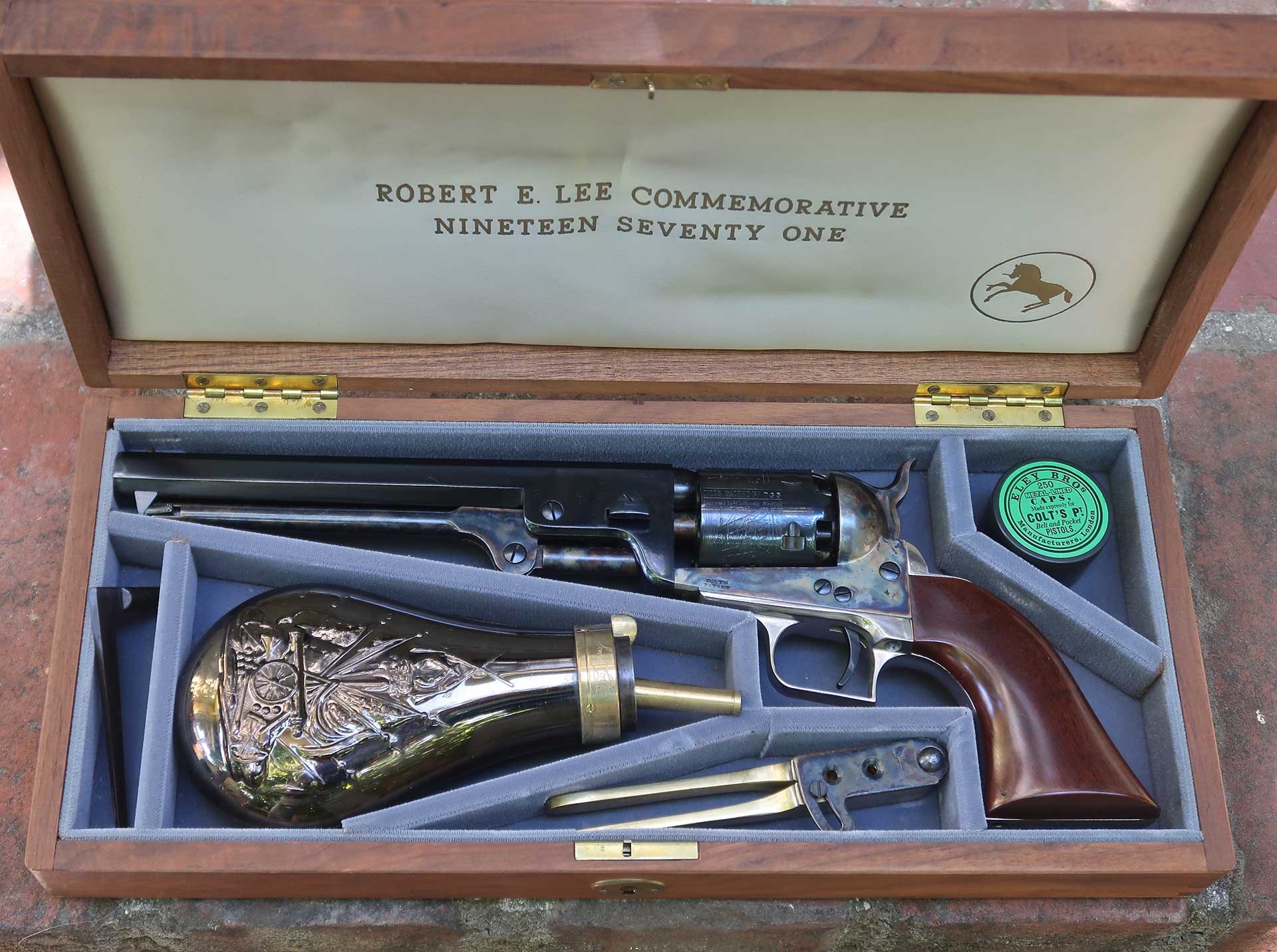
That is why many original cap-and-ball revolvers are encountered today as cased sets containing loading implements. Cased guns rose to prominence during the mid-19th century, when they became a marketing tool popularized by Samuel Colt, who often presented individuals with his cased revolvers containing everything needed for shooting. Many prominent 19th-century gun dealers also assembled cased sets as a way to motivate customers into making a purchase.
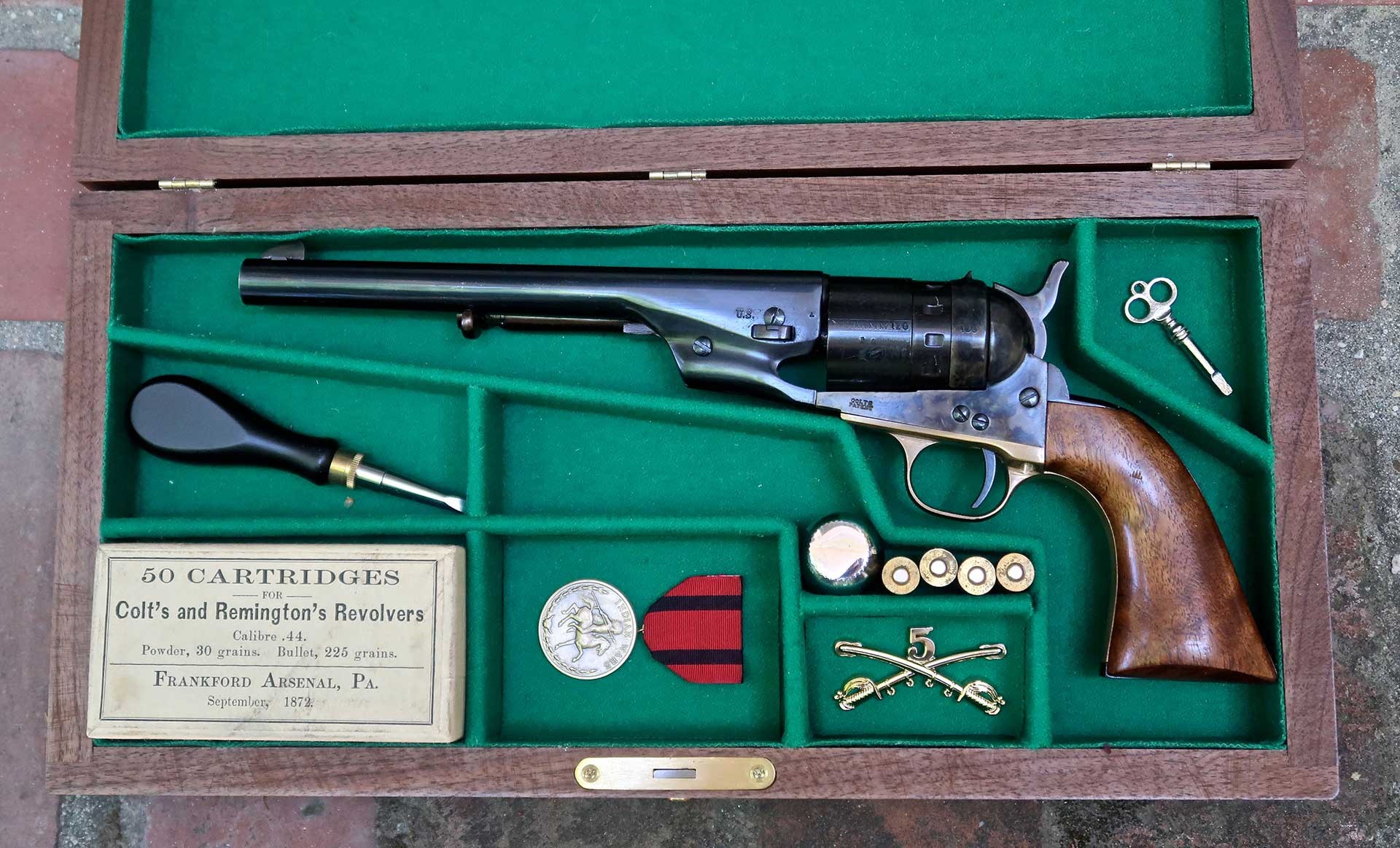
Today, this technique would be called “bundling,” and it still holds true for owners of replica cap-and-ball revolvers. However, unless they are commemoratives, most cap-and-ball revolvers today are not sold as cased sets. But acquiring the proper necessities is a fun and rewarding part of our hobby. Here’s what you’ll need:
Black Powder
Let’s start with the one thing that normally wasn’t included with the original cased sets but, ironically, is the one thing that the shooters must have. But because of its explosive flammability, black powder is subject to strict shipping regulations and must be purchased in person at well-stocked muzzleloading supply stores (state and local laws permitting), unless you're willing to pay rather exorbitant shipping and hazmat fees.
Some of the best black powder brands are GOEX, Swiss and Schuetzen. Today, there are also black powder substitutes that may be a bit easier to get ahold of. Two of the most popular brands are Pyrodex P (for pistols), and Triple Seven FFFg, both of which are produced by the Hodgdon Powder Company, which also manufactures handy Pyrodex P preformed 30-grain pistol pellets for .44 caliber cap-and-ball revolvers (but not for .36-caliber guns). However, there is one crucial caveat we must clarify:
Never, under any circumstances, use smokeless powder in any gun designed for black powder. Using anything other than black powder or black powder substitutes in these firearms can cause serious injury or death.
Now let’s look at what else you’ll need to make your 19th-century-styled revolver go “boom!”
Caps
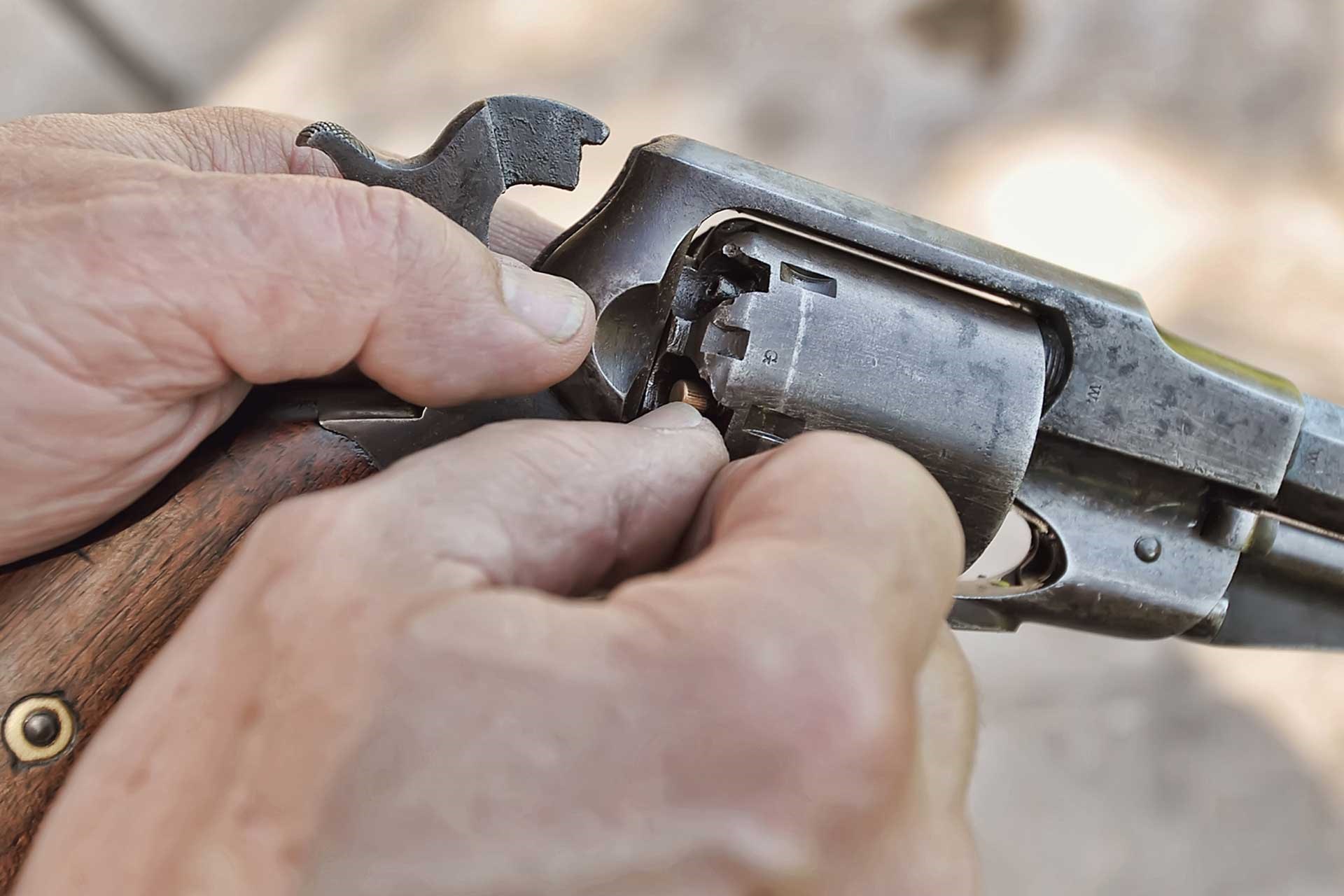
Think of these tiny copper cups as the black powder version of the primer in a self-contained metallic cartridge. Thus, when placed on the nipple of each chamber of a cap-and-ball revolver and struck by the revolver’s hammer, they provide an instantaneous flash of fire that ignites the powder charge in the chamber. Most caps come in two sizes, #10 and #11, with #11 usually providing the best fit on the nipples of most of today’s replica revolvers.
To ensure reliable ignition with either black powder or black powder substitutes (which typically require a hotter cap), the three best (i.e. hottest) brands on the market today are CCI, RWS and Remington (yes, America’s oldest firearms brand still makes caps!). You can find them at Dixie Gun Works (dixiegunworks.com), Buffalo Arms (buffaloarms.com), Track Of The Wolf (trackofthewolf.com) and Muzzle-Loaders.com (muzzle-loaders.com).
Cappers
Percussion caps can be pressed onto a revolver’s nipples by hand, but you’ll have a much easier time of it (and drop fewer caps in the process) if you use an inline capper or a semi-curved, teardrop-shaped capper. Both allow you to place the end of the capper over the nipple and strip off a single cap onto the nipple. (Think of cappers as the 19th century’s precursors to today’s speedloaders.)
Inline cappers are more compact, while the teardrop capper holds more caps but is larger. I’ve been using Dixie Gun Works’ inline cappers for years, but the company's Ted Cash Revolver Capper combines the best of inline and teardrop designs, although due to its size, it is more adaptable on larger revolvers such as the Walker and Dragoons. In addition to Dixie Gun Works, you’ll find these at Track Of The Wolf.
Powder Flasks
These are found in most original and replica cased revolver sets, as they provide a convenient way to carry an adequate supply of powder for multiple reloadings. The flask’s cylindrical nozzle is usually large enough to hold a charge from 25 to 40 grains of powder (depending on its size), with a thumb-operated spring cutoff that can be conveniently opened and closed after shaking enough powder into the nozzle. Excellent reproduction powder flasks, as well as more contemporary-looking brass cylindrical flasks, are available today from firms such as Dixie Gun Works, Muzzle-Loaders.com and MidwayUSA (midwayusa.com).
Adjustable Powder Measures
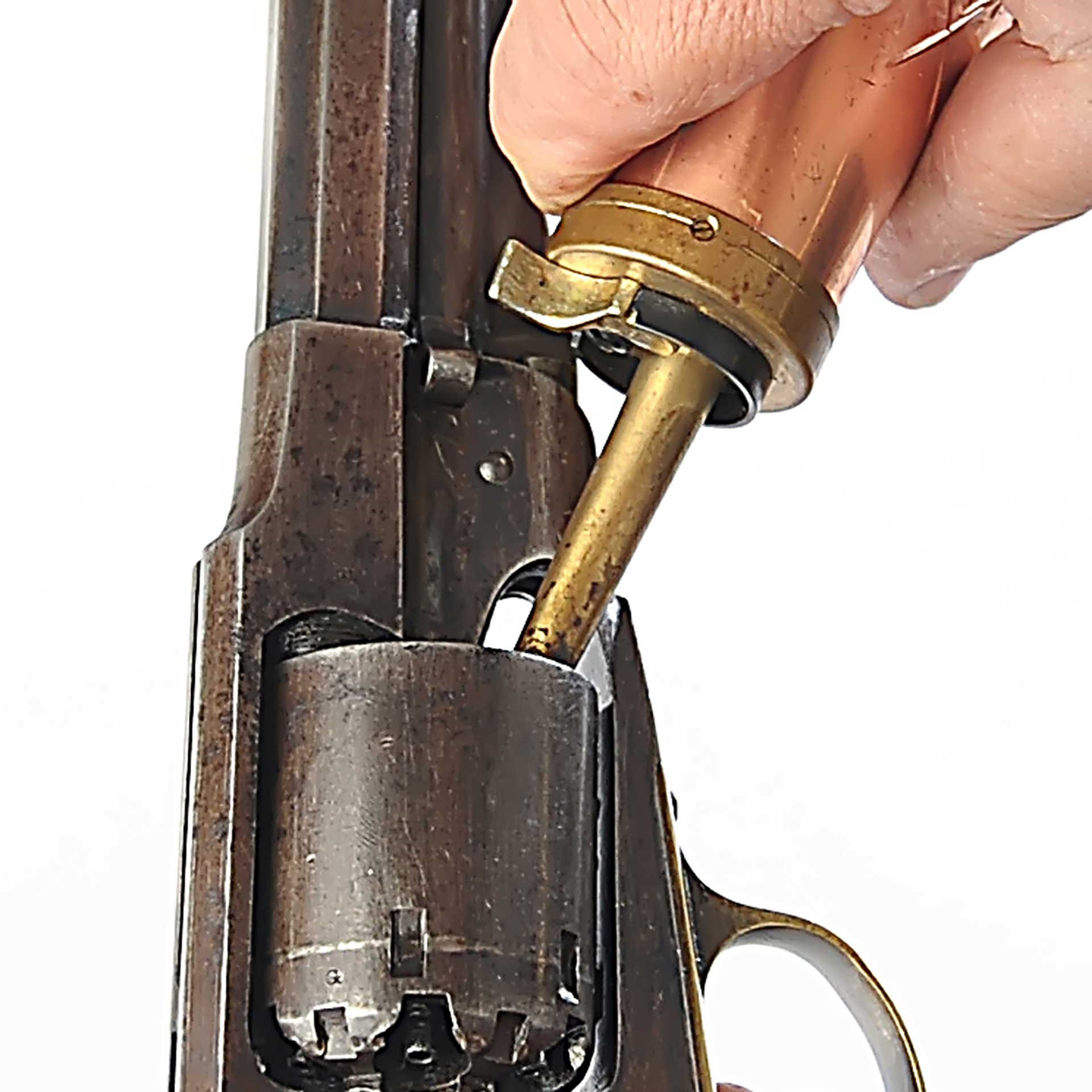
These more compact powder measures are not practical for use in the field, but they’re perfect for the shooting range, where exact power charges can be individually measured and poured into each cylinder’s chamber. I’ve been using Dixie Gun Works’ adjustable brass powder measure with its handy swiveling cutoff spout for years, as it conveniently pours each charge directly into the chamber with no spillage.
Requiring a little more dexterity is their adjustable powder measure without the spout, which still is not as awkward to use (for me, at least) as their powder measure with a pivoting funnel. Similar powder measures can be found at Muzzle-Loaders.com, Track Of The Wolf and MidwayUSA, with graduations ranging from 50 to 120 grains (far more than you’ll need for a cap-and-ball revolver but can serve double-duty with muzzleloading rifles).
Nipples & Nipple Wrenches
Sure, your cap-and-ball revolver comes with six percussion nipples already on the cylinder, but when shooting, these should be removed and cleaned of fouling and burnt cap residue with hot soapy water before being dried, oiled and screwed back into the chambers. Otherwise, they will eventually rust in place, making future removal impossible. In addition, should one of them become smashed or accidentally dropped down the sink (as I have done), your six-shooter becomes a five-shooter.
So do what the serious shootists of the 19th century did: Get an extra pair of properly sized nipples for your revolver, either from the original manufacturer or from firms such as Dixie Gun Works, Muzzle-Loaders.com, Cabela’s (cabelas.com) or Track Of The Wolf. Just be sure to get the right-sized nipples for your revolver; thread sizes and even nipple diameters can vary from manufacturer to manufacturer.
As for removing the nipples for regular cleaning and replacement, if necessary, needle-nosed pliers don’t cut it here. You’ll need a properly fitting nipple wrench to loosen, remove, reinstall and adequately tighten the cylinder’s nipples. You’ll find these at Taylor’s & Company (taylorsfirearms.com), Dixie Gun Works and similar black powder supply sources. Many of these come with a handy cleanout nipple pick.
Pure Lead Round Balls & Conicals
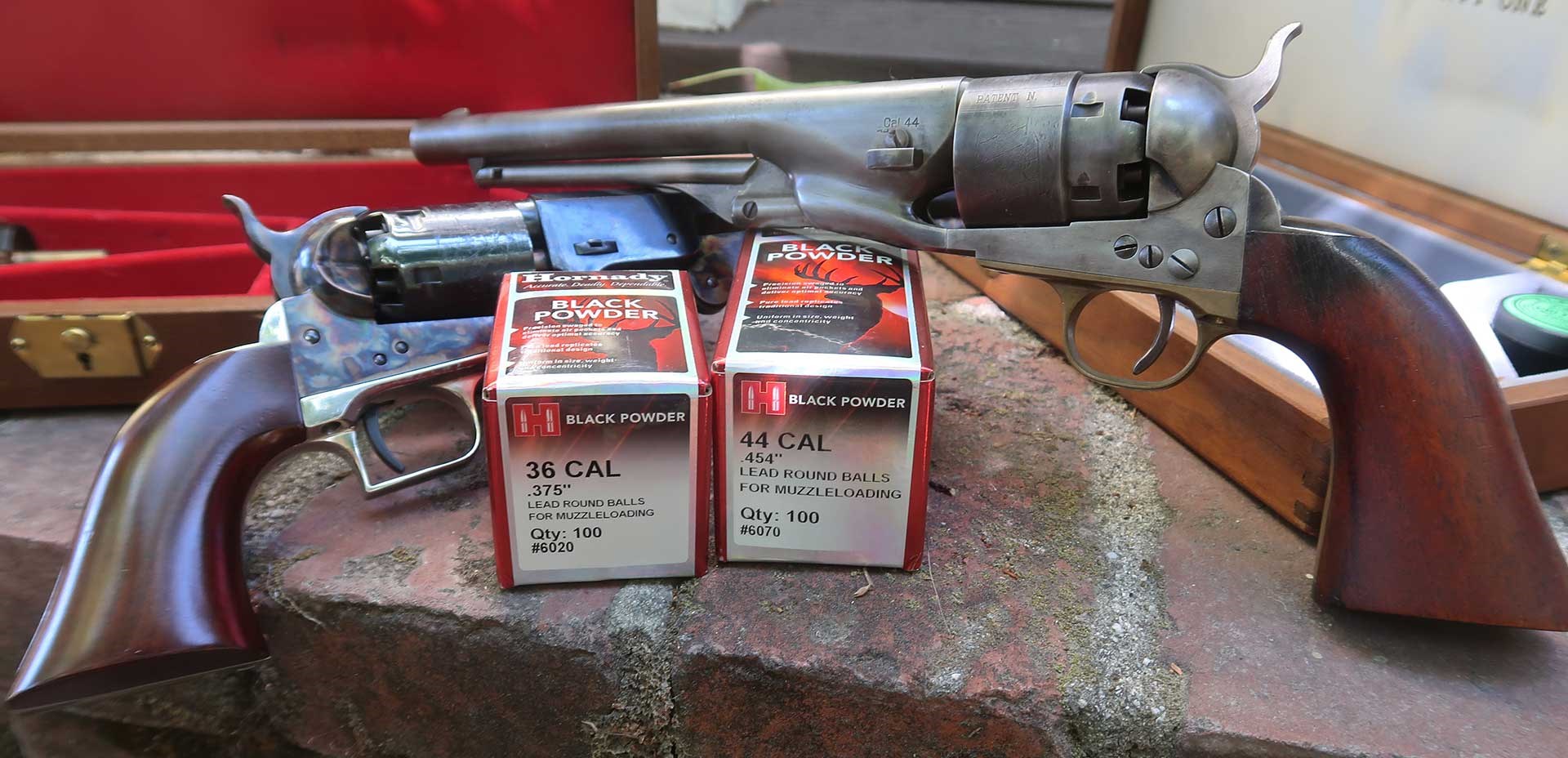
These are the “bullets” of your cap-and-ball revolver. Many years ago, I decided to try casting lead balls for an article and quickly realized that buying them ready-made from Dixie Gun Works was a much more viable option. Today, in addition to Dixie Gun Works, Hornady (hornady.com) and Speer (speer.com) sell cold-swaged, soft-lead balls that are devoid of casting imperfections like sprues or hidden air pockets. You’ll find them at Midway USA, Bass Pro shops (basspro.com) and other muzzleloading outlets. Conicals, while slightly more accurate, take up chamber space, which translates into reduced powder charges. Knowing this, you can find them at Track Of The Wolf and Muzzle-Loaders.com.
For .36-caliber revolvers I recommend Hornady’s .375 round balls, while for .44-caliber guns, I opt for Hornady’s .454 round balls. These are slightly oversized, so when ramming the balls onto the powder, you’ll be trimming off a thin ring of lead, indicating a tight fit, which will give you better accuracy.
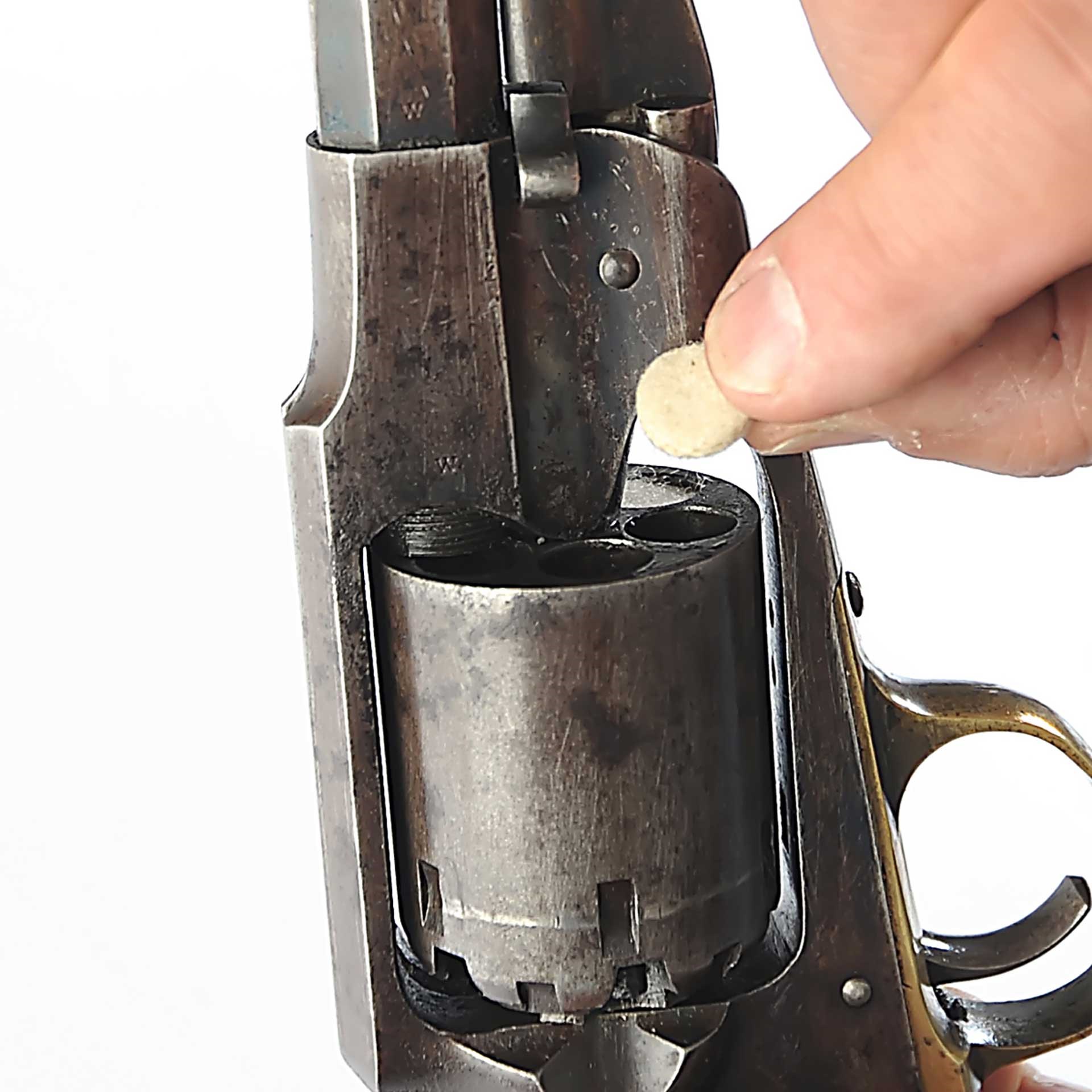
As an added precaution to prevent multiple discharges (when more than one cylinder accidentally ignites at the same time due to a few wayward grains of powder), you can cover each loaded chamber with a smear of any gel-like gun lubricant, or you can even use Crisco! Dixie Gun Works used to sell bear fat for those wanting the ultimate in authenticity, but times change, and now Dixie occasionally catalogues mutton tallow instead.
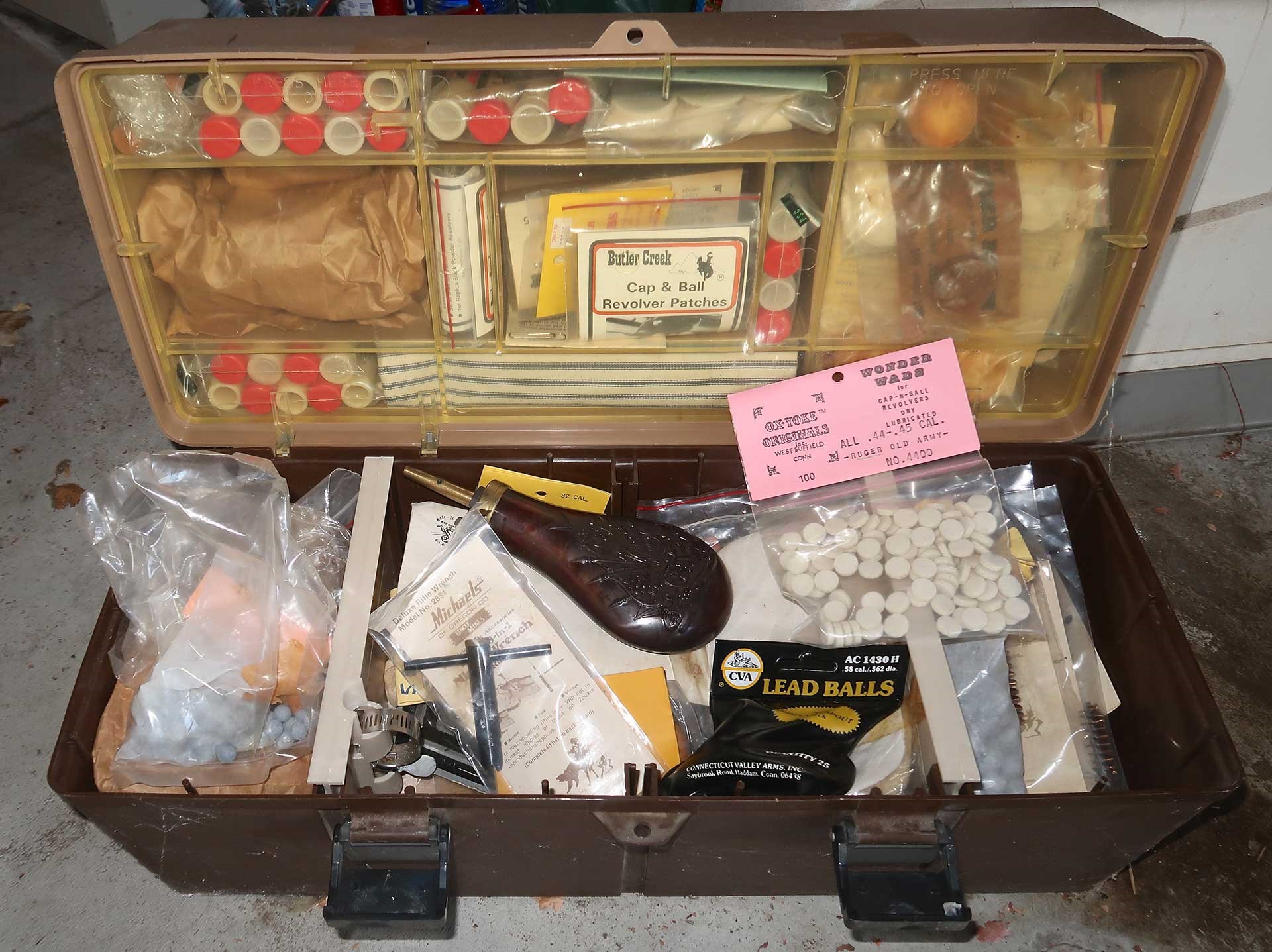
Now that you have assembled all this paraphernalia, where do you store it? When I first started shooting black-powder revolvers back in the 1960s, I used a Plano fishing tackle box. Today, MTM (mtmcase-gard.com) makes a handy multi-tray Muzzle Loader Dry Box. Additionally, I have been emulating Sam Colt’s idea by storing some of my cap-and-ball revolvers and their necessities in cases.
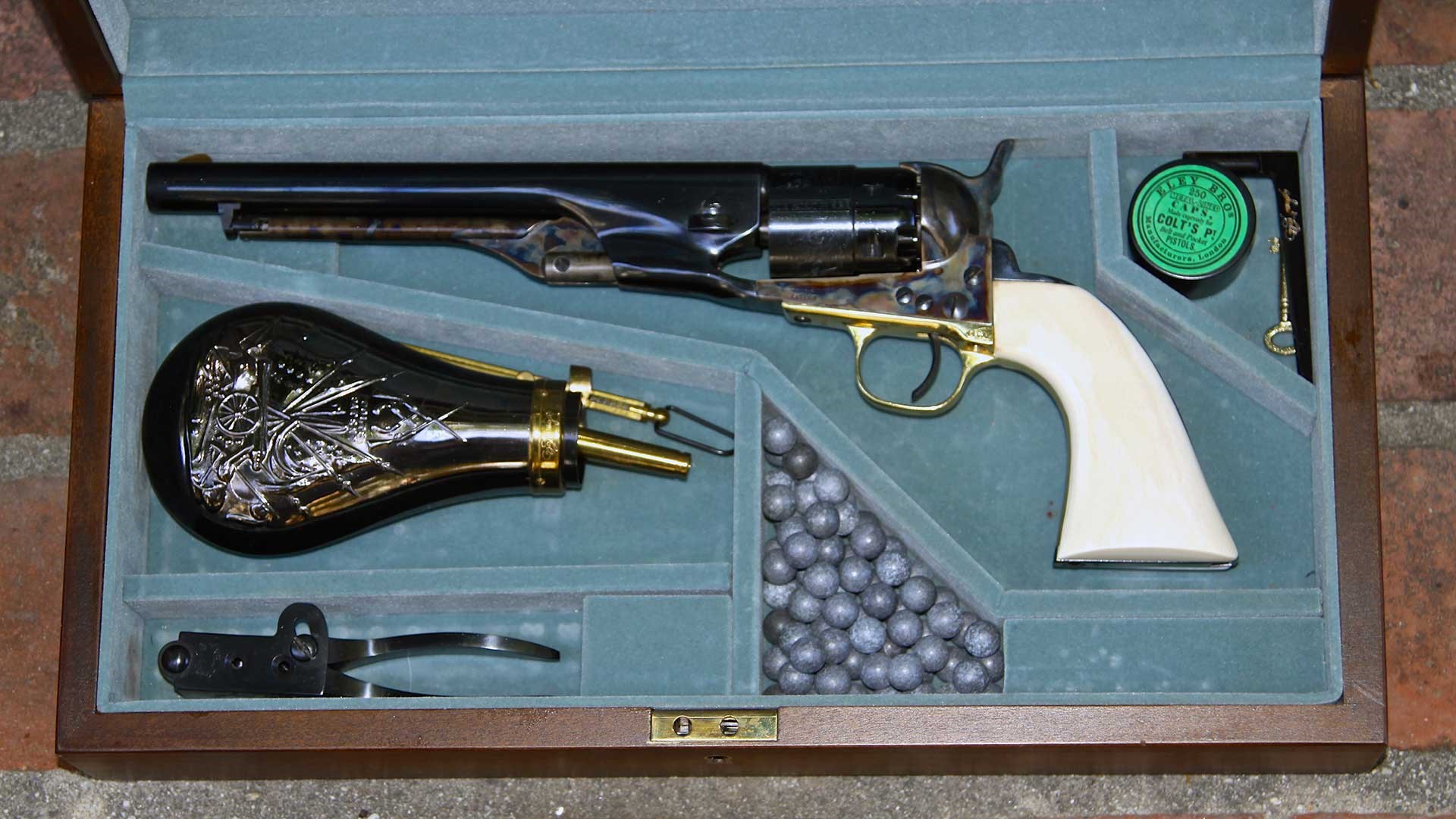
Ready-made versions are available from Dixie Gun Works, or you can have custom cases made (as I have done) by craftsmen such as Gerrod Hampel of Woodland Products (hampelswoodlandproducts.com). It’s a great way to display your revolver and its accoutrements while acknowledging their heritage at the same time. Either way, you’ll be ready with whatever it takes to “make smoke.”
Most Popular