I first heard about Jeff Cooper’s Gunsite Academy in Soldier of Fortune magazine in the late 1970s. Lt. Col. Jeff Cooper was already a living legend back then. Gunsite ran ads in every issue. It was the first serious, no-nonsense handgun fighting school open to civilians, police, military and the men we then called mercenaries or soldiers of fortune.
If you wanted to be the best handgun fighter you were capable of being, you went to Gunsite. If you graduated, you became a Raven. The Raven is still the school’s mascot and logo. Gunsite’s 50th anniversary is in 2026, and 50 years later, the reputation has not slipped. This is where good gunfighters come to get better. Gunsite sits on 3,200 acres of high desert outside Paulden, Ariz. Pure gun heaven.
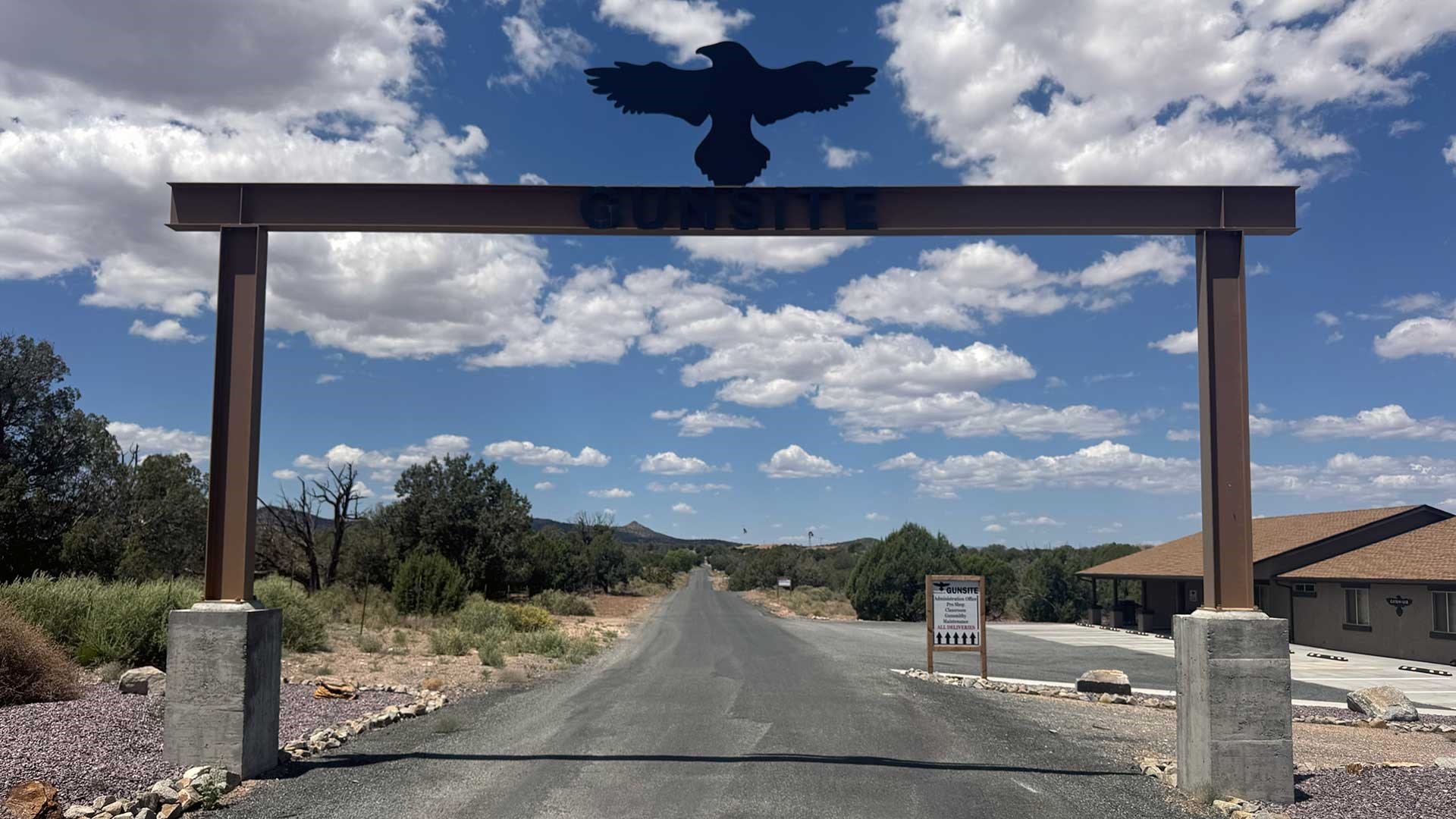
The Gate
The raven on the front gate watches you arrive like an ominous black sentry. That gate has been the line between civilian life and something else since Cooper opened the American Pistol Institute in 1976. When I was in the U.S. Army, we didn’t train much with handguns. I have wanted this for a very long time. Time to train with some of the best handgun instructors in the world.
The Instructors
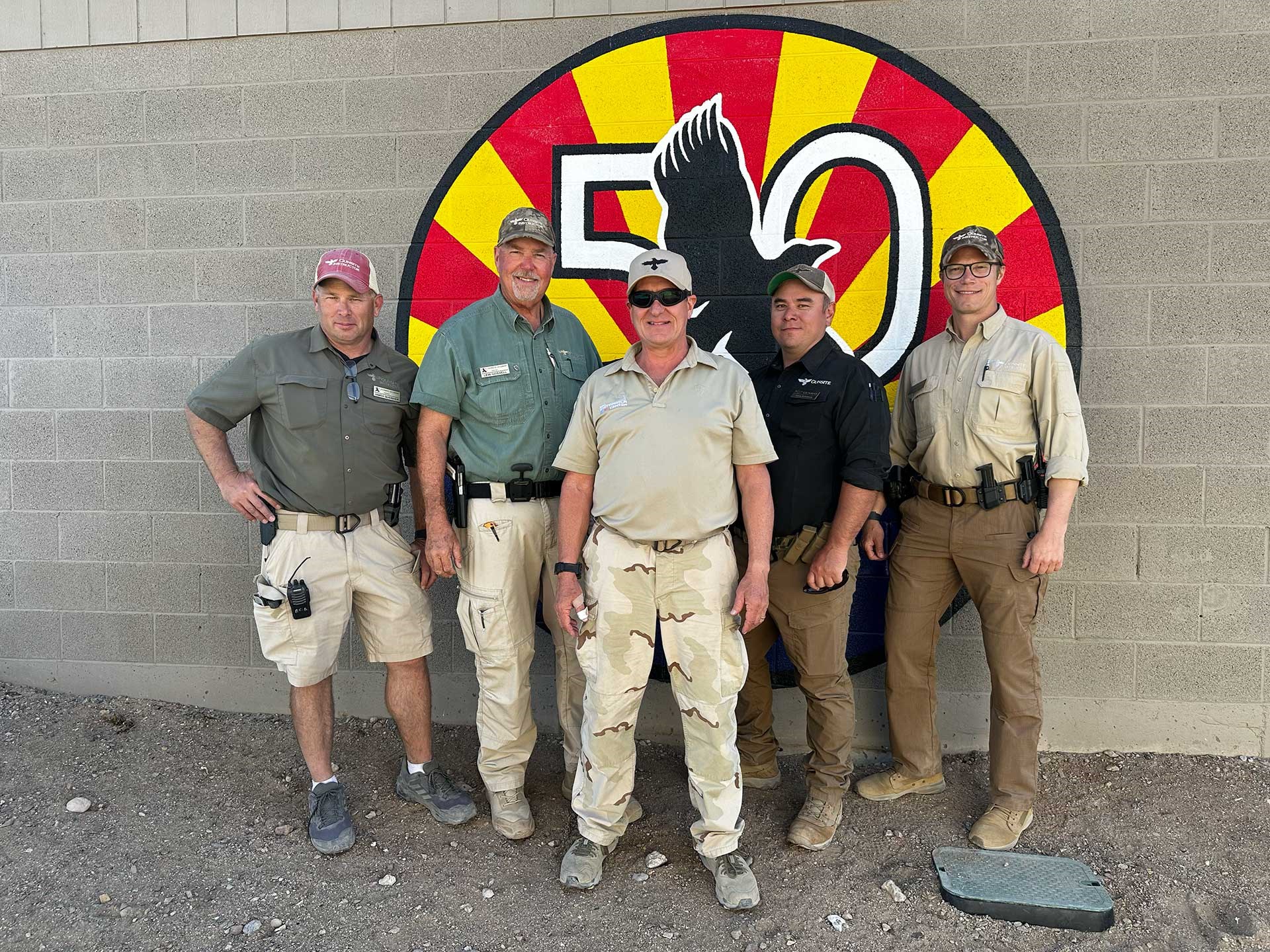
Gunsite’s 250 Defensive Pistol class is only as good as the people running the line. Ours was not handed to a nameless range crew.
Lew Gosnell - Lead Instructor / Rangemaster
Marine Corps, 1976 to 1983. Thirty-one years as a police officer in East Los Angeles. Soldier of Fortune National 3-Gun champion, End of Trail SASS, Steel Challenge Shotgun Speed Championships. Gunsite instructor and rangemaster since 2008. He ran the class the way a rangemaster should: tight, clear, no wasted motion.
James Queisner - Instructor
On staff since 2020. Retired after 23 years with Denver-metro agencies: SWAT, Emergency Response Team, academy firearms instructor. Still in the industry and still writing. Street time plus teaching time. Easy to listen to on the line.
Adam Collins - Instructor
Police officer in central Texas since 2012. Army combat tours in Iraq. Teaching since 2002, when his unit trained Royal Saudi Air Defense Force police in defensive tactics. Earned his Gunsite staff ticket at 41. Already had the calm demeanor of a pro who has done the work.
Adam Kurahashi - Instructor
Fourteen years Marine Corps and Reserve. Five deployments to Iraq and Afghanistan as an infantryman and forward observer/JTAC. Helps teach TacMed and the 250.
The Class
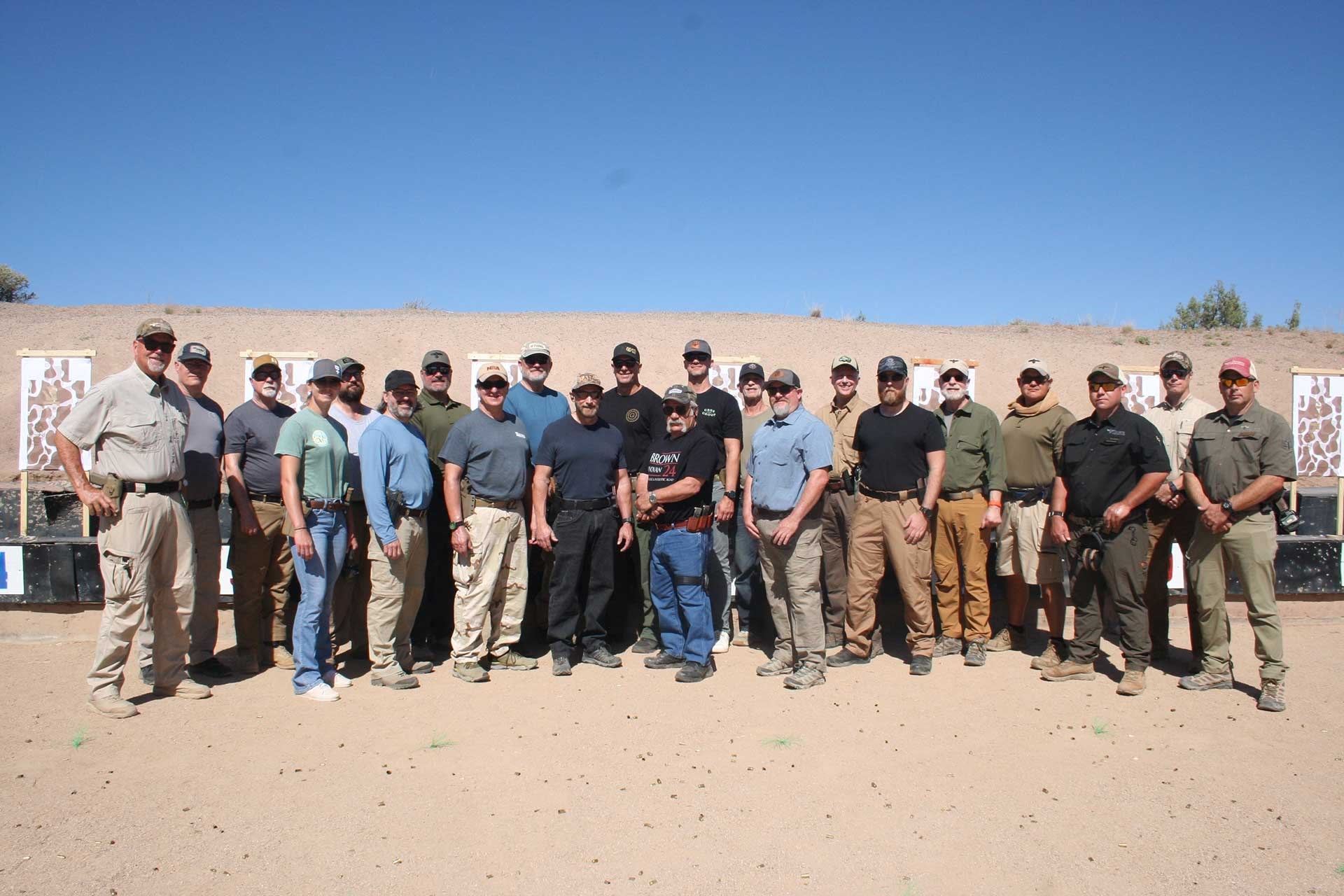
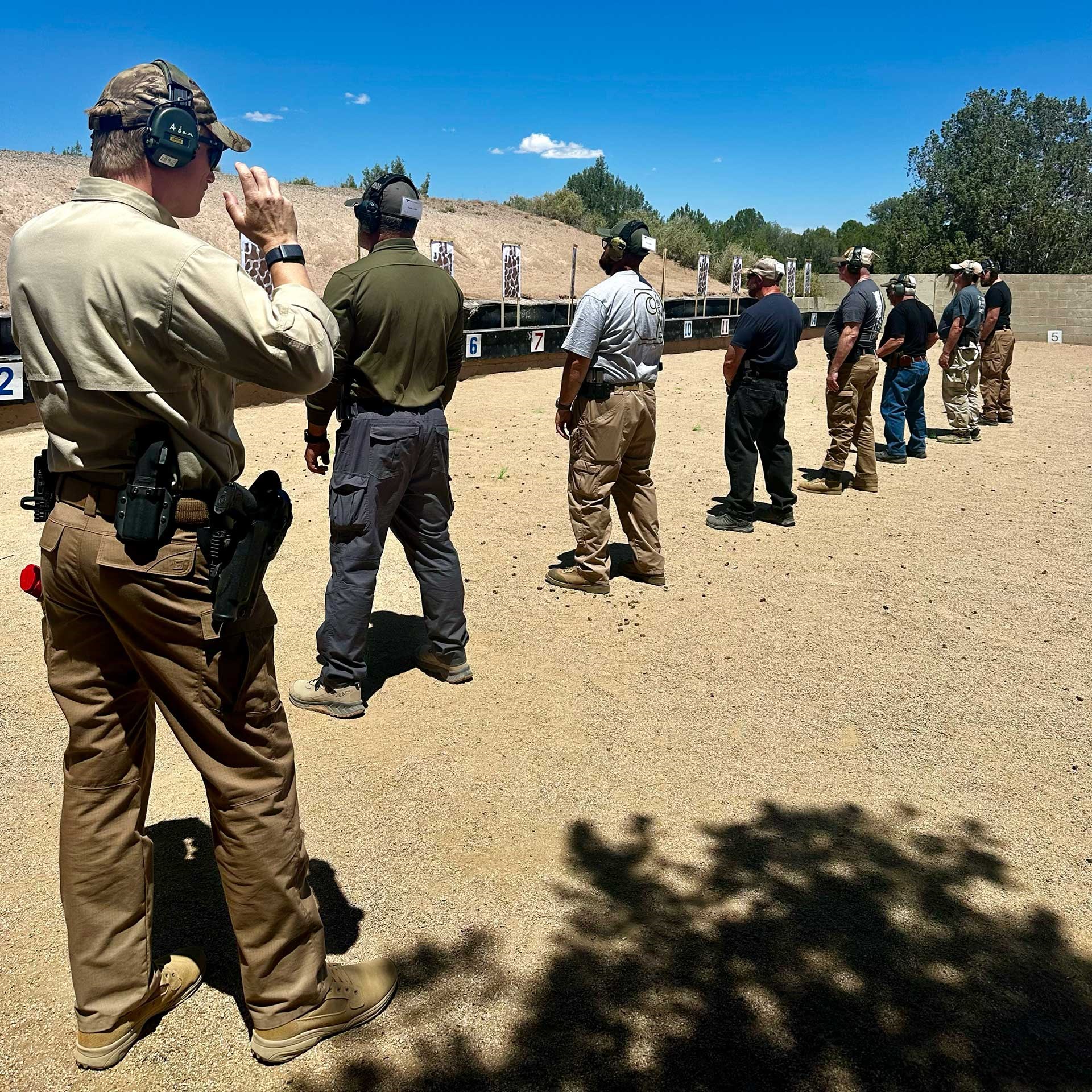
Four world-class instructors, all ex-law enforcement or ex-military. Eighteen students. The men ran in age from their 30s to nearly 80. Plenty of the students were ex-military or current or former law enforcement as well.
The students’ handguns were split roughly evenly between 1911s and striker-fired pistols. About eight shooters ran optics and 10, including me, ran iron sights. The instructors ran two lines: optics on one line and no optics on the other, which was smart. When one line fired, the other loaded magazines. Lunch was an hour, then we were back at it. I could tell immediately that the cadre were all former military or police. I felt at home.
They tell you to bring a minimum of four magazines. I brought eight to 10, loaded, every day. The load-up breaks are short because they have a lot of work to get through. Extra loaded magazines let you jump on the other line and steal more reps. Do that every chance you get.
We shot all day in the Arizona sun. Shade breaks were just long enough to stuff magazines and swallow cold water. I wanted to get as much shooting time in as possible, and the cadre were going to make sure of it. We started on the 3-yard line: draw, present, flash front-sight picture, squeeze, hit, confirm the threat is down, scan, carefully reholster. Then 5, 7, 10 and 15 yards. Then we ran all the drills over again with tighter times. Then we stood by the targets while the instructors scored and critiqued.
At Gunsite, even the last man on the line is still a good shooter. We shot 200 to 400 rounds a day.
On Monday, I started off with a 1911. I had more malfunctions—all failures to extract or eject—than the entire rest of the class combined! I was embarrassed. It threw me off my game, but it gave me plenty of practice clearing stoppages the Gunsite way.
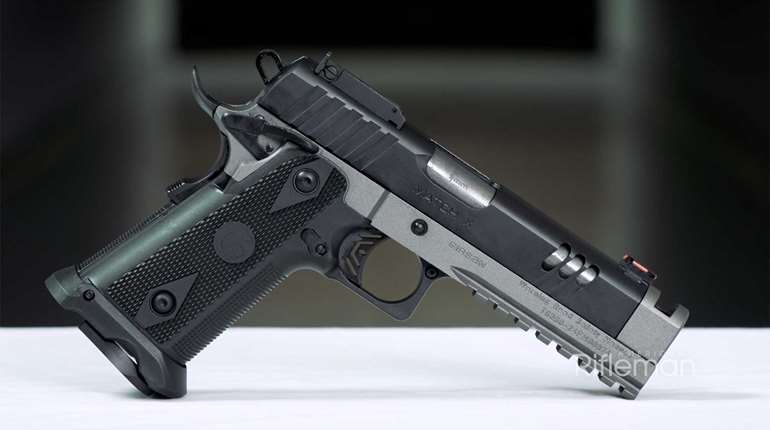
On Tuesday, the second day, I switched to another 1911. At Gunsite, you have to shoot a 1911 with a “high thumb,” meaning the strong-hand thumb rides ABOVE the thumb safety. As they say at Gunsite, “This is the only way to shoot a 1911!” That was a new habit for me.
On this 1911, it had the unintended consequence of lifting my grip pressure off the grip safety just enough that the safety was not always disengaged. So there I am, pulling the trigger under time pressure to get X number of rounds on target in a very short period of time—and the gun wouldn’t always go “bang!” I was so pissed!
All I could do was switch back to a low thumb, hope I got my hits in time and hope the instructors didn’t notice. They noticed. Of course they did. The instructors at Gunsite don’t miss anything, and they were not happy! I knew I needed to switch handguns, but I had to get through the end of the day first.
On Tuesday night, a good friend of almost 20 years, Marine Corps Lt. Col. Freddie Blish, whose retirement job is as an instructor at Gunsite, texted me and asked how things were going. I knew he was out of the country and didn’t expect to hear from him. I still wonder to this day if one of my instructors knew we were friends and called him to say, “What the heck is the deal with Kraus? He’s shooting like shit!”
Either way, I was shooting like shit, and I was so glad to hear from him. Colonel Blish told me, “Go back to what you know you can run without issue.” I told him that our mutual friend, a retired Delta sergeant major, had told me the same thing right before the class, and I failed to listen.
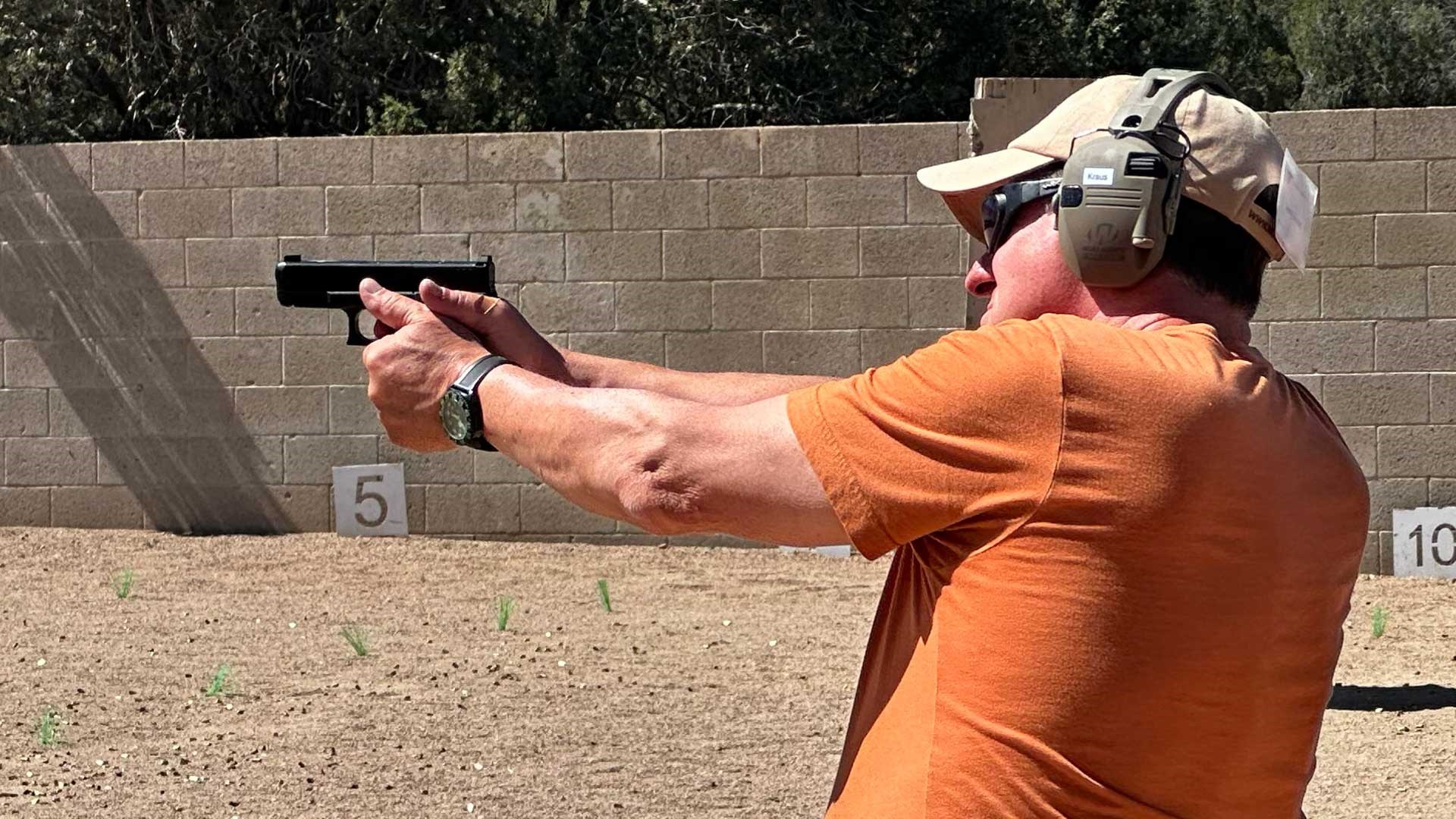
I really wanted to shoot a 1911 at my first Gunsite course, since Lt. Col. Jeff Cooper was such a big 1911 fan. NEVER FAIL TO LISTEN TO THE SERGEANT MAJOR, SGT. KRAUS! I told him I had come to the same conclusion in class that day and had rented a Glock 9 mm from the Pro Shop after class. It would be ready for me in the morning.
On Wednesday, I started shooting a Gunsite rental—a “Gunsite” Glock 45 in 9mm. I locked the slide back, hit the rails and feed ramp with Break-Free, racked it a few times, and ran it the rest of the week without another cleaning. It ran perfectly. How can you not respect that? I still don’t know why Glock numbered a 9 mm the “45,” though. Weird.
On Thursday, things got really interesting. As soon as I showed up that morning, Instructor James Queisner looked at me in utter disbelief, with a “WTF?” look on his face, and said, “Jerry, are you using a third handgun today?! We’re calling you ‘Three Gun Jerry’ from now on!”
I explained that Freddie Blish had texted me the night before and told me to run what I knew I could run without an issue, so I could focus on shooting, not clearing malfunctions. Queisner said, “Colonel Blish knows what he is talking about. You should listen to him more!”
I used to shoot PPC on FOP Lodge 128’s pistol team, and the thing you have to understand about cops is that the only thing worse than having a terrible nickname is having no nickname.
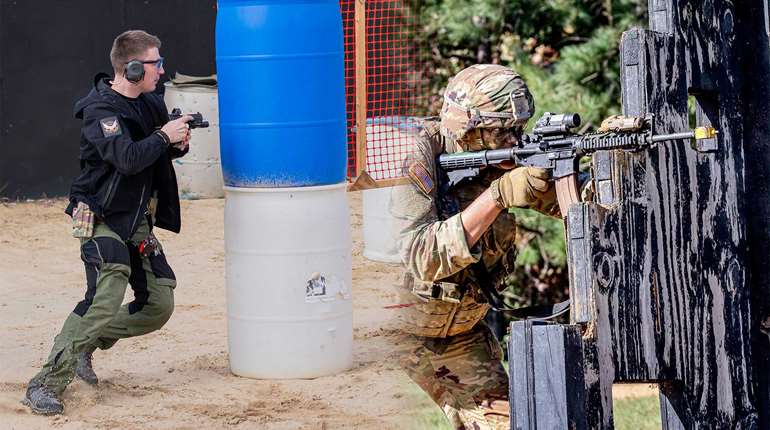
That morning, we drilled hard and had our first shoot-off. That afternoon, we trained in the shoot house, which at Gunsite is called “the Fun House.” We trained on cutting corners, clearing hallways, doorways and rooms and working shoot/no-shoot problems. We also trained in “the Donga” simulator, a dried-out creek bed that was like a giant hallway with lots of bends, corners and fingers going off on both sides. There we trained on cutting corners, clearing hallway sections and working shoot/no-shoot scenarios. Both were done with no live ammo.
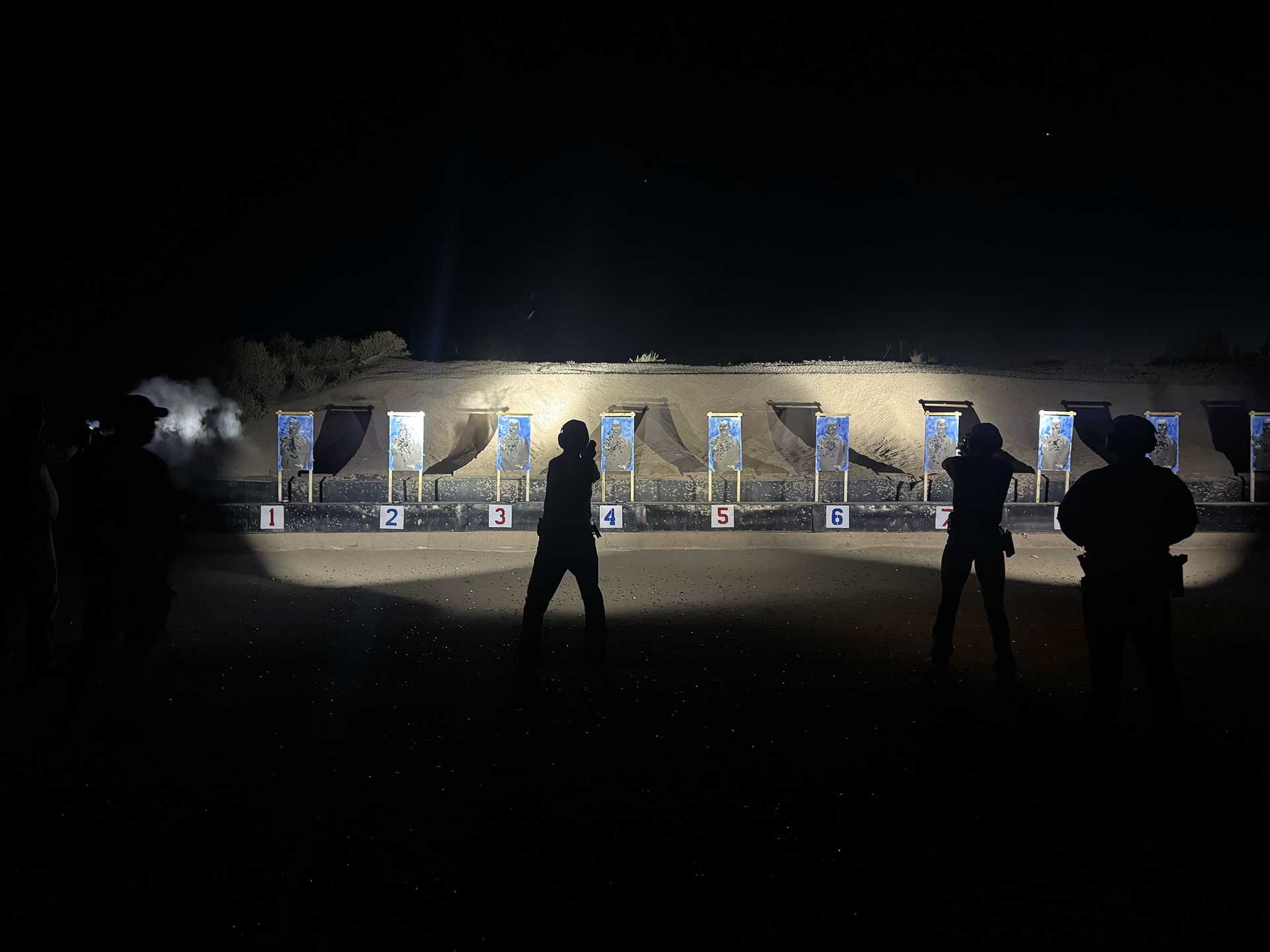
On Thursday night, we trained on shooting with tactical flashlights in the dark with live ammo. We trained on the FBI and Harries techniques—it was SO MUCH FUN! Weapon-mounted lights were not allowed, so I used my SureFire LX2. I have owned four SureFires for over 10 years, and none of them has ever failed me. When it comes to tactical flashlights, you get what you pay for.
Final Exam Friday
On Friday morning, we shot live-fire drills, then went back into clearing the Fun House and the Donga—this time with live ammo. Cutting corners, doorways, hallways, shoot versus no-shoot scenarios. It was a blast. I felt like I was back at Ft. Benning!
Part of the exam was a man-on-man shoot-off. They used the narrowest steel plate targets they could find, then cut them in half top to bottom so they were even narrower. You had to knock down the plates at roughly 13 and 20 yards, do a proper speed reload, then knock down a third plate in the center. First man to drop the third plate won.
Two things were obvious if you paid attention. The 9 mm shooters beat the .45 shooters on speed almost every time, but once in a while, the 9 mm would not knock the plate down. The .45 ACP never failed to knock the plates down—if it was a hit. And the optics shooters, more often than not, beat the iron-sight shooters. It pains a .45 man like me to write that, but I have to be honest.
If you have been to other shooting or CCW classes, you know the pattern: everybody who pays graduates. That is not Gunsite. People in my class were not sure they were getting a certificate until they held it. Graduate, and you become a coveted “Raven.” That means something in the military, law enforcement and gun communities.
The Pro Shop & Dave Fink
The Gunsite Pro Shop is the best gun shop I have ever walked into. You can pre-order your rental gun and ammo for your class from the Pro Shop, and in May 2026, their prices matched the cheapest I could find anywhere. You can also ship guns and ammo in if you don’t want to fly with them.
You can rent almost any quality pistol, with or without an optic, plus belt and magazines. They put it on your tab, and you settle up on the last day, like a country club. Classmates joked their wives were going to kill them when they saw how much they had spent in the Pro Shop. Instructors joked they sometimes teach the class for free after a week in that shop. I believe both. I almost bought the Gunsite Glock I rented. I loved it, but I fear my wife more than I loved it!
Dave Fink runs the gunsmithing side. He is among the best in the country. I rented one of his Gunsite Glock 45s. Crisp trigger, tight work, no drama. Whether he is tuning a piece or building a Gunsite Service Pistol from scratch, his exacting standards do not change.
Lessons Learned
Every night I wrote notes—my own after-action review. I am partial to .45 ACP, as Cooper was. The line taught me something I already half knew and did not want to admit: the 9 mm shooters got follow-up shots off faster and stayed tighter. Optics make everyone, at every skill level, a better shooter—once you get used to using them.
The Man Who Built It
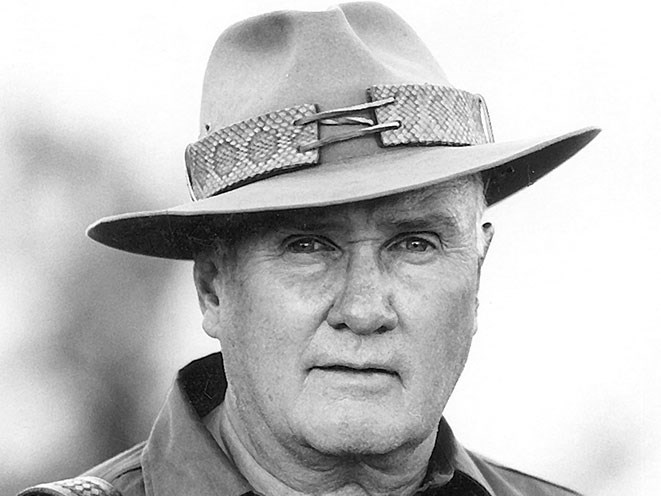
You cannot tell the Gunsite story without telling the story of Lt. Col. Jeff Cooper. Without him, there is no Gunsite. This year, 2026, marks Gunsite’s 50th anniversary. Since 1976, it has been one of the largest and most respected civilian firearms academies in the world.
John Dean “Jeff” Cooper was born May 10, 1920, in Los Angeles. He started shooting at the age of 11 and joined Junior ROTC mainly for the free .22 ammunition. He graduated from Stanford University, class of 1941, with a degree political science. He was then commissioned a Marine 2nd lieutenant months before Pearl Harbor.
For the first half of the war, he served with the Marine detachment aboard the USS Pennsylvania. Ashore, he was in at least one close-range fight on Kwajalein in early 1944, reportedly with a .45-caliber Colt Single Action Army. By V-J Day, he was a major with the 3rd Marine Division, staged for the invasion of Japan. After the war, he was a student and staff instructor at Command and Staff College in Quantico, Va.
From his quarters in Quantico, he could see the FBI Academy ranges. He unofficially shot their courses with his own 1911 instead of a .38-caliber revolver. He thought the Bureau’s one-handed, close-range stance was inadequate. Cooper preferred a two-handed stance and the .45, and those preferences became the spine of what he later named “The Modern Technique of the Pistol.”
He resigned after the war, was recalled for Korea, and made lieutenant colonel. He is reliably reported in three close-range lethal shootings: two in the Pacific and one in northern Thailand during clandestine work. American Rifleman, the Legacy Foundation documentary “A Man in Full” and Cooper’s own spare public remarks place that third gunfight in Chiang Rai province. An opium-trade hit squad of six men with Sten guns attacked him. Cooper stood his ground with a 1911 and dropped and killed all six. Cooper was reluctant to elaborate on the event. He treated secrecy oaths as permanent. He left active duty around 1955.
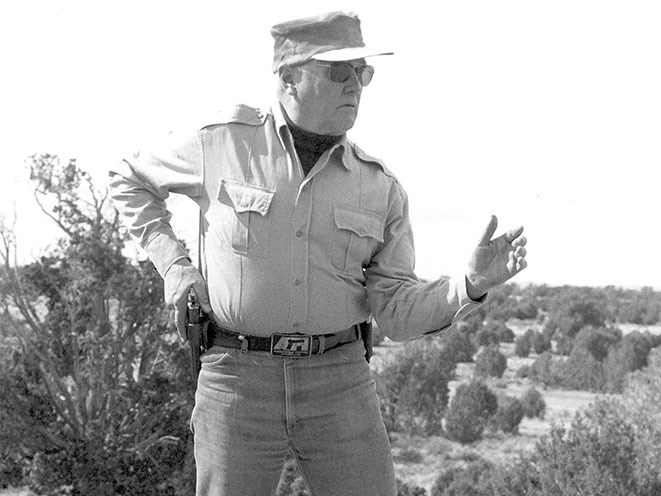
Back in California in the late 1950s, he organized the Leather Slap matches at Big Bear. Working with Jack Weaver, Elden Carl and Thell Reed, he put the Modern Technique on paper: a large-caliber semi-auto, preferably a 1911; the Weaver stance; a consistent draw; the flash sight picture; the compressed surprise break. He also wrote the Four Universal Rules of Firearms Safety.
His most durable gift may be the Color Code of Mental Awareness, still taught to police and military worldwide: White, unaware; Yellow, relaxed alert; Orange, specific alert; Red, the fight is on. Cooper said most shooting problems are simple. The hard part is seeing them coming. His book, Principles of Personal Defense, was first published in 1972 by Paladin Press.
He treated the right to keep and bear arms as pre-existing, not granted. An armed citizenry, he said, is the last check on government. He liked the line attributed to Washington: personal firearms are liberty’s teeth.
He was a serious African hunter and called Cape buffalo the ultimate quarry. On his 70th birthday, he is said to have taken a double with his .460 G&A.
In 1975-76, Jeff and Janelle Cooper moved to the ranch near Paulden and opened the American Pistol Institute. Buz Mills bought the place in 1999, restored the Jeff Cooper curriculum and brought Jeff Cooper back to teach through the end of 2003.
Cooper built their house, the Sconce, on the property, with kill boxes and firing ports inspired by houses he had seen in Rhodesia. After graduation in the old days, new Ravens were invited up for iced tea, lemonade and Janelle’s brownies. Cooper died at the Sconce on Sept. 25, 2006, at the age of 86. Janelle kept hosting new Ravens until she died in 2019. Their daughters still carry on the tradition to this day, when they can.
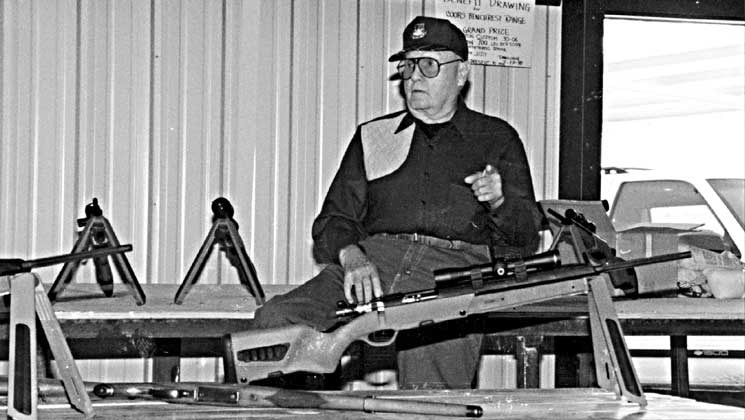
He helped found IPSC and served as its lifetime honorary chairman. He sat on the NRA Board. For decades, he wrote as editor-at-large for Guns & Ammo. He authored more than a dozen books. He specified the scout rifle—lightweight, compact, with forward-mounted glass for a fast sight picture. Steyr Arms built the first one to his standard in late 1997. Ruger, Savage, Springfield and Mossberg followed with their own variants.
Gunsite now stewards the Sconce and his library. The Jeff Cooper Legacy Foundation keeps the papers. The Modern Technique, the Four Rules, the Color Code and his insistence that mindset beats hardware have been absorbed into military, police and civilian training worldwide. You cannot talk about serious defensive small-arms work without tracing it back, one way or another, to Lt. Col. Jeff Cooper.
Fifty years after Jeff Cooper first opened that gate, I finally drove through it. I will never forget that week. I cannot wait to go back.
Most Popular