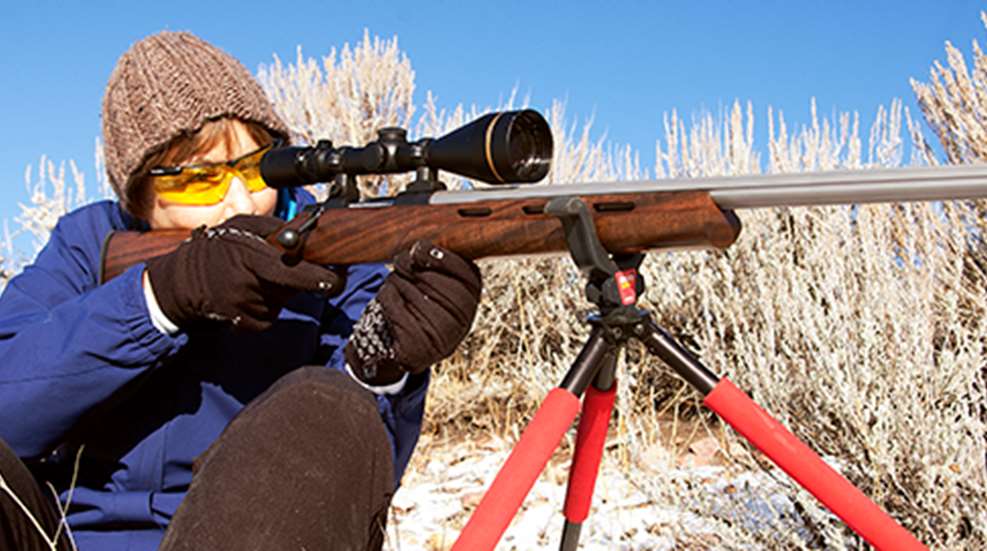
The whip-hand dominance of the .223 Rem. has littered the boneyard with nearly all other 22-cal. center-fire cartridges; however, the .221 Rem. Fireball remains just outside that acre’s gate because informed handloaders look at it from a different perspective than those who see it as merely a short .223. Besides, you have to like a cartridge with a cool-sounding name such as “Fireball.”
The .221 case is a close copy of the .223. Both cases have the same head diameter, shoulder angle, neck length and maximum average pressure (MAP) of 55,000 p.s.i. The only difference is that the .221 is shortened 0.3674 inches in the body. That reduces its propellant capacity to 60 percent of the .223s. But loaded with the proper propellants, the .221 produces about 90 percent of the .223’s velocity with bullets weighing up to 55 grains.
Beginnings
This short cartridge was initially chambered in Remington’s XP-100 bolt-action single-shot handgun in 1963. From the XP-100’s original 10.75-inch barrel, the .221 fired 50-grain bullets at about 2600 f.p.s. The XP-100’s barrel was eventually lengthened to 14.5 inches and chambered in other .22-cal. cartridges such as the .223 Rem. and .22-250 Rem. The .221 chambering lasted until 1985. For a while Thompson/Center chambered the cartridge in its Contender single-shot handgun. The .221 languished in neglect until 2002 when Remington gave it a face-lift as a rifle cartridge in its Model 700 Classic rifle. The last year Remington chambered the cartridge was in 2007 in the Model 700 Light Varmint Stainless Fluted rifle.
The CZ 527 American and the Model 21 from Cooper Firearms of Montana are the only rifles currently chambered in .221 by major manufacturers. The Cooper folks say the .221 is nowhere near as popular as the .204 Ruger or .223 Rem. But the cartridge has a following, and they sell about as many rifles chambered in the Fireball as they do rifles in .22 Hornet.
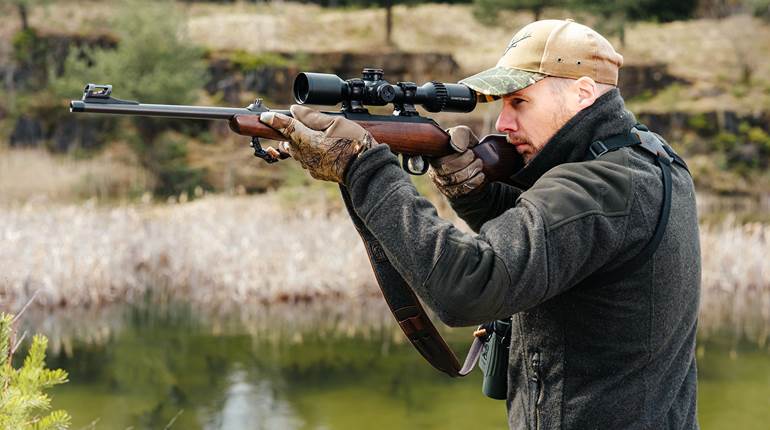
A Cooper Model 21 Montana Varminter was used to shoot the loads for this article. The Varminter is intended for shooting from a rest, with style. The oil finish highlights the running grain of its AA+ claro walnut stock with a beavertail fore-end. The Model 21 is a single-shot. Pushing forward the three-lug bolt picks up a cartridge from the loading pan, feeding it into the chamber. The sample rifle’s trigger has a perfect 2-pound pull.
Handloading
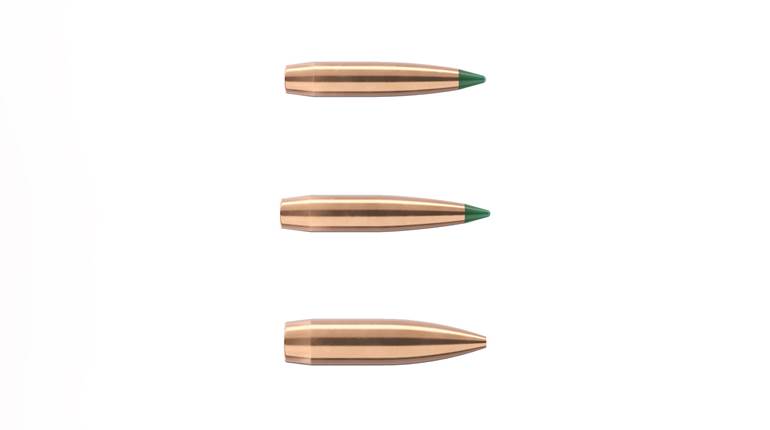
The Fireball case is only a smidgen larger than the Hornet case. The 3 to 8 grains of additional propellant the .221 holds, though, result in a gain of 600 f.p.s. over the Hornet with bullets of the same weight. Care should be taken when developing loads for a cartridge as small as the .221 because a big increase in velocity and pressure results from a small increase in propellant. From the Cooper Model 21’s 24-inch barrel, Nosler 35-grain Ballistic Tip Lead Free bullets had an average velocity of 2752 f.p.s. powered by 17.0 grains of H4198. Stepping up the propellant to 17.5 grains increased velocity to 2949 f.p.s. An additional 0.5 grain jumped speed to 3034 f.p.s, and 18.5 grains upped the velocity to 3,296 f.p.s.
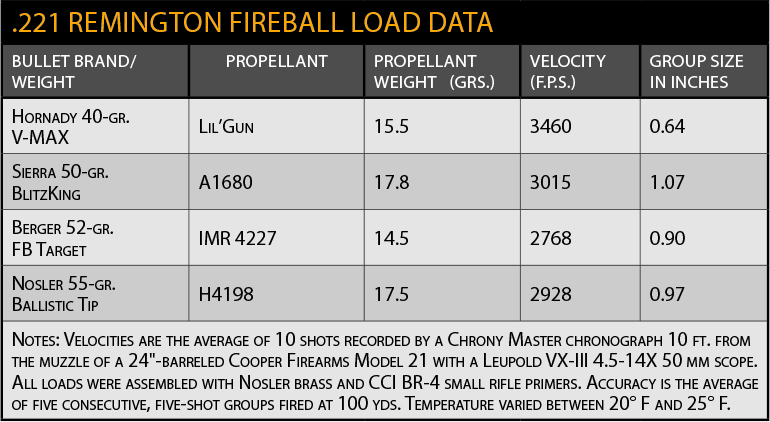
Relatively fast-burning propellants such as Hodgdon’s H4198, Lil’Gun and Accurate 1680 are a key to loading the .221. Lil’Gun is a great propellant for the Fireball shooting lightweight bullets. From two other .221 rifles, Lil’Gun fired Berger 30-grain Varmint bullets at nearly 3900 f.p.s. and Nosler 35-grain Ballistic Tip Lead-Free bullets at 3700 f.p.s. From the Cooper Varminter, Hornady 40-grain V-MAX bullets reached 3270 f.p.s. with 15.0 grains of the propellant and 3460 f.p.s. with 15.5 grains.
Relatively slow-burning propellants provide a more sustained push to 50-grain and heavier bullets. Lil’Gun and A1680 are still good choices as well as H335, H4198, N130 and Reloder 7.
Heavier bullets also provide more uniform velocities. The 30- and 35-grain bullets had extreme spreads of velocity of up to 200 f.p.s with several different propellants. But spreads shrank to less than 50 f.p.s. with 40-grain bullets and down to 10 f.p.s. with 50 and 55-grain bullets.
How close to seat bullets to rifling lands for the best accuracy is a matter of hundredths of an inch. Bullets close to, or even in contact with, the rifling are thought to function with improved accuracy because they make less of an unsupported “jump” before engaging it. That minimizes the chance of bullets entering the rifling at an angle and flying into left field. Just as important, though, bullets seated straight with the centerline of case necks align with the chamber throat to ensure they enter the rifling straight, even if they have to move a ways to engage it.
The .221’s maximum cartridge length is 1.830". However, Nosler 55-grain Ballistic Tips just touch the rifling lands of the Cooper .221 with a cartridge length of 1.873 inches. The Cooper rifle has no magazine, so that long cartridge length fits fine. A smidgen shorter cartridge length, though, ensures easy extraction of an unfired cartridge from the chamber. Also, pressures tend to be greater when bullets do not have a bit of a running start before contacting rifling.
To determine if accuracy was better with bullets seated just short of the rifling compared to seated back a ways, I loaded 10 cartridges each with the Ballistic Tips seated with an overall length of 1.850 inches and 1.830 inches. Before shooting I ran the cartridges through a Hornady Lock-N-Load Concentricity Tool. The majority of the bullets were absolutely true with the case necks but a few varied up to 0.002 inches. The longer cartridges averaged 0.96 inches for two, five-shot groups. The shorter cartridges averaged 0.95 inches.
Shooting
After firing 20 shots at a fast pace, the Cooper’s barrel was lukewarm and the front third remained cold. Even though the temperature was in the 20s, heat rising from the barrel created barely any mirage through the Leupold 14X riflescope. Recoil was so mild that the crosshairs scarcely jumped off target, and often I saw bullet holes appear instantly. The Cooper Varminter shot well. It probably would have shot even tighter groups, but there was the shiver factor to consider from the cold temperatures. It helped, though, thinking about warm spring days ahead and green fields of ground squirrels and prairie dogs.
Most Popular