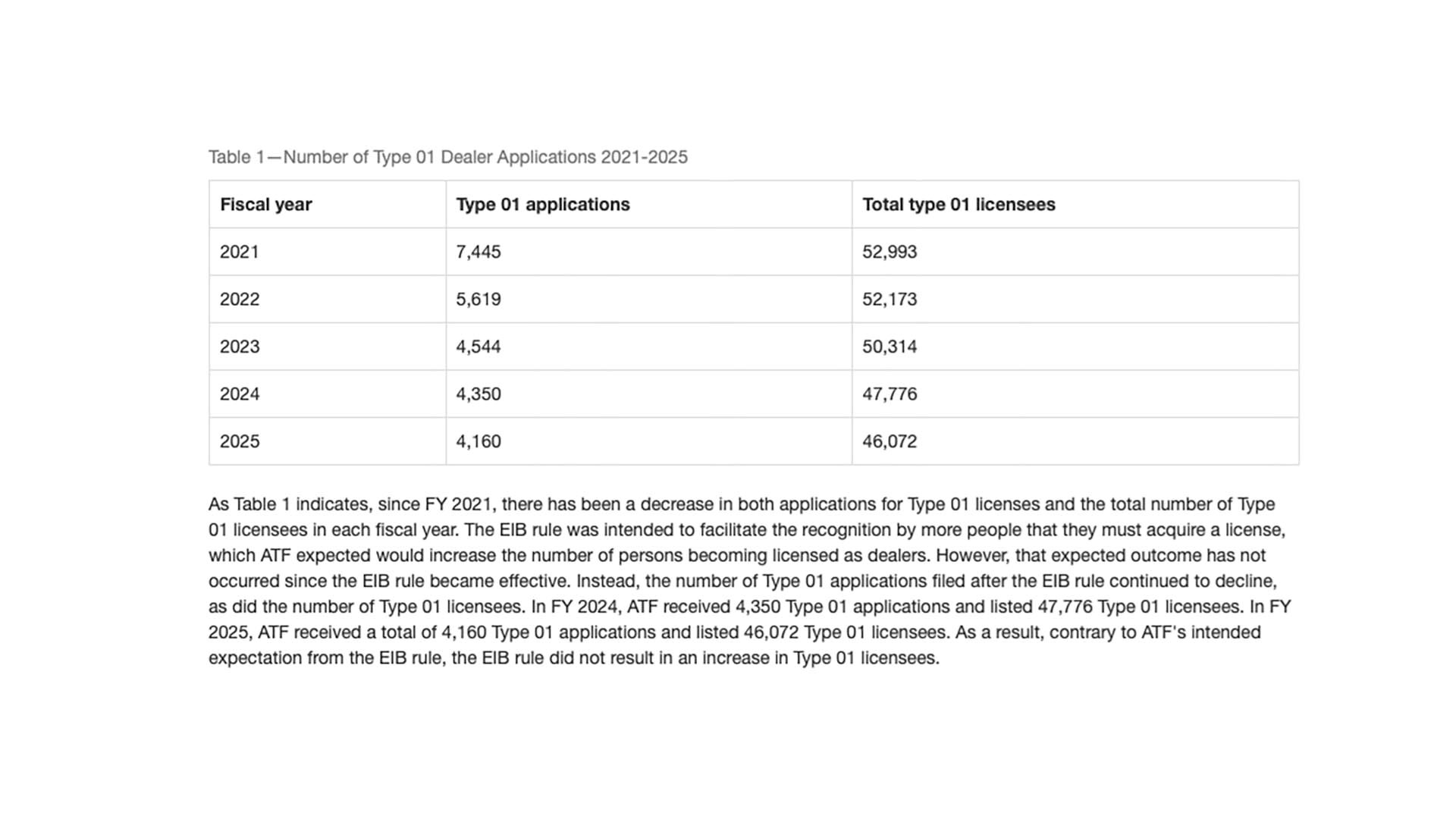
The number of retail outlets with an FFL Type 01 license to sell firearms has declined by more than 13 percent in just the last five years. A proposed rulemaking document published by the Bureau of Alcohol, Tobacco, Firearms and Explosives (BATFE) on May 6, 2026, provides the startling figures.
In 2021, there were 52,993 Type 01 FFLs nationwide. By 2025, that number dwindled to 46,072. Companies and individuals applying for the license, which is good for three years, dropped even more dramatically. In the same period, that figure went from 7,445 to 4,160.
The trend began long before 2021. BATFE’s “Firearm Commerce in the United States Statistical Update 2024” (the latest available) reports that in 2013 there were 54,026 Type 01 FFLs. By 2016, the number was up to 56,074. It has declined every year since. The trend is identical for pawn shops licensed to conduct firearm transfers—Type 02 FFLs.
The figures dwarf in comparison to the 1990s, when more than 200,000 Type 01s were valid nationwide. Gun stores back then were a respected and valued member of every community, holding special events for charity, raffles for churches, big-buck contests and more. Many were gathering places for enthusiasts, a stop on the way from work and trade-in racks attracted crowds looking for a bargain or special gun.
What’s at Stake
Those local, family-owned stores aren’t gone, but they are scarce. The Second Amendment Family Gun Shop in Hereford, Ariz., is one of them still going strong. Its 19th Anniversary celebration on July 11 demonstrates what is often lost when FFL Type 01s are not renewed.
That day, owner David Greenberg held a cookout to thank regular customers for their nearly two decades of patronage and extended an invitation to the entire community. He flipped burgers while his team dispensed chips and soda. People were greeted by name at the free event, and there were no sales pitches. In fact, everything was held outside, far from displays and the cash register.
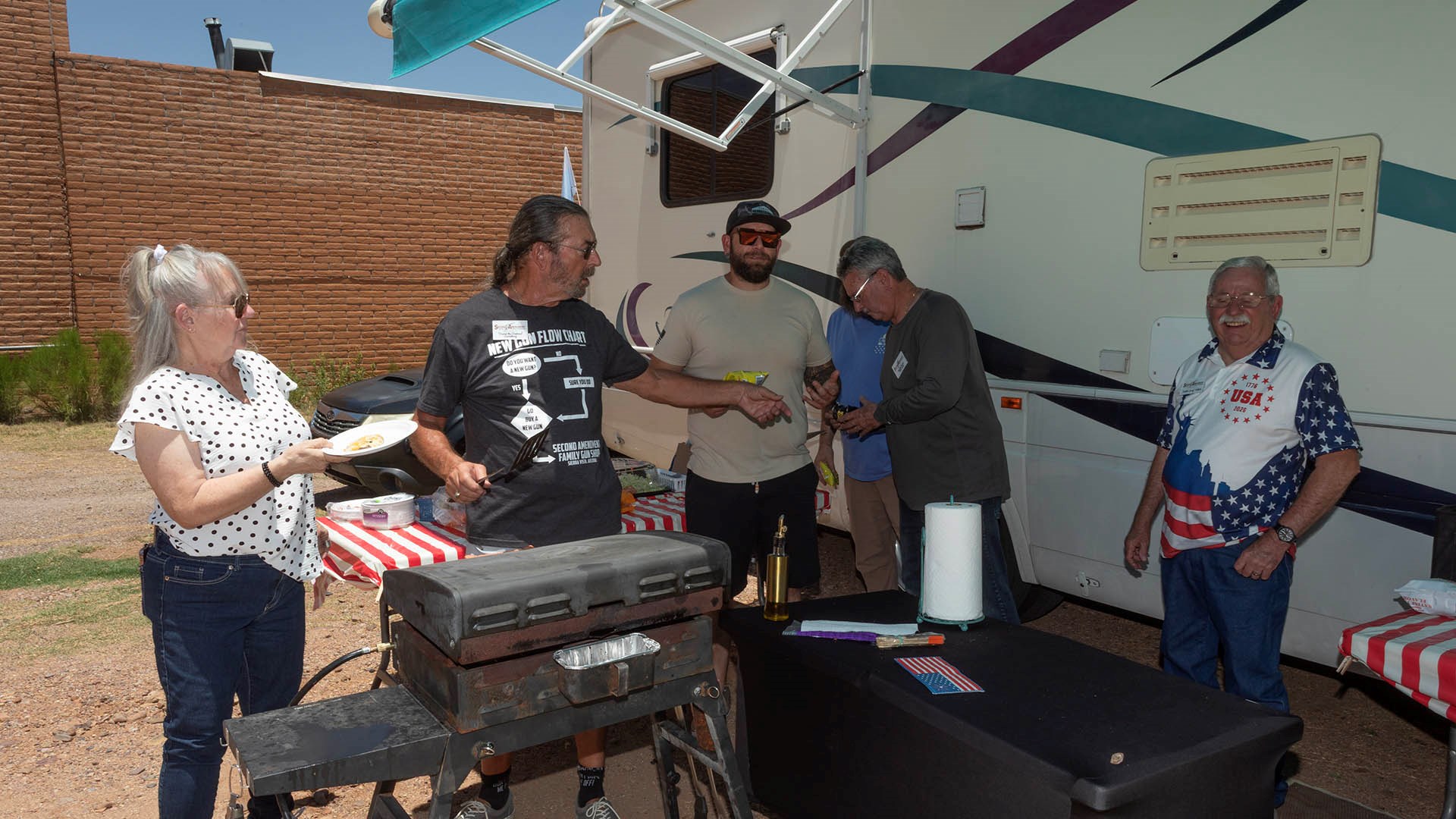
His story is not unique. Check your local newspaper, social media outlets or bulletin board at your favorite range and you may discover a nearby spot with a similar story. But family-run shops like this are growing scarcer by the year.
Manufacturing Adds to the Challenge
Gun sales this year continue to climb, despite the drop in Type 01 FFLs. Corporate-owned chains and larger outlets are apparently taking up the slack when it comes to initiating 4473 NICS background checks.
Buried in BATFE’s 2024 report (linked above) is a rarely mentioned challenge small gun retailers face. There were 9,094 Type 07 FFLs (firearm manufacturers) in 2013. By 2023, there were 20,023—more than double the number.
Small shops don’t have the retail space or budget to inventory or display that increased selection. Big companies have larger lines of credit, occupy more square footage and displays are large.
That small FFL down the street can order any gun, though. And there’s always that trade-in rack, an attraction with a well-documented history of gifting smiles to every enthusiast.
Most Popular