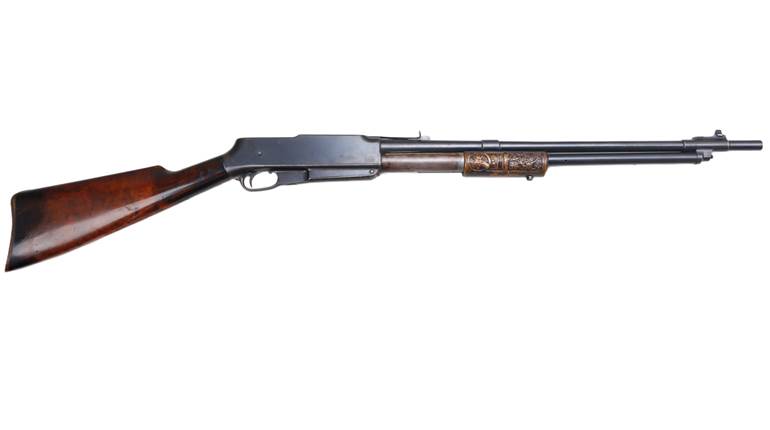
In the 1890s, U.S. military small arms were evolving rapidly. The recent discovery of smokeless powder, along with the development of new operating systems and cartridge designs, led the U.S. Navy to adopt a radically new platform. The Model 1895 Lee Navy rifle, as manufactured by Winchester Arms, was a unique straight-pull design that saw the service through the Spanish-American War. Watch our "American Rifleman Television" I Have This Old Gun segment above to hear its story.
"The Model 1895 Lee Navy rifle, it's a little bit of a, you know, odd spot in the development of U.S. military arms, because before that, you have the U.S. government using the .45-70 'Trapdoor' system," American Rifleman Executive Editor Evan Brune said. "And then, of course, there in the 1890s is the adoption of the Krag-Jorgensen system. But again, it's this, you know, typical .45-caliber cartridge case and, you know, .30-caliber military rounds, and all of a sudden, there's this 6 mm, lightning-fast, you know, small-caliber smokeless round that comes onto the scene in what is a really kind of radically modern design for its time."
Its semi-rimmed, bottlenecked cartridge, the 6 mm Lee Navy, contained a 112-grain bullet with a muzzle velocity measuring approximately 2,500 f.p.s., producing approximately 1,600 ft.-lbs. of muzzle energy. Previously, the U.S. Navy fielded the .45-70 Gov't cartridge, which fired a 405-grain bullet at approximately 1,300 f.p.s., producing a similar level of muzzle energy. But the flatter trajectory of the 6 mm Lee Navy cartridge allowed for improved accuracy in the hands of sailors and Marines, and the smaller cartridge made it easier to load in the rifle's box magazine.
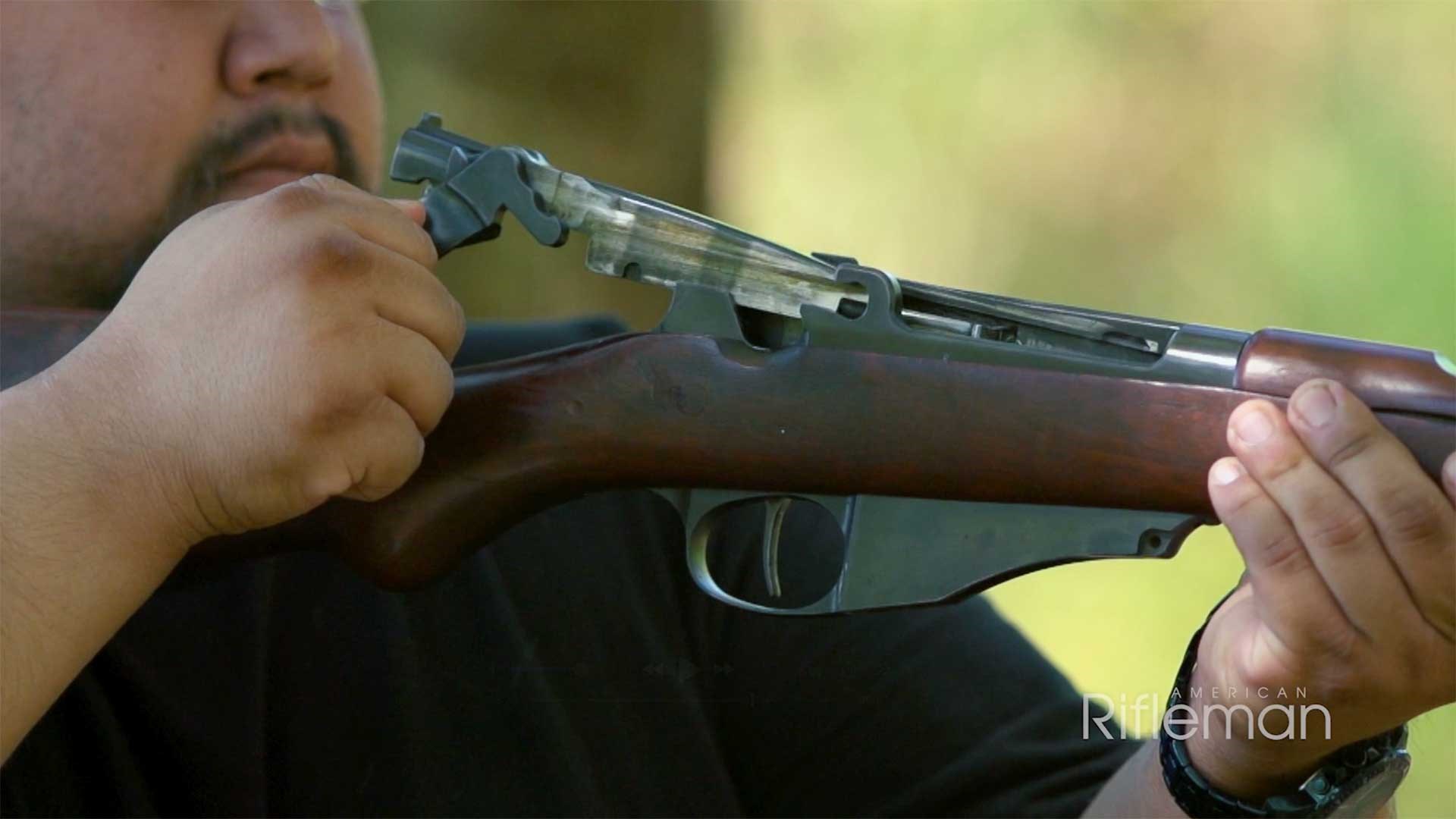
"The gun was designed by James Paris Lee of Lee-Enfield fame," American Rifleman Field Editor Garry James said. "He'd noticed there were some other straight-pulls out there that were fairly successful, the Schmidt-Rubin Swiss 1889 and the 1895 Austrian Mannlicher. So he thought, 'Well, why not? Why not come up with my own device?' And he did. It was an interesting gun. Unlike the European guns, his gun did not have a rotating bolt head. Rather than just coming straight back, it kinda cammed upwards. So when you pulled it up, it unlocked, then you lower it, and it would chamber a round and it would lock again with a clever bolt system."
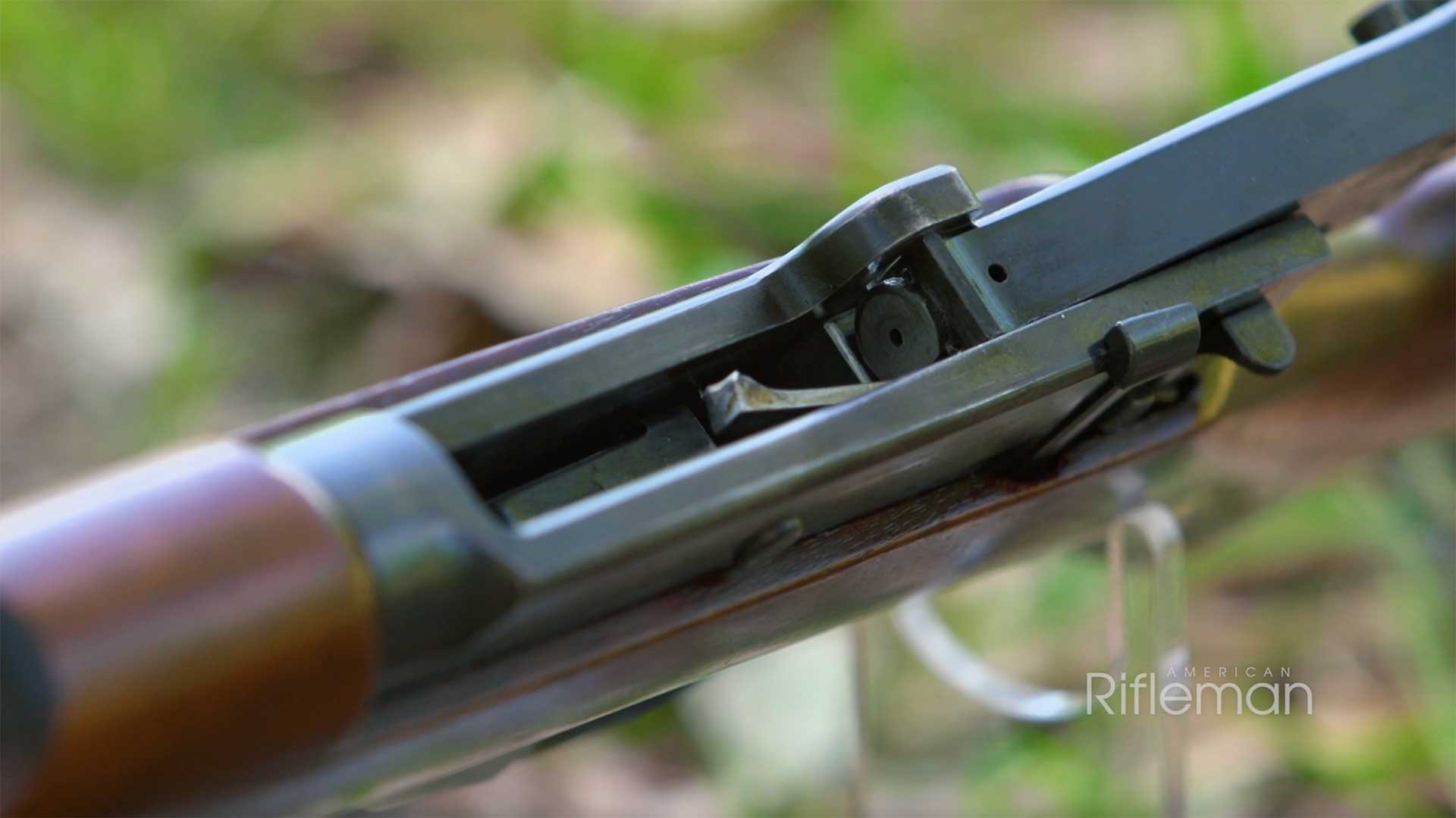
Cartridges were fed from an en bloc style of loading system, whereby cartridges were loaded into the rifle from the top of the action in five-round clips. An opening at the bottom of the fixed box magazine dropped the en bloc clip after the second shot was fired. Due to the receiver's integrally machined feed lips, rounds could also be fed into and fired from the action without using the en bloc clip.
"One of the more interesting historical aspects to the 1895 Lee straight-pull is that there were 53 of them on board the USS Maine on the night of February 15th, 1898, when she blew up and sunk in Havana Harbor," NRA Museum Director Philip Schreier said. "The guns were later recovered by the Francis Bannerman Company of New York. They had been in about 40' of water for 12 years or so and were not in the greatest condition when they were brought up during the reclamation efforts on the Maine. But the nice thing about their recovery is the serial numbers of all 54 guns were published in the catalog from Bannerman's that came out in subsequent years."
To watch complete segments of past episodes of American Rifleman TV, go to americanrifleman.org/videos/artv. For all-new episodes of ARTV, tune in Wednesday nights to Outdoor Channel 8:30 p.m. and 11:30 p.m. EST.