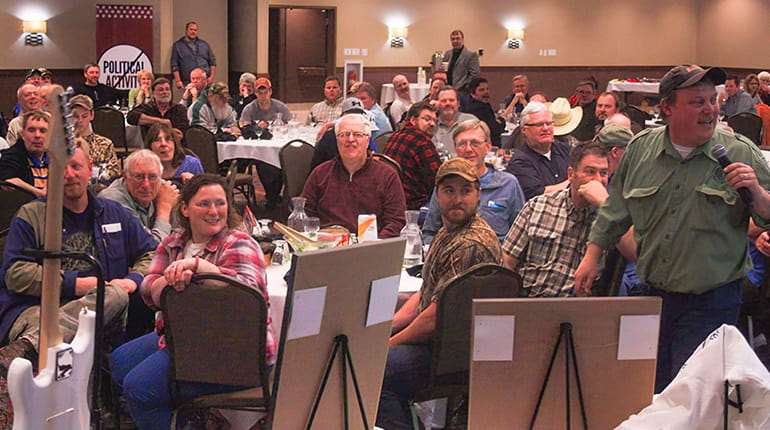
The game of poker has always interested me, as does any activity that combines luck and skill. Perhaps for this reason alone, the sport of X-Card shooting has appealed to me since my early 20s. Informally known as “turkey shoots,” after the grand prize, these events pit competitors against each other to see who can place a shotgun pellet closest to the center of the target—which is a simple, pencil-drawn “X.”
Even though they’re designed to be friendly games of chance, it would be 20 years before I learned that folks do indeed put money into their X-Card rigs. After getting whooped by a few shooters who had fancy, purpose-built guns, I decided to look into having one built myself and was quickly introduced to SumToy Customs.
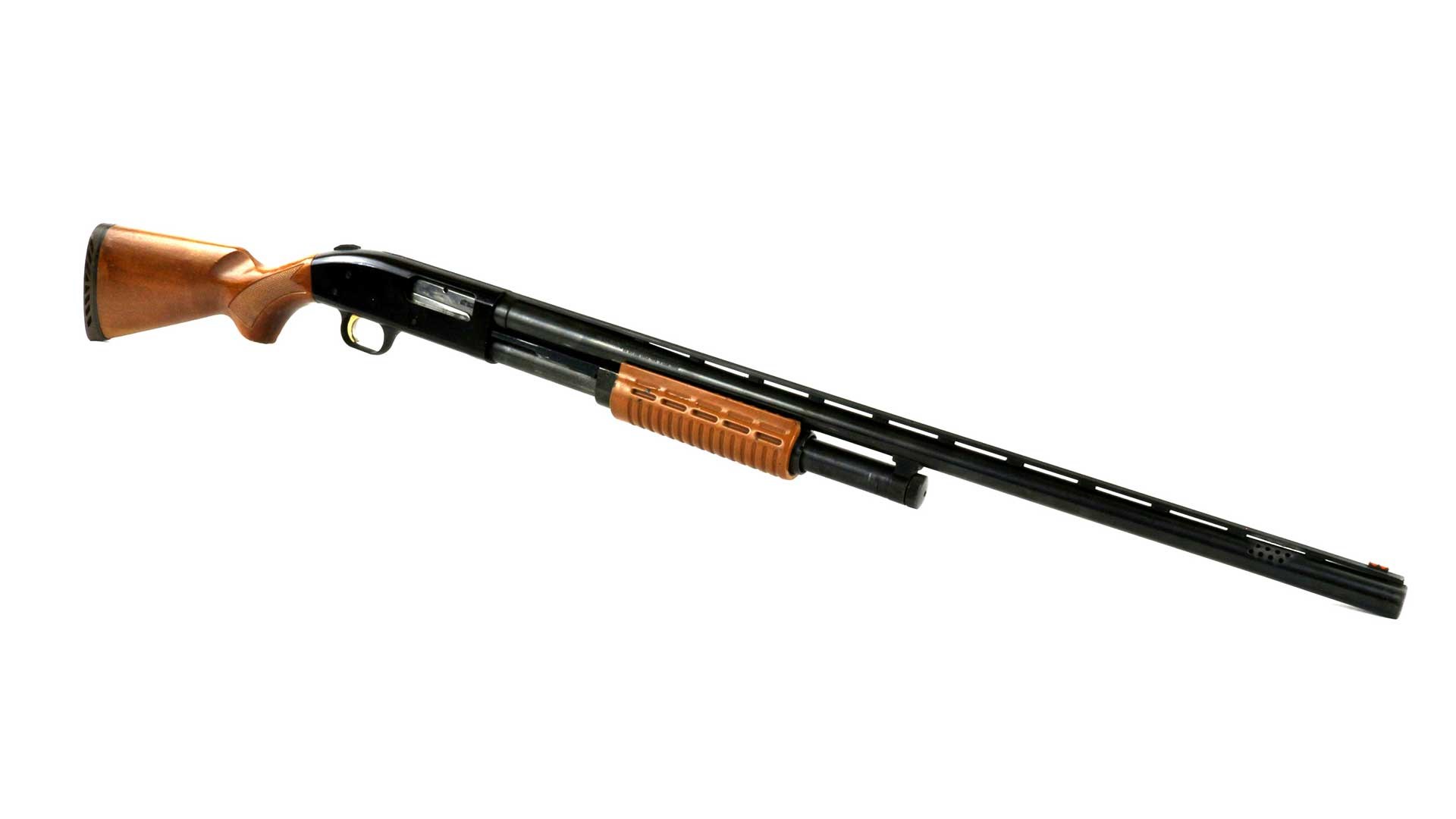
SumToy is headed up by William Lambert, who, after years of turkey-shoot competitions, realized that he could build a better choke. What started with chokes grew into an entire custom-build service and eventually a full CNC machining facility. Today, SumToy can create an X-Card or hunting shotgun from just about any base. I appreciated this approach because it lets you decide how much you want to throw at the sport based on how serious you are. For myself, I want to win, but if it comes down to it, I have no problem driving to the supermarket to buy my own turkey. So, with that, I decided to send him my most seasoned Mossberg 500 and let him work some budget-minded magic.
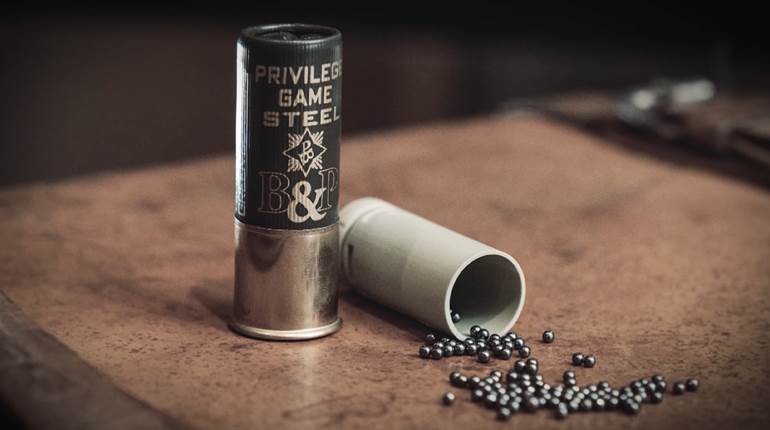
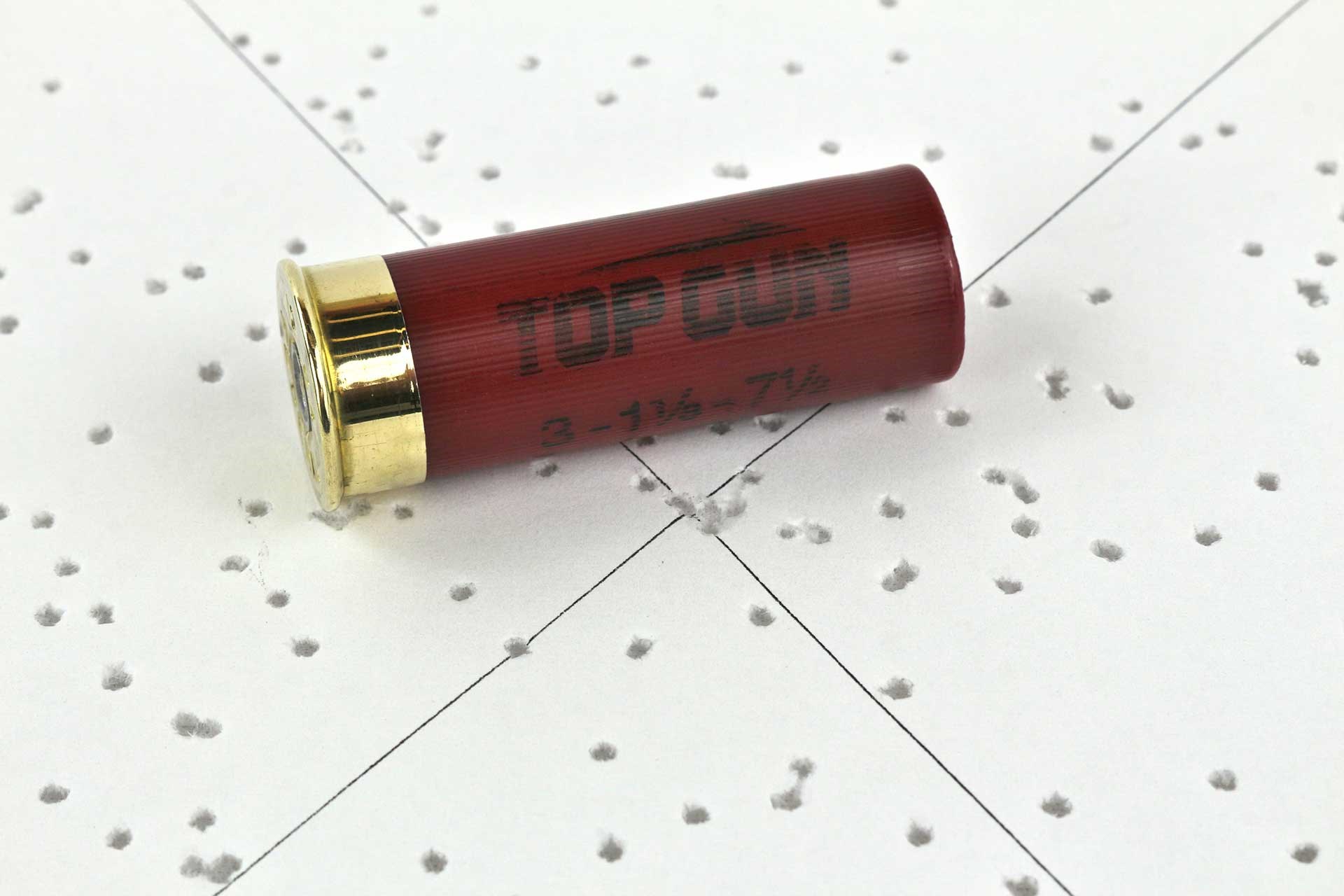
Visiting with Will, I learned that shotgun barrels are far more sophisticated than we give them credit for. Sure, they aren’t rifled, but they are a far cry from a simple pipe. He began by asking which shell was used in my shoots, as his team customizes bores to the specific wad. The matches that I most commonly attend use Federal’s #7.5 Top Gun load, one that he was intimately familiar with.
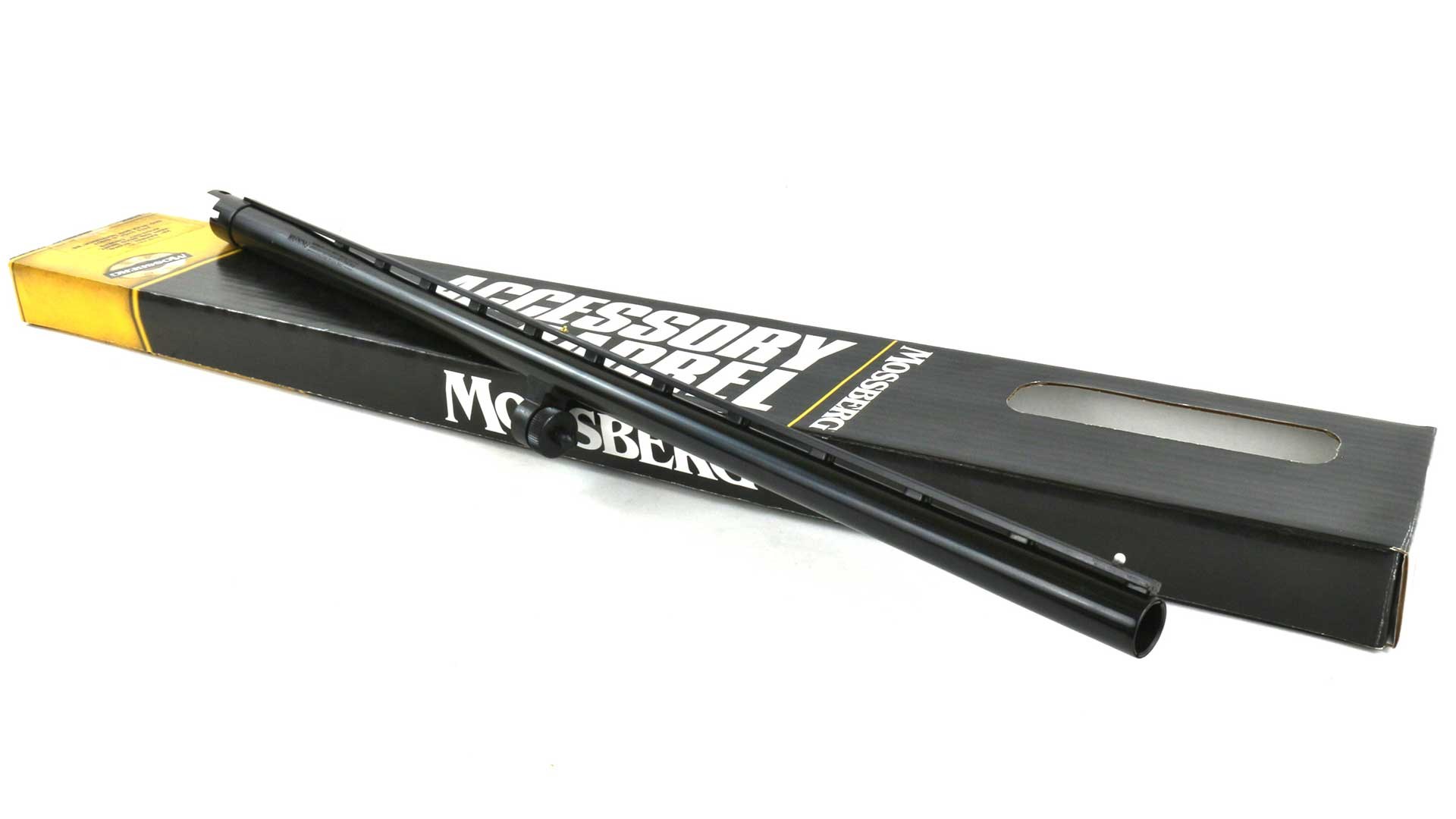
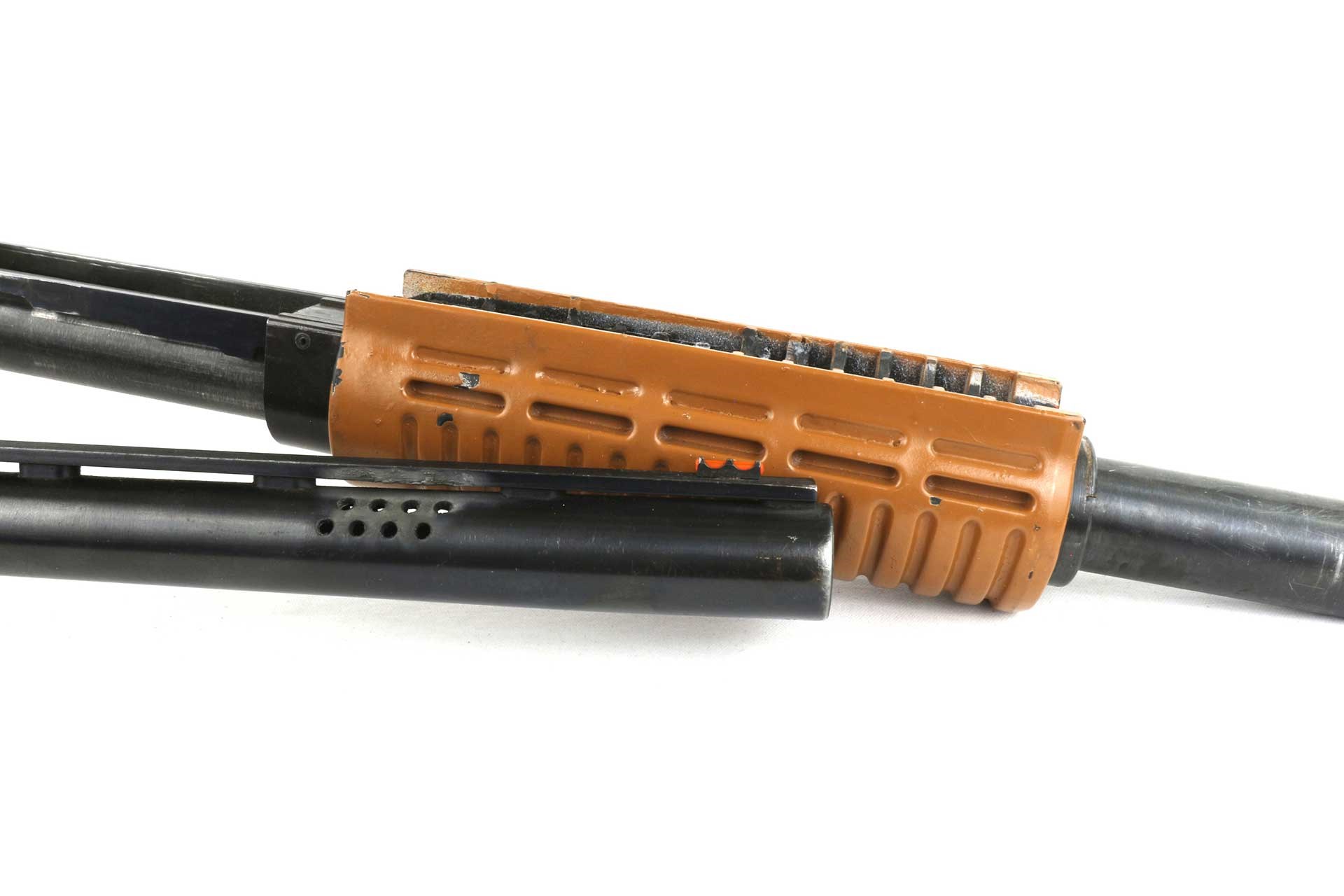
In the case of my Mossberg, shooting these would involve adding a sleeve to shorten the chamber. This tightens the fit to the bore, starting it on the right path for pattern density and consistency. Something I learned as well is that it isn’t so much the choke that tightens or opens a shotgun pattern. In some cases, the area just forward of the chamber is opened up through a process called backboring, a paradoxical operation proven to tighten patterns. Additionally, ports do more than reduce recoil and muzzle rise. They also strip the wad from the shot column. So, before sending my gun in, I made sure to pick up an unported barrel to maximize the effect.
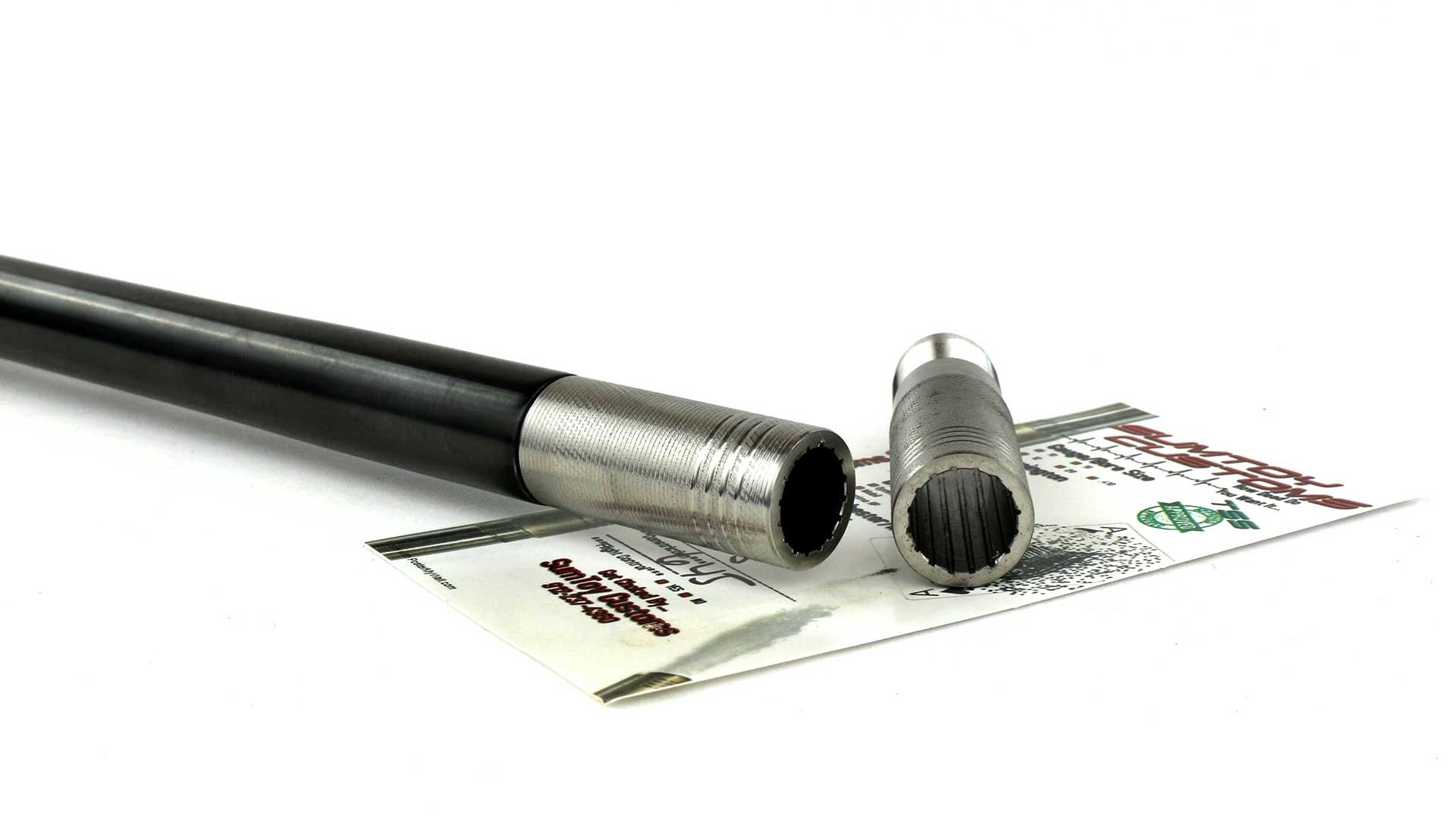
The choke is arguably the most important part of the package, as it’s the last thing the wad and cup touch before heading downrange. As the company got its start in this area, it’s clear SumToy fully understands their value. One of the pattern phenomena that applies to turkey shoots, but not so much real life, is the donut effect that you get with constriction. Fire a few shells at paper, and you’ll see that although the pattern is compact, few, if any, pellets are in the center.
Live game won’t notice, but if you need a pellet precisely where you’re aiming, this is troublesome. SumToy addresses this through a straight-rifling system that slows the wad, keeping it from “bumping” the shot column and creating the “donut of doom.” These cuts allow gases to vent around it, slowing down the wad but not so much the shot, as lead has more momentum. They also stop the wad from spinning, which would otherwise deploy the petals more rapidly. Will insisted on supplying me with both the .638” and .645” constriction, as tighter numbers do not always equate to tighter patterns.
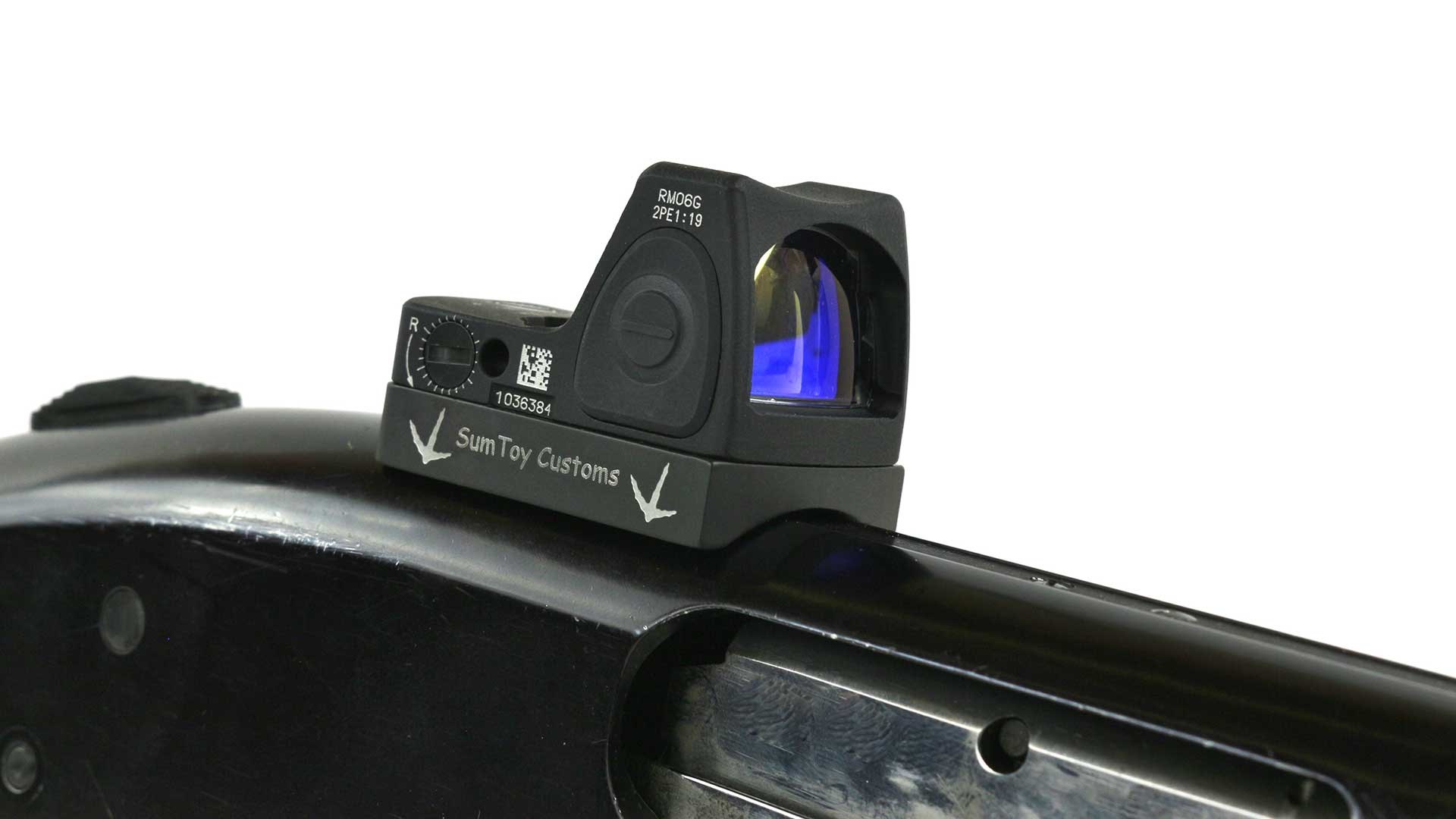
Like anything else you do to a shotgun, this work will change the point of impact. Will and his team can realign your bead, too, but I think all of this work would be wasteful if you didn’t add an optic. For this, I opted for the company’s simplest approach: a bolt-on red dot adapter. These are made entirely in-house and will fit the existing screw holes in your shotgun’s receiver. These are kept in stock for the most popular models, but like everything else, SumToy can craft one for whatever oddball you might be looking to convert.
After screwing it on, I topped it with Trijicon’s new green RMR and was ready to go shred some paper. But before heading out, I applied semi-permanent thread locker to the barrel takedown screw and the magazine tube to ensure they wouldn’t loosen and potentially change my zero. The shop offered to permanently pin the barrel in place, but I thought this would be a better move in case I ever want to change something.
Firing my first shots at a steel target, I made some gross adjustments. Here, I was also reminded that the team did some work to the trigger, taking some of the creep out of it and lightening it a touch. At 25 yards, the RMR was nearly out of adjustment, but I was able to center my pattern, nonetheless. The tighter choke covered the entire 8.5-inch x 11-inch paper target with very little overspray, which is impressive, as it rivals some of the pricey TSS loads that I’ve fired.
The results were several steps above some of my current setup (which is a stock shotgun wearing an aftermarket turkey choke), but I needed more pellets near the center. Taking Will’s advice, I swapped in the looser choke and found my answer. My very first target put three pellets nearly touching the intersection, which would easily earn me a Butterball turkey.
Through this build, I learned that not only is there an entire form of competition that I was unaware had existed, but I also learned how meticulously a shotgun can be tuned to win. Although the champion of an X-Card round is determined by chance, like poker, there are things that you can do to put luck in your favor. While I may never have a fully custom gun built from scratch, a $400 gunsmithing bill is about in line with what I consider effective without being excessive.
Come this fall, we’ll see if SumToy is the ace-up-my-sleeve or if I should keep my eye open for a sale on frozen turkeys. I’d say I could hedge off the latter by practicing, but this is a shining example of when it’s better to be lucky than good.
Most Popular