** When you buy products through the links on our site, we may earn a commission that supports NRA's mission to protect, preserve and defend the Second Amendment. **
In this week's episode of American Rifleman TV, we take a look at the history and reintroduction of the Colt Python series of revolvers that were first introduced in 1955. Reviewed this week is the Smith & Wesson Model 648-2 revolver chambered in .22 WMR. In the 1850s, Britain adopted a new service arm, the Pattern 1853 Enfield rifle-musket, that would not only serve the British Empire through several conflicts in the 19th century, but also played a large role on both sides of the American Civil War.
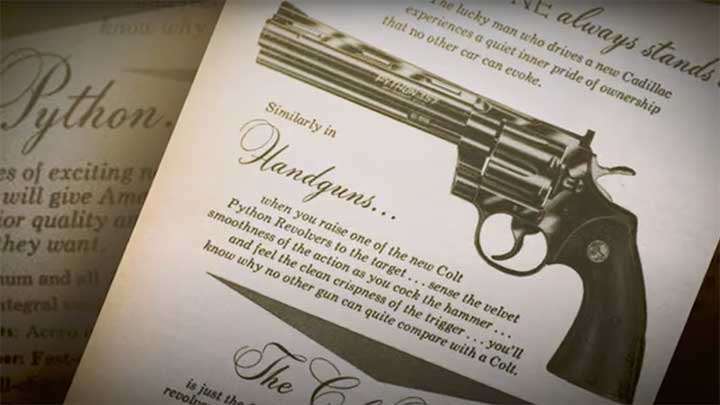
Over the past decade, one of the trending focuses for firearm collecting circles has been the "snake gun" series of revolvers manufactured by Colt, with a particular favorite being the Colt Python series. The Python was originally intended to be a .38 Spl. target revolver built off of Colt's large I-frame design. The chambering was changed to .357 Mag. in the final production design and it was introduced in 1955, the same year as the Smith & Wesson Model 29.
The Python series earned a notable reputation for its build quality, smooth trigger and tight cylinder lockup which aid in accuracy. The fit, finish and performance of the Python also earned the series the title of "the finest production revolver ever made" among firearm collectors. After four decades in production, Colt ceased production of the Python completely by 2005. That has changed for 2020, as Colt announced the re-introduction of the Python series with revisions and reinforced construction.
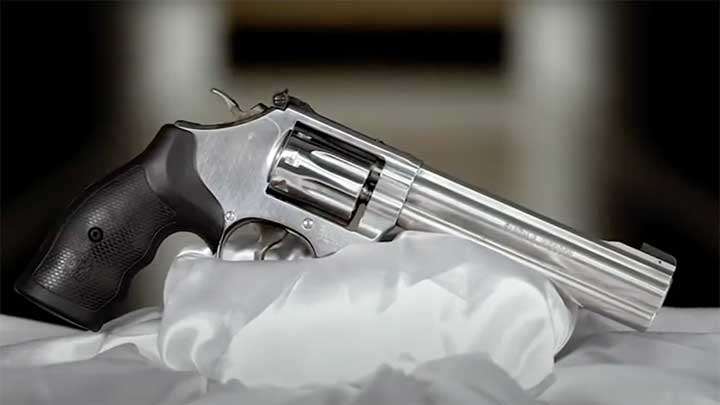
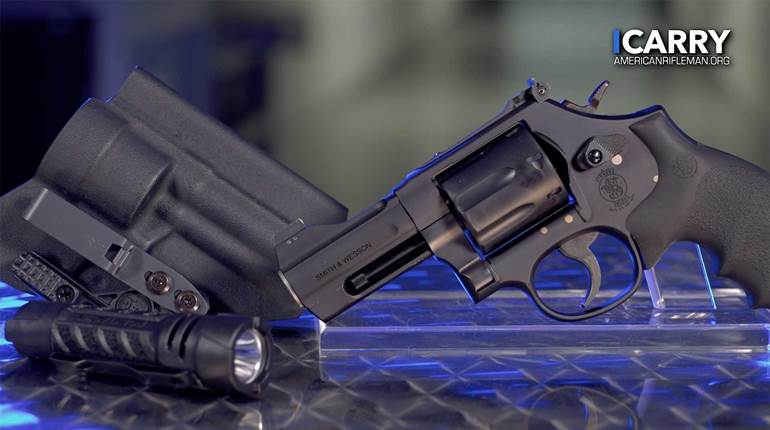
Smith & Wesson has a long history of producing .22 caliber revolvers, with the Model 648-2 adding a new take on the classic rimfire revolver design. The Smith & Wesson Model 648-2 is a fullsize K-frame revolver design chambered for .22 WMR. with a cylinder capacity of eight rounds. It's constructed of mostly all stainless steel and features a 6" fully-lugged barrel which offers added weight for stability.
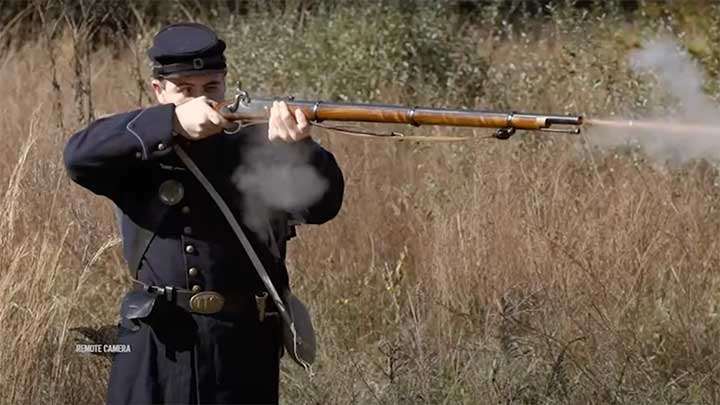
In the 1850s, British designer William Pritchett developed a new design for a rifled musket using a primer-based ignition source, three rifle groves in the 39" barrel, and a Minie-ball style projectile. The rifle-musket design offered improved accuracy over the smoothbore musket that had been in standard use earlier and the percussion cap ignition source offered improved reliability over the previous flintlock designs.
Adopted in 1853, the design became known as the Pattern 1853 Enfield, named in part after the Royal Small Arms Factory located in Enfield, England that produced it in large numbers. The design is also know as the "three-band Enfield," due to the use of three spaced bands that secure the barrel to the forend. The Pattern 1853 was adopted just in time to be fielded in large numbers by British forces in the Crimean War.
The later Type 3 Pattern 1853 is the most commonly known variation in the United States today due to its roll in the American Civil War. The Pattern 1853 Enfield was the second most used infantry weapon during the conflict, surpassed only by the Springfield Model 1861 rifle-musket towards the end. While the Pattern 1853 was used by both sides during the war, the Confederates used it the most and imported it more than any other small arm.
To watch complete segments of past episodes of American Rifleman TV, go to americanrifleman.org/artv. For all-new episodes of ARTV, tune in Wednesday nights to Outdoor Channel 8:30 p.m. and 11:30 p.m. EST.
Introduced in 1955, the Colt Python earned a reputation for build quality and performance.
Over the past decade, one of the trending focuses for firearm collecting circles has been the "snake gun" series of revolvers manufactured by Colt, with a particular favorite being the Colt Python series. The Python was originally intended to be a .38 Spl. target revolver built off of Colt's large I-frame design. The chambering was changed to .357 Mag. in the final production design and it was introduced in 1955, the same year as the Smith & Wesson Model 29.
The Python series earned a notable reputation for its build quality, smooth trigger and tight cylinder lockup which aid in accuracy. The fit, finish and performance of the Python also earned the series the title of "the finest production revolver ever made" among firearm collectors. After four decades in production, Colt ceased production of the Python completely by 2005. That has changed for 2020, as Colt announced the re-introduction of the Python series with revisions and reinforced construction.
The Smith & Wesson Model 648-2 K-frame target revolver chambered in .22 Win. Mag.
Smith & Wesson has a long history of producing .22 caliber revolvers, with the Model 648-2 adding a new take on the classic rimfire revolver design. The Smith & Wesson Model 648-2 is a fullsize K-frame revolver design chambered for .22 WMR. with a cylinder capacity of eight rounds. It's constructed of mostly all stainless steel and features a 6" fully-lugged barrel which offers added weight for stability.
Despite being a British designed a produced rifle-musket, the Pattern 1853 Enfield saw extensive use by both sides during the American Civil War.
In the 1850s, British designer William Pritchett developed a new design for a rifled musket using a primer-based ignition source, three rifle groves in the 39" barrel, and a Minie-ball style projectile. The rifle-musket design offered improved accuracy over the smoothbore musket that had been in standard use earlier and the percussion cap ignition source offered improved reliability over the previous flintlock designs.
Adopted in 1853, the design became known as the Pattern 1853 Enfield, named in part after the Royal Small Arms Factory located in Enfield, England that produced it in large numbers. The design is also know as the "three-band Enfield," due to the use of three spaced bands that secure the barrel to the forend. The Pattern 1853 was adopted just in time to be fielded in large numbers by British forces in the Crimean War.
The later Type 3 Pattern 1853 is the most commonly known variation in the United States today due to its roll in the American Civil War. The Pattern 1853 Enfield was the second most used infantry weapon during the conflict, surpassed only by the Springfield Model 1861 rifle-musket towards the end. While the Pattern 1853 was used by both sides during the war, the Confederates used it the most and imported it more than any other small arm.
To watch complete segments of past episodes of American Rifleman TV, go to americanrifleman.org/artv. For all-new episodes of ARTV, tune in Wednesday nights to Outdoor Channel 8:30 p.m. and 11:30 p.m. EST.