Most people build an everyday-carry loadout the same way they build a gym routine. They copy something they saw work for someone else, and then they stop questioning it. The gun goes in. The holster goes on. Maybe a spare magazine follows. After that, it becomes habit. Habit is comfortable. It is also lazy.
The problem is not that most loadouts are bad. The problem is that most loadouts are never re-examined against reality.
Reality has changed. Self-defense shootings still look like they always have—fast, close, chaotic and usually over in seconds. But, the edge cases are more visible now. Terrorist attacks and active-shooter incidents have pushed distance, movement and uncertainty back into the conversation. They are still extremely rare, but they are not merely theoretical. If you carry a gun for serious reasons, you owe yourself an honest look at whether your equipment actually supports those reasons.
This is not about chasing trends or building a fantasy kit. It is about four simple questions:
Do you have enough capacity in the gun itself? If you run out of ammunition, or have a magazine-related malfunction, can you reload efficiently?
Are you accurate enough at all realistic distances with what you carry?
Can you run the gun with one hand? What about using only your support hand to run the gun?
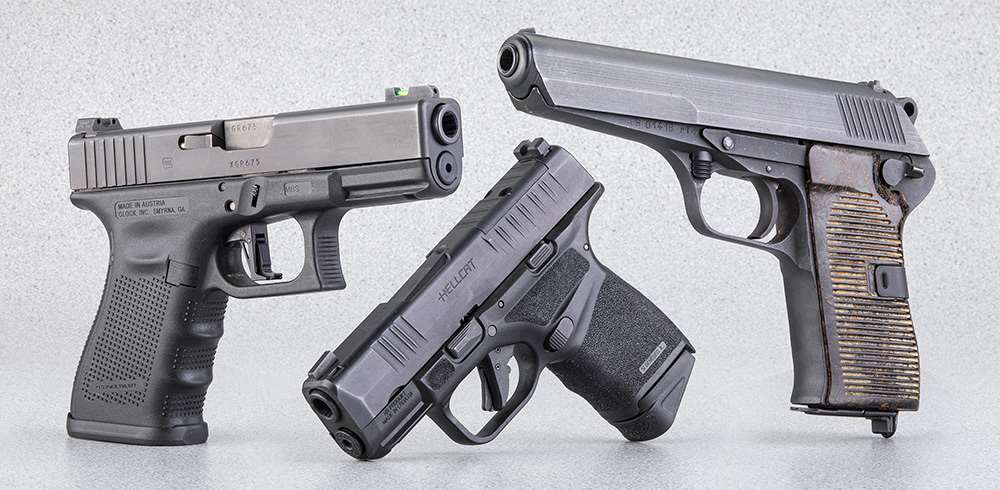
Are there truly optimal, proven holster options for carrying every single day?
If your loadout cannot survive these questions, it is probably surviving on little more than inertia.
The Reality
Most defensive gun uses still happen at bad-breath distance. They are ugly, fast and usually decided by who acts first and who keeps functioning under stress. That hasn’t changed. What has changed is our awareness of outliers: attacks in public spaces, longer sightlines, multiple threats, movement through crowds and the possibility you are not just breaking contact, but also moving to escape or protect others.
You are not carrying to fight a war. You are carrying to survive a sudden, violent problem long enough to get out of it. But “getting out of it” does not always mean two steps backward and it’s over. Sometimes it means moving 30 yards to an exit. Sometimes it means holding space long enough for people to run. Sometimes it means you are injured, your support hand is out of action, and the fight is not yet done.
A good EDC setup does not pretend every day is the same. It accepts that most days are simple and a few days are not. It balances comfort with capability, not comfort with wishful thinking.
1. Enough Capacity and Reload-Friendly
Capacity is not about winning a gunfight. It is about not running out of options at the worst possible moment.
Most civilian defensive shootings involve very few rounds. That is true—and it is also a terrible reason to plan for the minimum. You do not get to choose which version of the problem shows up. You get the one you get.
Modern trends show two pressures in opposite directions. On one side, most encounters are still close and fast. On the other, we have seen multiple-attacker events and longer engagements in public spaces. The answer is not to carry a duty belt under your T-shirt. The answer is to stop pretending that five or six rounds is “plenty” just because it usually has been.
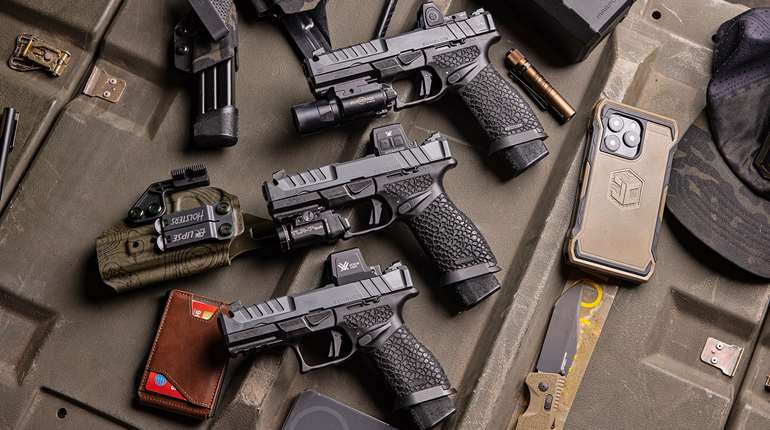
A realistic baseline today is a pistol with a magazine holding a reasonable number of rounds. If you’re carrying fewer than 15 rounds—which is a common minimum—you should have at least one reload you can reach under stress. This is not a reload buried in a bag or one you only carry when you feel motivated, but rather a reload that lives on you every day and one you can access with either hand.
Reload-friendly does not mean fast like a competition shooter. It means simple and repeatable. The magazine drops out, the next one goes in and the gun works again. If your chosen pistol has tiny magazines, features odd release geometry or requires fine motor skills that disappear under stress, you are accepting fragility for the sake of convenience.
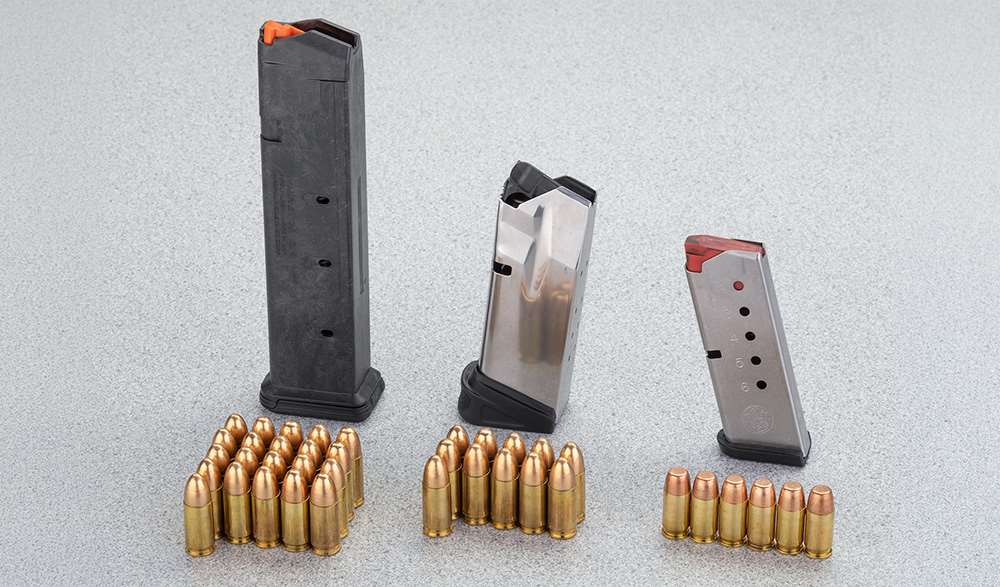
There is also a quiet truth here: reloads are not just about empty guns. They are also about malfunctions. If your gun stops and the fix requires ripping the magazine out and putting another one in, you either have a spare or you have a very short list of options.
Capacity is insurance. A reload is a tool. Neither is glamorous, but both are honest.
2. Accurate Enough at Distance
“Most fights are close” has been used for decades to excuse poor shooting standards. Close is not the same thing as easy, and close is not guaranteed.
Public spaces are open. Parking lots are wide. Big box stores are long. Mega churches are mega-big. Food courts and transit hubs create sightlines that used to be rare in daily life. In the worst cases—active shooters and terrorist attacks—distance is not a theory. It is the environment.
You are not carrying to fight a war. You are carrying to survive a sudden, violent problem long enough to get out of it.
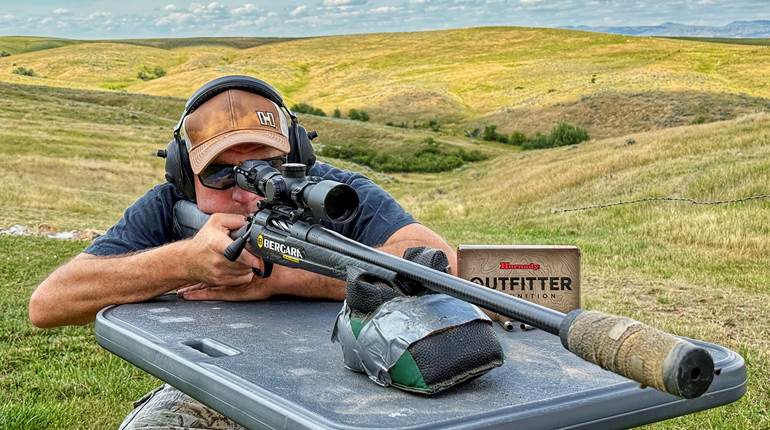
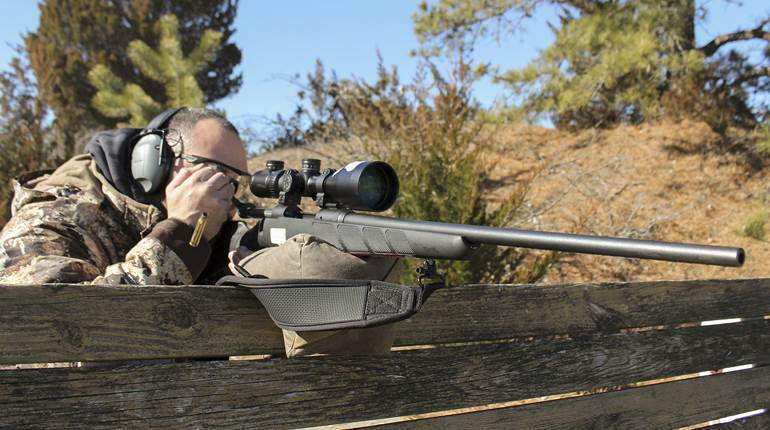
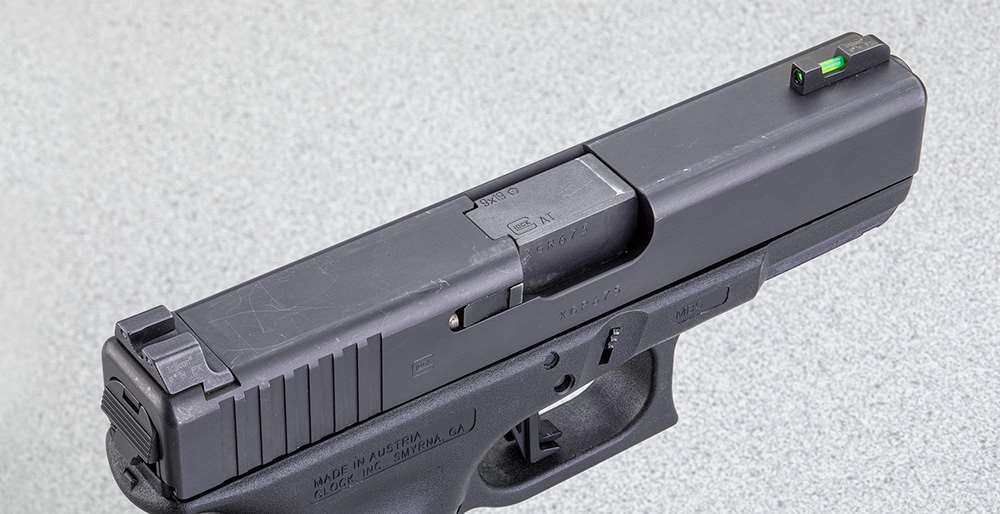
You do not need to be a 100-yard hero like John H. Hannigan. But, you do need to be able to make responsible, controlled hits at distances that used to feel academic. That means your sights, trigger and recoil control all matter more than they do in a 7-yard comfort zone. This is where many ultra-small guns quietly fail the test. They are easy to carry and hard to shoot. Short sight radius, incompatibility with modern red-dot sights, tiny grips, sharp recoil and minimal controls stack the deck against you the moment precision is required. You can train around some of that, but you cannot train around physics.
An honest assessment asks a simple question: With this exact gun, from concealment, under time pressure, can I make a clean hit on a partial target at distance? Not once. Not on a perfect day. On demand.
If the answer is no, the issue is not your confidence. The issue is your equipment, your training or both.
Distance capability is not about chasing rare scenarios. It is about recognizing that distance is always around you. It is about not being helpless when space opens up and the problem does not politely stay within arm’s reach.
3. Capable With One Hand
Injuries are not cinematic. They are messy, painful and inconvenient in the worst possible way.
Hands get cut. Shoulders get hit. People fall. People use one arm to move loved ones, hold doors or keep balance while moving. If your entire shooting plan assumes two perfect hands on a perfect grip, you are planning for a version of reality that only exists on the range.
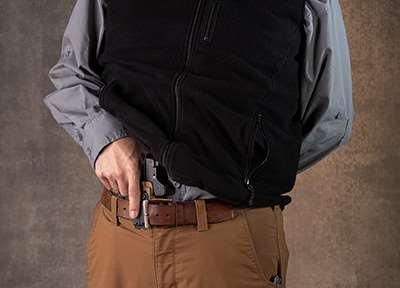
One-handed capability starts with the gun itself. Can you reach the controls with either hand? Can you run the trigger and control recoil without the gun trying to leave your grip? Can you clear simple stoppages without a three-step choreography?
It also includes your carry setup. Can you draw with either hand? Can you reholster safely one-handed if you must? Can you access your spare magazine with either side?
This is not about becoming ambidextrous for sport. It is about reducing single-point failures. If one limb going offline collapses your entire system, your system is brittle.
Modern incidents, especially chaotic public attacks, are full of movement, obstacles and people. The chance that you will need to do something with only one hand is not remote. It is normal.
A serious EDC loadout works when you are not at your best or are otherwise occupied.
4. Optimal, Real-World Holster Support
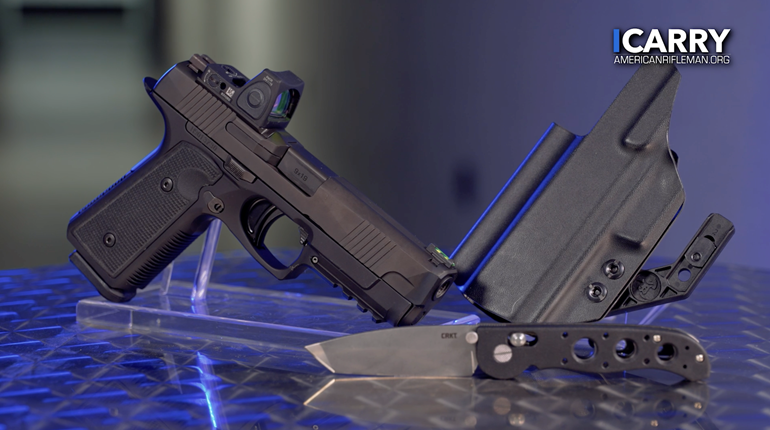
A gun you cannot carry efficiently is a gun you will not carry consistently. A holster is not an accessory. It is part of the overall carry system.
“Optimal” does not mean exotic. It means proven, available and suited to your body and your life. The holster must protect the trigger, stay open enough to reholster safely, hold the gun securely during movement and allow for a full firing grip for a clean draw under stress. It must also be comfortable enough that you do not talk yourself out of wearing it.
Distance capability is not about chasing rare scenarios. It is about recognizing that distance is always around you.
This is where niche guns often reveal their hidden cost. If your pistol only works in two obscure holsters, you have fewer options for concealment, fewer options for replacement and fewer options for adapting to seasonal clothing or changing needs. If your light, optic or compensator combination only fits custom rigs with long wait times, your system is fragile again.
Modern carry trends have moved toward modular, well-supported platforms for a reason—not because they are trendy, but because support matters. When something breaks, you can replace it. When your body changes, you can adjust. When your role shifts, you can change positions or ride height without starting from zero.
The holster also ties back into one-handed use. Can you draw cleanly with either hand? Can you reholster without muzzling yourself? These are not small details; rather, they are the difference between a tool that works under stress and one that only works on a calm afternoon.
Putting It Together Without Lying to Yourself
An honest assessment is uncomfortable because it forces tradeoffs into the open. Bigger guns are easier to shoot and harder to carry. Smaller guns are easier to carry and harder to shoot. More capacity adds weight. Better holsters add cost. Redundancy adds complexity. There is no free lunch.
The mistake is pretending your current compromise is “good enough” without ever pressure-testing it against real demands.
Modern self-defense incidents still reward speed and decisiveness at close range. That has not changed. What has changed is the penalty for being under-equipped when distance, movement or multiple threats enter the picture. Terrorist attacks and active-shooter events are not the norm, but they expose the ceiling of your setup. They show you the outer edge of what your gear and skills can handle.
Your EDC does not need to be built for everything. It does need to fail gracefully. It needs enough capacity that you are not counting rounds in a panic. It needs enough shootability that distance is a challenge, not a wall. It needs enough redundancy that one injured limb does not end the story. It needs enough holster support that carrying it well is not a daily negotiation.
The final test is simple: does your loadout make you more capable across a wider range of realistic problems, or does it only make you more comfortable? Comfort is not nothing—you have to live with the thing. But comfort without capability is just decoration.
Revisit your choices. Shoot your carry gun at distances you usually avoid. Practice with one hand. Try your reloads under time pressure. Evaluate whether your holster and support gear actually help you in a life-threatening situation, or if they just help you tolerate the gun.
If something comes up short, that is not failure. That is information. Use it.
Most Popular