As Walt Kelly’s cartoon character Pogo so famously said, “We have met the enemy and he is us.” Wrapping up this three-part series on the business of the gun business (which has focused on why the shooting industry is so hard to analyze compared to other industries), we come face to face with one of the most complicating factors that distorts what little data there is on firearms sales—used guns.
Firearms redefine the concept of “durable goods.” While the automotive industry also has to compete against its own products over on the Used Car lot, no other industry—not even the jewelry business—has products with such longevity as the gun business.
The Insider once toured Beretta in Italy and I asked Christian Verhuyck, Beretta's director of international sales, whom he sees as Beretta’s main competitor in the shotgun market. His answer? “Beretta. We compete against ourselves, Beretta second-hand guns.”
Not that I should use myself as an example, but it just so happens that my most recent firearms purchase was a Cogswell & Harrison underlever hammer gun chambered in .450-400 that I bought at auction for an irresistibly good price. It was made in 1912.
As I look back on 2010, I see that my acquisitions also included a mint S&W Model 40 Centennial, manufactured in 1956,in the original box. I also bought a new Winchester Model 70 made in 2010 by Winchester’s newest manufacturing licensee, FN.
If we were to use me as a barometer of firearms sales in 2010, the reportable data would show that I purchased one gun when in fact I transacted for three. You see the problem?
The question we need to address is how to gauge the significance of the second-hand market? And that’s hard to answer because no data is collected; however, a pretty accurate picture can be painted if you talk to the right expert. I did. The expert is a broker of second-hand guns who also has a long history of sales and marketing in the shooting industry. He spoke to the Insider only on condition of anonymity.
“There are really six answers to the question,” he said. “You need to look at shotguns, rifles and handguns separately, as well as each category in utility and premium classifications.
Utility Shotguns: "The impact is significant, as utility shotguns often have either casual or hard use. Most everyone has an old 870 or 500 or something similar somewhere. It cost $200 or so, and they are more than willing to loan it out to someone who just wants to go along to shoot at a duck.
"The offset here is that a one-time loan could create a new customer. These shotguns are often cast to the used market when the kids are grown and during the time in life when men get gray hair and too many guns. It is hard to imagine going quailing with an 870 Express when a sleek little Fox is in residence."
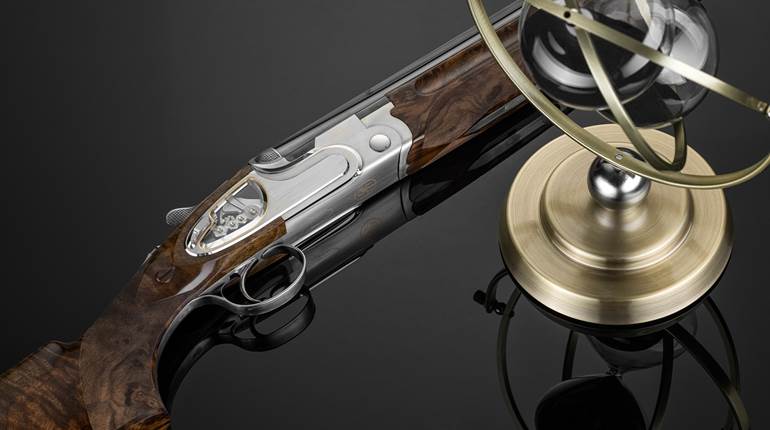
Premium Shotguns: "The impact is huge. Why would anyone buy a new shotgun at $3,000 to $5,000 when a far better purchase awaits on the used market. Citori vs. Superposed (no contest). Model 12 vs. modern Beretta (fat chance). Wood quality, fit, finish and pure blue-pill charm just don't compare. The only place this doesn't track is in the duck blind. Steel shot has forced those who hide in the water to get a new wonder-shucker for about $1,200."
Utility Rifles: "The impact is marginal. Utility rifles are passed down or rendered to backup status, generally as an excuse for buying a new rifle. Note that this new rifle is also justified with the tandem excuse of needing a bigger caliber.
"Utility rifles are usually heavy, thick and ugly, even though they can and do serve in a pinch. Most people leave them in the case until absolutely needed, and their use is justified by the most offensive words in a rifleman's vocabulary, 'Good enough.' Hear me when I say that there is no such thing as 'good enough' when it comes to rifles. As with shotguns, the long-term rifle market benefits from those moving up from utility arms."
Premium Rifles: "The impact is slight, mostly because of the wide variety of calibers sought by serious rifleman (at least those of means). Those who have fine rifles often have several."
Utility Handguns:"Significant, especially with revolvers. Much more so than cheap semi-autos, which are often unreliable and underpowered. This is the province of the causal shooter (if indeed a shooter at all) to whom 'a gun is a gun is a gun.' Pondering such things deeply does not happen. To these people, a handgun is a tool. And that’s fine."
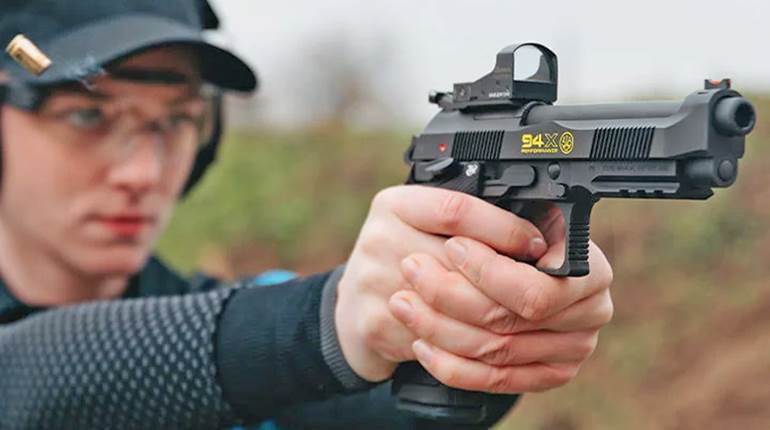
Premium Handguns:"Slight. Those who buy and shoot fine handguns often own many and keep them long term. They might be fond of trading around from time-to-time, but the real move is one collection to another. Today's premium pistols are literally so much better than anything offered at any time in the past that they create their own weather."
The Insider offers his thanks to my anonymous expert. You know who you are.
Most Popular