Sturm, Ruger & Co., Inc. and Beretta Holding S.A. have announced a strategic cooperation agreement.
This collaboration began last year as a contentious disagreement between the two companies—as of last March, Beretta Holding S.A., the Luxembourg-based parent of the iconic Italian gunmaker Beretta, had amassed a 9.95 percent stake in Ruger.
To parry this, Ruger had adopted a one-year shareholder rights plan—commonly known as a “poison pill.” The poison pill, if Beretta or another stakeholder attained 10 percent or more of its stock, would basically have given options to others to purchase shares at a discounted rate, a defense strategy that would likely have diluted Beretta’s percentage of ownership.
Those corporate maneuvers, however, made the business battleground ready for negotiations.
“The agreement reflects a shared commitment to long-term value creation, constructive engagement, and stability for Ruger’s shareholders, employees, customers and industry partners,” says a press release running at MarketScreener.com.
The shared agreement will allow Beretta to increase its ownership of Ruger to up to 25 percent of the company’s outstanding shares (NYSE: RGR). According to the press release, the minimum partial tender offer price shall be $44.80 per share in cash.
Beretta had been promoting four individuals for seats on the Ruger board. But, according to this agreement, Beretta will “nominate up to two independent directors following the 2026 Annual Meeting of Shareholders and regulatory approval. At that time, the Company will temporarily expand the Board. The nominees will be subject to Ruger’s Nominating and Governance Committee process and qualification criteria.”
Also, per this agreement, Beretta will not, “among other things, initiate or support any proxy contest or similar action,” for at least three years. “These provisions, together with other provisions in the agreement, are designed to safeguard Ruger’s independence and stability while increasing alignment of Beretta Holding with all shareholder interests,” says the release.
Many American gun-owners reacted to Beretta Holding S.A.’s disagreement with Ruger with confusion and even apprehension, as it is difficult to know what to think about a popular foreign gun conglomerate amassing an increasing percentage of a beloved domestic one.
Even as Ruger has resisted Beretta’s actions, Beretta’s narrative has consistently been that they are trying to create a value-adding partnership. Indeed, at its core, Beretta’s motivations appear to be rooted in strategic business decisions: expanding its footprint in the large U.S. market, better leveraging its brands, and capitalizing on Ruger’s earned market share. In essence, Beretta is a 500-year-old European dynasty that sees opportunity in an American icon.
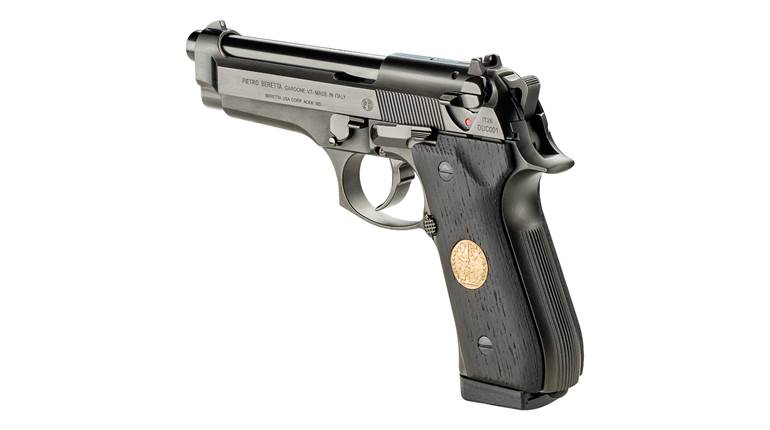
Beretta, after all, has a strong presence in defense, law enforcement, hunting, and the shooting sports, with significant U.S. operations through brands like Beretta USA, Benelli, and Stoeger.
In contrast, Ruger, founded in 1949, is renowned for its affordable, rugged firearms, including rifles, revolvers and pistols, targeting the mass-market consumer segment. With manufacturing facilities in Connecticut, New Hampshire, Arizona, and North Carolina, Ruger emphasizes innovation and value. Ruger’s 2025 revenues rose modestly to $546 million (up 1.9 percent year-over-year), yet the company swung to a net loss amid restructuring costs and margin pressures.
Beretta says that, in Ruger, it sees untapped potential. In its February 2026 nomination announcement, Beretta emphasized that it invested in Ruger because of Ruger’s “storied American brand, meaningful assets, and deeply loyal customer base.”
So, in a consolidating industry—marked by mergers like CZ Group’s acquisition of Colt in 2021—Beretta views Ruger as a gateway to greater scale, perhaps enabling it to compete more effectively in defense contracts and consumer segments.
Partnerships between dominant brands have succeeded many times before. The Exxon and Mobil merger in 1999 comes to mind, as does J.P. Morgan and Chase Manhattan in 2000. Other agreements, like PepsiCo and Starbucks and Apple and Samsung, have increased profits and greatly benefitted both corporations, as well as consumers.
Beretta excels in premium pistols and shotguns, while Ruger dominates in budget-friendly rifles and revolvers. This partnership can fill gaps: Beretta could infuse Ruger with high-end innovation, while Ruger’s mass-production expertise might lower costs for Beretta’s lines.
So, if successful, this agreement could forge a transatlantic giant. Size, however, is hardly an indicator for innovation. But, in any case, corporate combat like this can sharpen manufacturers.
The leadership of these two important and beloved companies are sounding optimistic.
“This agreement is strategically valuable and will benefit all Ruger stakeholders,” said John Cosentino, chairman of the board of Ruger. “As a Board, our responsibility and duty is to act in the best interests of all shareholders. This agreement provides stability, avoids further expense and distraction, and creates a framework for productive engagement with Beretta Holding while preserving Ruger's independence and governance standards.”
“We are pleased to have reached this Agreement with Ruger,” said Dott. Pietro Gussalli Beretta, chairman and CEO of Beretta Holding. “This cooperation is fully aligned with the Group’s strategy to further strengthen our presence in the United States, a key market where we have been active for several decades, and it reflects our commitment to continued long-term development.”
Most Popular