Handgun muzzle rise is a matter of simple physics. Factors like barrel length, cartridge size and handgun weight all contribute to how high a pistol’s muzzle kicks up when you fire it. Bore axis (how low the barrel sits in the frame) is also a big contributing factor to muzzle rise, and over the years, many designers have attempted to use a low-bore axis to result in a flat-shooting pistol. One of these attempts, the Rideout Arsenal Dragon, is now more than a concept. It’s on the market.
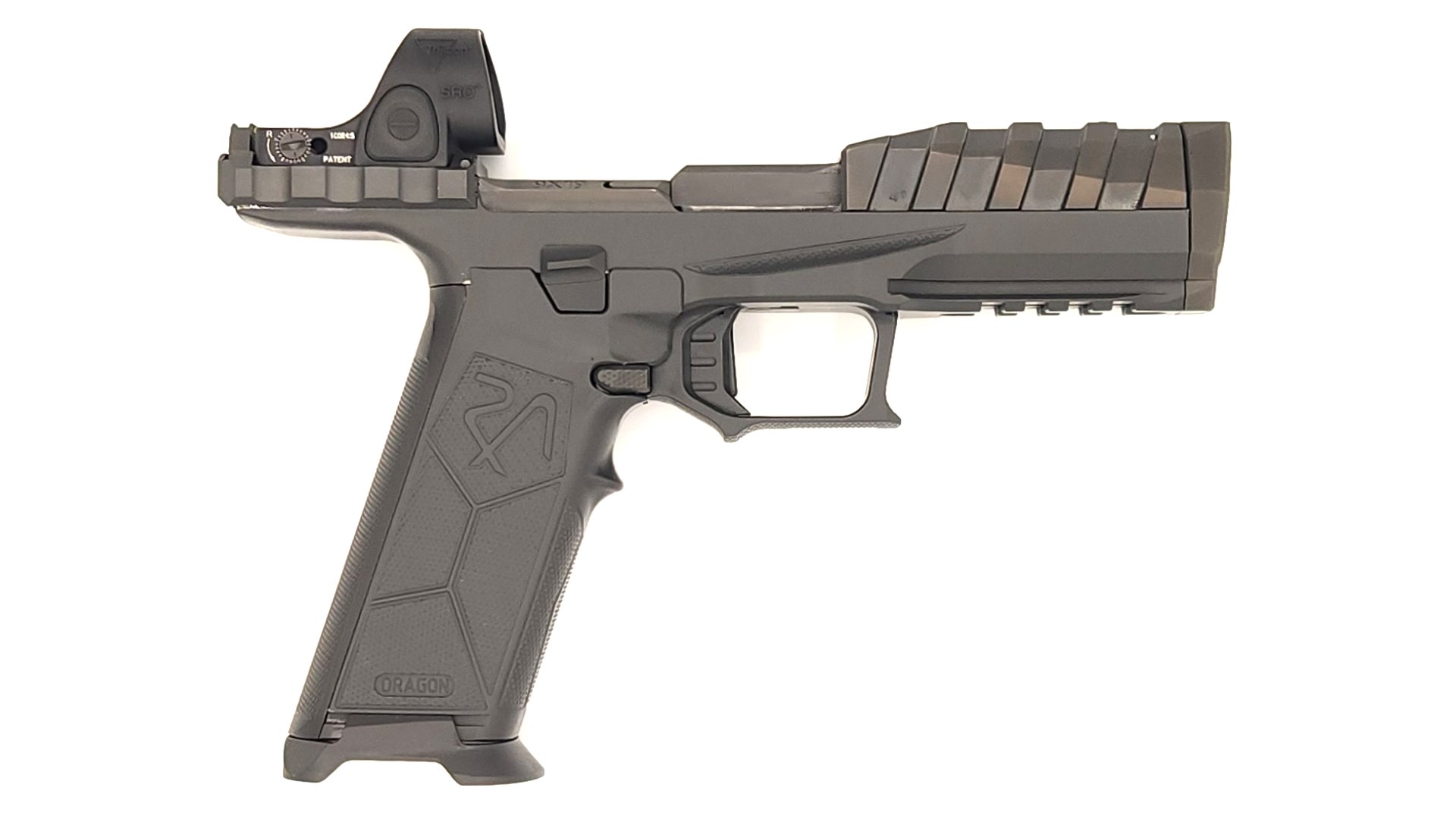
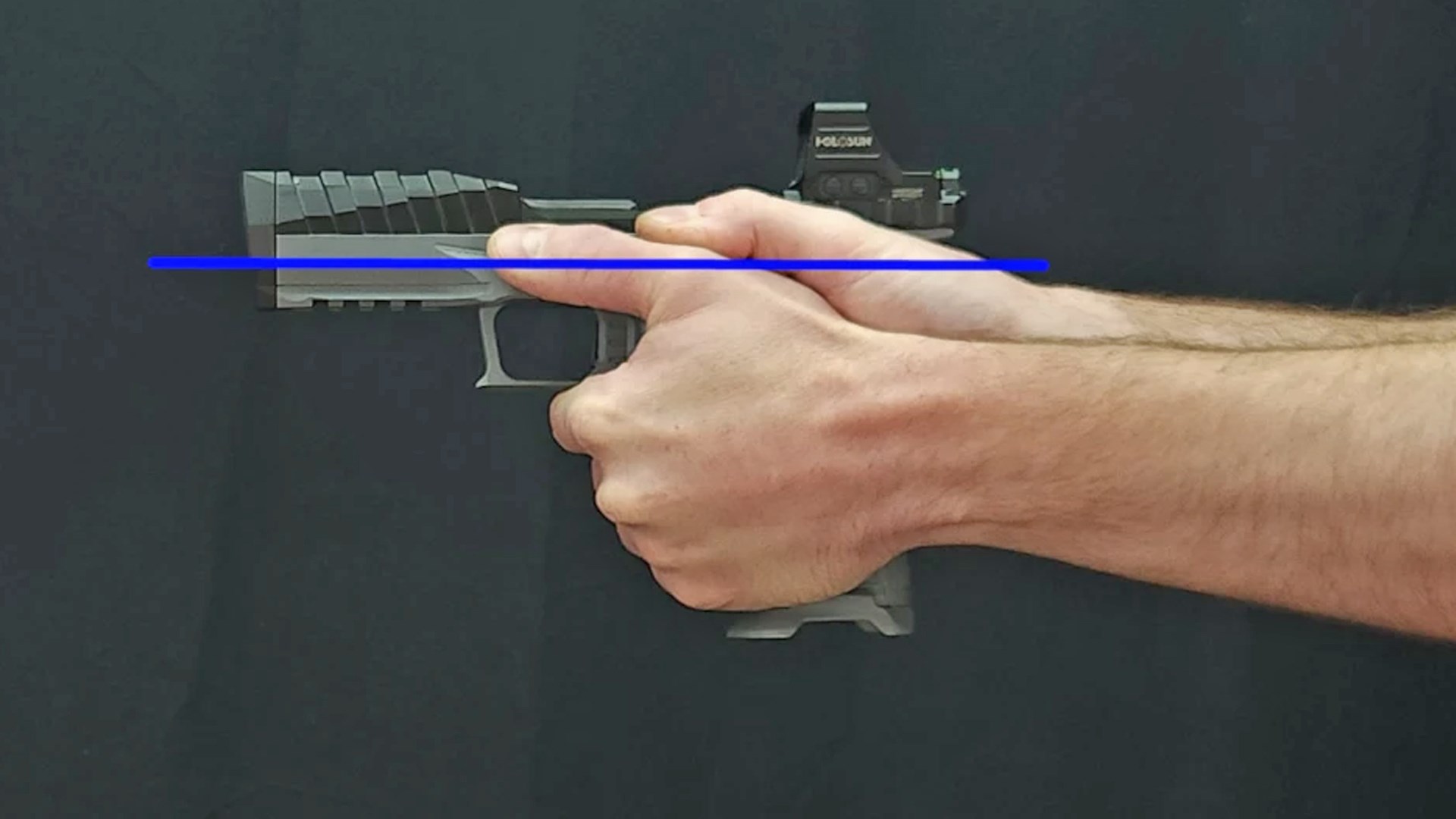
The 9 mm-chambered Dragon is the brainchild of Rideout Arsenal CEO and founder Travis Rideout. It is based around an ultra-low bore axis that places the center of the bore 0.13 inches below the line of the frame’s beavertail, meaning that the barrel and its recoil impulse is directly in line with the palm of your hand.
The Dragon’s innovations go beyond its bore axis. The design uses a fixed barrel and a lever-delayed blowback action. Lacking a traditional slide, when the pistol is fired, as the cartridge case is forced back against the breechface of the bolt that rides in the rear of the frame, a lever transfers its movement to a carrier that sits above the barrel. This transfer of force delays the movement of the bolt until the chamber pressure has dropped to a safe level.
A striker-fired design, the Dragon uses a 1911-style trigger that pulls straight back and is factory-tuned for a 4-pound or less pull.
A truly modular design, the grip frame separates from the main frame/chassis and its backstrap and magazine well are removable. The fire control unit (the serialized firearm) is incorporated within the trigger guard, which is also removable. A removable nose cap on the muzzle end attaches with a tri-lug system allowing for muzzle compensators or suppressors to be attached to the pistol. The entire pistol can be disassembled without tools.
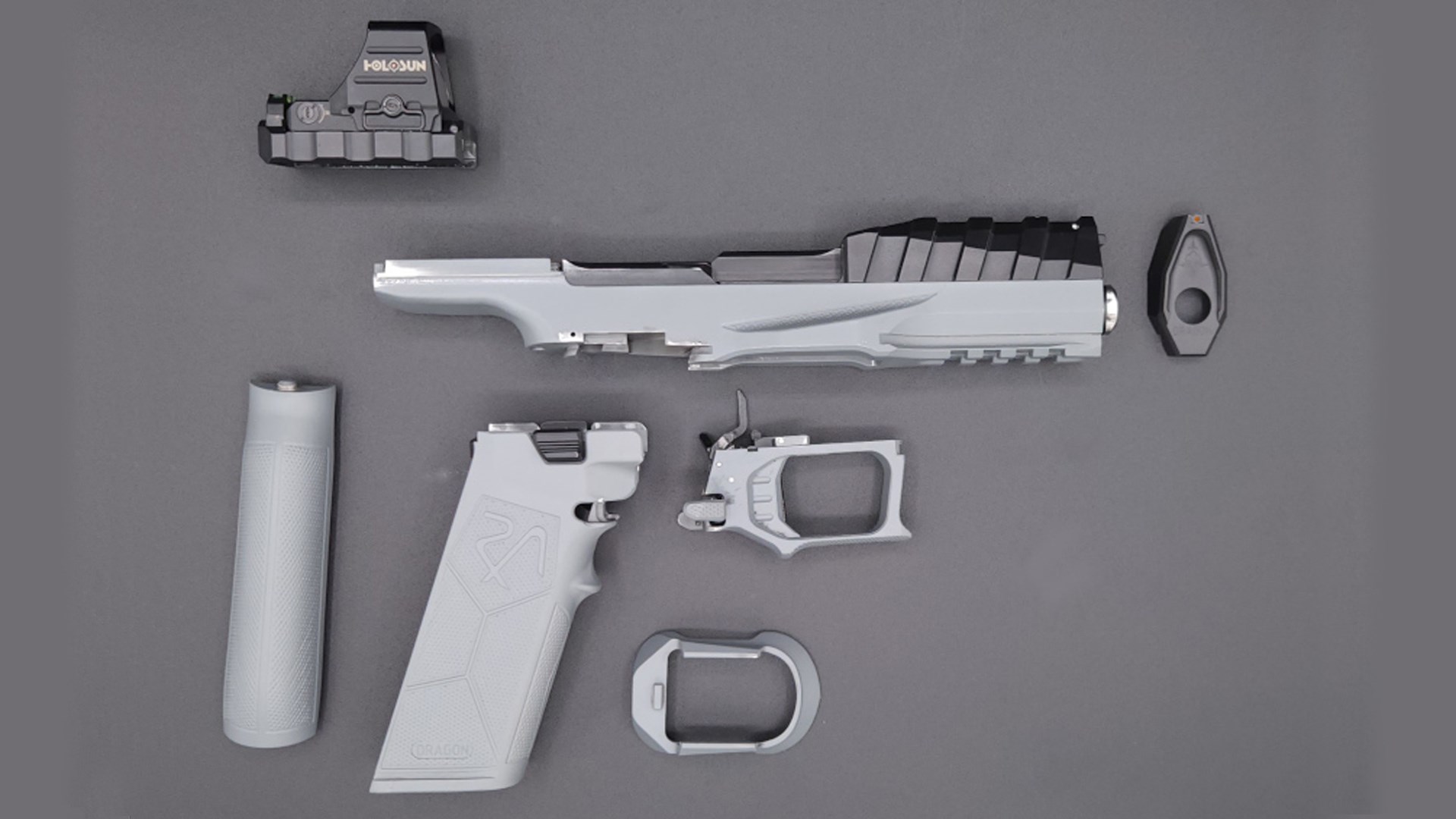
The Dragon’s chassis components are machined from 7075 aluminum. The ergonomic grip has an 18-degree grip angle. This, combined with a deep undercut triggerguard, yields a high hand hold under the frame’s extended beavertail. A “gas pedal” thumb rest is machined into both sides of the chassis, and there is a Picatinny accessory rail on the dustcover. The magazine release and bolt release are mirrored on both sides of the pistol for ambidextrous use.
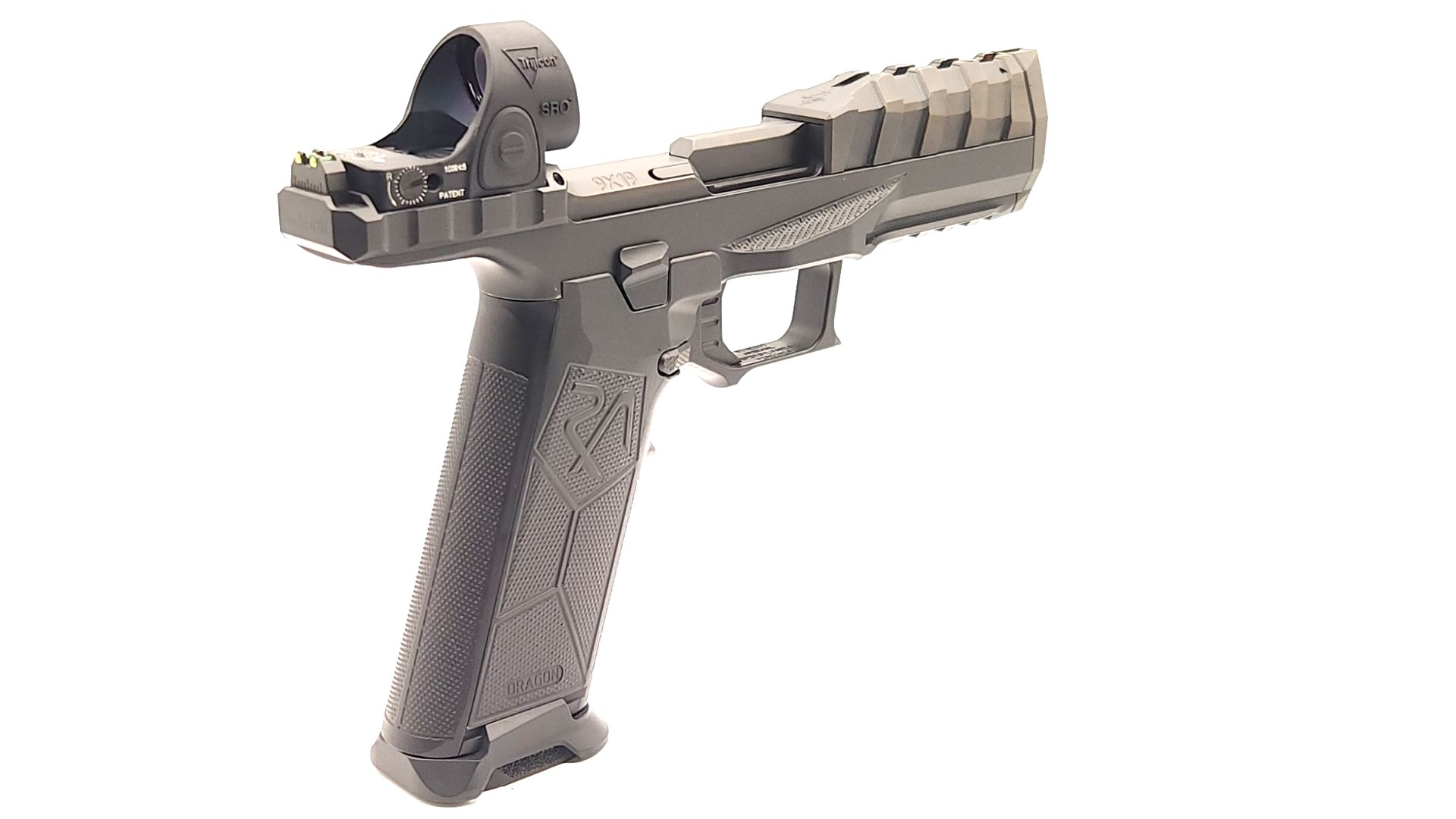
The pistol can be loaded by either racking the front bolt carrier or the rear optics mount. Optics mount to the “Non-Reciprocating Optics Carrier,” meaning your sights do not move back and forth when you fire the pistol as they would with a slide-mounted optics on a conventional design pistol. It uses an RMR footprint for the direct mounting of optics. Front and rear iron sights with fiber-optic inserts that co-witness with the optic are incorporated into the design. Magazines come from the Springfield Echelon, meaning that they are available in a variety of capacities.
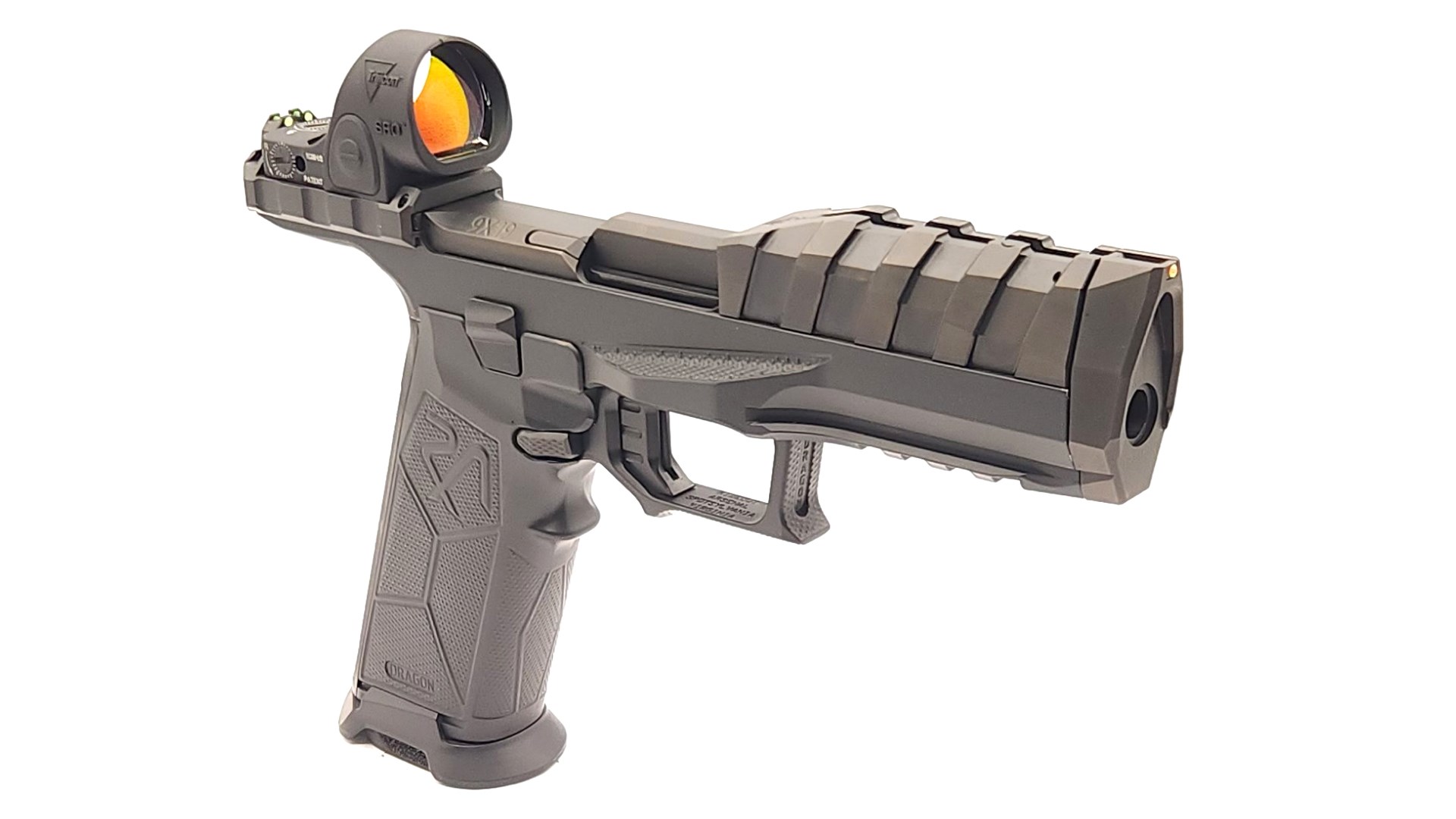
With a 5-inch bull barrel, the Dragon has an overall length of 9.1 inches, a height of 5.9 inches and weighs 33.3 ounces. Steel components are given a diamond-like carbon (DLC) finish and while aluminum components are given a Type III hardcoat anodizing.
The base model Dragon has an MSRP of $3,600. The company also has an online 3D configurator that allows you to choose colors and features to custom build your pistol. For more information, see the company’s website.
Most Popular