by
Support NRA American Rifleman
DONATE
** When you buy products through the links on our site, we may earn a commission that supports NRA's mission to protect, preserve and defend the Second Amendment. **
Throughout World War I, Imperial German soldiers were issued the classic Mauser designed Gewehr 98 bolt-action rifle chambered in 8 mm Mauser. The Gewehr 98 was a reliable and accurate rifle design, and performed well in the mud and chaos of the fighting on the Western and Eastern Fronts. However, as the war dragged on, it became clear that the Gewehr 98 was not without its drawbacks.
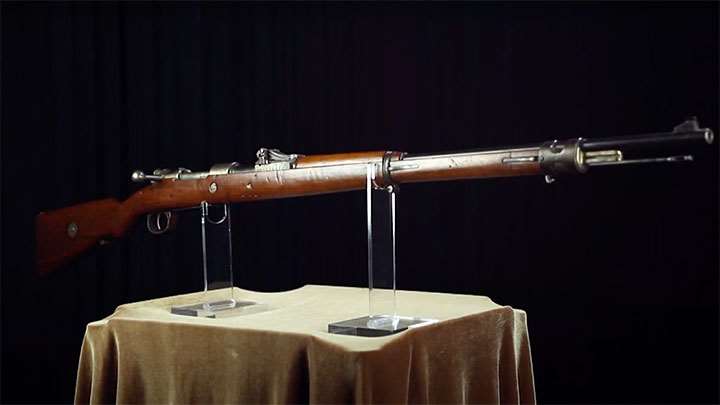
The most notable issue with the Gewehr 98 was its length. At an overall length of 49.2" with its 29" barrel, the Gewehr 98 was too long and heavy to issue to cavalry and artillerymen. Before the war, Germany had attempted to come up with a solution to the size issue of the Gewehr 98 for use by these units by introducing a short carbine chambered for the same cartridge.
These initial carbines, while easier to carry, had a large muzzle blast caused from the excess powder of the 8 mm Mauser cartridge not fully burning up in the barrel and igniting once hitting the open air at the muzzle. It also had significantly increased recoil. These initial carbines were not liked by the cavalry and artillerymen, who requested a new design to rectify the carbine's issues.
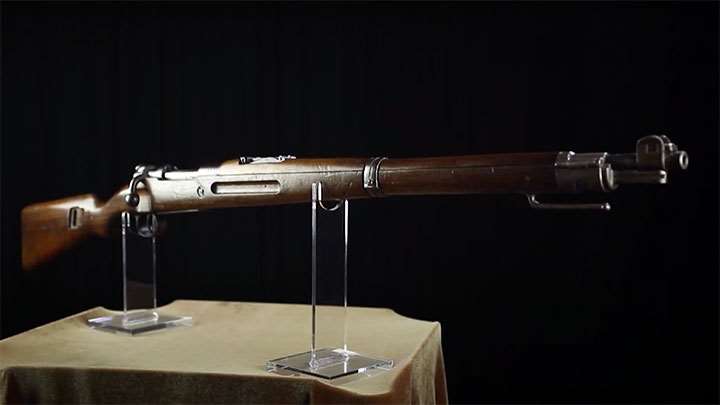
In 1908, a new short rifle designed to rectify the shorter carbine's issues began arriving to German troops. It was modified from the design the full-size Gewehr 98, using the same action and bolt design, albeit with a short-ring receiver instead of the long-ring receiver of the Gewehr 98. It was shorter than the Gewehr 98 by around 6" with an overall length of 42.9" and a lighter-contoured 23.2" barrel. This new 7 lbs. carbine version was designated as the Karabiner 98AZ.
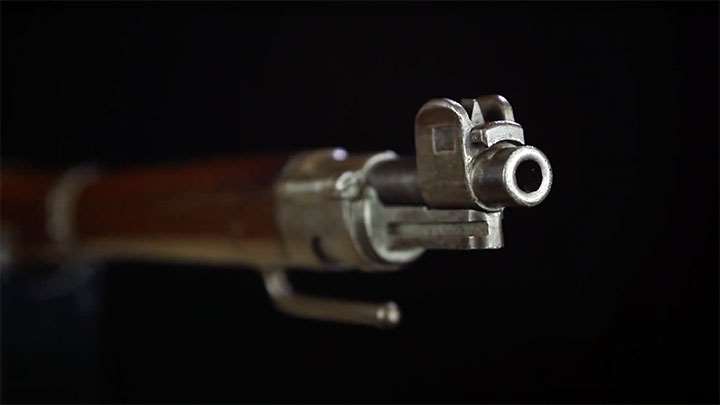
Some confusion exists amongst writers and collectors as to the designation of the initial Karabiner 98, with it often being referred to as the Karabiner 98A to help distinguish it from the later Karabiner 98K used during World War II. The "AZ" designation came about due to the provisions for a stacking rod and bayonet lug, features that were not common on typical carbines at the time.
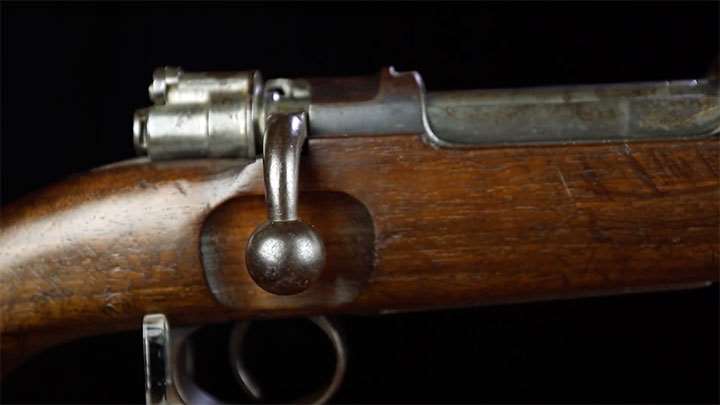
In reality, the slightly shorter design of the Karabiner 98AZ was more of a short-rifle design than a traditional carbine, in line with the British Short Magazine Lee Enfield and American M1903 Springfield which were at a comparable size. The handguard on the design was extended out to the front barrel band to prevent soldiers from burning their hands on a hot exposed barrel and the bolt handle was bent downward to prevent the normally straight handle design of the Gewehr 98 from snagging on equipment or unintentionally opening.
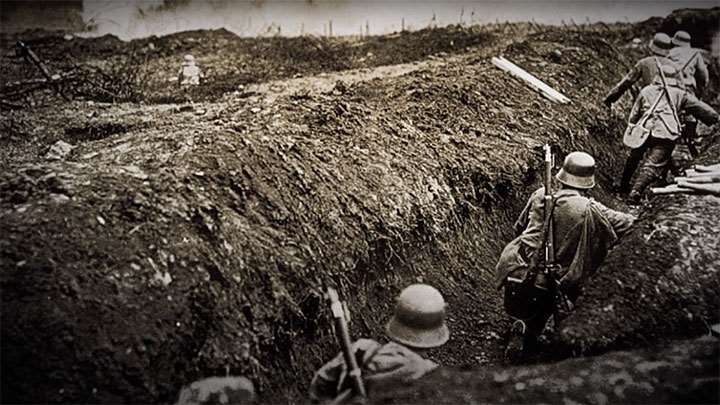
The Karabiner 98AZ grew from its intended purpose as an artillery and cavalry carbine, as its short-rifle layout made it longer and more accurate than the previous carbine. Its more compact size and length also made it easier to maneuver than the Gewehr 98 in the close quarters nature of trench warfare. As a result, the Karabiner 98AZ took on a new role as a principle battle rifle used in increasing numbers by the Germans as World War I dragged on.

Production of the Karabiner 98AZ increased throughout the war, with over one million of these short rifles being produced by manufacturers including Erfurt, Spandau, Danzig and Amburg by the end of the war in 1918. By the end of the war, the manufacture of the Karabiner 98AZ represented up to 65 percent of all rifle production in Germany and was being made in greater numbers than the Gewehr 98.
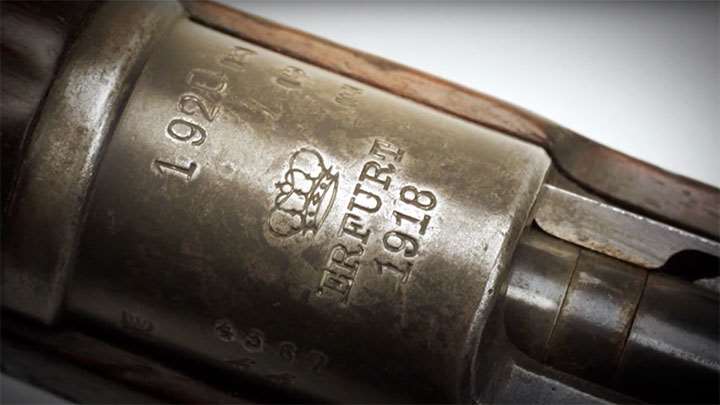
After the end of World War I, the Karabiner 98AZ continued service is smaller numbers as the terms of the Treaty of Versailles allowed German Weimar Republic to retain 100,000 carbines, whereas the Gewehr 98 long rifle was not allowed. These Karabiner 98AZ rifles allowed for use by Weimar Germany were over stamped with the year date "1920" on top of the receiver, signifying their use after the war. The design principles found on the Karabiner 98AZ would be carrier over into the design of Germany's later short rifle, and standard issue battle rifle used in World War II, the Karabiner 98K.
To watch complete segments of past episodes of American Rifleman TV, go to americanrifleman.org/artv. For all-new episodes of ARTV, tune in Wednesday nights to Outdoor Channel 8:30 p.m. and 11:30 p.m. EST.
The Gewehr 98 long rifle.
The most notable issue with the Gewehr 98 was its length. At an overall length of 49.2" with its 29" barrel, the Gewehr 98 was too long and heavy to issue to cavalry and artillerymen. Before the war, Germany had attempted to come up with a solution to the size issue of the Gewehr 98 for use by these units by introducing a short carbine chambered for the same cartridge.
These initial carbines, while easier to carry, had a large muzzle blast caused from the excess powder of the 8 mm Mauser cartridge not fully burning up in the barrel and igniting once hitting the open air at the muzzle. It also had significantly increased recoil. These initial carbines were not liked by the cavalry and artillerymen, who requested a new design to rectify the carbine's issues.
The Karabiner 98AZ short rifle.
In 1908, a new short rifle designed to rectify the shorter carbine's issues began arriving to German troops. It was modified from the design the full-size Gewehr 98, using the same action and bolt design, albeit with a short-ring receiver instead of the long-ring receiver of the Gewehr 98. It was shorter than the Gewehr 98 by around 6" with an overall length of 42.9" and a lighter-contoured 23.2" barrel. This new 7 lbs. carbine version was designated as the Karabiner 98AZ.
The stacking rod and bayonet lug near the muzzle on the Karabiner 98AZ.
Some confusion exists amongst writers and collectors as to the designation of the initial Karabiner 98, with it often being referred to as the Karabiner 98A to help distinguish it from the later Karabiner 98K used during World War II. The "AZ" designation came about due to the provisions for a stacking rod and bayonet lug, features that were not common on typical carbines at the time.
The downward-curved bolt handle of the Karabiner 98AZ.
In reality, the slightly shorter design of the Karabiner 98AZ was more of a short-rifle design than a traditional carbine, in line with the British Short Magazine Lee Enfield and American M1903 Springfield which were at a comparable size. The handguard on the design was extended out to the front barrel band to prevent soldiers from burning their hands on a hot exposed barrel and the bolt handle was bent downward to prevent the normally straight handle design of the Gewehr 98 from snagging on equipment or unintentionally opening.
Imperial German soldiers armed with Karabiner 98AZ short rifles.
The Karabiner 98AZ grew from its intended purpose as an artillery and cavalry carbine, as its short-rifle layout made it longer and more accurate than the previous carbine. Its more compact size and length also made it easier to maneuver than the Gewehr 98 in the close quarters nature of trench warfare. As a result, the Karabiner 98AZ took on a new role as a principle battle rifle used in increasing numbers by the Germans as World War I dragged on.
Shooting the Karabiner 98AZ.
Production of the Karabiner 98AZ increased throughout the war, with over one million of these short rifles being produced by manufacturers including Erfurt, Spandau, Danzig and Amburg by the end of the war in 1918. By the end of the war, the manufacture of the Karabiner 98AZ represented up to 65 percent of all rifle production in Germany and was being made in greater numbers than the Gewehr 98.
A "1920" overstep on the receiver of a Karabiner 98AZ signifying use by Weimar Germany after World War I.
After the end of World War I, the Karabiner 98AZ continued service is smaller numbers as the terms of the Treaty of Versailles allowed German Weimar Republic to retain 100,000 carbines, whereas the Gewehr 98 long rifle was not allowed. These Karabiner 98AZ rifles allowed for use by Weimar Germany were over stamped with the year date "1920" on top of the receiver, signifying their use after the war. The design principles found on the Karabiner 98AZ would be carrier over into the design of Germany's later short rifle, and standard issue battle rifle used in World War II, the Karabiner 98K.
To watch complete segments of past episodes of American Rifleman TV, go to americanrifleman.org/artv. For all-new episodes of ARTV, tune in Wednesday nights to Outdoor Channel 8:30 p.m. and 11:30 p.m. EST.