by
Support NRA American Rifleman
DONATE
** When you buy products through the links on our site, we may earn a commission that supports NRA's mission to protect, preserve and defend the Second Amendment. **
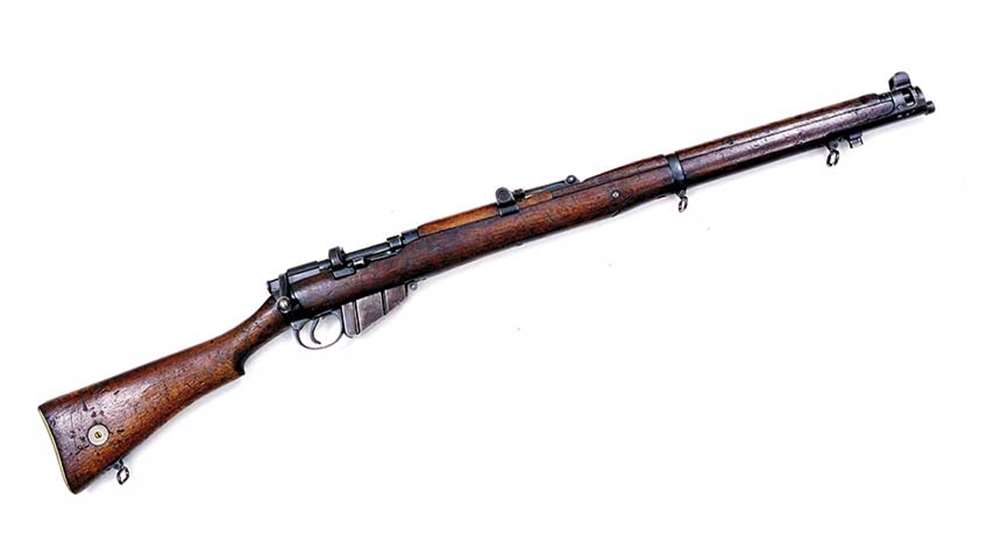
Without question, the Short, Magazine Lee-Enfield (SMLE) is one of the most effective bolt-action military rifles ever made. While there were several versions, including the No. 4 of World War II fame, it’s the SMLE, Mark III, or as it came to be known later, the No. 1, Mk III, that seems to have caught the public’s fancy.
The No. 1, Mk III’s lineage goes back to 1888 with the introduction of the Lee-Metford rifle. That fine 10-shot repeater featured a bolt-action designed by naturalized American citizen James Paris Lee, wedded to a barrel devised by Britisher William E. Metford.
The .303 British cartridge originally employed black powder as a propellant. When smokeless powder was adopted, the Metford rifling was found wanting, so the gun was revised by substituting a barrel with new rifling designed at the Royal Small Arms Factory, Enfield. The Lee-Enfield was thus born.
Offered in rifle and cavalry carbine versions, the Lee-Enfield had a removable sheet-metal box magazine and an extremely smooth bolt-action that cocked on closing. Its short stroke also meant that the gun could be fired extremely rapidly—about a round a second—with practice.
Locking was effected by means of a lug on the bolt’s rear that engaged a recess in the receiver and a solid rib that secured against a shoulder. The rimmed .303 British round itself was also very effective and proved to be an excellent military cartridge in both rifles and machine guns.
Unfortunately, the rifle could not be loaded with stripper clips, a fault that became only too evident during the Boer War (1898-1902) when facing the Boer’s Mausers. It was determined that a short rifle that could be used by both infantry and cavalry, and one that could be stripper-clip-loaded, was the answer.
In 1901, the Short, Magazine Lee-Enfield Mark I was born, followed in 1907 by the improved Mark III. Originally equipped with a magazine cut-off and long-range dial sight, exigencies of World War I caused these to be eliminated for production and cost reasons.
The rear ladder sight was graduated to 2,000 yds., and the front barleycorn was protected by a pair of sturdy wings, set atop a stout, blunt fore-end cap that gave the gun its distinctive bull-nosed appearance.
Metal parts of the Mark III were blued, with the exception of the brass buttplate. Its two-piece stock, including handguards, was of walnut. The Mark III proved to be one of the most rugged and reliable arms of the Great War, and was used in its original form by some Commonwealth troops during World War II and beyond. F
ollowing a general trend toward redesignating all arms in the British service, in 1926, the Mark III’s official title was changed to No. 1, Mk III. Whatever you call it, though, it remains one of the world’s legendary military firearms.
Disassembly
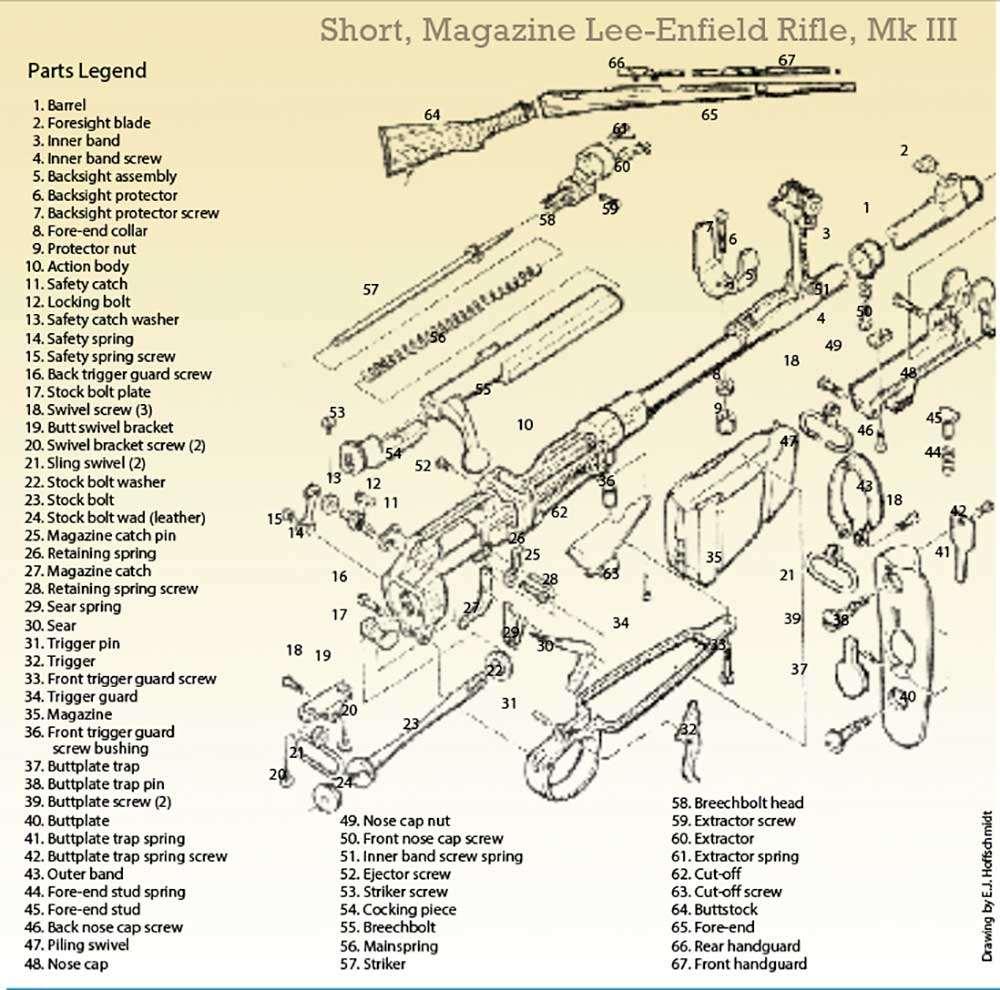
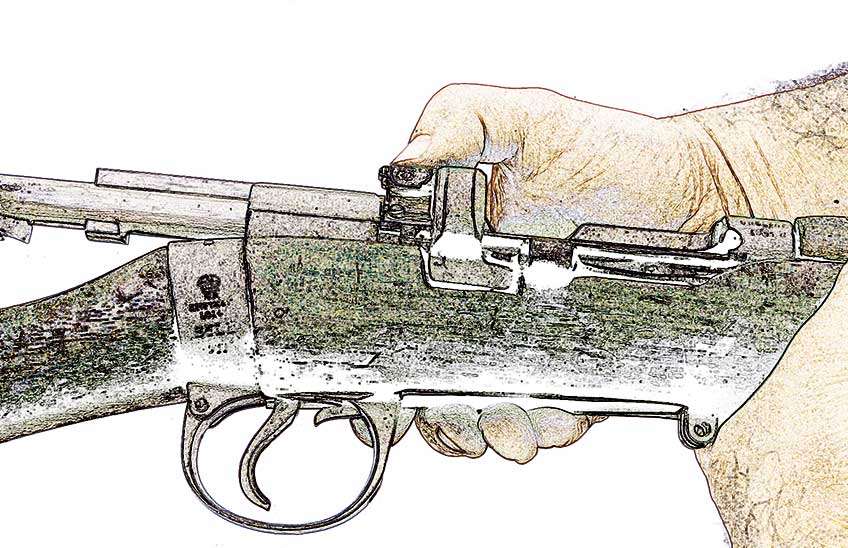
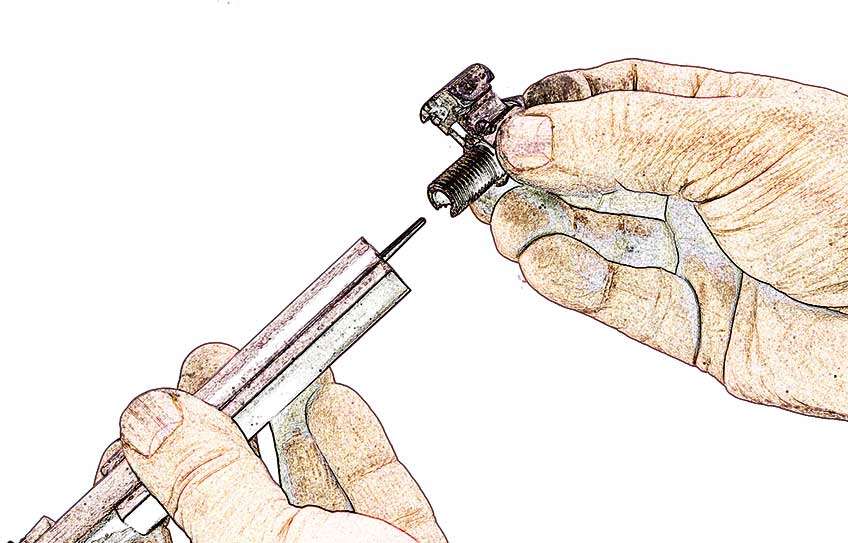
To disassemble a No. 1 Mark III, first retract the bolt, remove the magazine and check the chamber to ensure the gun is unloaded. Pull the breechbolt (55) to the rear, snap the breechbolt head (58) fully upward (Fig. 1) and remove the bolt. Unscrew the breechbolt head (58) from the bolt (55) (Fig. 2). Remove the striker screw (53) (Fig. 3).
Make a tool from a piece of 3/8” O.D. steel or brass tubing by filing two notches in the front and boring a hole in the rear for the insertion of a short metal handle. Insert this tool in bolt opening (Fig. 4), engage the striker (57) and unscrew it from the cocking piece (54) making sure to maintain an inward pressure against the mainspring to keep it from forcibly ejecting the striker when it is totally unscrewed. Remove the striker, striker pin and cocking piece from the bolt.
Unscrew the front nose cap screw (50) and back nose cap screw (46) and remove the front nose cap (48). Take out the outer band swivel screw (18) and open up and remove the outer band (43).
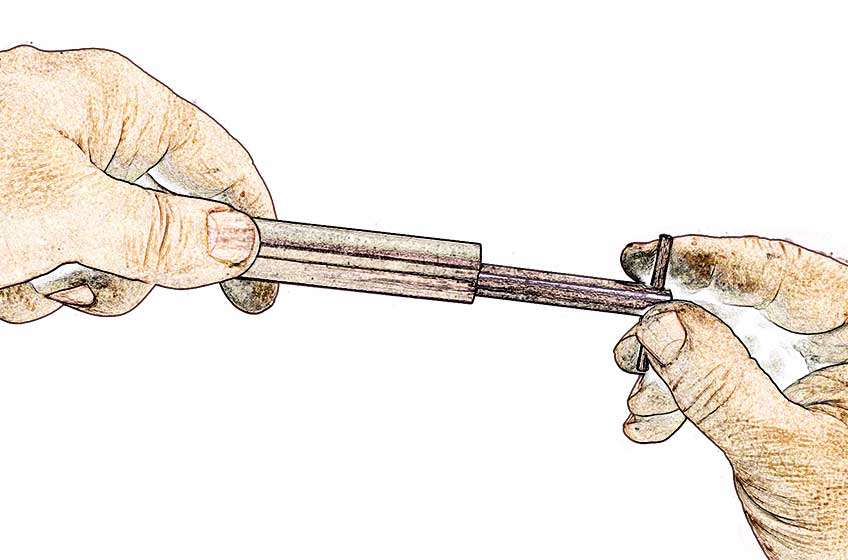
Lift off the front handguard (67). Unclip the rear handguard (66) from the barrel, taking care not to damage the thin flanges that surround the rear of the backsight assembly (5) (Fig. 5).
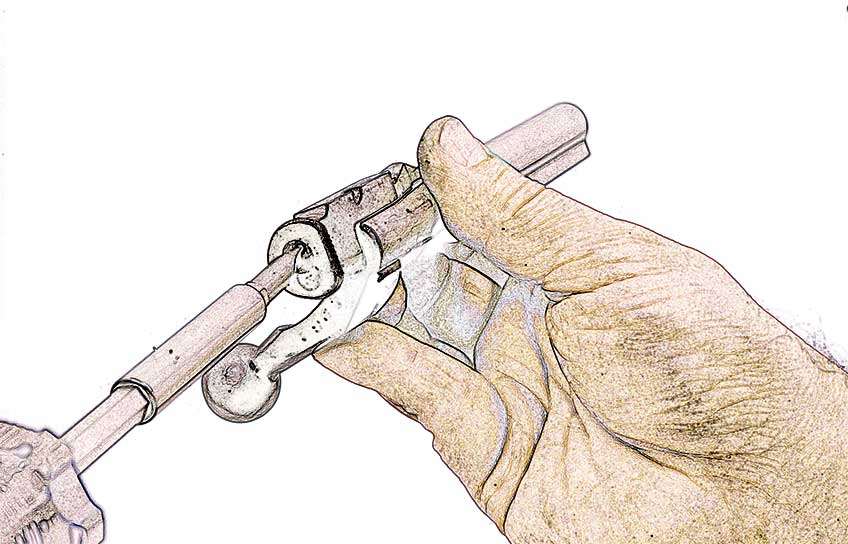
Remove the back and front trigger guard screws (16 and 33) and lift out trigger guard (34). Remove the buttstock (64) by first pulling out the leather stock bolt wad (24) with a piece of bent wire.
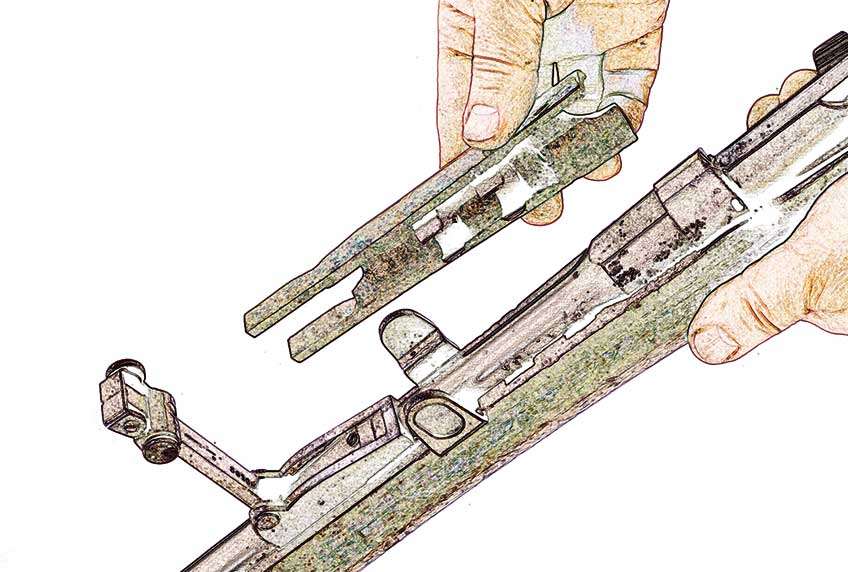
Next, insert a long, wide-bladed screwdriver into the buttplate trap (37), engage the slot in the stock bolt (23), and, using a wrench for extra leverage, unscrew and remove the stock bolt. Reassembly is in the reverse order.
The No. 1, Mk III’s lineage goes back to 1888 with the introduction of the Lee-Metford rifle. That fine 10-shot repeater featured a bolt-action designed by naturalized American citizen James Paris Lee, wedded to a barrel devised by Britisher William E. Metford.
The .303 British cartridge originally employed black powder as a propellant. When smokeless powder was adopted, the Metford rifling was found wanting, so the gun was revised by substituting a barrel with new rifling designed at the Royal Small Arms Factory, Enfield. The Lee-Enfield was thus born.
Offered in rifle and cavalry carbine versions, the Lee-Enfield had a removable sheet-metal box magazine and an extremely smooth bolt-action that cocked on closing. Its short stroke also meant that the gun could be fired extremely rapidly—about a round a second—with practice.
Locking was effected by means of a lug on the bolt’s rear that engaged a recess in the receiver and a solid rib that secured against a shoulder. The rimmed .303 British round itself was also very effective and proved to be an excellent military cartridge in both rifles and machine guns.
Unfortunately, the rifle could not be loaded with stripper clips, a fault that became only too evident during the Boer War (1898-1902) when facing the Boer’s Mausers. It was determined that a short rifle that could be used by both infantry and cavalry, and one that could be stripper-clip-loaded, was the answer.
In 1901, the Short, Magazine Lee-Enfield Mark I was born, followed in 1907 by the improved Mark III. Originally equipped with a magazine cut-off and long-range dial sight, exigencies of World War I caused these to be eliminated for production and cost reasons.
The rear ladder sight was graduated to 2,000 yds., and the front barleycorn was protected by a pair of sturdy wings, set atop a stout, blunt fore-end cap that gave the gun its distinctive bull-nosed appearance.
Metal parts of the Mark III were blued, with the exception of the brass buttplate. Its two-piece stock, including handguards, was of walnut. The Mark III proved to be one of the most rugged and reliable arms of the Great War, and was used in its original form by some Commonwealth troops during World War II and beyond. F
ollowing a general trend toward redesignating all arms in the British service, in 1926, the Mark III’s official title was changed to No. 1, Mk III. Whatever you call it, though, it remains one of the world’s legendary military firearms.
Disassembly
To disassemble a No. 1 Mark III, first retract the bolt, remove the magazine and check the chamber to ensure the gun is unloaded. Pull the breechbolt (55) to the rear, snap the breechbolt head (58) fully upward (Fig. 1) and remove the bolt. Unscrew the breechbolt head (58) from the bolt (55) (Fig. 2). Remove the striker screw (53) (Fig. 3).
Make a tool from a piece of 3/8” O.D. steel or brass tubing by filing two notches in the front and boring a hole in the rear for the insertion of a short metal handle. Insert this tool in bolt opening (Fig. 4), engage the striker (57) and unscrew it from the cocking piece (54) making sure to maintain an inward pressure against the mainspring to keep it from forcibly ejecting the striker when it is totally unscrewed. Remove the striker, striker pin and cocking piece from the bolt.
Unscrew the front nose cap screw (50) and back nose cap screw (46) and remove the front nose cap (48). Take out the outer band swivel screw (18) and open up and remove the outer band (43).
Lift off the front handguard (67). Unclip the rear handguard (66) from the barrel, taking care not to damage the thin flanges that surround the rear of the backsight assembly (5) (Fig. 5).
Remove the back and front trigger guard screws (16 and 33) and lift out trigger guard (34). Remove the buttstock (64) by first pulling out the leather stock bolt wad (24) with a piece of bent wire.
Next, insert a long, wide-bladed screwdriver into the buttplate trap (37), engage the slot in the stock bolt (23), and, using a wrench for extra leverage, unscrew and remove the stock bolt. Reassembly is in the reverse order.
Most Popular