Photo Credit: Photo credit: Matthew Diffenderfer
When the temperature is low, most of us don’t want to go outside unless we absolutely have to. Many of us live in areas that experience all four seasons. If you are unfortunate enough to be part of this demographic, you owe it to yourself to brave the elements in order to enjoy shooting sports all year. As a Northerner, I realized this very early in my shooting career and even learned a few advantages that shooting in cold weather. Here are five reasons why you should shoot in the cold:
No. 1: Outdoor ranges are usually vacant.
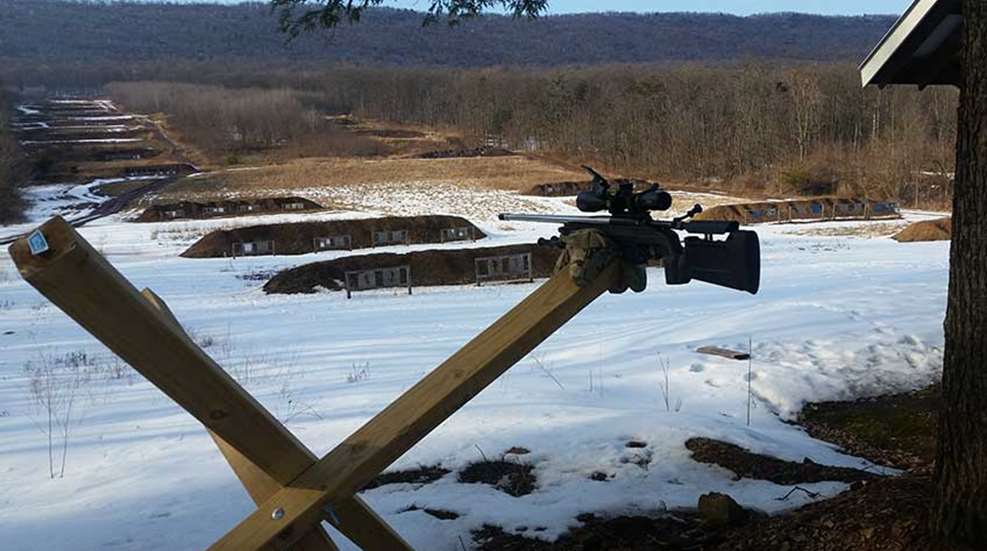
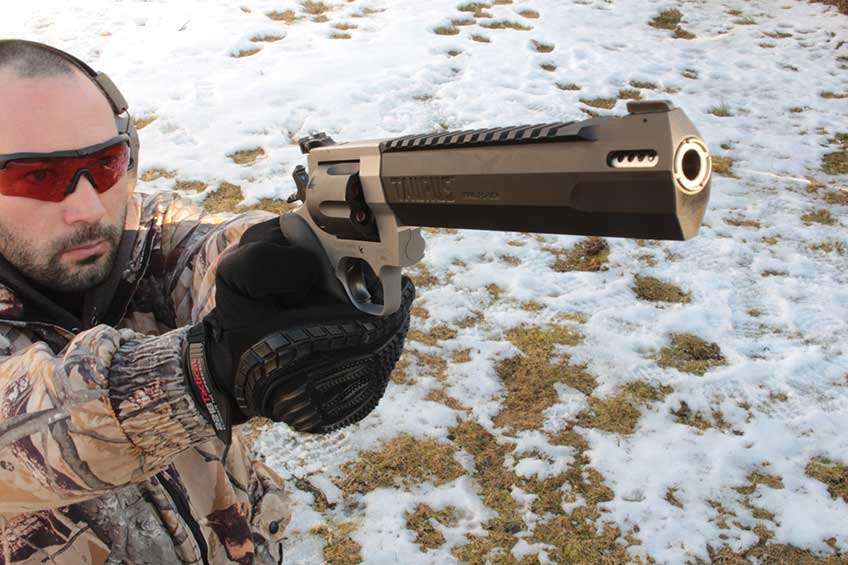
Silence is golden, and crowds are overrated. Call me anti-social, but I absolutely love having the range to myself. Depending on the specific range in question, there may even be different rules from which you can benefit. For instance, I belong to a rifle range that allows you to shoot from in front of the firing line, just as long as you are alone. For me, this is the only time that I can practice engaging unknown-distance targets. Another range that I belong to allows drawing from a holster only when you are alone, because it requires you to stand slightly behind the shooting point. If nothing else, it’s nice to not wait and use a club plate rack as you like. You also get to call as many or as few cease-fires as you like.
No. 2: You can perfect winter-concealment methods.
When it comes to practicing our draw from concealment, most of us only do so in basic clothing. Maybe we try drawing from a light jacket, vest, or the button-down shirt that we happen to be wearing that day. Crime still exists during the colder months, particularly around the holidays. Parking garage muggings come to mind for sure. It’s not a bad idea to see how the addition of a winter coat affects your access and presentation. What better place to do so than on the range? Be sure to try shooting in different positions and see how good you can do with gloves on. Spare mags are often buried by extra layers, can you still reach them? These are all important aspects of concealed carry to not only be aware of but practice as well.
No. 3: Cold weather quickly cools barrels.
While this might seem silly to point out, it has some big advantages for the rifle shooter. Rifle barrels act differently when they are cold or hot. Handloaders running a load development may have to wait up to 15 minutes for their barrel to cool in between groups. If they are testing 10 different charges, then that means they are looking at more than two hours of down-time. However, in frigid temperatures, that same barrel will likely be cool again in just five minutes, eliminating more than 90 minutes of sitting around. For the hunter looking to find their cold-bore zero, this reduction in wait time is going to be a huge bonus, as they only get to fire one shot before having to wait on the barrel to cool in normal conditions.
No. 4: Learn your winter ballistics.
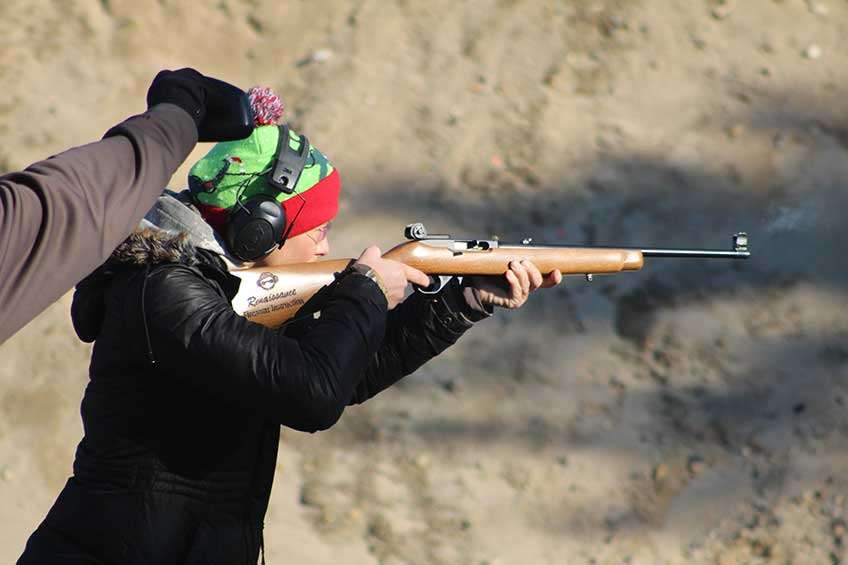
Not only do barrels behave differently in cold weather, but powders and bullets do as well. Run a ballistics app on your smartphone, and you’ll see right away that your drops are going to be very different in the winter than they are in the summer. While most of this has to do with air density, much of it has to do with some propellant burn characteristics. I had some military surplus 7.62x51 mm NATO that had a difference in zero of 6" at 100 yds. between winter and summer. It was still accurate enough for practice, but in order to score a first-round hit, I needed to take this phenomenon into account. Certain ball-type powders also have a tough time igniting in cold weather. My service rifle load is made with the Hodgdon classic, BLC-(2), and has about a half-second delay between “click” and “boom." Being that our club season ends in early November, I’ve never seen a reason to change it.
No. 5: Shotguns recoil less in the cold?
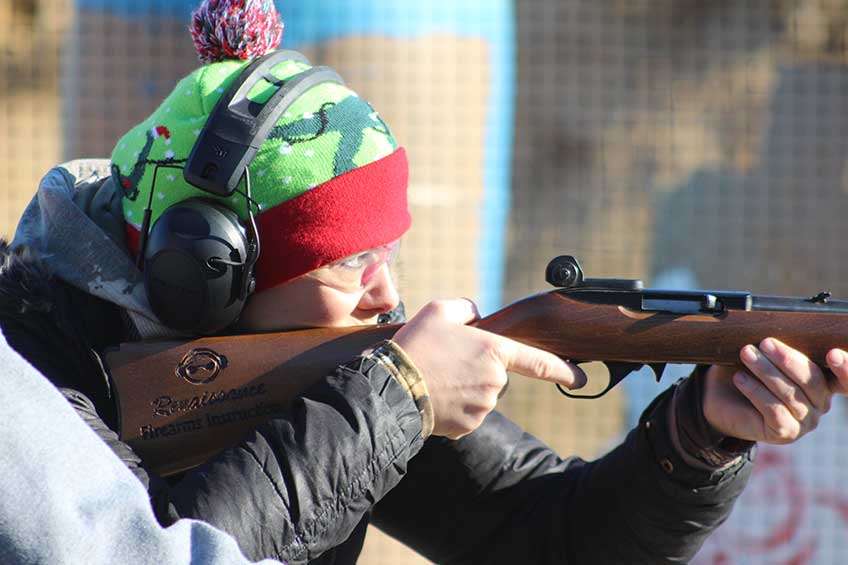
According to a gentleman whom I met at a public range who’s been shooting for 40 years, Newton’s Third Law is completely non-existent in cold weather. While a sixth-grade physics education will assure you that this isn’t true, your shoulder will certainly take less of a beating in the colder months if you are zeroing a slug gun or shooting clays. Why? All of those layers that you are wearing make for an added buffer. While I love having PAST pads and LimbSavers available for students to use, nothing helps to insulate them from recoil like a puffy down jacket. While all of these layers will take a bit of the punch out of the shooting equation, be careful as too much may make your shotgun harder to mount.
While writing this piece, I couldn’t help but reflect back to some of the first times I braved the elements just to shoot. While most people looked at me and said I was crazy, I would just smile back and retort, “I prefer to call it dedicated.” While it is not my ideal working condition, the lessons that I’ve learned are invaluable. Whether you enjoy precision rifle marksmanship, shooting clay pigeons or you just simply carry a gun every day, there are many benefits to showing up on a cold day for some practice.
Most Popular