For all but one of the years of the '70s, I carried a handgun in my daily work. In 1972, I was assigned to the Jail Division of the Orange County Sheriff's Department. The jail was a multi-storied monolith of a building in downtown Santa Ana and the residents thereof were not the best folks you would ever want to meet. Accordingly, the sheriff did not allow guns inside.
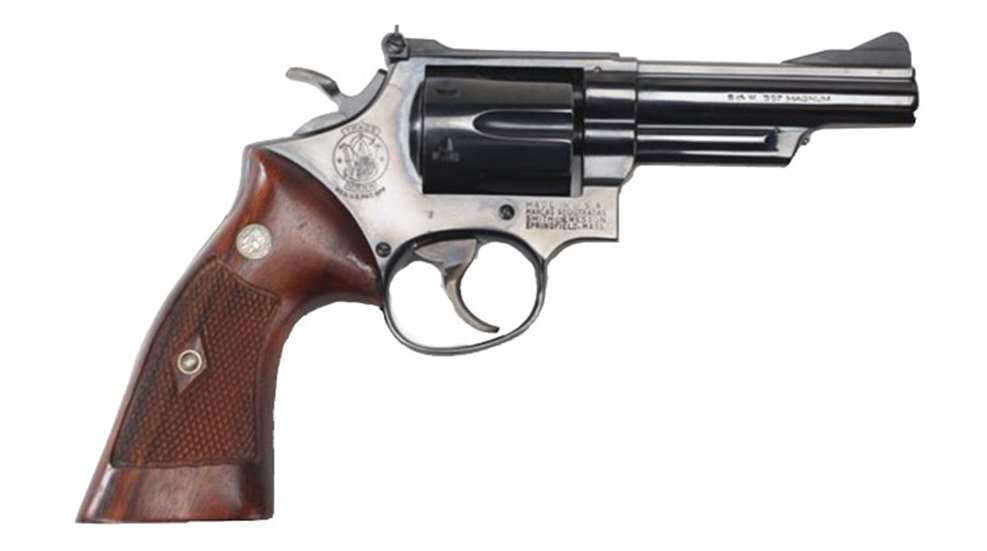
After I progressed to another assignment to the department's Patrol division, I was required to carry an approved handgun. The department would issue a suitable weapon, but individual deputies were allowed to provide their own—within some fairly narrow limits. You were allowed to choose either Colt or Smith & Wesson DA/SA .38 Spl. six-shot revolvers with either 4" or 6" barrels. Ammunition was issued—Winchester 158-gr. LSWC. If you wanted the slightly greater weight of most .357 Mag. revolvers, you could use your own. You were not allowed to use Magnum ammo. A small number of the guys chose Colts in either Python or Trooper configuration, but the overwhelmingly popular gun was a K-frame .38 4" Model 10 (Military & Police model) or Model 15 (Combat Masterpiece). I had bought a revolver from the PX at Camp Pendleton before I left the Marine Corps that fit the Sheriff's specifications. That was my gun.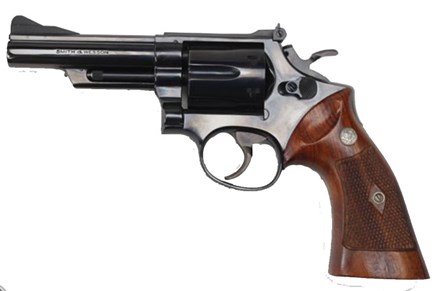 It was a Model 19 Combat Magnum. This is the gun that legendary Border Patrolman Bill Jordan persuaded Smith & Wesson to make for police service back in the late 50s. The major advantage of the Model 19 over other .357s was size and weight. This was the first carryable Magnum and it sold like beer at a German picnic. The gun was often sold via waiting lists at local gun shops and was in short supply for years. Mine was a 4" blue gun, but it was also made with 2½", 3" and 6" barrels, as well as in nickel finish. As much as I liked and carried that original gun, I eventually ended up owning a number of different 19s. I've had all the barrel lengths, as well as two of the fixed-sight Model 19-Ps.
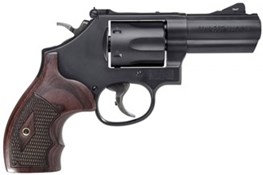
The Model 19 was a remarkable technological achievement. It was basically built on the maker's medium-sized .38 Hand Ejector frame (K-frame) which dates all the way back to 1898-99. Smith & Wesson introduced the first .357 Mag. revolver in 1935, using the larger N frame. That was a heavy gun and Jordan argued hard for a lighter K frame version. With some changes to dimensions and metallurgy, as well as a longer cylinder, the K-frame was adapted to the more powerful round. It worked pretty darned well and the guns themselves were superbly fitted and finished examples of the gun maker's craft. The more I carried and fired mine, the more I grew fond of the double-action trigger. I spent the money to get a pair of Jordan Trooper grips from Herrett's and a Border Patrol holster from Don Hume. It was great set-up. I qualified at least once a month with that gun and experimented with several kinds of sights, eventually replacing the original white outline-red ramp with plain black. My very first off-duty gun was even the 2 ½" round butt Model 19.
This was the time of the revolver in police work, and I was heavy into all things wheelgun.
This was the time of the revolver in police work, and I was heavy into all things wheelgun. I fired my 19s quite a bit, but I was also shooting on the department teams, so I acquired a couple of Model 14s in .38 Spl. The longer sight radius of a 6” barrel helped a lot. One of these was set up for bullseye matches, which I fired single-action style. It had a cocked-eyed hammer and thumbrest grips. For the more complicated PPC matches, I fired more long-arc, double-action style. I tried every other type of revolver I could, including fixed sight K frames with 2" or 3" barrels and even some of the once common N-frame .38s. Every time I tried something new and different—like a brief fling with a 5" Model 27 or the Colt Python affair—I found myself pining for that businesslike K frame Model 19.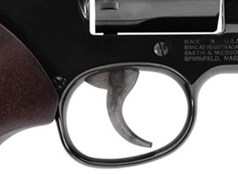
Used for police service where .357 Mag. ammo was not permitted, my 19s were de facto .38 Spls. As such, they held up beautifully. I have, however, seen Model 19s pretty badly worn by the protracted use of screaming-hot, high-velocity .357 ammo. In all the time I carried my first one, I doubt if I ran any more than a box of 50 .357s through it. In my opinion, the gun was damn near perfect for duty use and the only way to improve on it was to make it out of stainless steel. Smith & Wesson did exactly that in the early 1970s, calling the silvery-colored stainless steel K frame .357 a Model 66. And yep, I had one of them and it was a fine duty weapon.
Throughout the troubled decade of the 1970s, I worked as an active peace officer and almost every bit of that time I carried a K frame Smith. I did plenty of experimenting with off-duty autos of various types, as well as an array of Colt and S&W off-duty snubbies that would make a great tale in its own right. The plain truth was that I had become a revolver man, with a great deal of experience with the Springfield, Mass., product. My beloved 1911 .45s of the 1960s were at the rear of the lower shelf of the big Browning safe and my holster held a scratched but sound S&W Model 19—the gun of the decade, 1970s.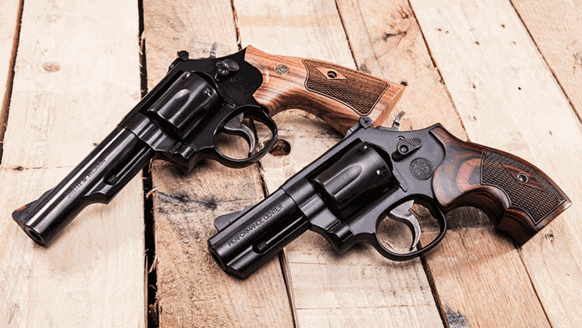
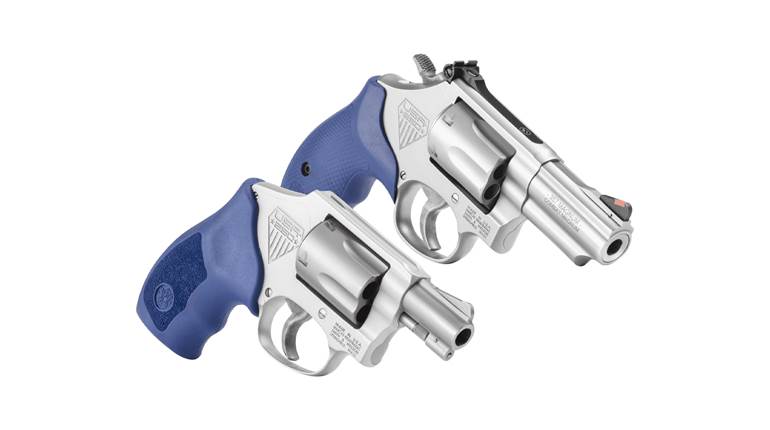
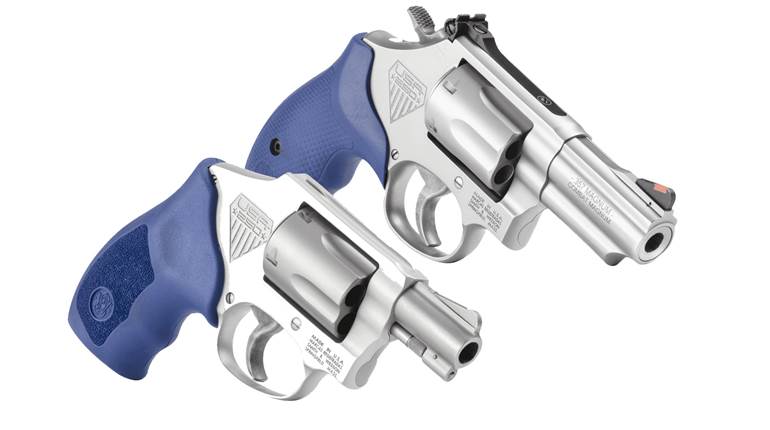
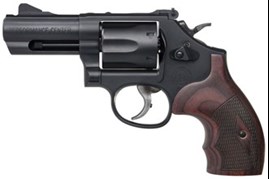
In 2018 Smith & Wesson reintroduced the Model 19 revolver.
Additional Reading:
By the Decade: Wiley Clapp's Favorite Handguns—The 1960s
By the Decade: Wiley Clapp's Favorite Handguns—The 1980s
Smith & Wesson Reintroduces Model 19 Revolver
A Look Back at the Smith & Wesson Model 19
Most Popular