3/6/2013
In 1922, John Browning was 67 years old. Perhaps after a lifetime of innovative design—from a graceful single-shot rifle to a series of lever-action repeating rifles and shotguns to iconic pistols like the 1911 and P35 and even several machine guns—he may have been feeling the tug on his sleeve by angels, and he wanted to leave something beautiful behind. Others opine that Browning was well aware of the government’s desire to disarm the citizenry, and wanted to design a firearm that was affordable to most anyone while projecting an image of relative innocuousness so that it would be one of the last guns subject to confiscation.
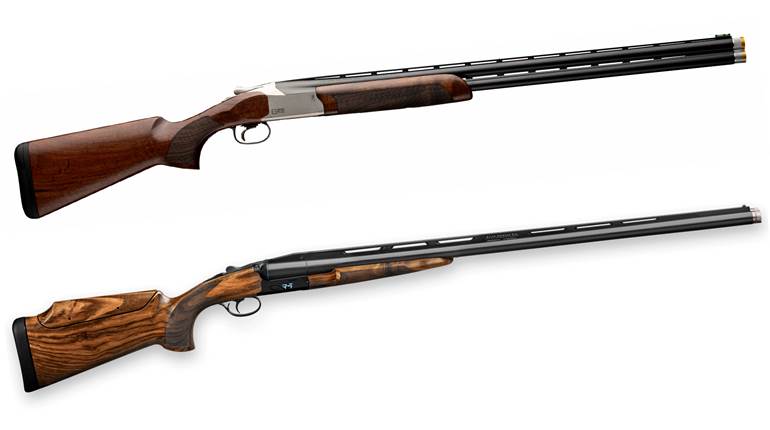
The over-under shotgun was already being produced by fine gunmakers ever since the hammerless design was perfected in the 1870s. Then, as now, twin-tubed shotguns bespoke of quality and class. So Browning began working on an over-under design that could be mass produced by the technology of the day.
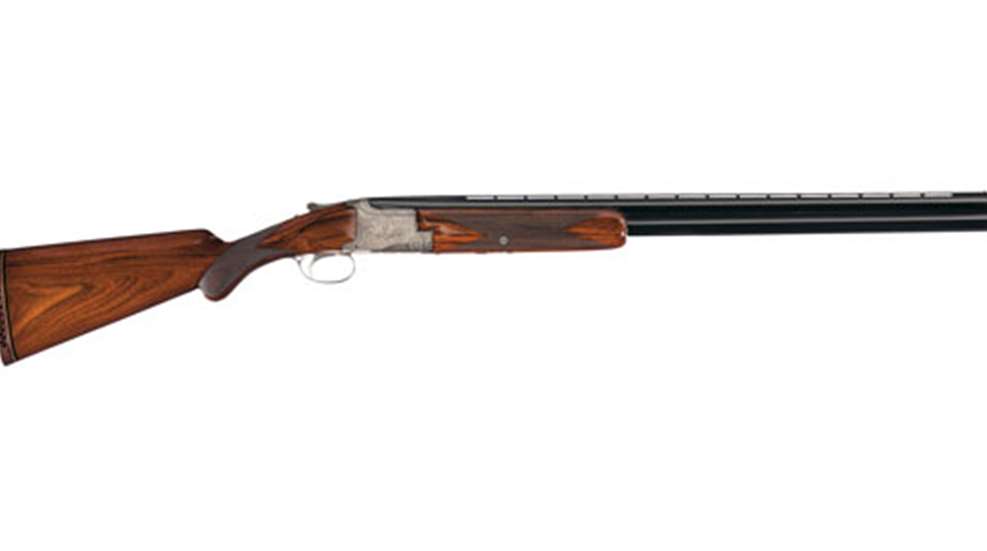
He started with a massive boxlock receiver. Unlike many of today’s over-under shotguns that use tubes welded or braised to a monoblock, Browning utilized full-length barrels with integral tandem lumps under the bottom barrel. An under-bolt operated by a lever atop the receiver engages a pair of bites machined into the lumps to lock the shotgun up for firing.
Browning really wanted this shotgun to have a single, selective trigger to distinguish it from more common designs. It was a vexing problem for him. In fact he never did get it quite done. Browning died in November 1926, and the task fell to his son, Val, who eventually perfected the single, selective trigger in 1939. The first Superposed shotguns released in 1931 had double triggers.
Val’s trigger incorporates an inertia block mechanism where the recoil from firing the first barrel—the shooter selects which barrel fires first with the barrel selector/safety mounted at the rear of the tang—engages the second barrel. Later models now have a mechanical system where each barrel fires independently, and recoil is not needed to set the second barrel.
Takedown of the Superposed is different from what one normally encounters on a double gun. The latch on the fore-end frees the wood to slide forward, while remaining on the barrels. Watching someone who’s unfamiliar with the Superposed try to remove the barrels can be amusing—they’ll tug away on the fore-end trying to remove it.
The Superposed is a robust shotgun, noted for its reliability, as well as its heft. Later versions included some that were lightened somewhat, and they usually had straight stocks. That substantial weight made the Superposed popular for some time as a trap gun, and some waterfowlers bent toward quality guns enjoyed the recoil absorbing weight.
Fit and finish of Superposed shotguns reflect Browning’s legacy for quality well above the norm. Receivers are hand engraved and the French walnut stocks receive a hand-rubbed finish that rivals anything produced by even the best gunmakers.
The popularity of this beautiful fowling piece has resulted in the Superposed being chambered in 12, 16, 20 and 28 gauges, as well as .410 bore, and several four-barrel skeet sets have been available during its 82 years. Chokes run from Skeet to Full depending on the buyer’s wishes. The Superposed has been made in a plethora of grades from field to Grade V, each getting more lavish finishes, engraving and walnut as the grade rose.
Like many of Browning’s designs—the Winchester Model 94, 1911 and P35 pistols and the M2 Machine Gun come quickly to mind—the Superposed has more than withstood the test of time. Two of those iconic firearms are more than 100 years old and are still with us. The Superposed has become the benchmark of over-under shotguns. Sure, modern manufacturing has made what was once only available to the well-to-do within the reach of almost any shooter, but it took Browning to show them the way.
Most Popular