2/5/2013
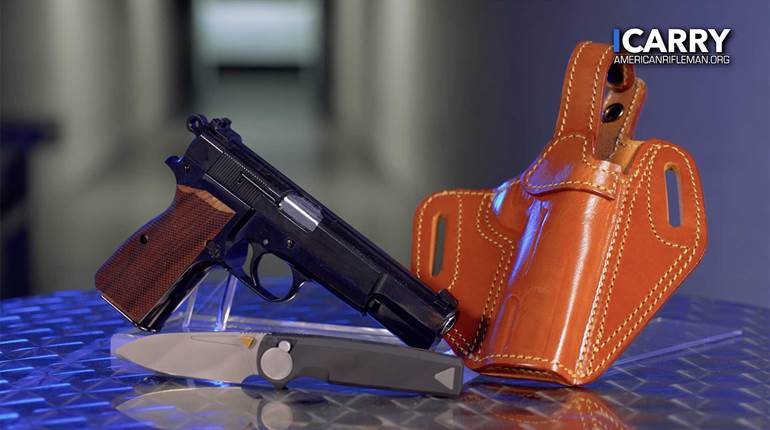
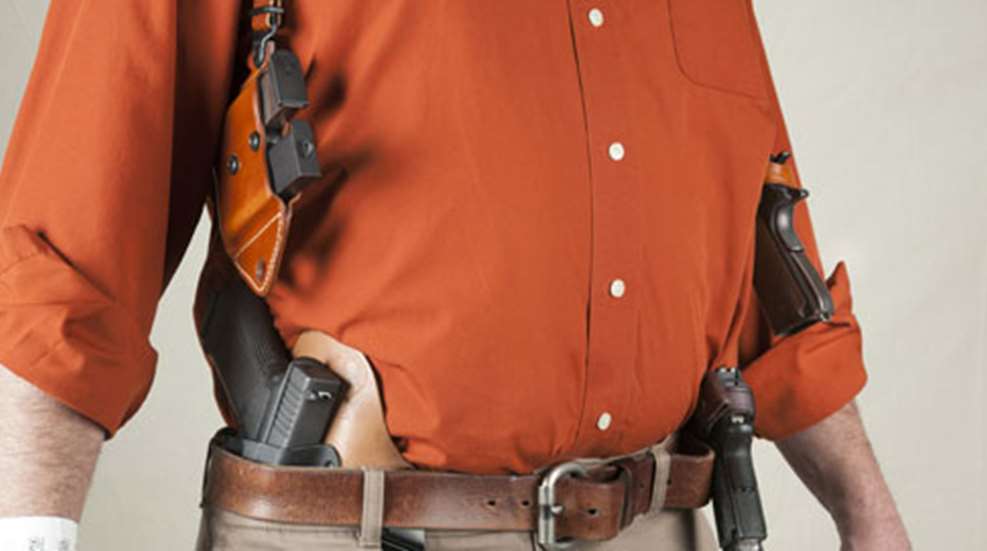
Too often people spend a lot of time and thought on selecting the proper defensive handgun and then choose the holster to carry it in as an afterthought. In reality, selecting the proper defensive holster is almost as important as the gun itself. Fortunately there are a broad array of holsters, of all makes and materials, from which to choose. With a little thought, time and experimentation, it is really quite easy to find the rig that suits you best.
The defensive holster should always be made from the best material possible. Cowhide, horsehide and synthetics are all used in today's holster manufacturing. It is important to select a rig made of the very best material for both fit and longevity. For example, the best cowhide holsters come from the very center of the hide where the leather is the thickest. A holster made from the edges of the hide, will get softer and loosen up more quickly. Holsters made from quality materials cost more, but tend to fit better and last longer.
A defensive holster should be made for a specific model of handgun. Those one-size-fits-all rigs generally don't fit any handgun well enough to trust them for defensive carry. This causes undue wear on the pistol's finish, and a poorly fitting holster probably won't hold a handgun securely. It is not a good thing to have to run to try to get away from a criminal attack only to find that the exertion caused your pistol to fall out on the ground.
If your defensive holster is a belt rig, the selection of your belt is also critical to the equation. The belt should be wide enough to just fit the slots on the holster. The belt should also be thick enough to support the holster and prevent sag under the weight of the handgun. Several holster companies also produce belts that are suitable for both formal and casual wear, while supporting the gun and holster securely.
A defensive holster should allow re-holstering with one hand. Many models feature an extra layer of material at the holster mouth to keep it open during the re-holstering process. Safety straps and thumb snaps, if you use them, should be designed so that they don't interfere with this important task. The armed citizen needs to keep his or her eyes on the surroundings during the re-holstering move. In addition, the support hand might be occupied holding off an unarmed assailant or holding onto some support.
The defensive holster should be designed so that the armed citizen can draw a handgun with either hand. Savvy criminals may grab the shooting arm to prevent drawing a handgun. Imagine their surprise when the support hand accesses the pistol.
For this reason, I am not a big fan of thumb snaps and safety straps on a defensive holster. Such retaining devices may make it virtually impossible to draw the handgun with the support hand. When deciding on how you are going to carry your defensive handgun, it is always a good idea to consider how easily you can access it with your support hand.
Another aspect of defensive holsters that one has to consider is the fact that what works for one person simply won't do for the next. This is generally due to gender, body size and clothing choice. For example, I prefer to wear jeans and find that the popular in-the-pants rigs are just not for me. In that case, one must either change clothing or change holsters. I chose to stick with the jeans and find another carry technique.
Every shooter has to experiment with various carry techniques and holsters to find what works. Discussions with experienced defensive shooters may help to thin the field just a bit. But the reality is that a person just has to try a few methods to determine the best for his or her uses. The key is to stick with quality craftsmanship in selecting the holsters for consideration. Ask any experienced gunman and he will, if he's honest, admit to having a big box of holsters that he has collected over the years while seeking what works for him. So, get your big box, keep an eye on quality and start your search. The search is worth it when your personal safety is at stake.