“Have you heard of GPA?” one shooting competitor asks another. For now, the response is often “no,” but then the inquirer is off to the races, telling them all about it. It happened in Tennessee and then in Poland—and it continues happening in many other places where GPA hasn’t even been introduced yet.
So, what is it? The acronym stands for Galactic Pistol Alliance, and sure, that’s a name that some might mock for its implied sci-fi aspects. After all, no matches are taking place on Luna or Mars yet. But what the name really indicates is that this game is for everyone. Young, old, male, female, American, Martian—oh, right, not that yet—whoever and wherever.
Sure, IDPA, USPSA and similar competitions also welcome anyone, but the fact of the matter is, most of us are just trying to add a little scenario assessment to our defensive game and have some fun, not trying to join SEAL Team 6. Hobbyists just don’t need that level of intensity. And we definitely don’t want to have to memorize an extensive set of rules.
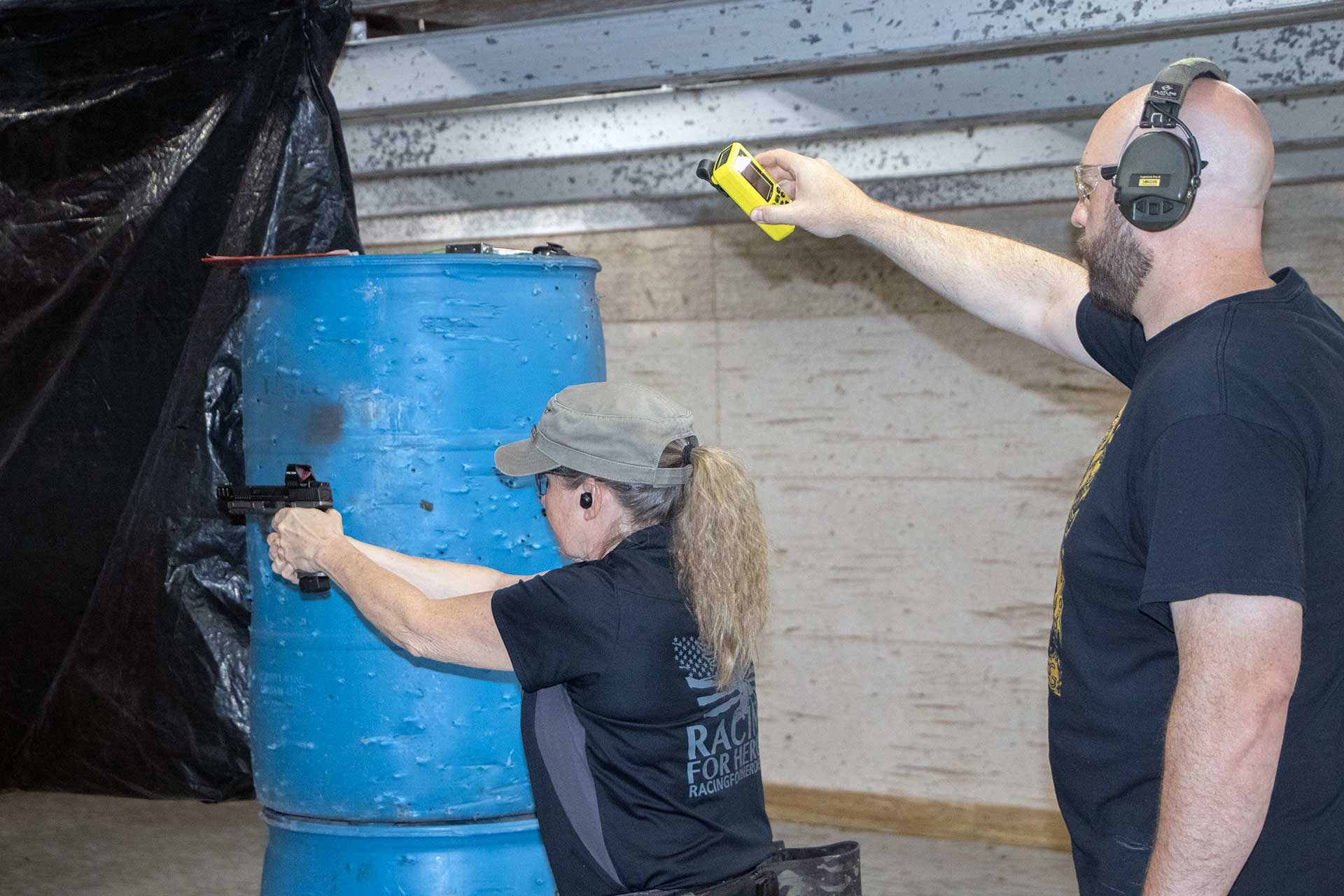
GPA jettisons the rule confusion and offers a much more relaxed model, while keeping the cool shooting stages and emphasis on safety. In fact, its entire rule book is only 13 pages long, and each rule is carefully crafted by the two GPA co-creators, who’ve each spent many years competing in and running hundreds or maybe even thousands of matches.
“We were both safety officers,” said Chuck Limpert, one of GPA’s cofounders. “But it became more and more problematic to explain the rules. We would try to get them edited, but the rules just compounded and got more confusing, and they were being interpreted differently at different matches.”
“There were always questions,” Terry Stewart, the other founder, agreed. “I remember in one match, three chief safety officers spent a good 10 minutes discussing whether someone could reload in this spot or not. It seemed crazy people with so much experience would have to discuss it so much. So, we talked about what we would change if we were in charge. We started running wildcat matches, and eventually this turned into GPA.”
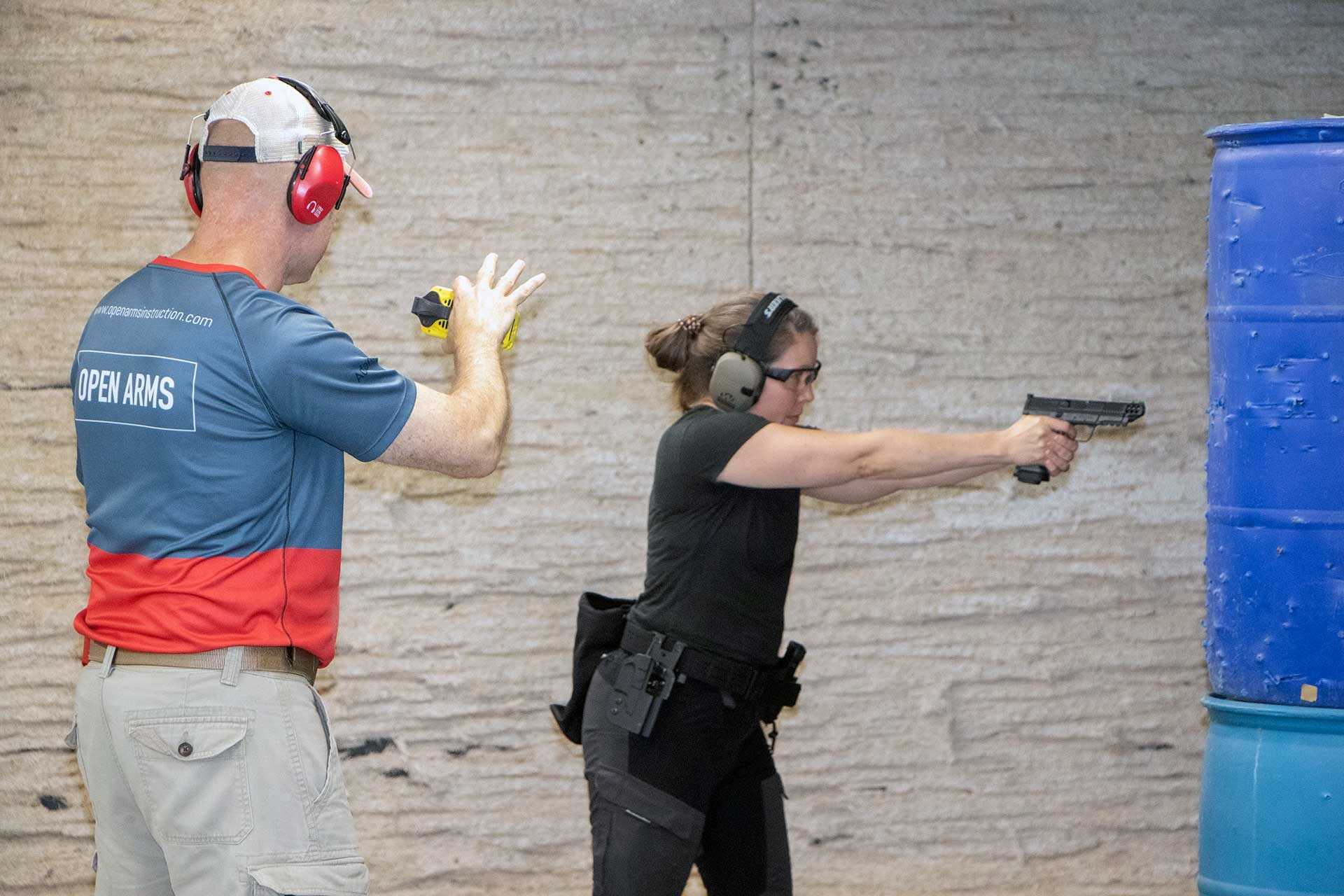
Chuck and Terry refined the rulebook about 130 times before they fully launched GPA, and everyone I’ve talked to about it seems to enthusiastically approve of the final product. One rule change is that cover garments aren’t required. Another is that you can reload any time during your run after the first shot but before the last shot—and no, it doesn’t matter if there are still rounds in the mag. (In fact, rarely would you need to count rounds in this game unless you’re using a revolver or a low-capacity concealed-carry pistol.)
Adam Metcalf of Open Arms Instruction has been shooting in competition matches since about 1997 and started training others for it about a decade ago. Once he tried out GPA, he completely pivoted to that format.
“In GPA matches, competitors can have more fun in a shorter amount of time,” he said. “The whole match is faster, and the stages are better paced. The response from students has been high because it’s easier to break into. More women are competing, and older competitors are coming out. GPA has lowered the barrier to entry but kept it safe and competitive, so it’s bringing people in.”
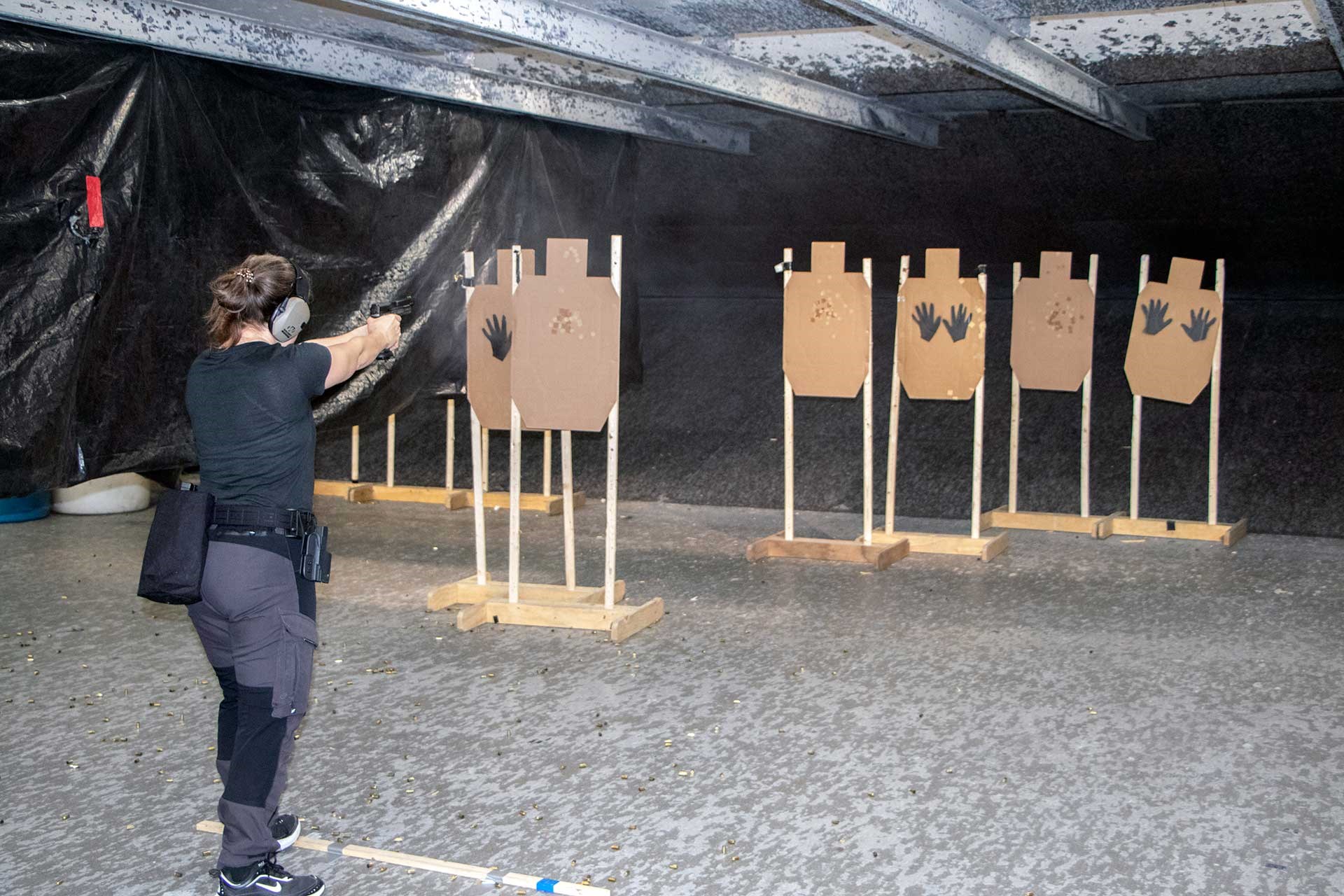
I had observed an IDPA match a few years ago, but I knew my near-50-old “neurospicy” brain would struggle with the rules—especially considering the other learning curves of finding the right equipment and learning how to work through stages. But when several women from the Armed Women of America (AWA) clubs in the area started talking about GPA, I investigated its rules and signed up.
My first match went pretty poorly, of course. And my second match, at the NRA Range, wasn’t exactly stellar, either. But that’s part of why I’m doing this—I suspected I might fall apart under the pressure of a timer and watching eyes, and, well, I did. But now I can move past all that, growing as a shooter in the most fun way I can imagine.
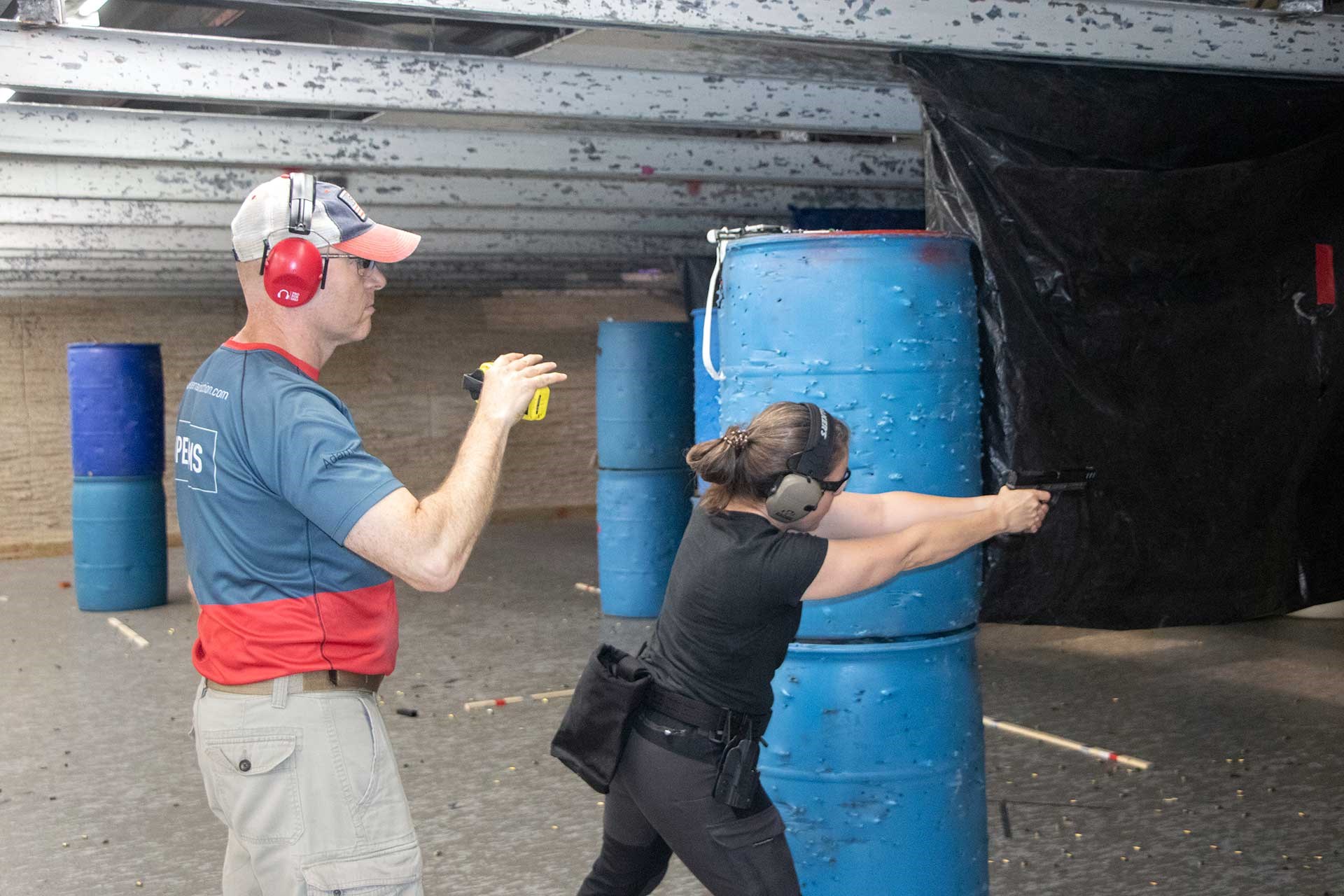
I’m learning a lot, and some of it could even apply to defensive situations. I’ve gotten faster at reloads, for example. I realized I’ve let my support hand get very lazy over the years—though it’s really supposed to be doing all the work—and now I’m working hard to correct that critical deficit. I’m working on my drawstroke and my footwork and my trigger pacing, and I’m trying to be consistent in all of it. Of course, I’ve also learned to “airgun” (‘pew pew’ with my fingertips like a 10-year-old playing cowboy) before each run, so clearly some of this is just about the game. I think that makes for an excellent mishmash of motivations—just what my brain needed to be interested in change.
I’m not the only one. Everyone I know who has tried this competition has come back for more.
“It teaches you defensive skills in a fun way,” Jerikay Smith, an AWA chapter leader administrator, told me. “You’re practicing all the fundamentals but it’s always a different scenario, so you’re still learning and growing. And everyone is very encouraging! It’s always a great time, even if you’re rock bottom in the rankings.”
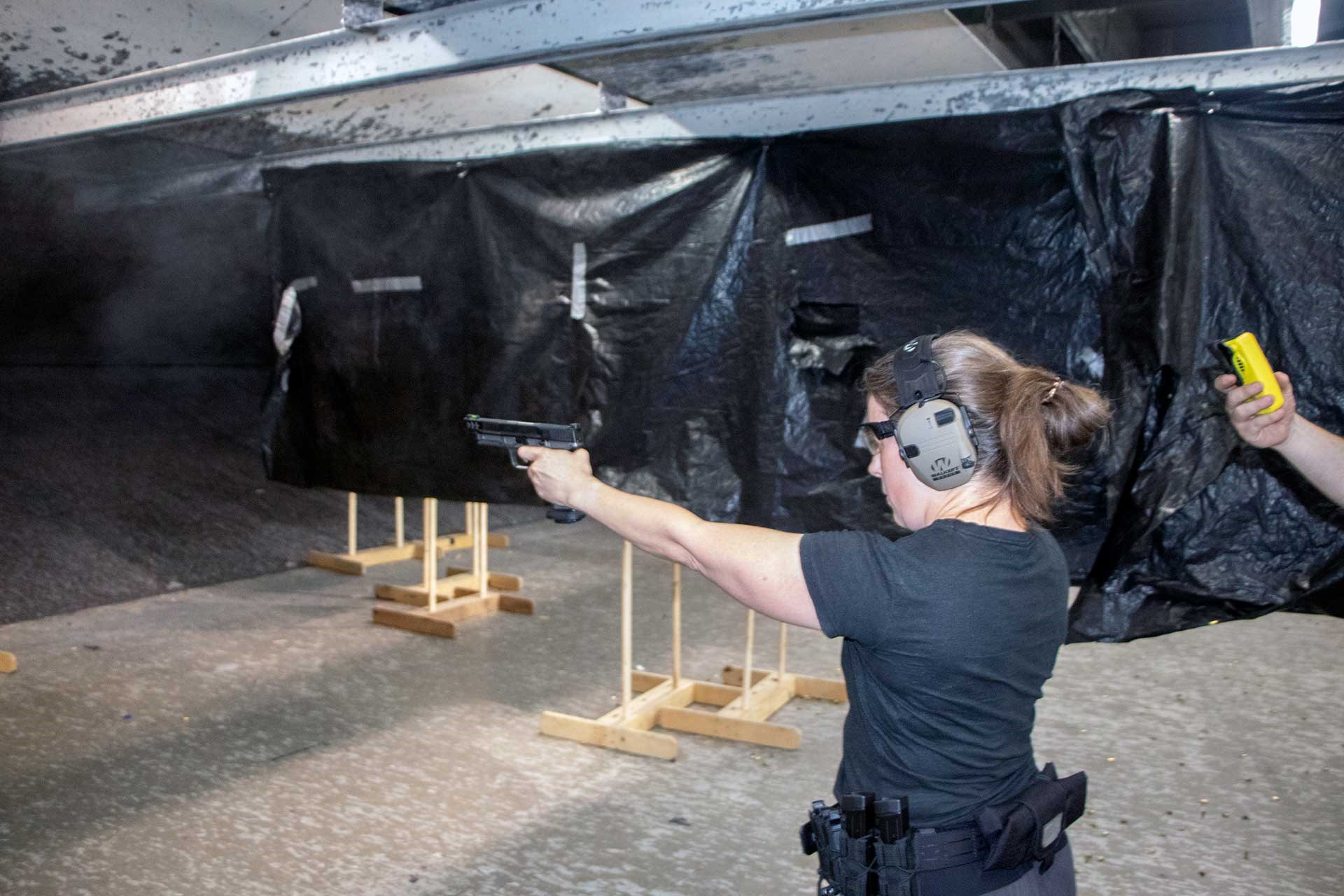
“I like how GPA matches get the shooter out of their head,” said Jill Colburn, an AWA chapter leader. “In a defensive situation, you’d have to get out of your head and respond. These matches help you move through fear and nervousness and become more fluid, more in the moment.”
I’ve been shooting the Smith & Wesson M&P 2.0 Competitor with a 5-inch barrel in these matches, using its standard iron sights. (I’ll add a dot at some point, like all the cool kids, but since I’m still transitioning to that new-fangled technology, I didn’t want to add in the extra learning hurdle.) I settled on a Kore Essentials competition belt, with a T-Rex Arms holster and a Safariland QLS system to attach it. I’m also running High Speed Gear TACO mag carriers and a Predator Armor dump pouch. I’ve been happy with the setup overall, though time will of course be the ultimate arbiter.
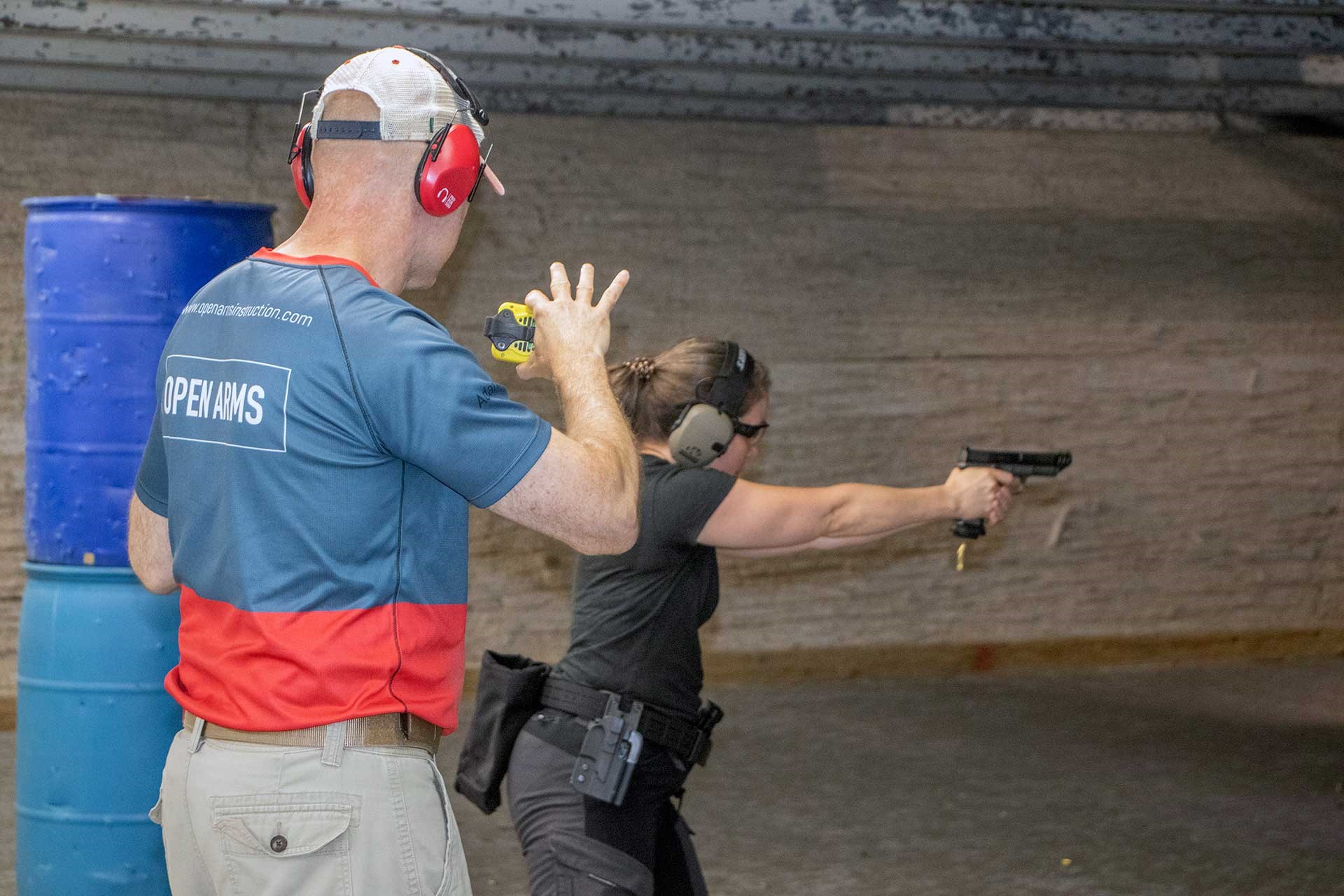
GPA has been rolled out to about a hundred ranges and clubs across the U.S. at this point, and the first international match, which was wildly successful, was held in Poland this summer. But for now, GPA is small enough that any club official or competitor with a question is very likely to be able to talk with Terry or Chuck directly. Because they keep things as simple as possible, matches run smoothly, and match directors can focus on keeping things safe and fun rather than on small technicalities.
When I asked him what else he might want people to know about GPA, Chuck emphasized the friendly vibe: “Come have fun. It’s a more casual approach—like a pickup game of golf … A bunch of people get together and hit the ball, but no one’s worried about making the playoffs. GPA is for the everyday shooter.”