The events of April 19, 1775, at the Massachusetts towns of Lexington and Concord stirred a hornet's nest among the American colonists. After heavy fighting along what is now known as Battle Road, the British army in North America was trapped in the city of Boston by thousands of militiamen from surrounding colonies. Soon, both sides recognized the value of the heights of Breed's and Bunker Hills outside of Boston, setting the stage for the first pitched battle between British regular infantry and the defending militia. Watch our "American Rifleman Television" feature segment above to hear the story of the U.S. Army's first fight.
"So by the end of the April 19th, you've got around maybe 4,000, 5,000 men who are there, who have followed the British back in to Boston and are in Cambridge in that surrounding area," American Rifleman Contributor Joel Bohy said. "Charlestown, at the time, what's now Somerville, wasn't just the neck and where Bunker and Breed's Hill was, it was a larger area than that. But there's troops that come in and stay the night in that area. By the next morning, there are thousands more. Within a couple of days, there's 23,000 troops that surround the British and Boston."
As of June 14, 1775, the Second Continental Congress had officially recognized that these 23,000 men arrayed outside of Boston were the armed forces of the colonies, and June 14 is the date that the U.S. Army recognizes as its founding moment. Soon after, the new army would engage in its first battle, as both sides struggled for control over the prominent Charlestown Heights.
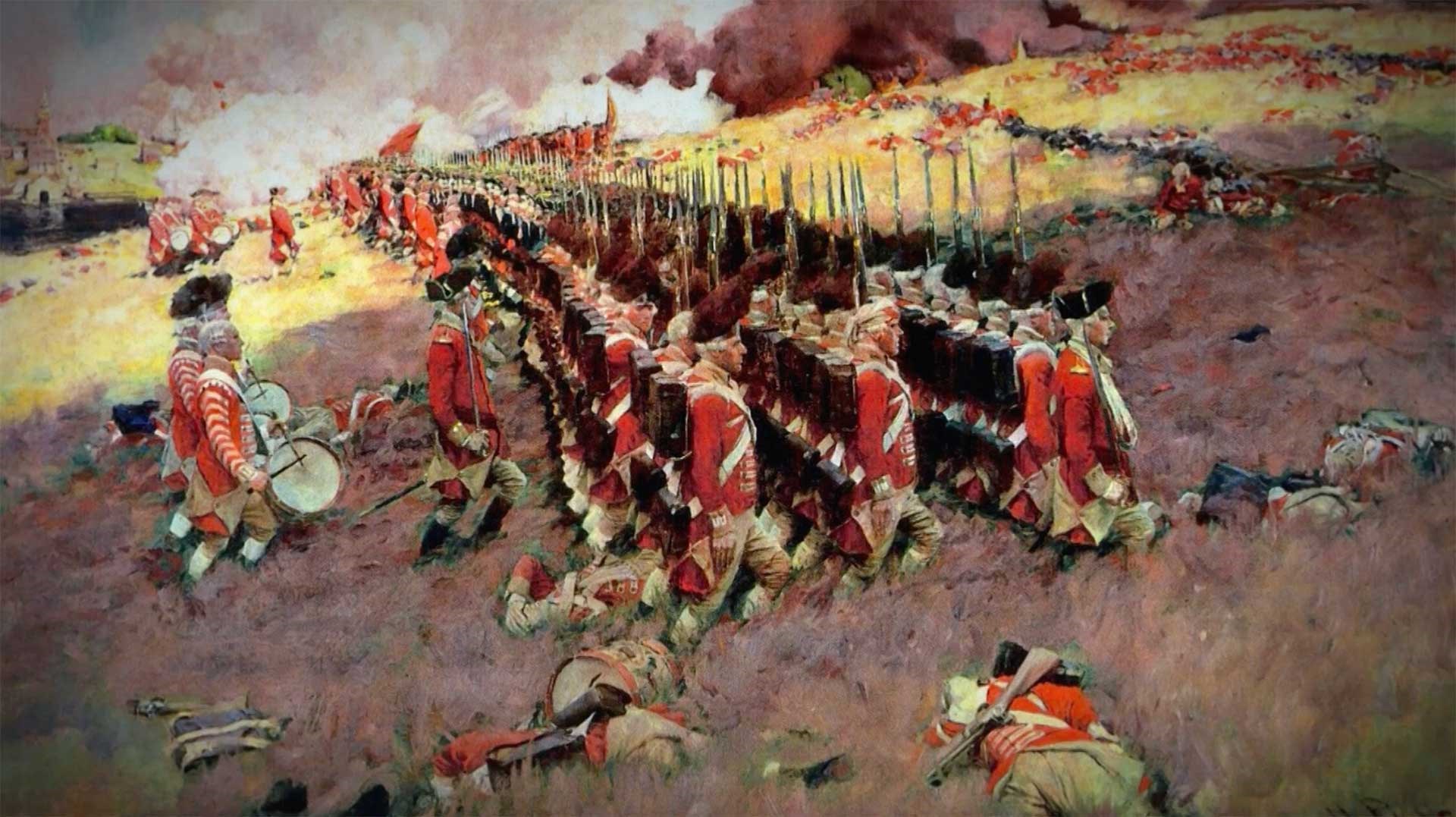
"The colonists and the British basically came to the same conclusion at the same time that the hills, Bunker and Breed's Hill outside of Charlestown, Massachusetts, just across the bay, were ideal for mounting artillery and shelling the city of Boston, and that would also put the Royal Navy at risk, which was an anchor there as well," NRA Museums Director Phil Schreier said. "They both kind of set out to capture those two hills almost at the same time."
Unlike earlier years, this time, the colonial militiamen were well-equipped and outfitted to besiege the British inside of Boston. Through the work of Committees of Safety and Committees of Supplies, men had been armed with muskets and fowling pieces, along with packs, canteens, tents, cartridge boxes and all manner of other accoutrements required to sustain a military force. However, there were some limiting factors.
"They had been outfitting and equipping themselves, and so they were in a position to be able to effect a sustained siege. However, it's not quite as cut and dry as all that because one of the biggest limitations that they have is powder," American Rifleman Executive Editor Evan Brune said. "And this is going to be a problem that plagues the American cause throughout the revolution is access to any kind of quantity of powder, because blackpowder in this era, not a ton of it is made in the colonies. There are very few powder mills. Most of it's coming in from Great Britain."
Despite the limited quantity of powder, the armed colonials outside of Boston recognized the importance of fortifying and defending the heights of Breed's Hill and Bunker Hill, and the order soon went out that the top of the hill nearest the city of Boston would have to be reinforced.
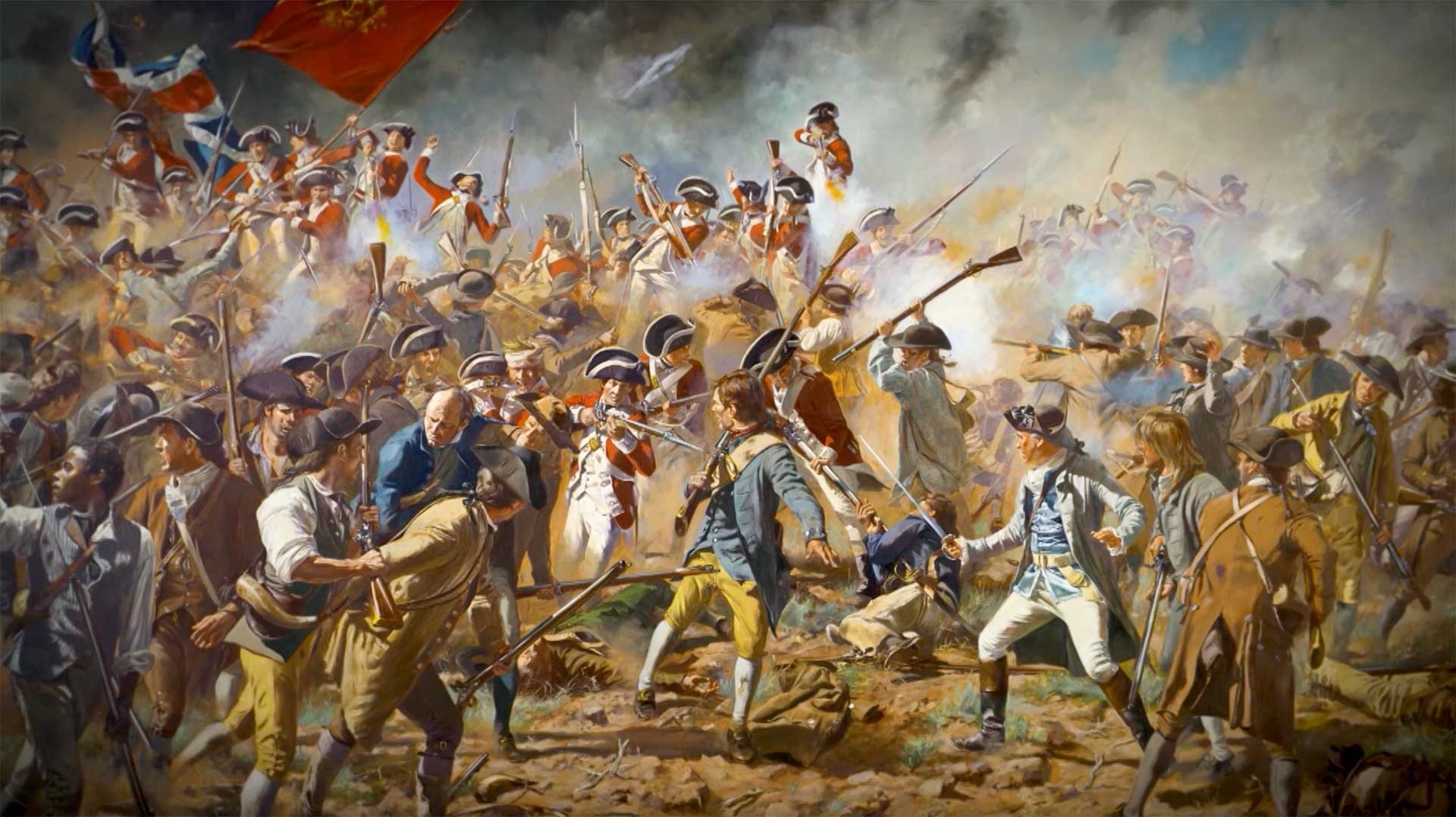
"The man in charge of that is Colonel William Prescott from Pepperell, Mass., and he takes his men and, overnight, they excavate a fairly crude fortification," Bohy said. "In the morning, British ships realize what's going on and they start cannonading the earthworks, but they also start firing hotshot and burn the town. The town of Charlestown starts to burn, and then they send in their infantry and it's really ugly. The Americans are firing down on these approaching columns, and the British suffer tremendous casualties. The only problem with that though is, as the provincials are firing, they're starting to run out of ammunition."
Despite suffering heavy casualties in their first two advances up the hill, the British infantry regrouped and commenced a third assault. This time, the lack of ammunition among the defending militiamen made it impossible to defend against the onslaught. Colonists resorted to throwing stones and bricks to stop the attackers, but after a bloody hand-to-hand fight, the British eventually took the hill. However, they paid dearly for the victory.
" Up until the Battle of Bunker Hill, and really even following the events of Lexington and Concord, there was this pervasive opinion among the British military establishment that militiamen and colonials were not a serious threat. In fact, one British officer in the runup to revolution remarked that he could march across the entire continent unscathed with just 5,000 men," Brune said. "And those kinds of suppositions were quickly put to rest following the really true bloodbath that was the assault on Bunker Hill by British infantry. The British suffered more than 900 casualties trying to take these defensive fortifications over three assaults."
To watch complete segments of past episodes of American Rifleman TV, go to americanrifleman.org/videos/artv. For all-new episodes of ARTV, tune in Wednesday nights to Outdoor Channel 8:30 p.m. and 11:30 p.m. EST.